21 Stunning Wedding Hairstyles for Long Hair Every Bride Will Love
Long hair on a wedding day is a gift and a logistical problem at the same time. The options feel endless, which is exactly what makes choosing so difficult, and the weight of it means a style that photographs beautifully at 2pm can be sliding down your neck by 9pm. The best wedding hairstyles for long hair account for both realities: how the look photographs, and how it survives fourteen hours, a veil removal, and a dance floor.
The direction for 2026 has softened noticeably. Angelica Datuin, senior stylist at Benjamin Salon, describes this year’s bridal hair as it-girl simplicity, moving away from high-volume styles and tight iron curls toward something more effortless. Her picture of it involves brushed-out pin curls, undone texture and simple elevated updos that feel timeless with a slight edge. Sarah DeVore, master stylist and co-owner at Aura Salon, has noted the same shift toward classic looks over heavily curled and pinned styles, with blowouts, sleek buns and chignons being appreciated again.
Twenty-one options follow, each with the practical detail attached.
Classic Bridal Updos
Updos remain the most reliable choice for long hair, holding eight to twelve hours with proper preparation. These five are the shapes stylists build most often.
The Low Chignon
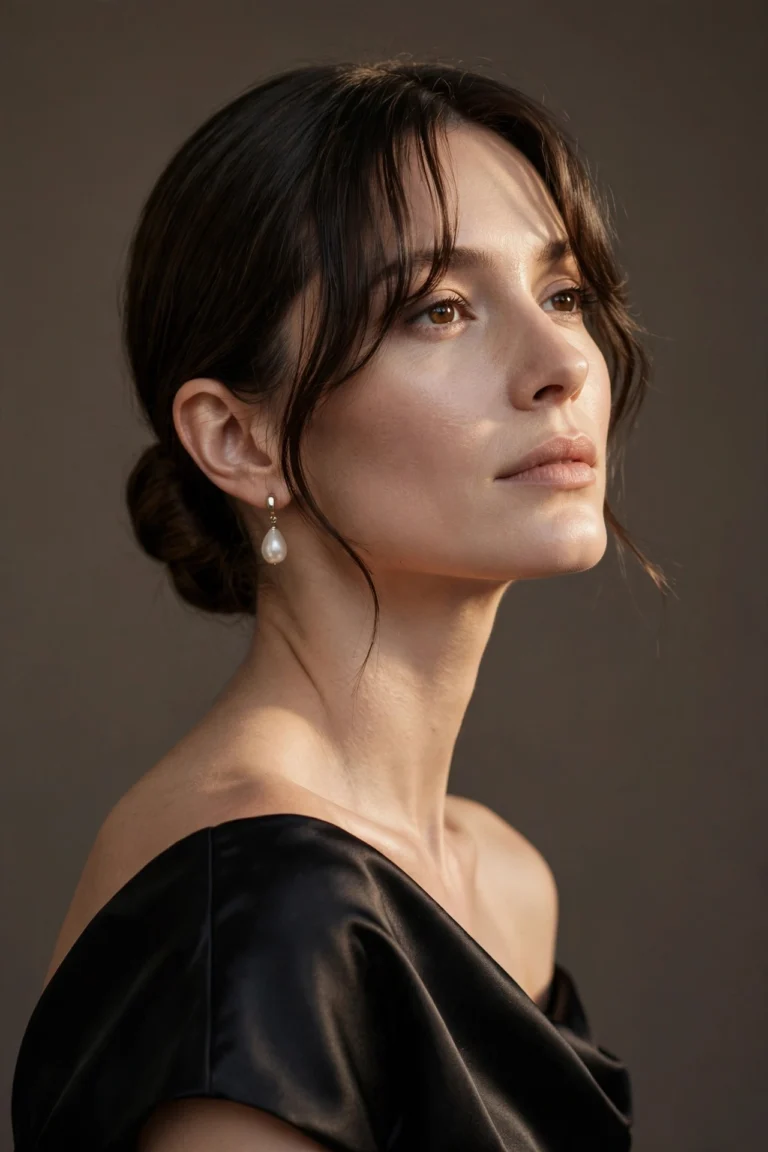
A chignon is a knot secured at the nape, and it remains the most universally flattering bridal updo because it sits low enough to avoid distorting your proportions. Long hair coils into it beautifully, and the compact shape means the weight sits close to your head rather than pulling. It suits nearly every dress silhouette and holds without much fuss through an entire reception.
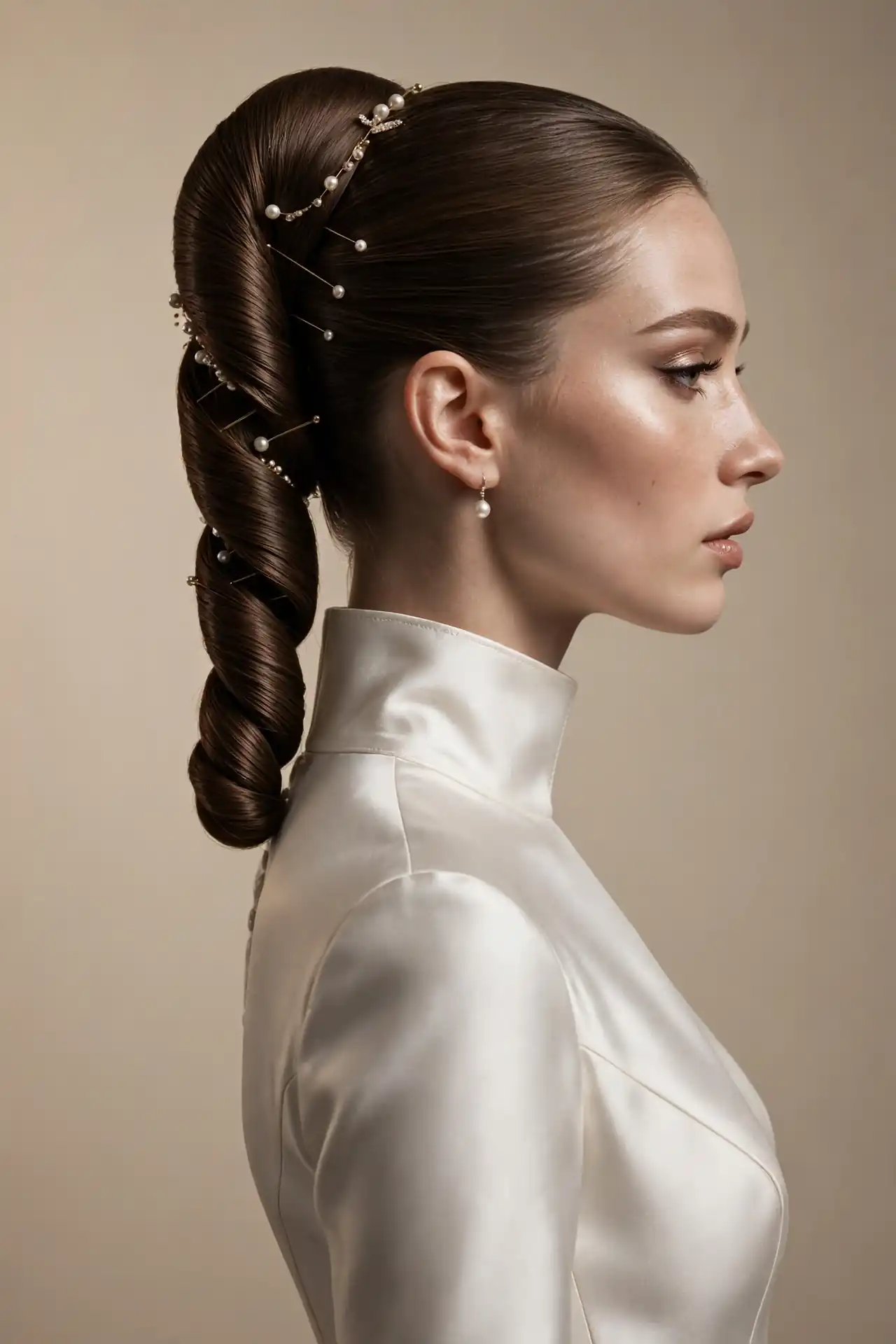
The French Twist
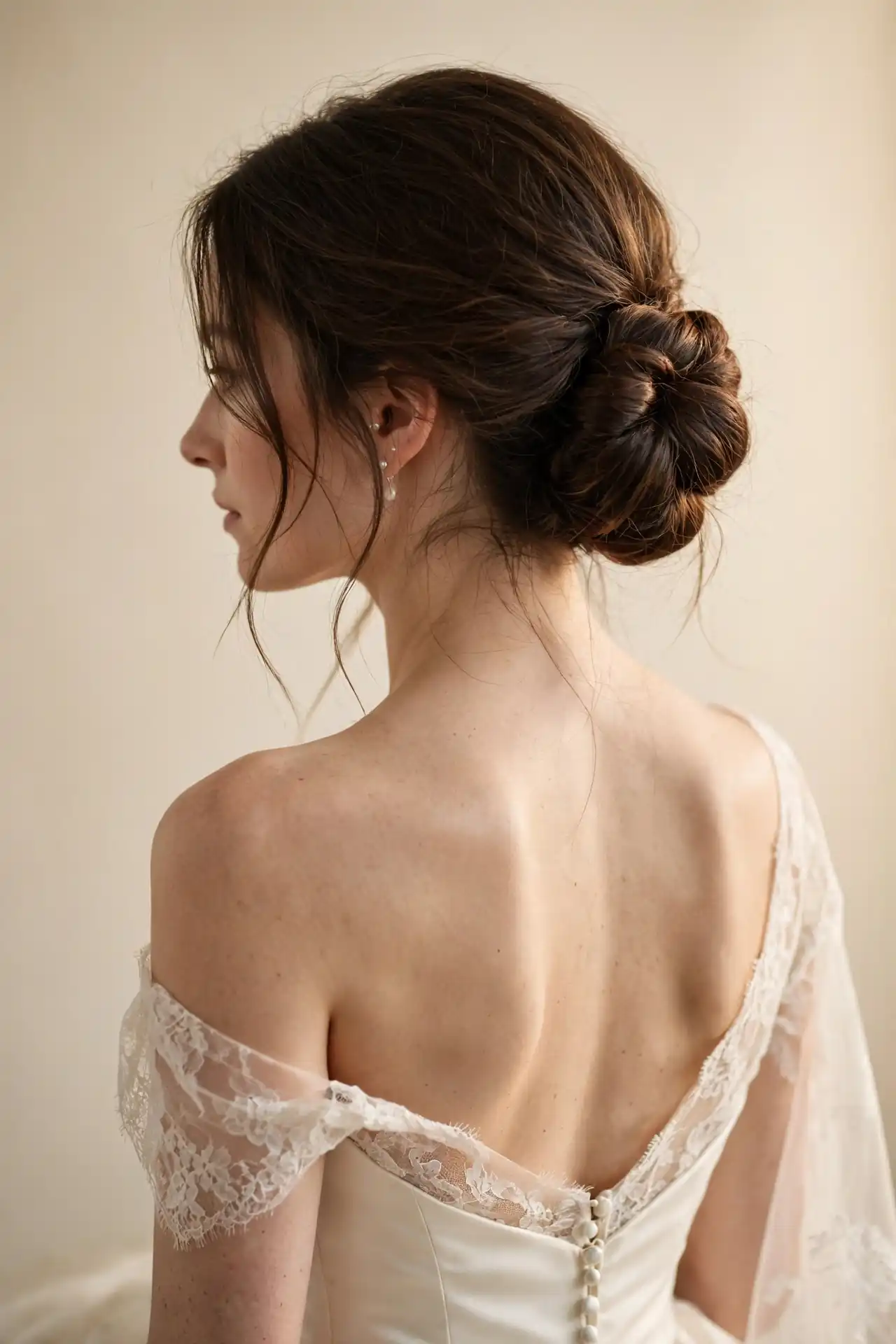
Ask any bridal stylist which updo hides the most hair in the smallest silhouette and this is the answer. Rather than coiling into a round knot, the length is folded vertically against the back of the head and pinned along a seam. That structure is why it works so well on very long hair, where a standard bun can become bulky. It reads architectural and slightly formal, pairing especially well with structured gowns.
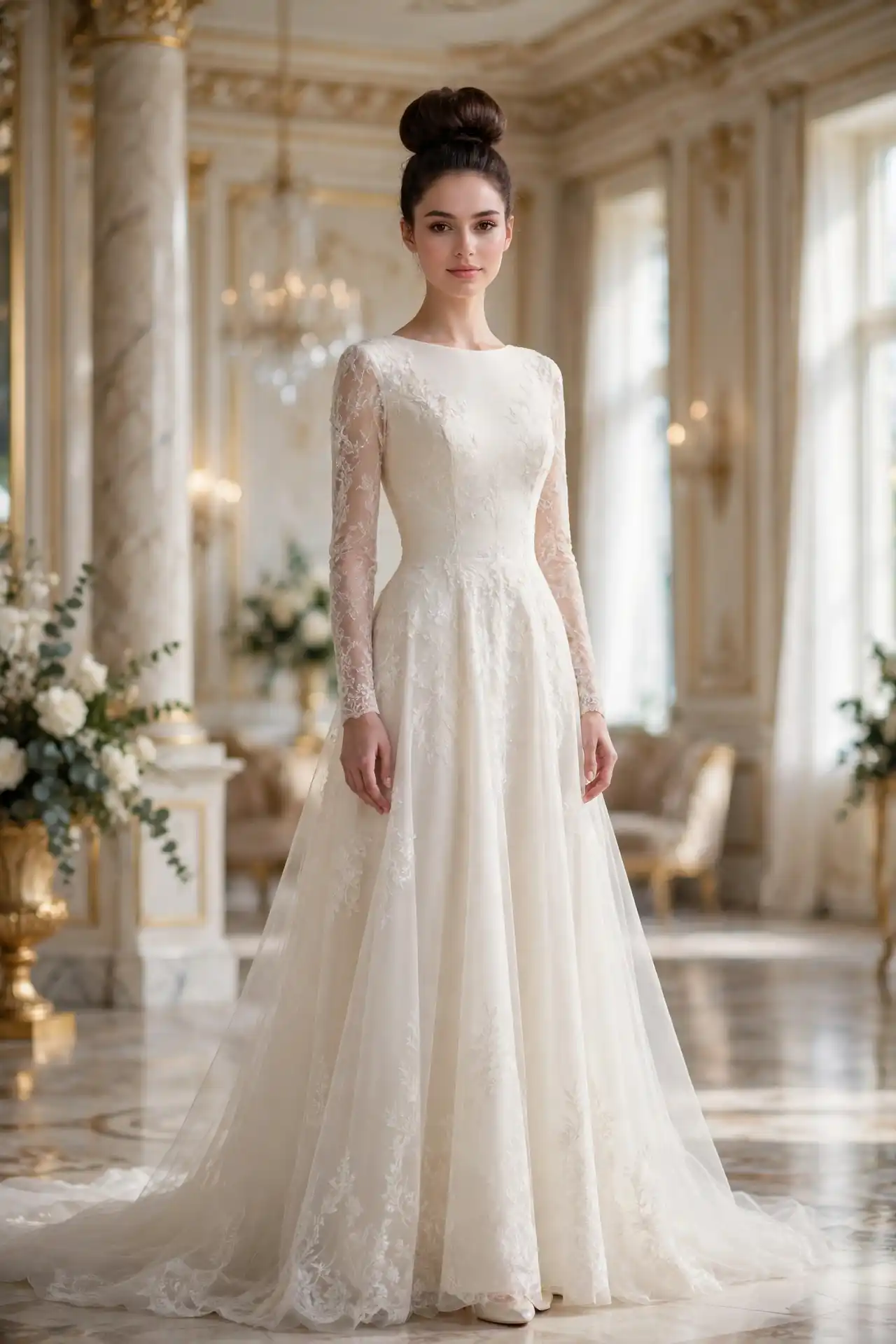
The Ballerina Bun
Planning to actually dance at your reception? This is the practical answer. Positioned high on the crown, it lifts the face, elongates the neck and keeps every strand off your shoulders. Wearing it lower and looser softens it considerably if the high version feels too severe. Thick long hair holds it best, since it needs genuine density to look full rather than sparse.
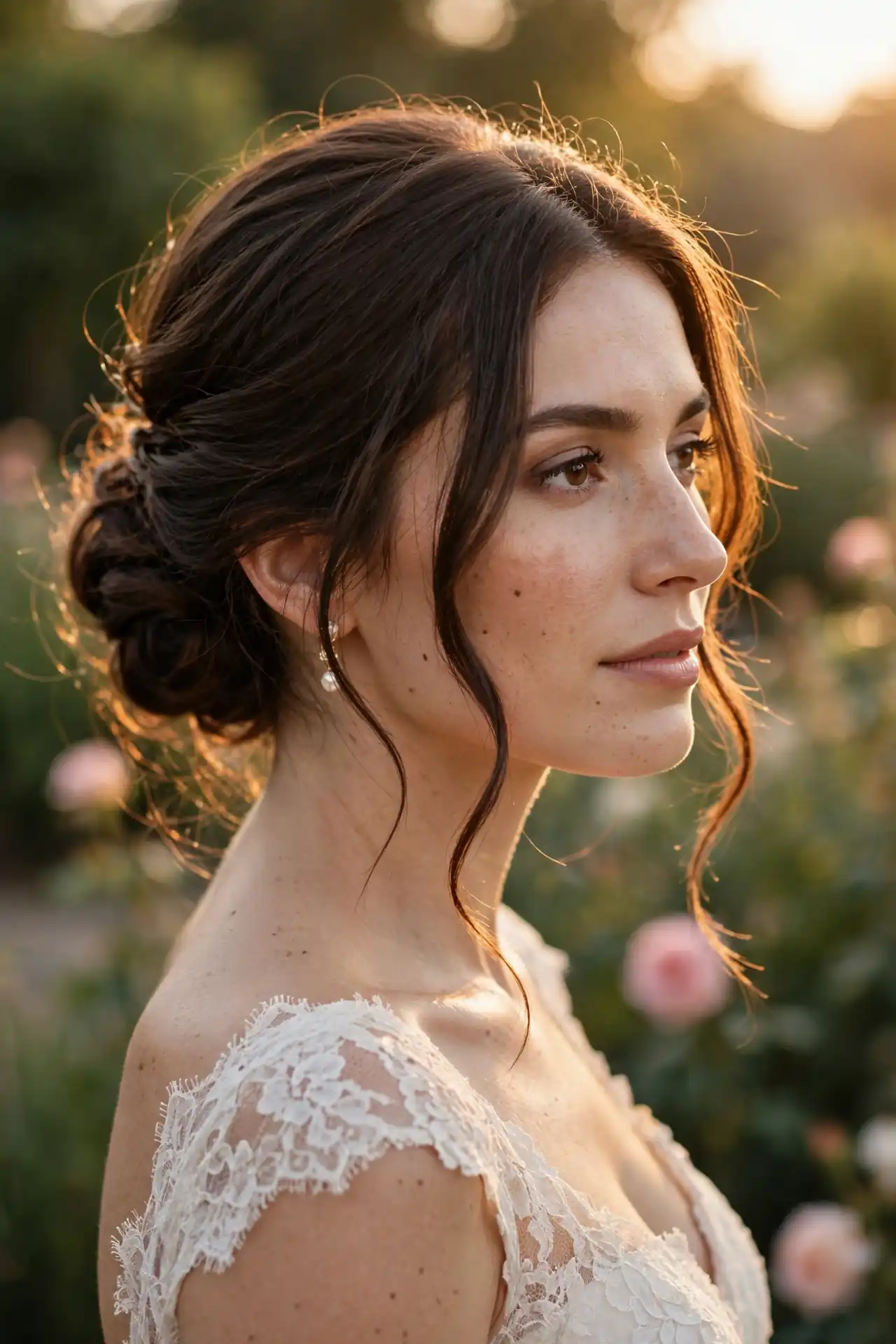
The Textured Low Bun with Tendrils
Eight to twelve hours. That’s the realistic hold window, and this softer style sits right at the sweet spot between polished and relaxed. Loosened deliberately at the crown and finished with two curved face-framing pieces, it reads romantic rather than formal. Datuin’s undone texture direction lands exactly here. Pull out two tendrils, not five, and curl them slightly so they look intentional rather than escaped.
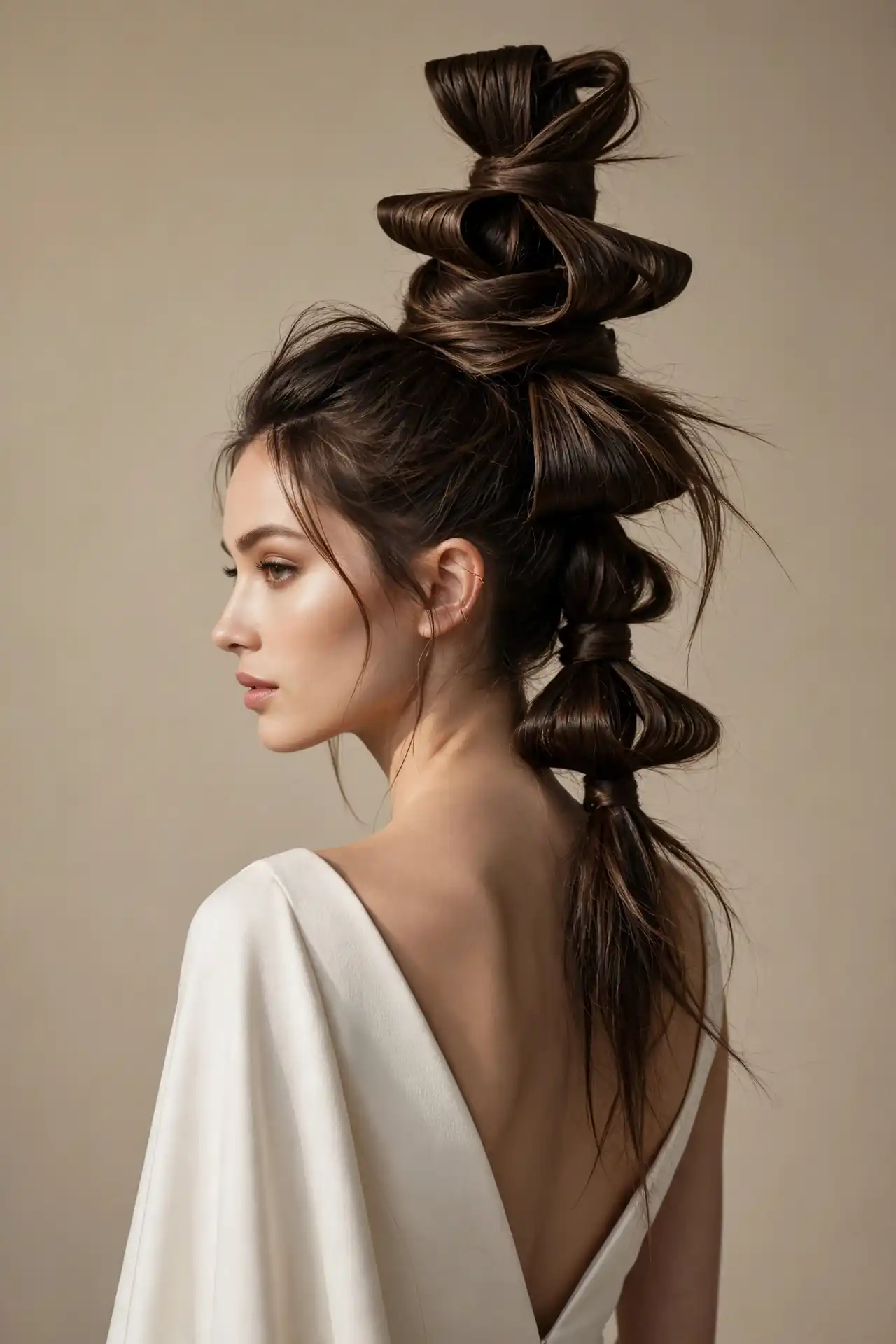
The Stacked Intricate Topknot
Dividing a high ponytail into small sections and pinning each one in a different direction creates dimension and height that a simple twisted bun cannot. The loose stacking gives it visual complexity, which photographs particularly well from behind. This one genuinely needs a skilled stylist, so check their portfolio for structural updos specifically rather than assuming any bridal stylist builds them.
Half-Up Bridal Styles
Structure at the crown, movement below. Half-up styles are the most versatile category for long hair, and they consistently rank among the most requested.
Half-Up Half-Down with Soft Waves
Nobody warns brides that fully-down styles need constant attention during the reception. Half-up solves that. Securing the top section keeps hair off your face and out of your photographs while the length below still moves. It suits every face shape, every dress and almost every venue. Long hair carries it especially well because there’s enough length below the secured section for the waves to actually show.
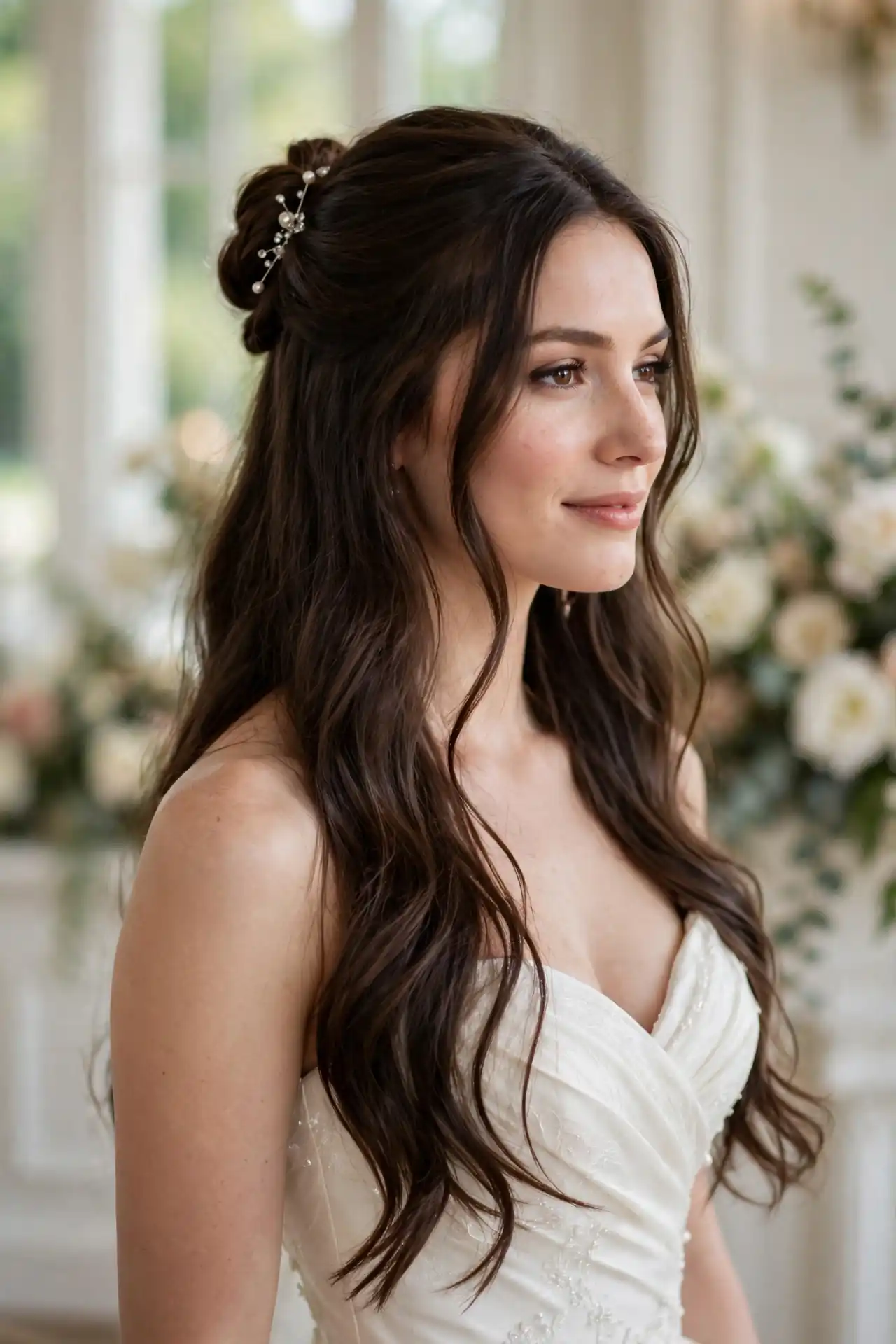
The Twisted Half-Up with Pearl Pins
Twisting the side sections back and securing them with pearl or crystal pins adds structure and sparkle without a full updo. Placement notes worth knowing:
- Twist from the temple back, not from the part
- Secure with pins crossed in an X, not pushed straight in
- Place three or four pins asymmetrically rather than in a row
- Keep the crown slightly lifted so the twists don’t flatten the top
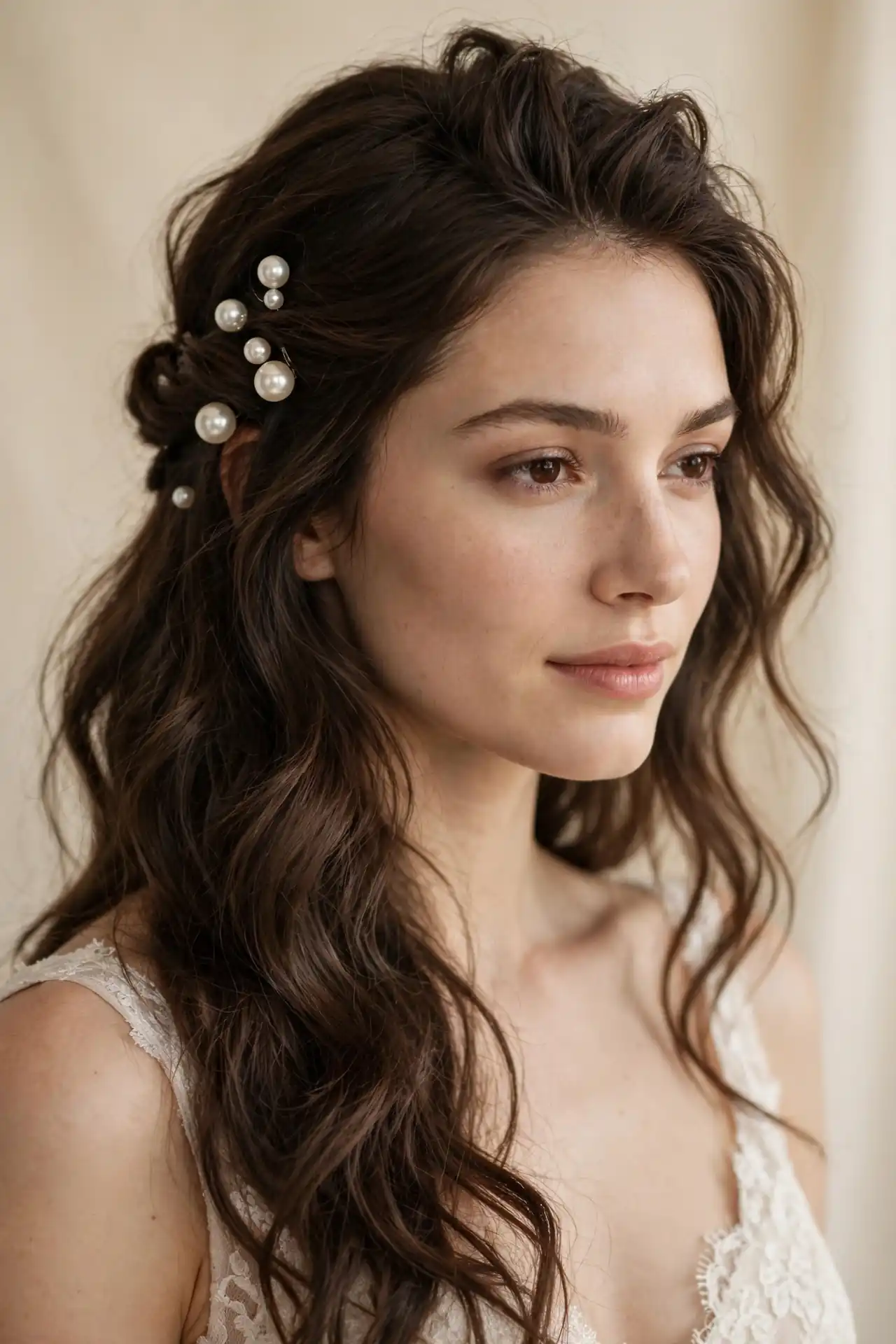
The Half-Up Bun
Gathering the top section into a small knot while the rest falls loose gives you a modern, slightly fashion-forward finish. It’s gentler on the scalp than a full updo, since only part of the hair carries tension across a long day. A small decorative pin or ribbon at the base takes it from casual to bridal.
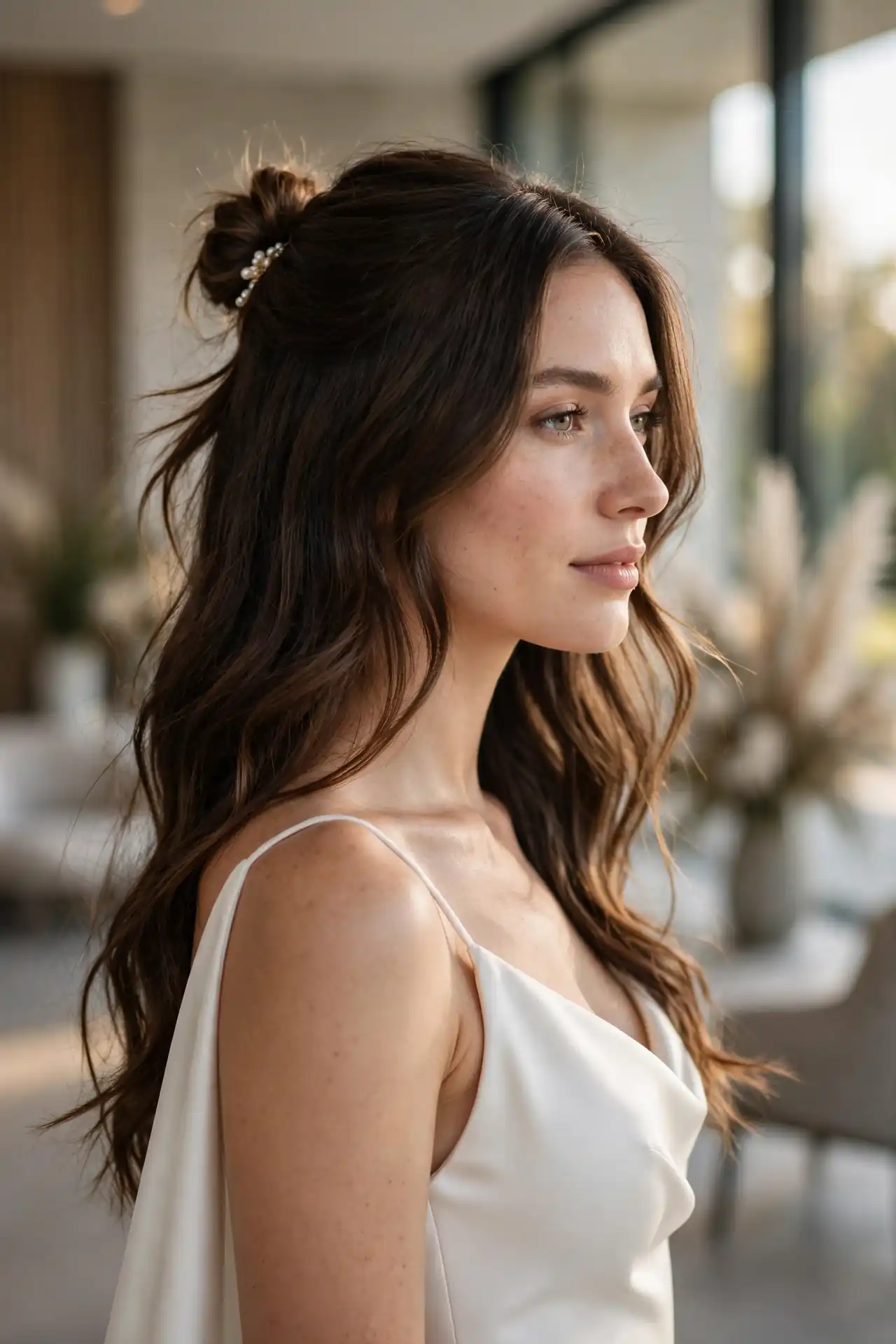
Half-Up with a Braided Crown
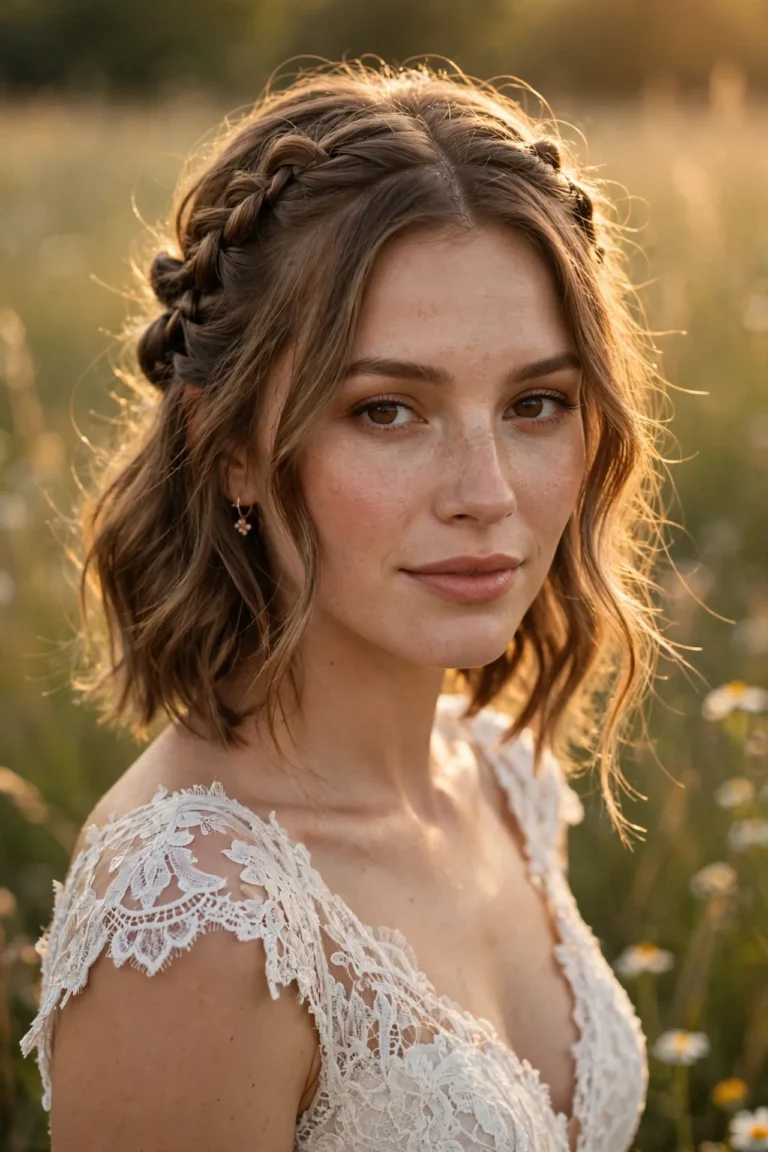
Braiding two sections back and joining them at the crown creates a soft halo effect above flowing length. Garden ceremonies and outdoor venues suit this one particularly well. The braid only needs to look neat where it faces forward, so the sections at the back can be considerably rougher without anyone noticing.
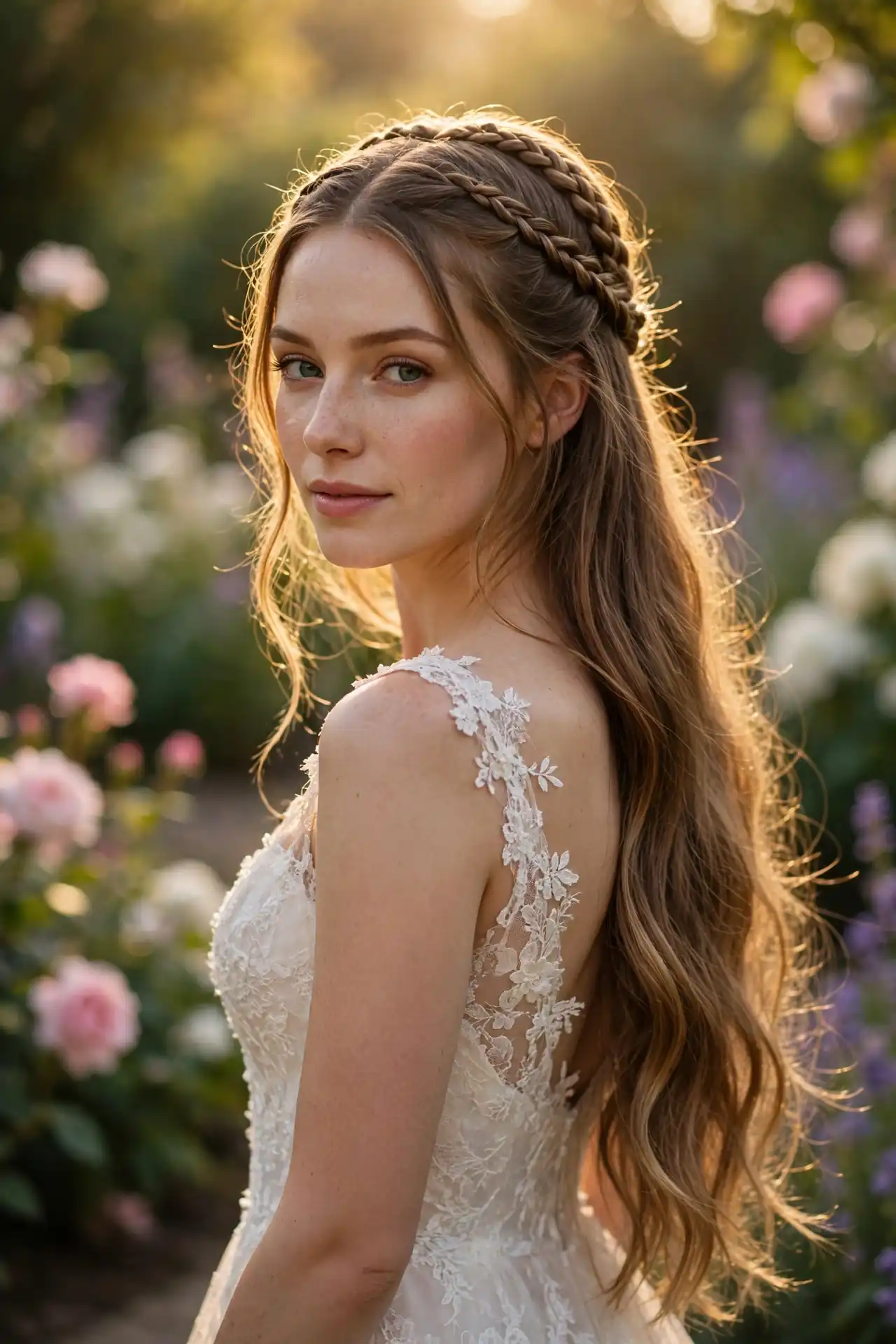
Wearing Long Hair Down
Down styles photograph beautifully and require the most maintenance. Build a touch-up kit if you choose one.
Old Hollywood Waves
Deep side part, sculpted uniform waves, and a finish that carries genuine glamour without feeling costume. Setting matters more than the curling. Pin each wave while it cools, leave everything set for at least twenty minutes, then brush through with a soft paddle brush to blend the individual curls into one continuous S-shape. Skipping the brush-out is what makes home attempts look like ringlets rather than waves.
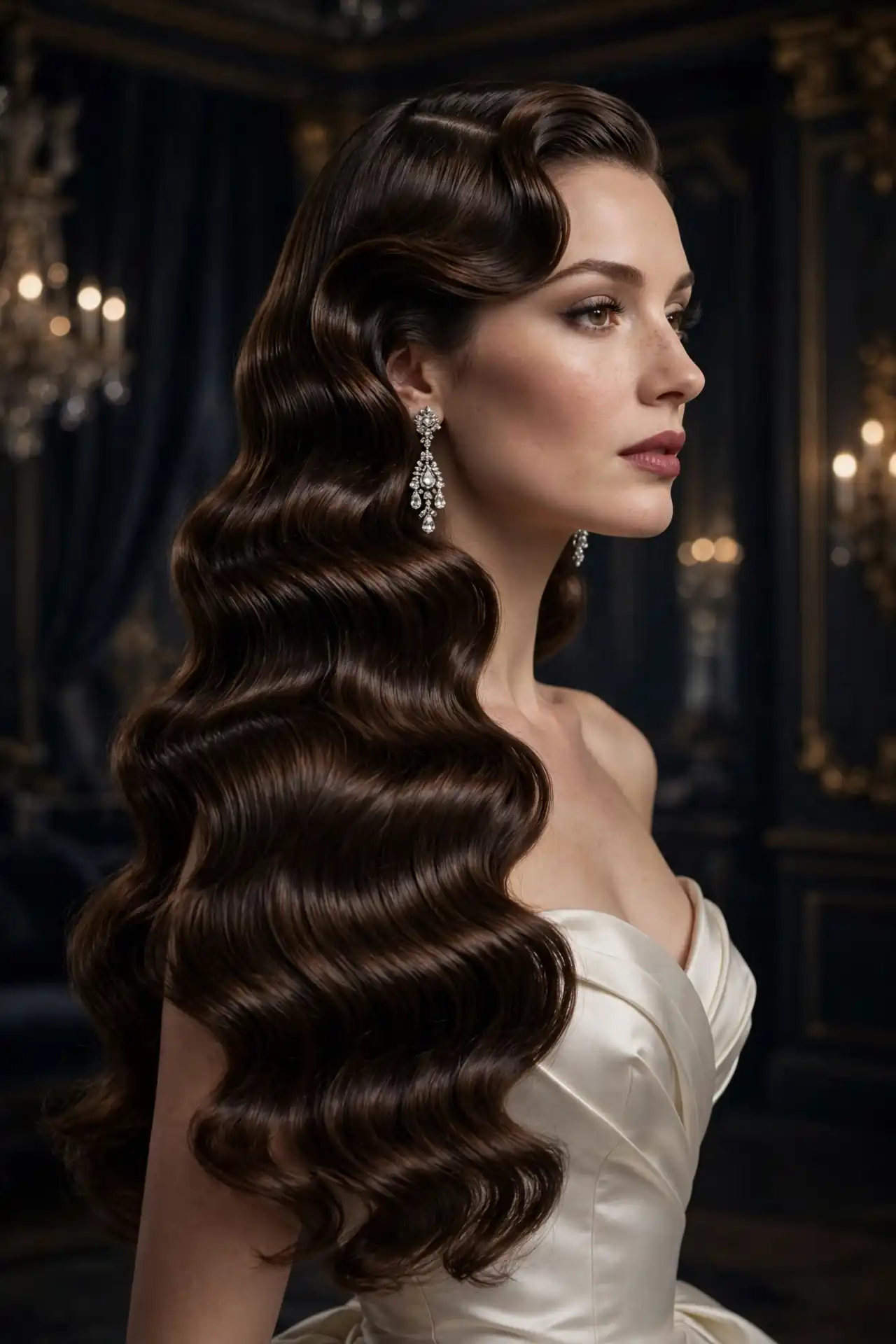
The Bridal Blowout with Big Waves
Why are stylists reaching for blow dryers instead of curling tongs on wedding mornings now? Because the blowout delivers movement without stiffness, and airy waves photograph better in candid shots than tightly formed curls. It works with every dress design, from structured and sleek to flowing and soft. One caution: your hair needs to hold heat styling for this. Fine or very straight hair can drop out within hours, so test it at your trial before committing.
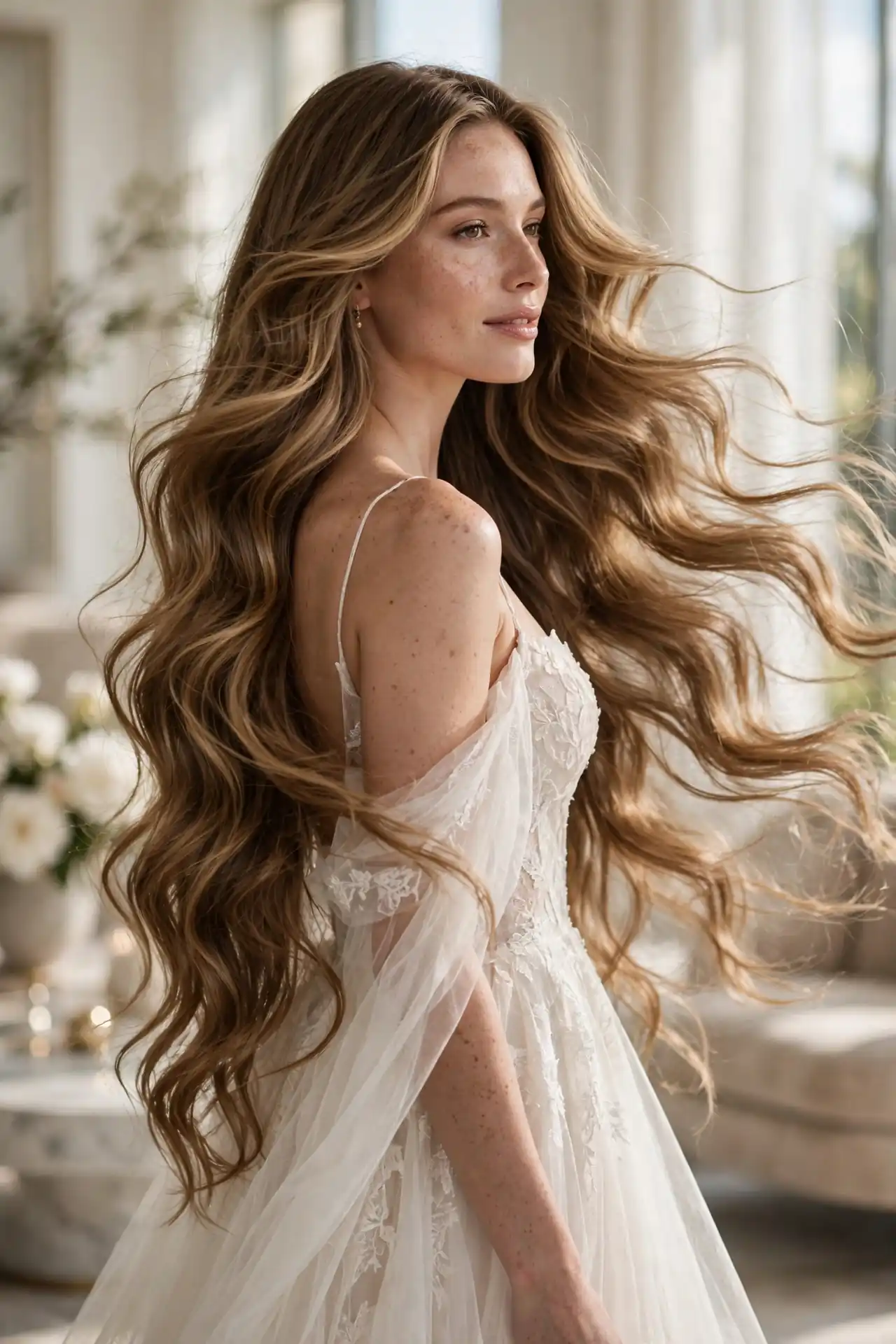
Sleek and Straight with a Centre Part
Minimalist bridal hair has grown steadily, and glass-smooth long hair with a razor-sharp centre part reads modern and quietly expensive. Shine carries the entire look. A gloss treatment two weeks before the wedding is worth booking. Humidity is the enemy here, so an outdoor summer ceremony is the wrong venue for this choice.
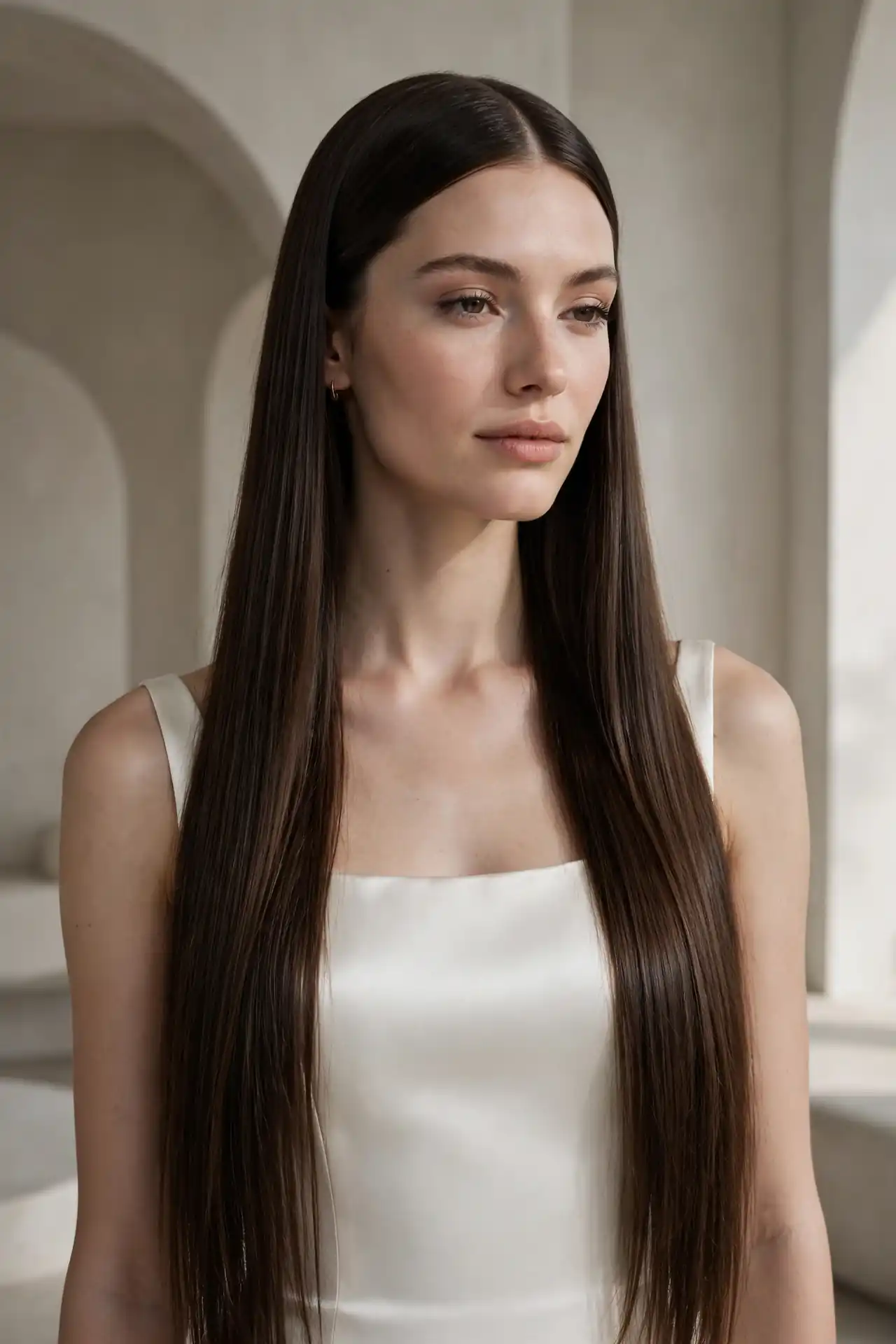
Brushed-Out Pin Curls
Vintage-inspired bridal hair drawing from Edwardian and Victorian aesthetics has become one of the defining directions for 2026, and pin curls are the technique underneath it. Setting small pin curls and then brushing them out completely produces soft, uniform waves with body that a curling iron cannot replicate. It takes considerably longer than tonging, usually ninety minutes with drying time, but it holds far better through a long day.
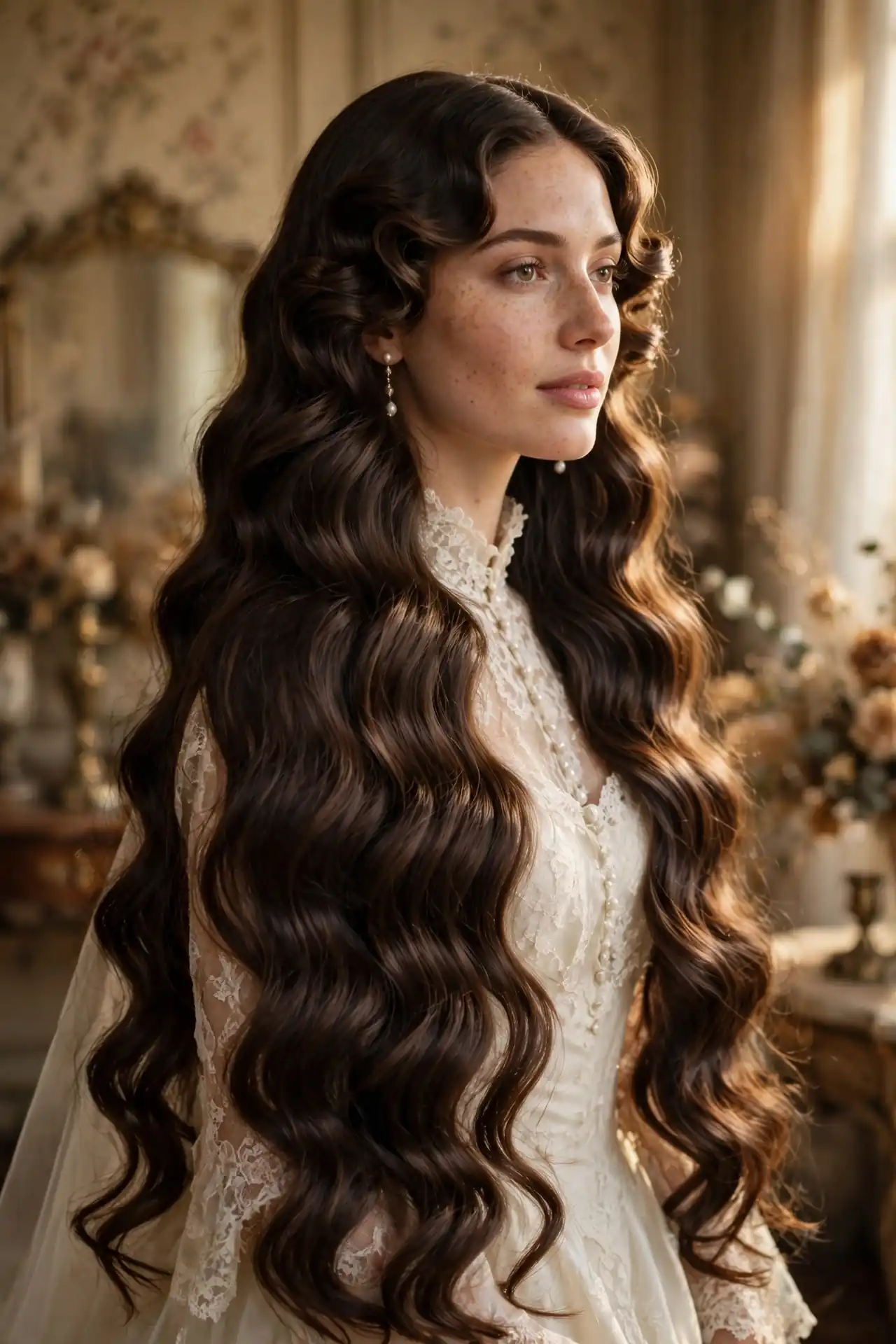
Braided Wedding Hairstyles
Braids add texture and interest, and they hold better than almost anything else across a fourteen-hour day.
The Boho Rapunzel Braid
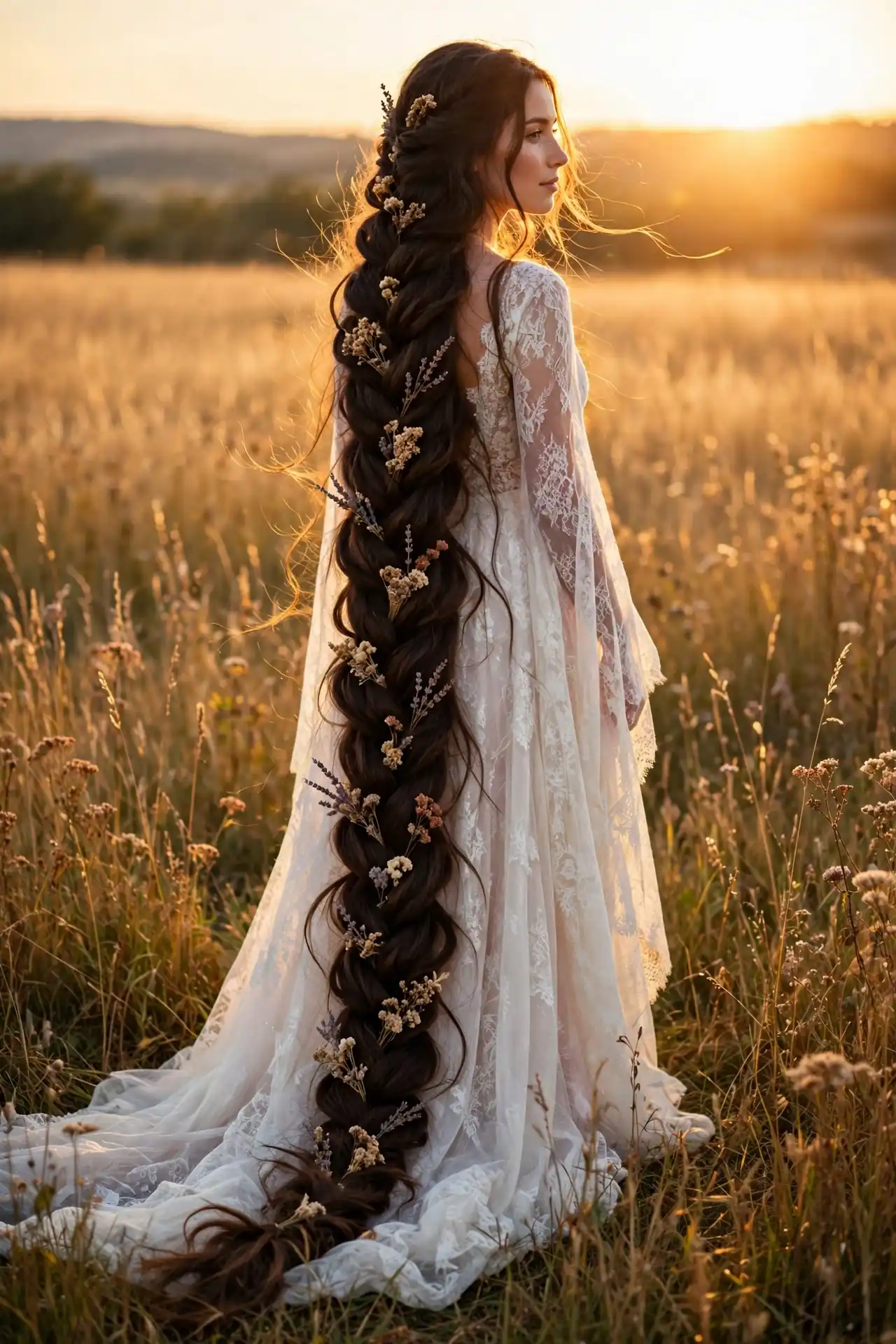
A thick, loose braid running the full length of the hair has become a bridal staple, and the general rule stylists follow is that chunkier and longer reads better. Pancake the braid, meaning pull the edges outward, to double its apparent width. Lace gowns and delicate accessories pair with it naturally, and dried flowers woven through complete the look.
The Fishtail Braid
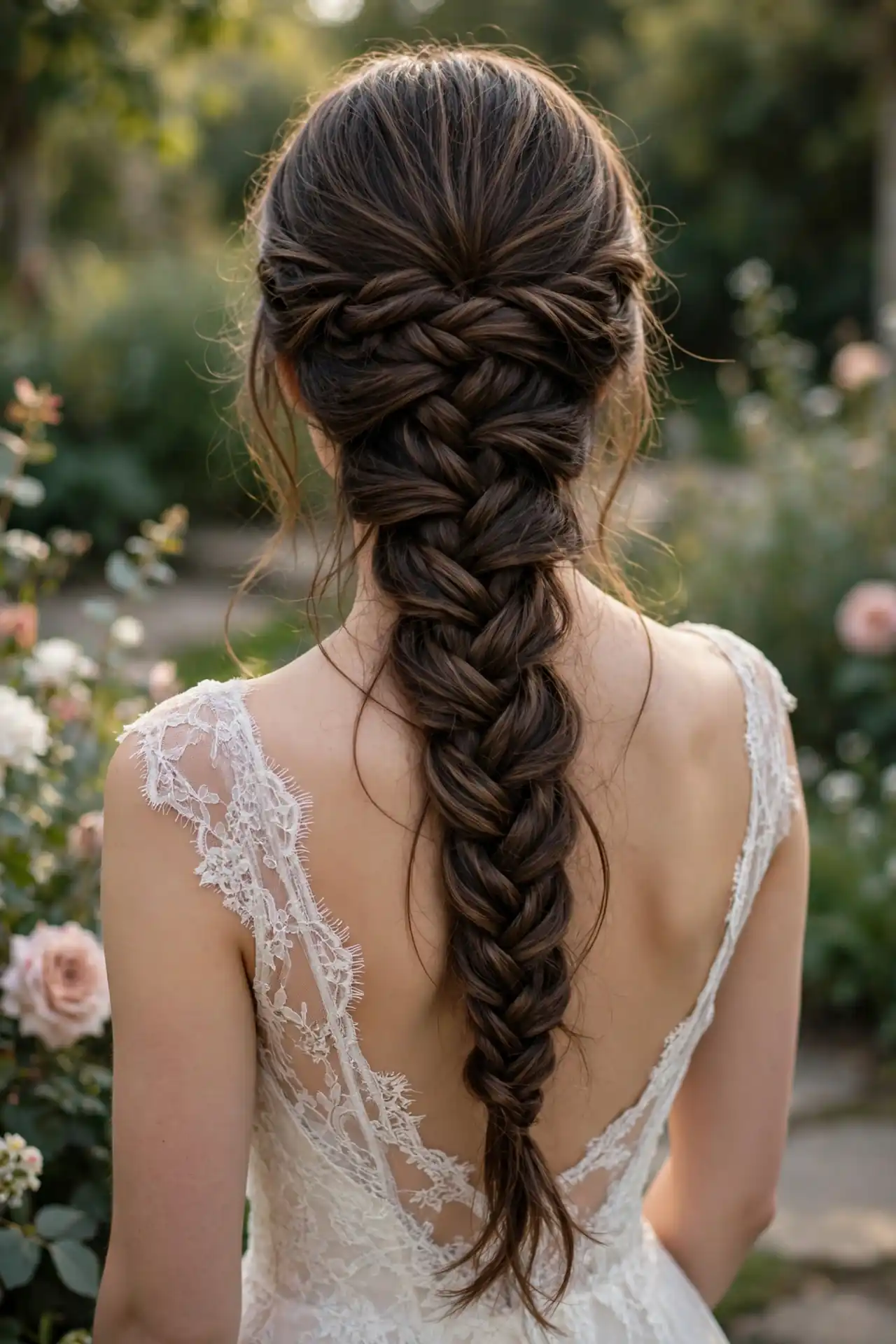
Most brides assume a fishtail is beyond them. It’s actually simpler than a three-strand braid, just slower. Two sections, with small pieces crossed alternately from the outer edges. That’s the entire technique. On long hair the narrow skeletal pattern travels far enough to read as genuinely intricate, which is why it photographs so well from behind.
The Halo Braid
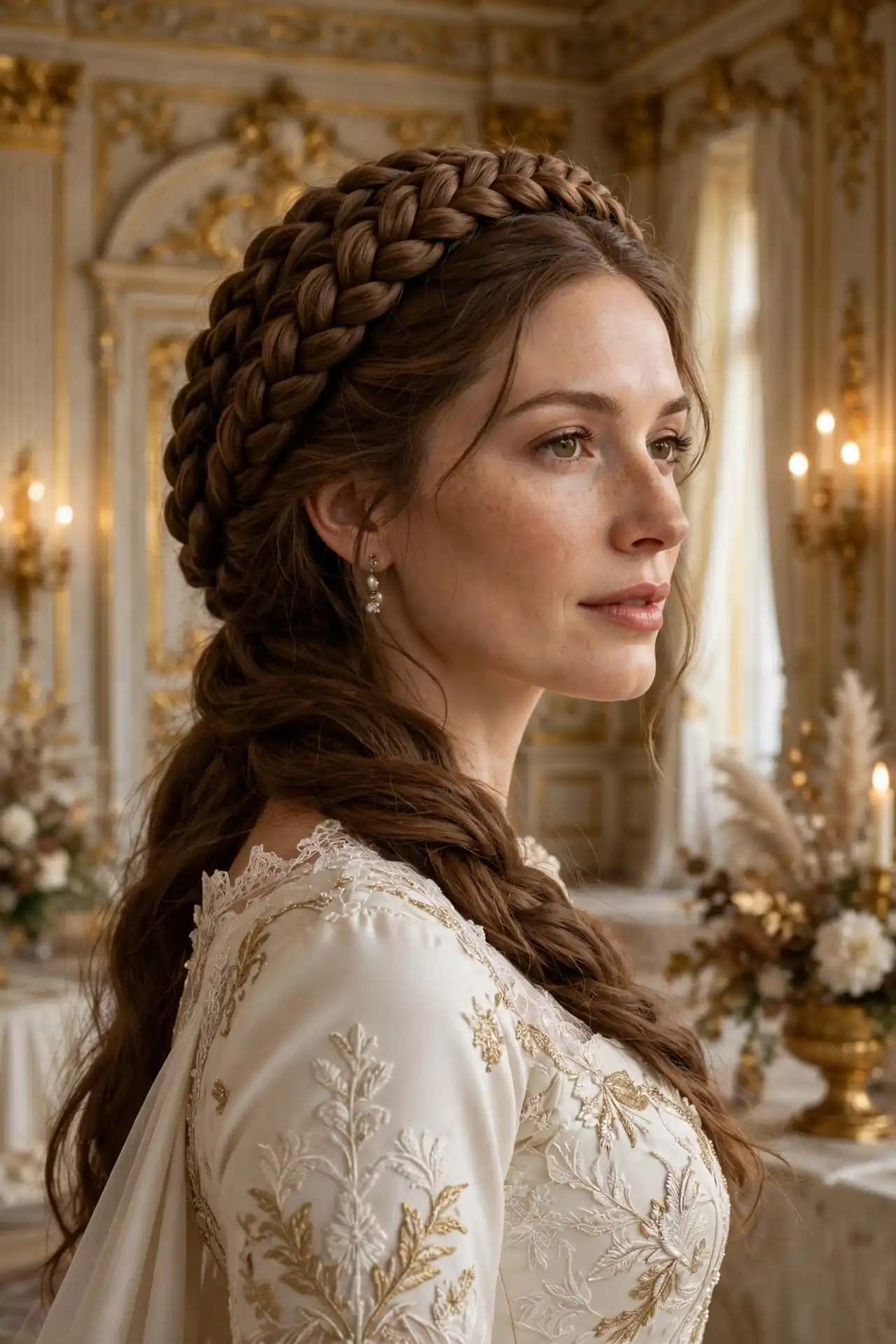
Wrapping a braid around the crown creates a regal silhouette that suits ceremonial settings. Long hair is essential here, since you need enough length to circle the head and tuck the end invisibly. Pin every four inches so it doesn’t shift when you move.
The Braided Chignon
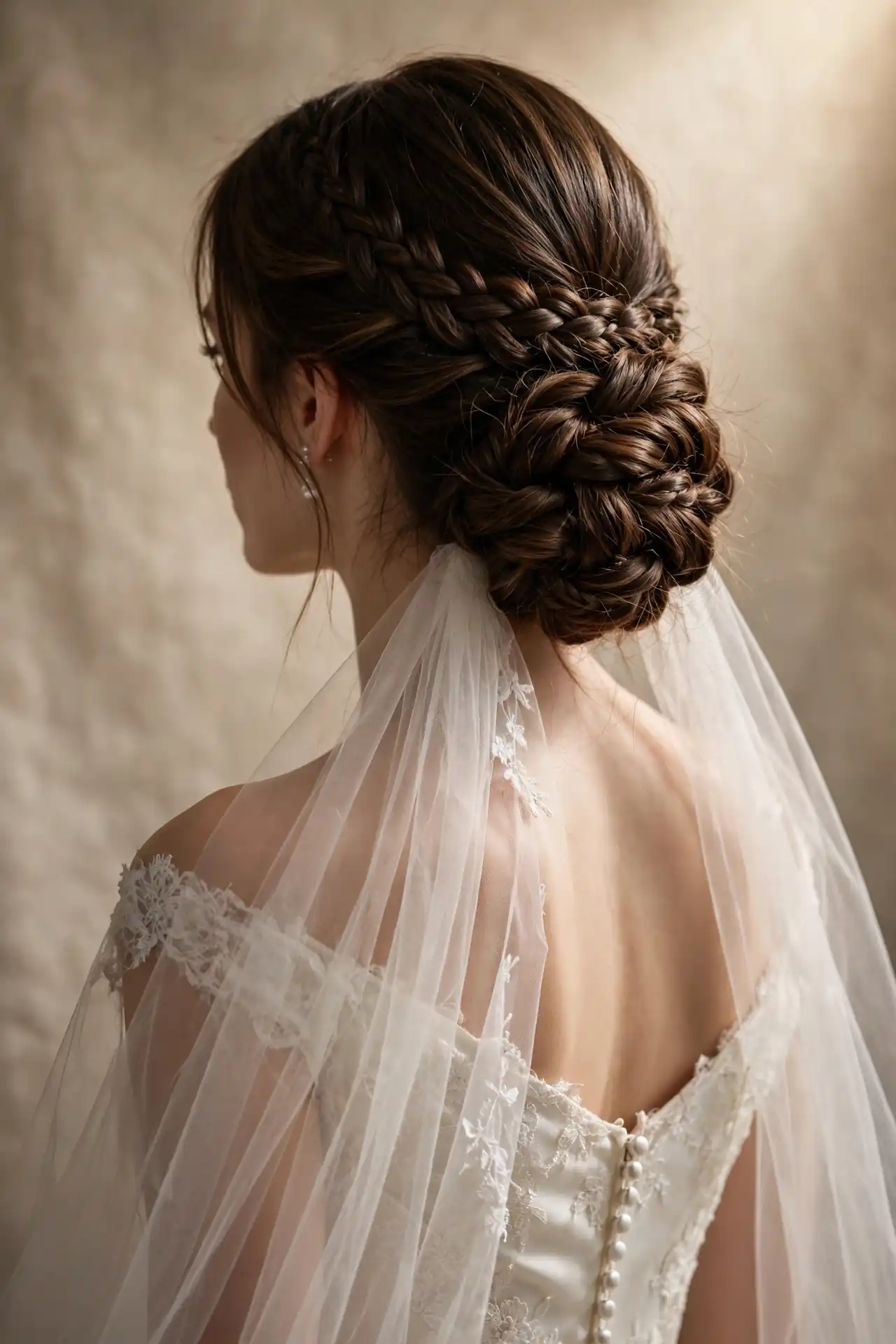
Braiding before coiling expands the hair’s surface area, so the finished knot looks noticeably fuller than the same hair simply twisted. Where it earns its place:
- Fine long hair that needs the appearance of density
- Formal weddings where a plain bun feels too simple
- Brides wanting texture visible in photographs from behind
- Veils, since the braid structure gives combs something solid to anchor into
Modern and Texture-Specific Bridal Looks
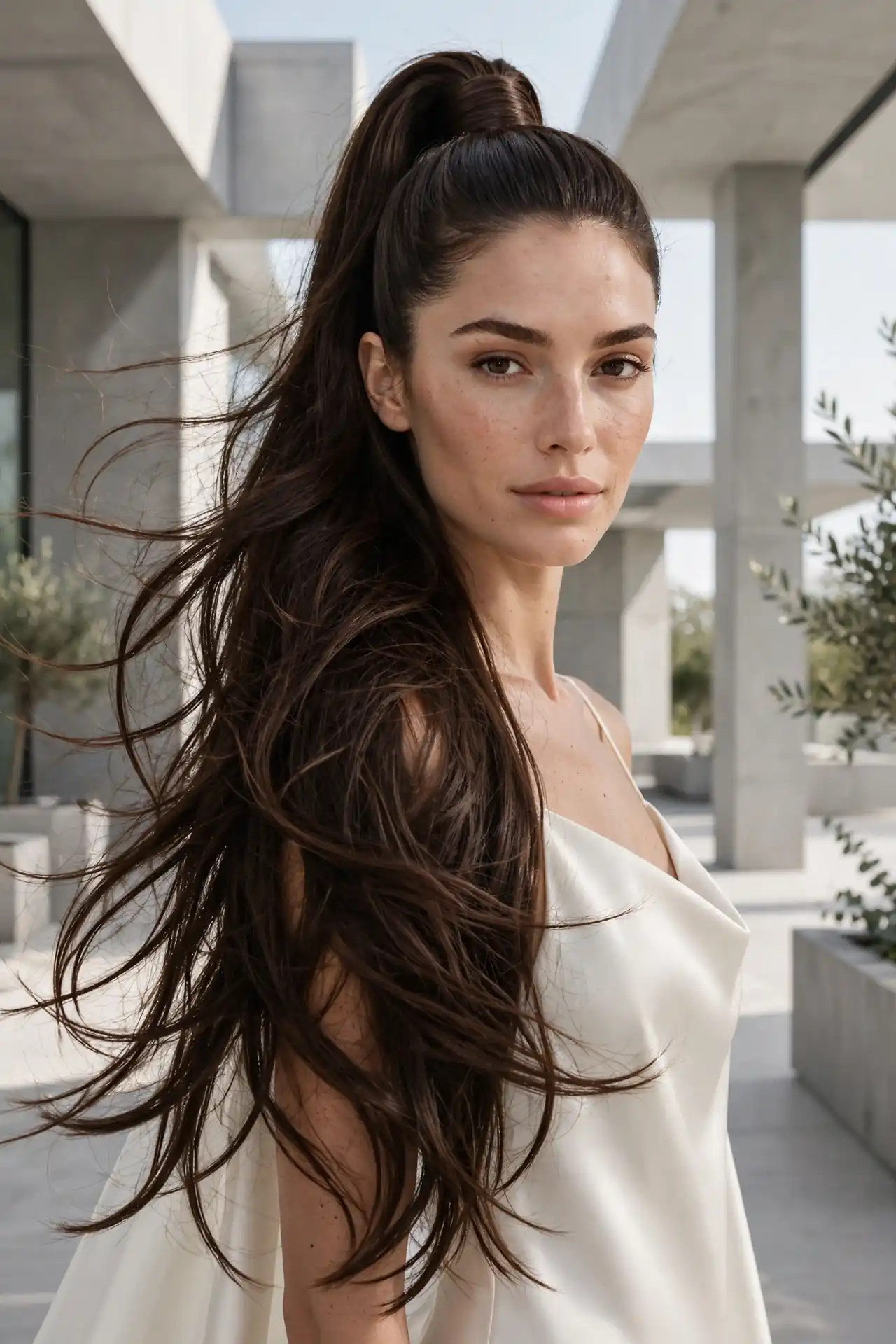
The Bridal Ponytail
Long underestimated, the ponytail has become a legitimate bridal choice, styled meticulously rather than casually. High placement reads editorial and modern, low placement reads classic and soft. Wrapping a strand around the base to hide the elastic is non-negotiable. On very long hair the result is genuinely dramatic, and it keeps hair off your neck without the pin count an updo requires.
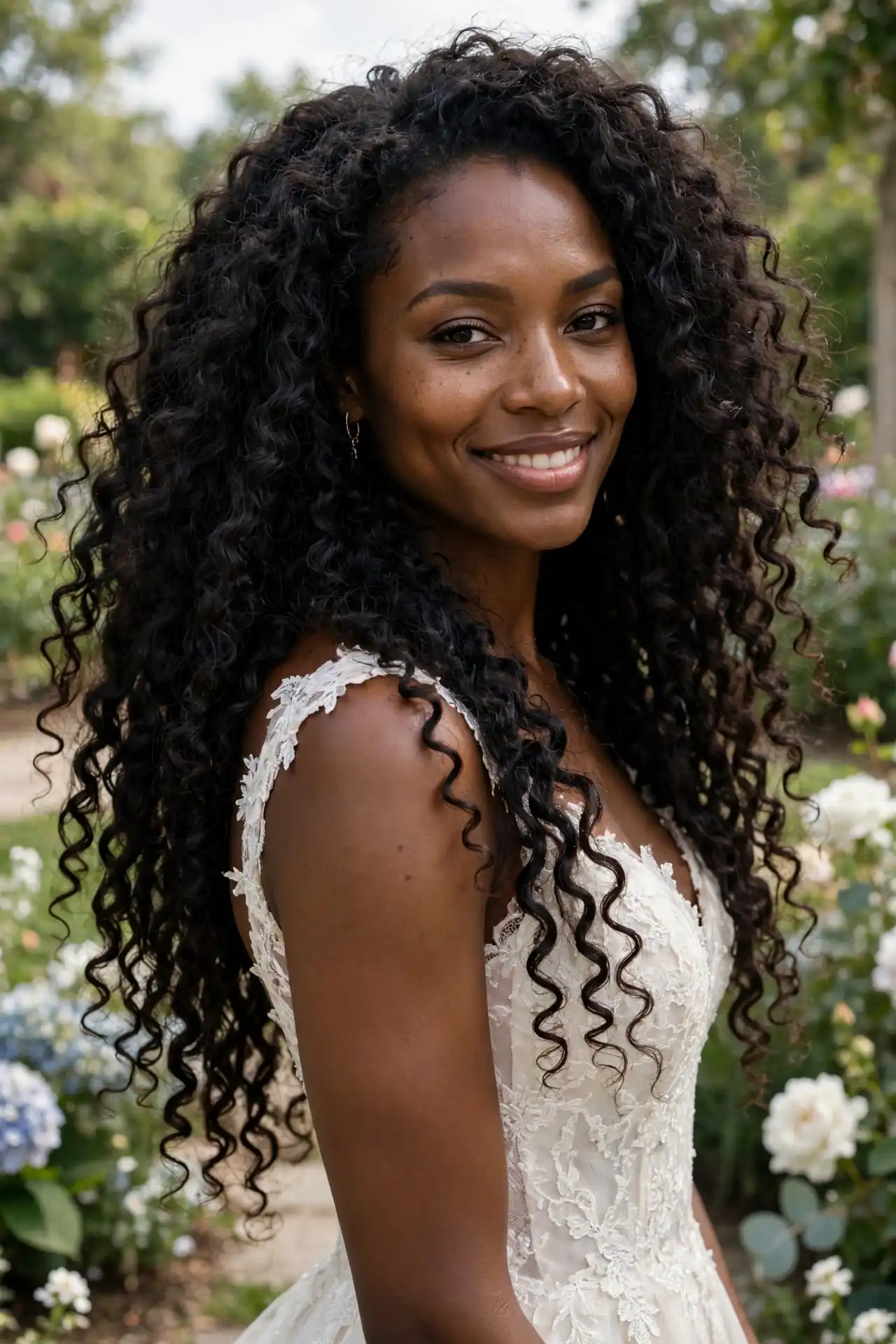
Natural Curls Worn Down
Brides with curls and coils are increasingly choosing to showcase their natural texture rather than straightening for the day, and 2026 has been a strong year for that shift. Preparation is the whole game. Start hydration treatments six to eight weeks out, define with cream rather than gel on the day, and diffuse on low. Ask your stylist directly whether they work with your texture regularly, because a stylist who only styles straight hair will not do your curls justice.
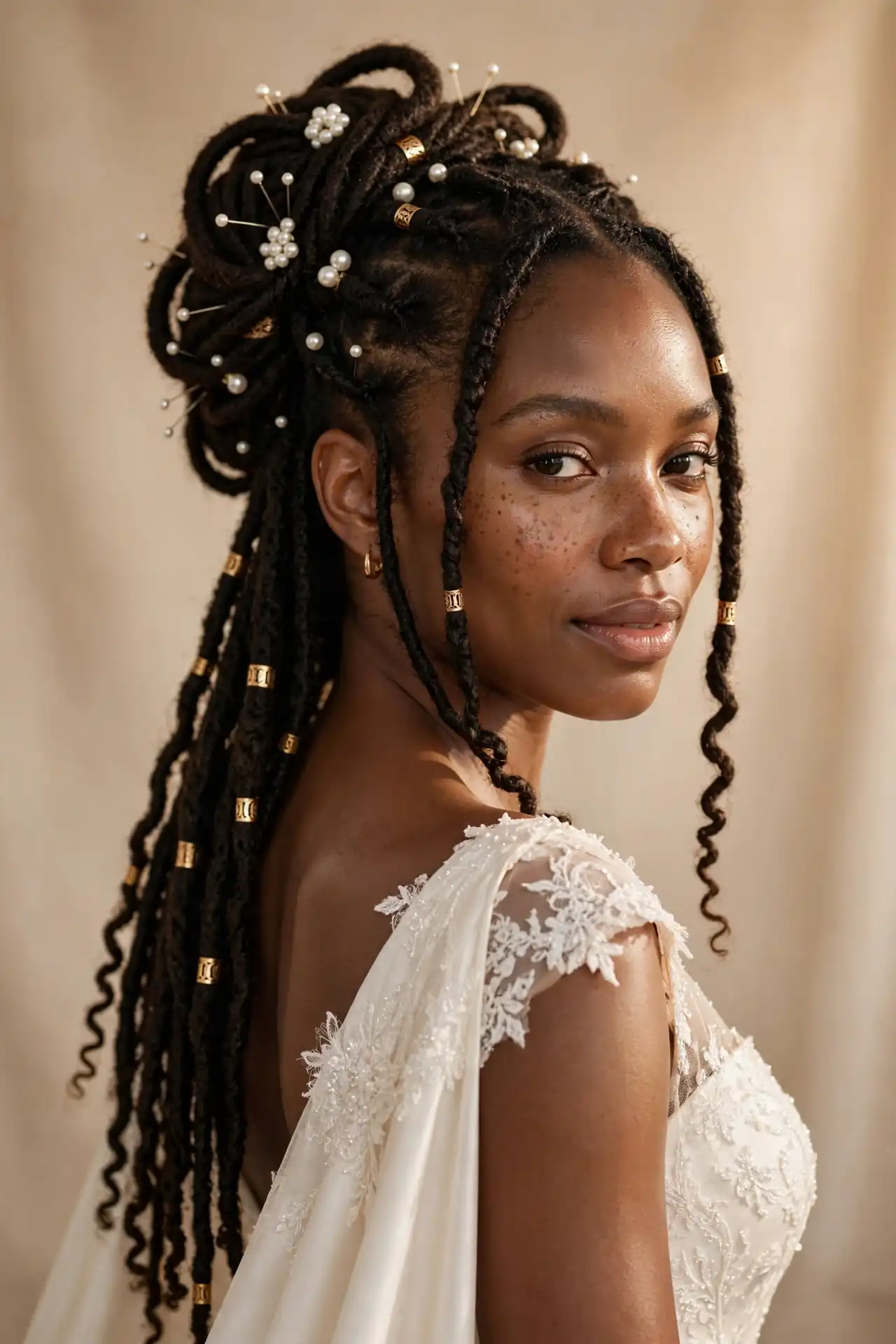
The Locs or Protective Style Updo
Locs, twists and braided styles gather into stunning bridal updos, and the structure holds better than loose hair ever will. Book your maintenance appointment two to three weeks before the wedding rather than the week of, so any retwisting has settled and the scalp isn’t tender. Decorative cuffs, pearl pins and fresh flowers all anchor easily into the sections.
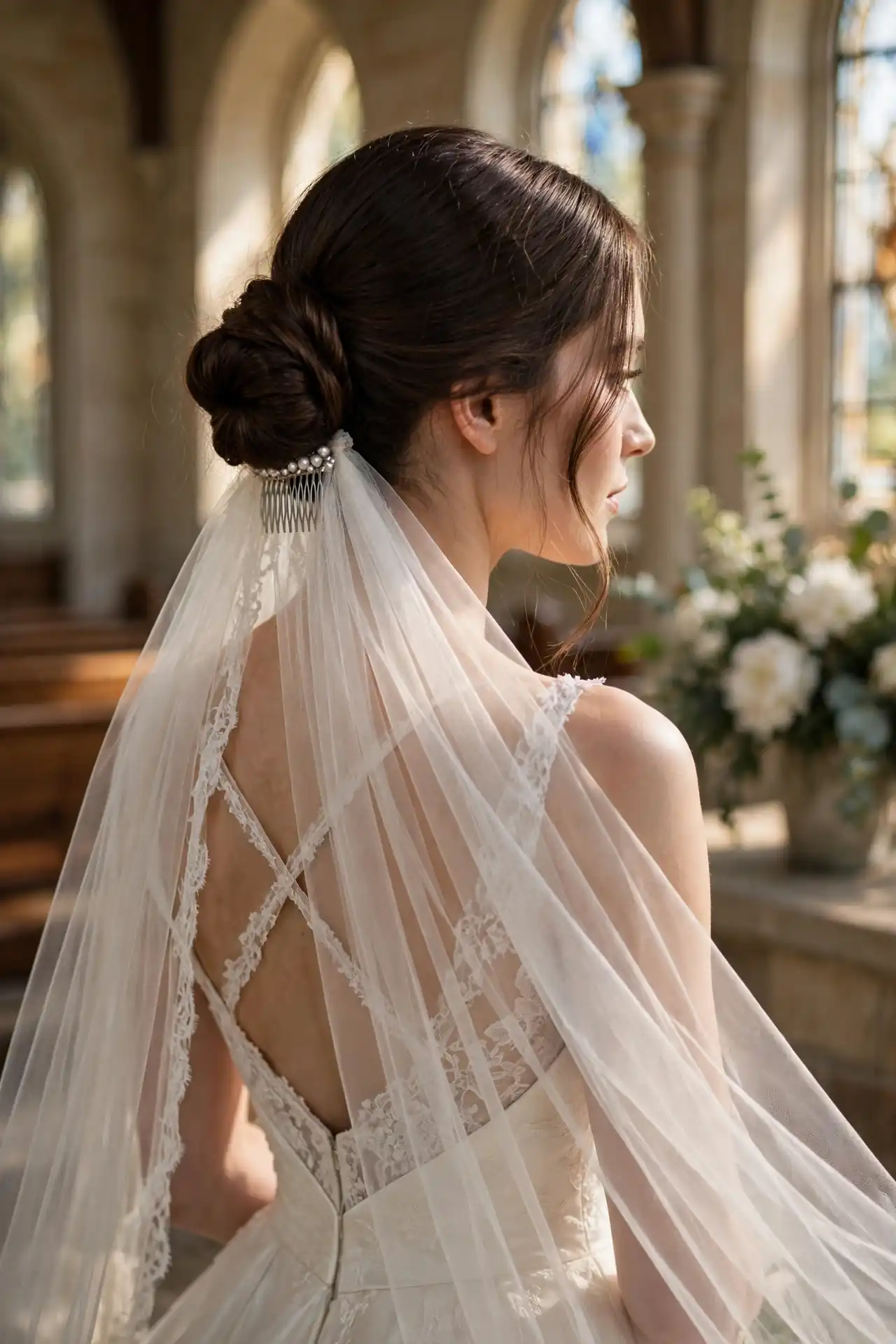
The Veil-Ready Low Knot
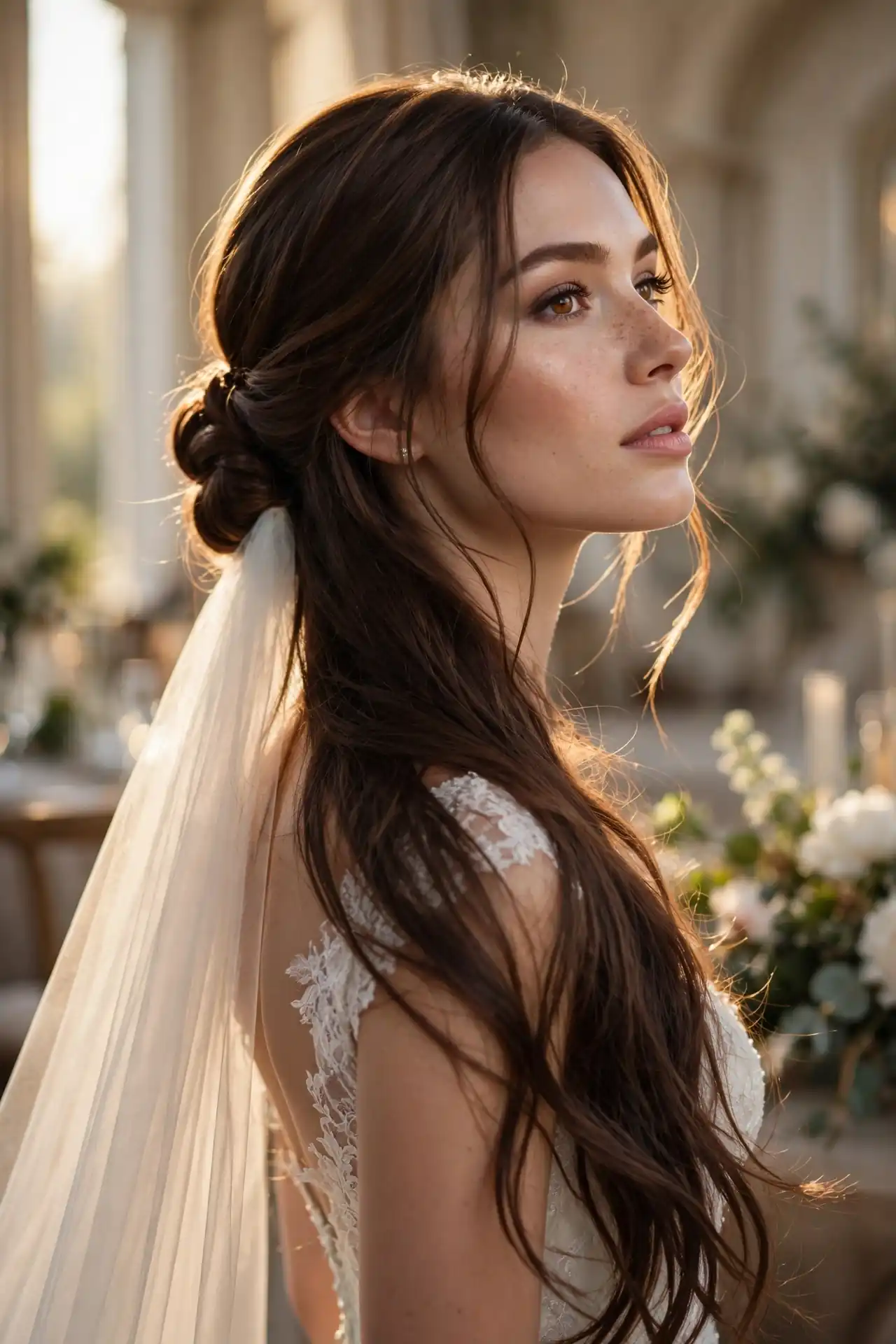
Ninety percent of veil problems trace back to one decision: where the comb was anchored. A compact low knot with a deliberate anchor point built in solves it. The veil comb should slide in underneath the knot, into a section of tightly pinned hair, rather than through the knot itself. This means the veil can be removed at the reception without the entire style collapsing, which is the single most common wedding-day hair disaster.
The Bridal Hair Planning Nobody Explains Properly
Most roundups show photos and stop. These are the details that decide whether your hair still looks like the trial photo at midnight.
Your Timeline
Book your bridal stylist six to eight months before the wedding, because the good ones fill their calendars early.
Plan for at least two trials rather than one. The first establishes the base style. The second should be done with your actual veil and headpiece in place, since accessories change how a style needs to be built underneath. DeVore’s point about trials is worth taking seriously: they let you discuss what you’re drawn to, what your stylist thinks suits your facial structure and hair type, and what’s currently working. Bring inspiration photos, your veil, and honesty about what you don’t like.
Three Things That Make Long Bridal Hair Hold
Long hair is heavy, and weight is what pulls styles down over a fourteen-hour day.
Strong-hold base product applied before styling begins, not after. Quality hairspray used at multiple stages throughout the process rather than one heavy coat at the end. Structural pins placed at the actual load-bearing points of the style rather than purely decoratively. That third one is where most home attempts and inexperienced stylists fail, because pins that hold only the outer surface of a bun are anchored to nothing.
Updos generally hold eight to twelve hours with this preparation. Loose and half-up styles need attention during the reception, which is what a touch-up kit is for.
If You’re Considering Extensions
Introduce extensions to your stylist three to four months before the wedding so they can be incorporated into every trial.
Testing them once, on the day, is how brides end up uncomfortable in photographs. Wearing them through a full trial tells you how they hold, whether they show, and whether the weight bothers you after several hours. Extensions add fullness and help styles hold longer, but they are not necessary for a beautiful bridal look at any length.
Matching Your Hairstyle to Your Dress
| Dress Feature | Best Hairstyle Choice | Why |
|---|---|---|
| Backless or low back | Updo, chignon, high bun | Keeps the back detail visible |
| High collar or long sleeves | Structured updo or tied style | Balances a covered neckline |
| Strapless or sweetheart | Half-up, soft waves, low bun | Softens bare shoulders |
| Flowing or bohemian | Loose waves, braids, half-up | Matches the relaxed silhouette |
| Heavy beading or embellishment | Simple sleek styles | Avoids competing with the gown |
| Long cathedral veil | Low knot with anchor point | Supports the weight properly |
Hold and Touch-Up by Style
| Style Type | Expected Hold | Touch-Up Needed | Best Venue |
|---|---|---|---|
| Classic updo or chignon | 8 to 12 hours | Rarely | Any, including outdoor |
| Braided styles | 10 plus hours | Minimal | Outdoor, garden, rustic |
| Half-up styles | 6 to 8 hours | Light, mid-reception | Most venues |
| Loose waves | 4 to 6 hours | Yes, bring a kit | Indoor, low humidity |
| Sleek straight | 4 to 6 hours | Yes, humidity sensitive | Indoor only |
| Bridal ponytail | 8 to 10 hours | Rarely | Any |
Your Touch-Up Kit
Anyone wearing hair down or half-up should hand this to a bridesmaid before the ceremony:
- Travel-size strong-hold hairspray
- Six to eight bobby pins matching your hair colour
- A small curling wand if the venue allows, or a comb for smoothing
- Anti-frizz serum, especially for outdoor summer weddings
- A spare hair tie hidden somewhere accessible
- Any decorative pins that might slip out
Weather and Venue Realities
Humidity destroys more bridal hairstyles than movement does.
Outdoor summer ceremonies genuinely favour updos and braids over anything smooth, because a sleek style that frizzes reads as a mistake while a textured style that frizzes just reads as textured. Wind is the other factor most brides underestimate at coastal and garden venues. If your ceremony is outside and exposed, secure more than you think you need to.
Final Thoughts
Long hair gives you more bridal options than any other length, which is genuinely lovely and genuinely overwhelming. The choice gets easier when you filter by practicality rather than beauty alone, because every style on this list is beautiful and only some of them will survive your particular day.
Book early, ideally six to eight months out. Do two trials, and make sure the second includes your veil. Be honest with your stylist about how much you plan to dance and whether your ceremony is outdoors. Choose a style that suits your dress neckline rather than fighting it. Hand a touch-up kit to someone reliable before you walk down the aisle.
Save the looks that made you pause and bring three or four of them to your trial. Your stylist would far rather work from clear references than from a description, and the trial is exactly where those references become your actual wedding hair.
Frequently Asked Questions
How long do wedding hairstyles last on long hair?
Updos and braided styles hold eight to twelve hours with proper preparation, meaning a strong-hold base product, hairspray applied at multiple stages, and pins placed at load-bearing points. Loose waves and sleek styles last four to six hours and need a touch-up kit for the reception.
When should I book my bridal hair trial?
Book your stylist six to eight months before the wedding, then schedule two trials. Do the first around three months out to establish the base style, and the second closer to the date with your actual veil and headpiece in place.
Do I need hair extensions for a bridal updo?
No. Extensions add fullness and help styles hold longer, but a beautiful bridal look is achievable at any length or density. If you do want them, introduce them three to four months before so they feature in every trial rather than appearing for the first time on the day.
Which wedding hairstyle works best with a veil?
A low knot or chignon with a deliberate anchor point built underneath. The comb slides into tightly pinned hair below the knot rather than through it, which means the veil can be removed at the reception without the whole style collapsing.