27 Short Pixie Bob Haircuts for Round Faces That Add Shape & Definition
A round face is defined by fairly simple geometry: the width across the cheekbones roughly matches the length from hairline to chin, the cheeks are full, and the jawline curves rather than angles. What that means practically is that pixie bob haircuts for round faces succeed or fail on one variable, and it isn’t length. It’s where the weight sits.
The pixie bob is a hybrid, close-cropped through the nape and sides with more length kept on top and around the face. That structure is exactly what a round face benefits from, because it stacks height at the crown while keeping the sides narrow. Celebrity hairstylist Jennifer Korab frames the goal simply: choose a shape that adds angles and structure, since the aim is to elongate. Her specific warning is worth memorising, because blunt bobs and blunt bangs both emphasise roundness rather than breaking it up.
Twenty-seven variations follow, sorted by shape, texture, fringe and finish.
Shapes That Do the Most Work for a Round Face
Start here. These six silhouettes carry most of the flattering effect before styling enters the picture.
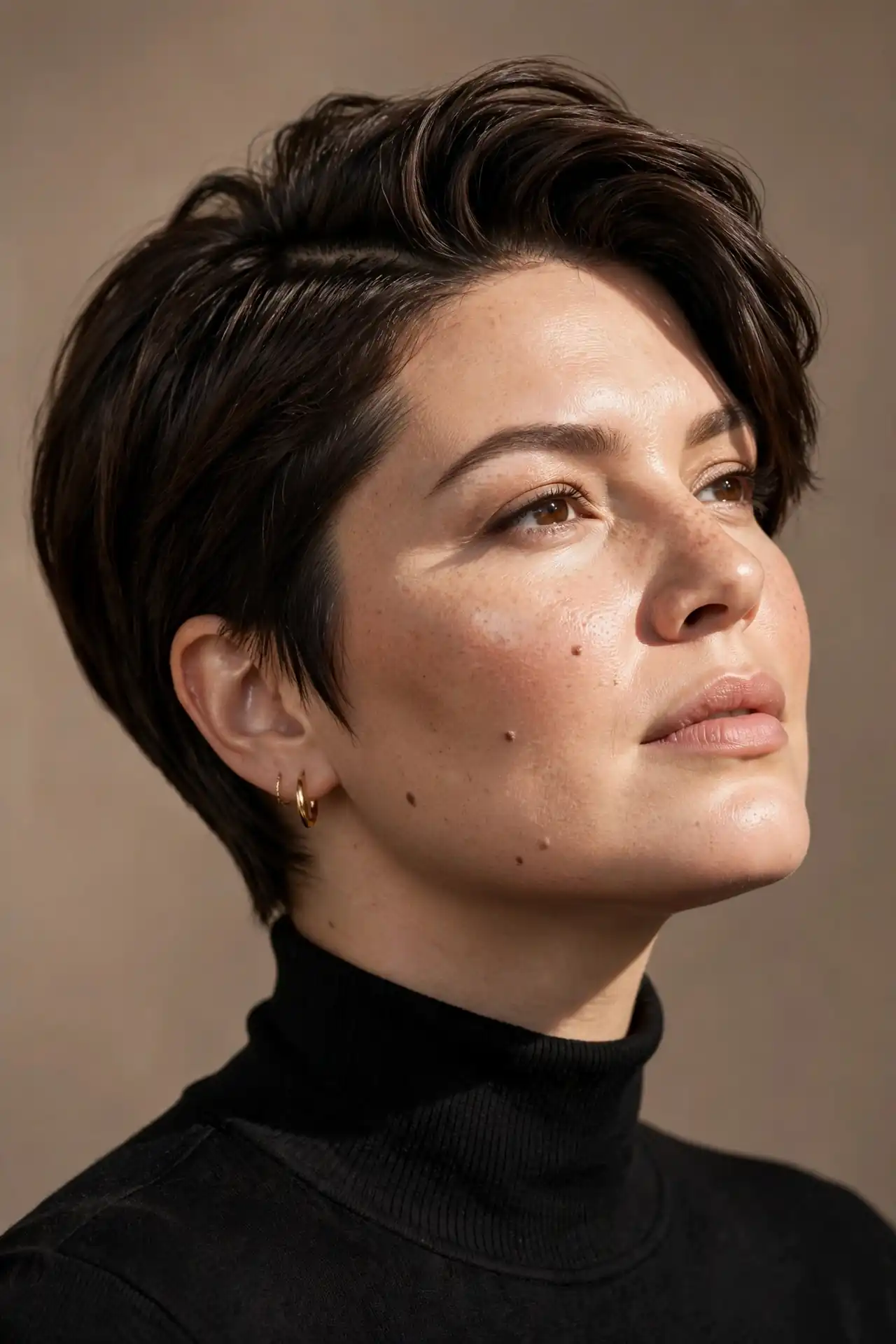
The Deep Side-Part Layered Pixie Bob
A deep side part is the most reliable optical trick available on short hair. Sweeping everything heavily to one side breaks the symmetry that makes a round face read as round, and it creates a diagonal line across the crown where none exists naturally. Uniformity is what you’re avoiding. Ask for the part to sit at least two inches off centre so the effect actually registers.
The Asymmetrical Pixie Bob
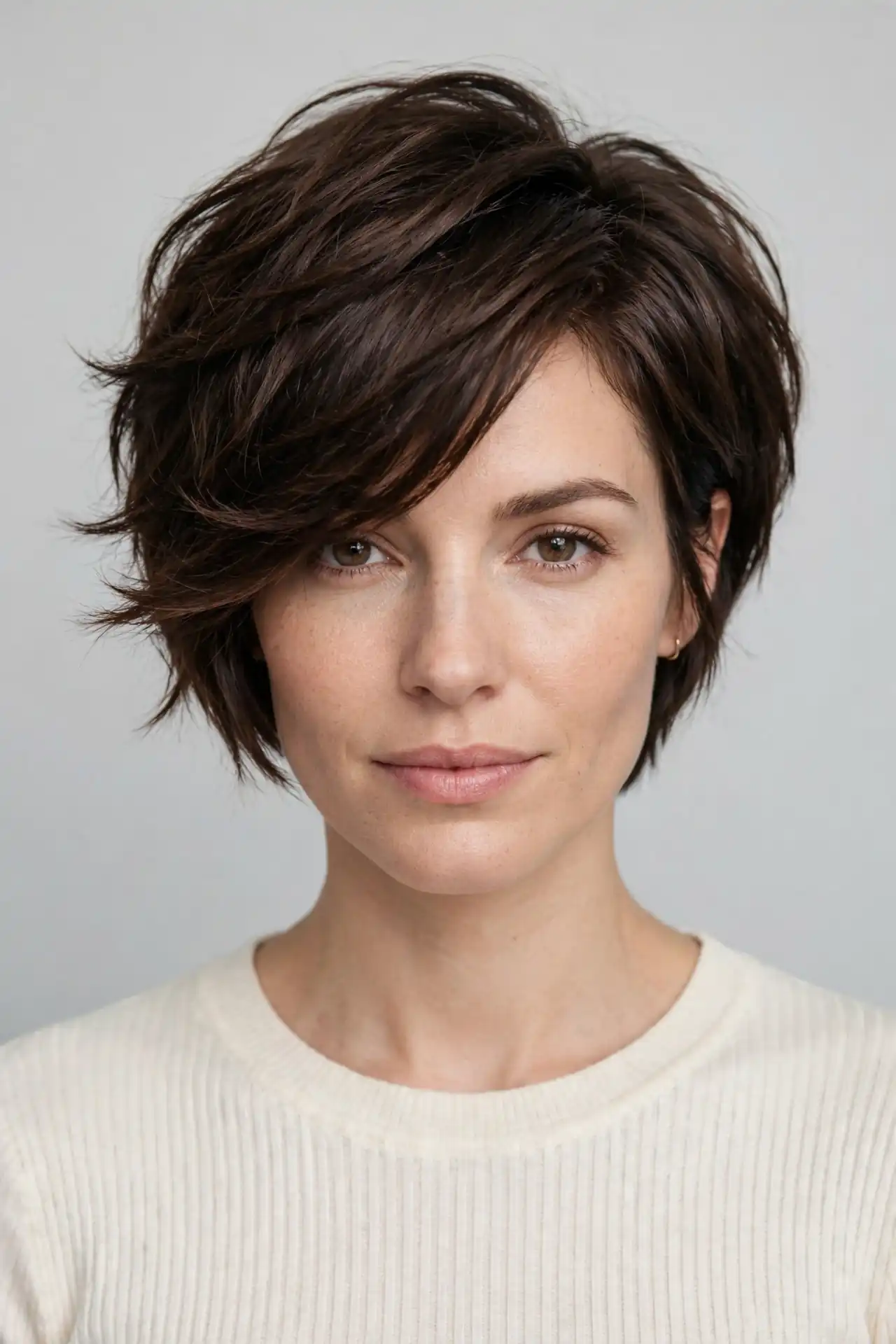
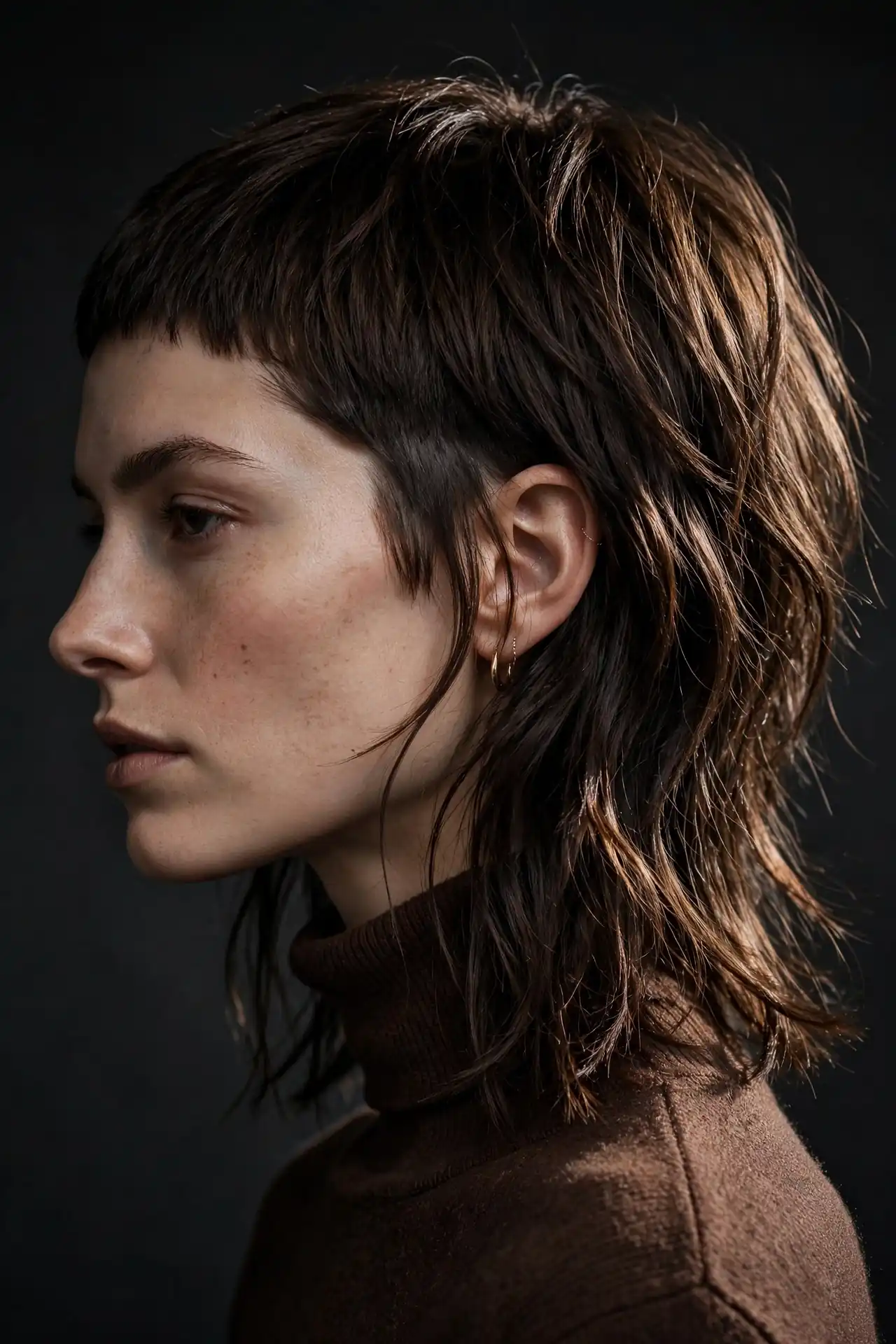
Walk into a salon with a round face and this is the shape a good stylist will steer you toward first. One side sits noticeably longer than the other, which forces the eye to travel diagonally rather than horizontally. That single change does more for facial proportion than any amount of layering. It also adds movement and body without adding width at the cheeks.
The Angled Pixie Bob
Why does an angled shape flatter where a blunt one doesn’t? Because sharp lines create the contrast that soft features need. Cutting the front pieces longer than the back produces a downward diagonal that visually extends the face. L’Oréal Paris styling guidance recommends exactly this over a classic blunt bob, with long defined layers beginning around chin length. The angle should be visible from the front, not just from the side.
The Stacked Pixie Bob
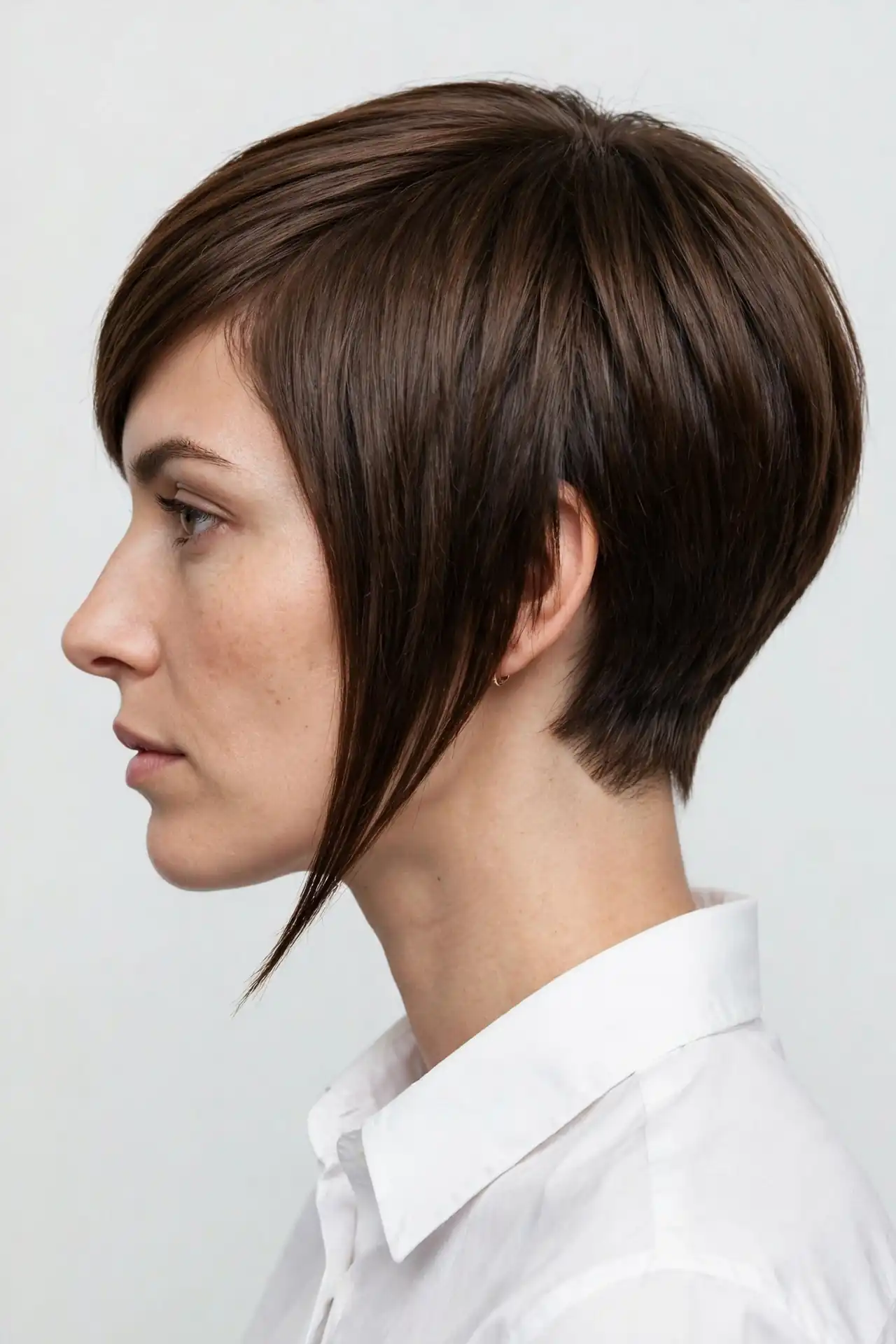
Five weeks. That’s the trim schedule a stacked shape genuinely needs to keep its structure, and it’s the main thing people underestimate. Tight graduation at the back sculpts the head shape and keeps the profile crisp, while the front stays longer for face framing. The stacked volume at the crown adds height, which is the single most useful thing you can do for a round face. Steeper graduation means more drama and more height.
The Tapered Nape Pixie Bob
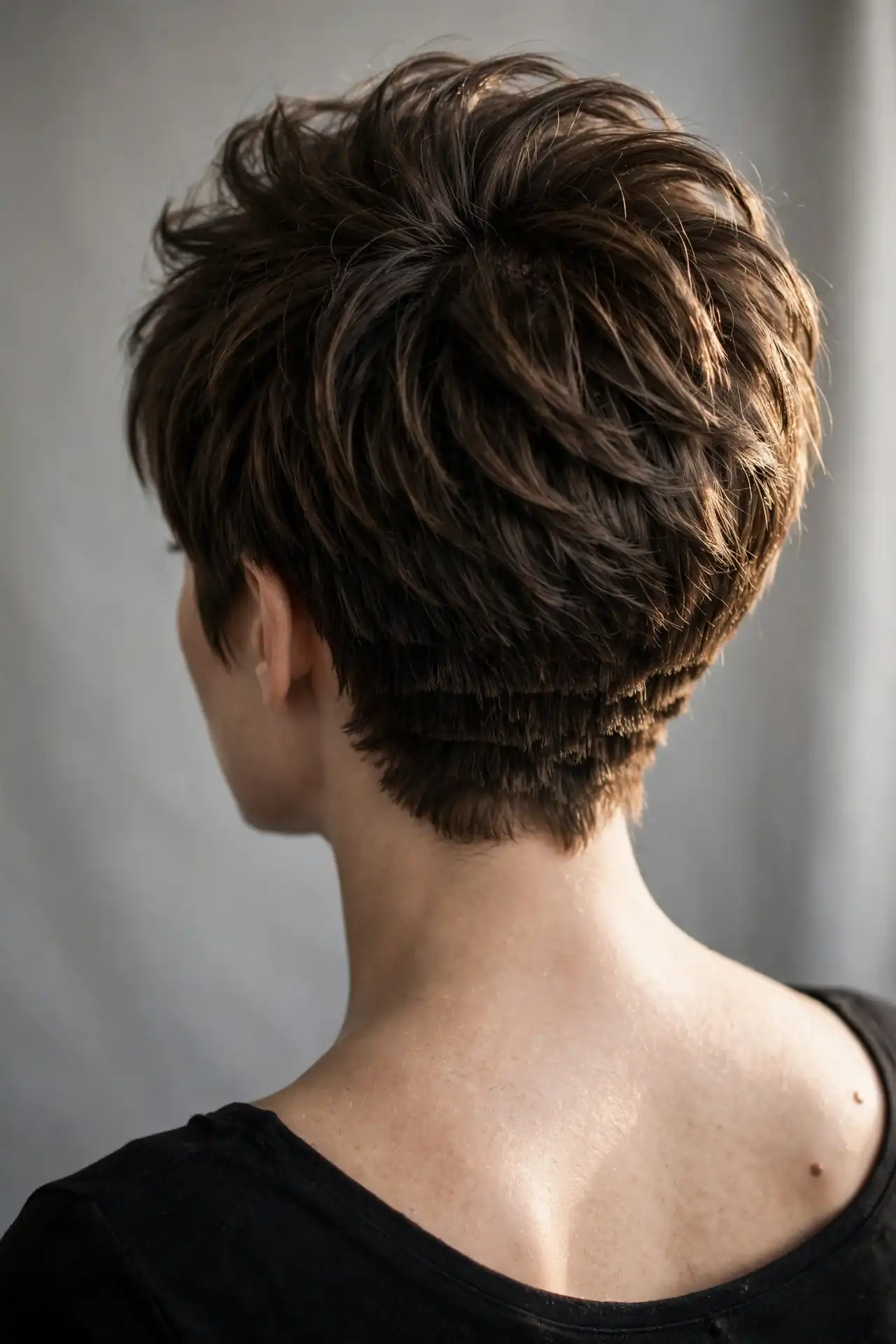
Cropping the nape close while leaving weight on top creates the narrowing effect that a round face benefits from. It also elongates the neck visually, which reinforces the whole silhouette. Straight and slightly wavy textures take this cleanly, and a pea-sized amount of smoothing cream keeps the outline sharp.
The Long Pixie Bob
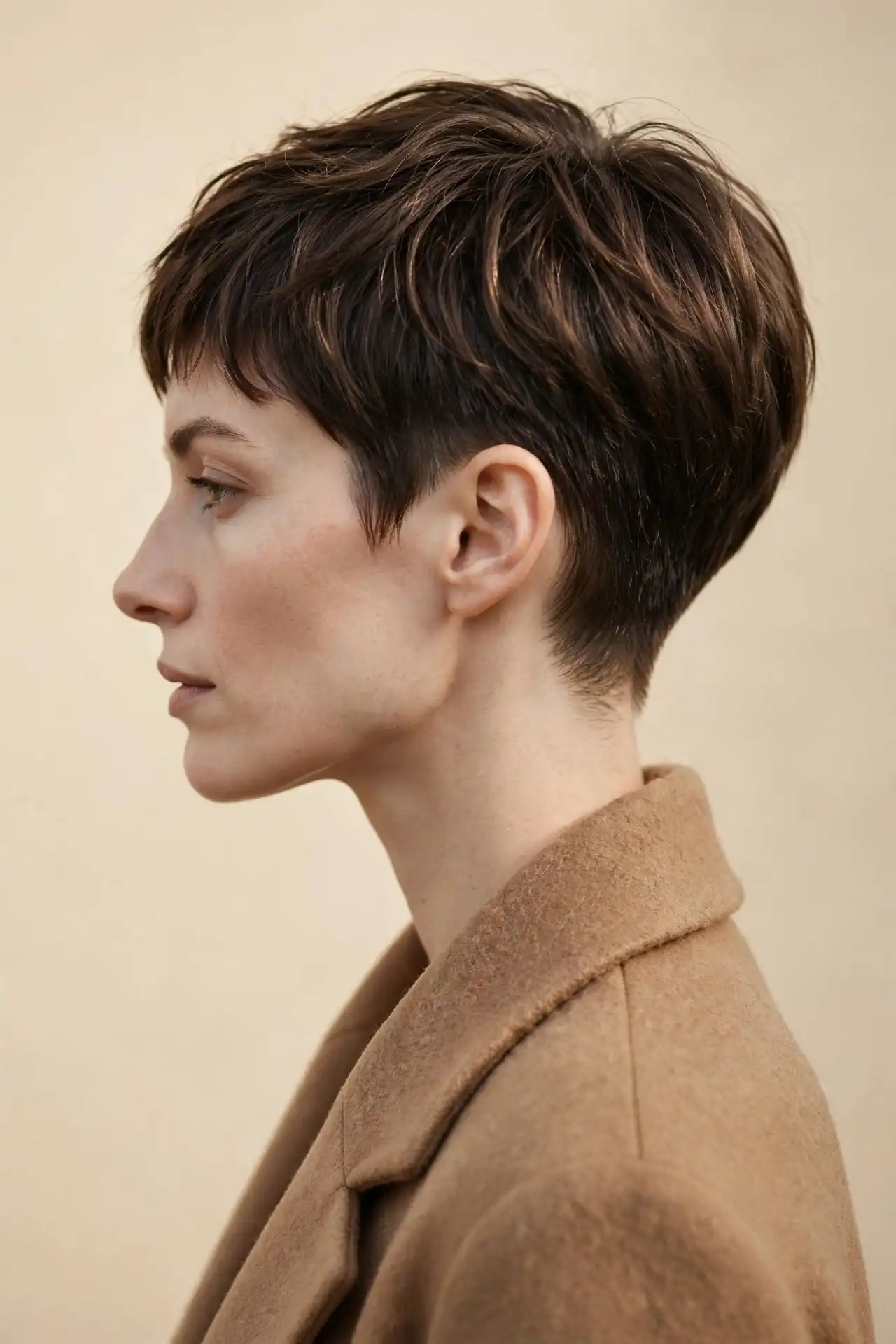
There’s one rule that overrides everything else on this list, and almost nobody states it clearly. Your length should not stop at the jaw, because the jaw sits at or near the widest point of a round face. Hairstylist Jordanna Cobella makes exactly this point about bobs, noting that taking the length a little longer is always more flattering on rounder shapes. A long pixie bob with jaw-length front pieces works because those pieces skim past the widest point and extend downward rather than stopping on it. Anything that ends precisely at the cheek or jaw line draws a horizontal line across your widest measurement.

Texture and Layering Variations
Layering is what prevents a short cut from sitting as a solid block against your face. These six approach it differently.
The Choppy Layered Pixie Bob
Choppy layers introduce sharpness and edge, breaking up the roundness that uniform shapes emphasise. The choppiness is doing structural work, not just adding style. Prim, perfectly smooth finishes rarely flatter round faces, which is why stylists reach for texture. Ask for extra texturising through the top if you want the effect pronounced.
The Razored Feathered Pixie Bob
Razoring produces feathered, uneven ends that create movement without bulk. Where razoring helps most:
- Removes weight from the sides where you don’t want width
- Creates visible separation between pieces
- Softens the outline without making it round
- Works particularly well on thick, heavy hair
- Should be avoided on fine or heavily damaged ends
Thick-haired clients get the most dramatic improvement from this technique.
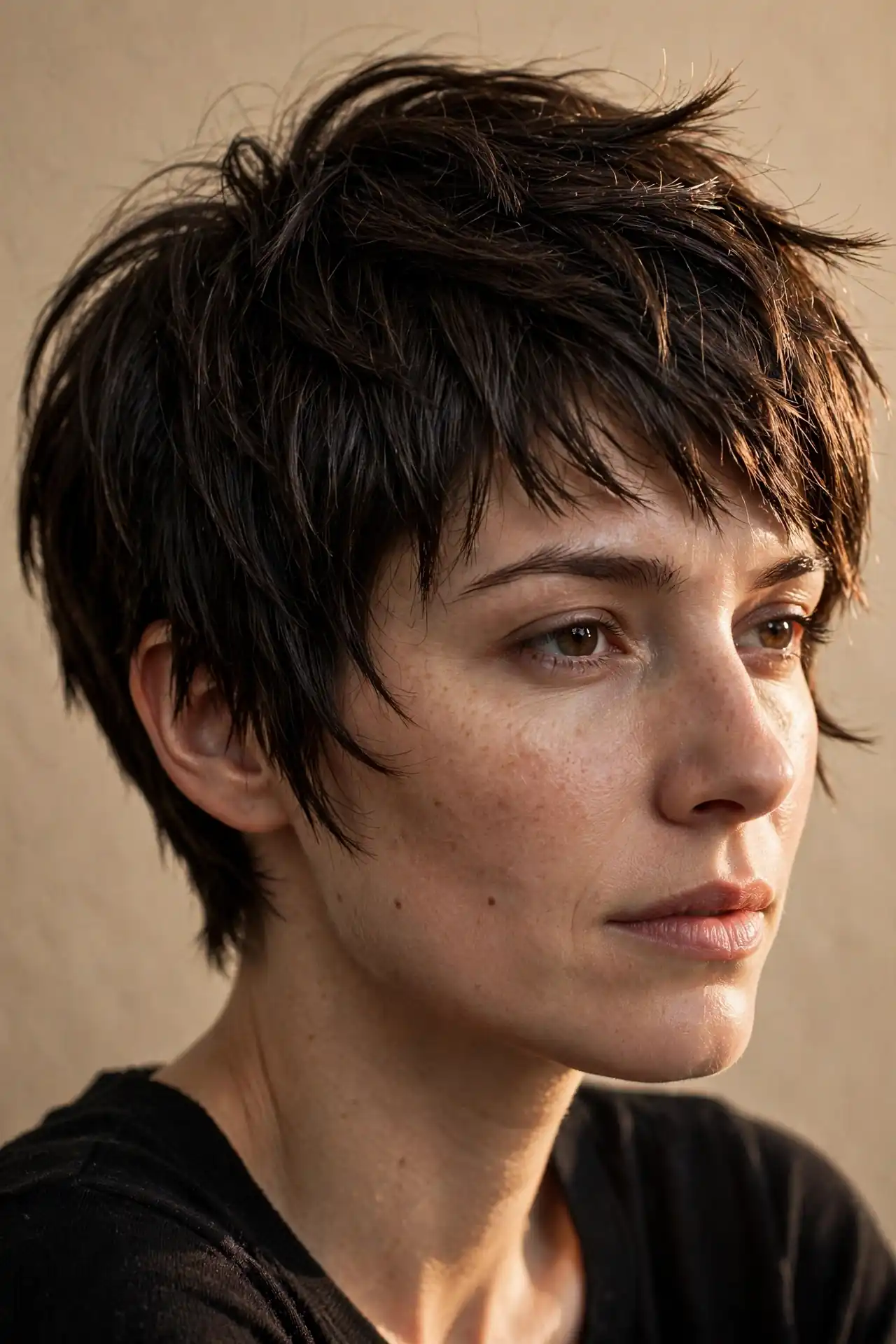
The Tousled Textured Pixie Bob
Deliberately undone texture reads modern and breaks up any hint of a helmet shape. Texturising paste worked through with fingers rather than a brush keeps the pieces separated. Two minutes of styling, and it looks better slightly messy than perfectly neat, which is a rare and useful combination.

The Wispy Pixie Bob for Fine Hair
Fine hair on a round face has a specific problem: not enough weight to hold structure, and a tendency to sit flat against the head. Lightweight wispy layers with a stronger perimeter outline solve it. Rather than layering heavily, which thins the hair further, keep the layers concentrated at the front and preserve weight elsewhere. Lifting the roots at the crown with a round brush during blow-drying creates instant contour and matters more here than any product.

The Volume-at-Crown Pixie Bob
Height at the top, flat at the sides. That’s the entire formula for a round face, and this cut is built around it. A touch more length on top keeps bounce while the sides and nape stay clean. Blow-dry the top section forward and upward, then smooth the sides down. Volumising mousse at the roots before drying makes the difference between lifted and collapsed by noon.
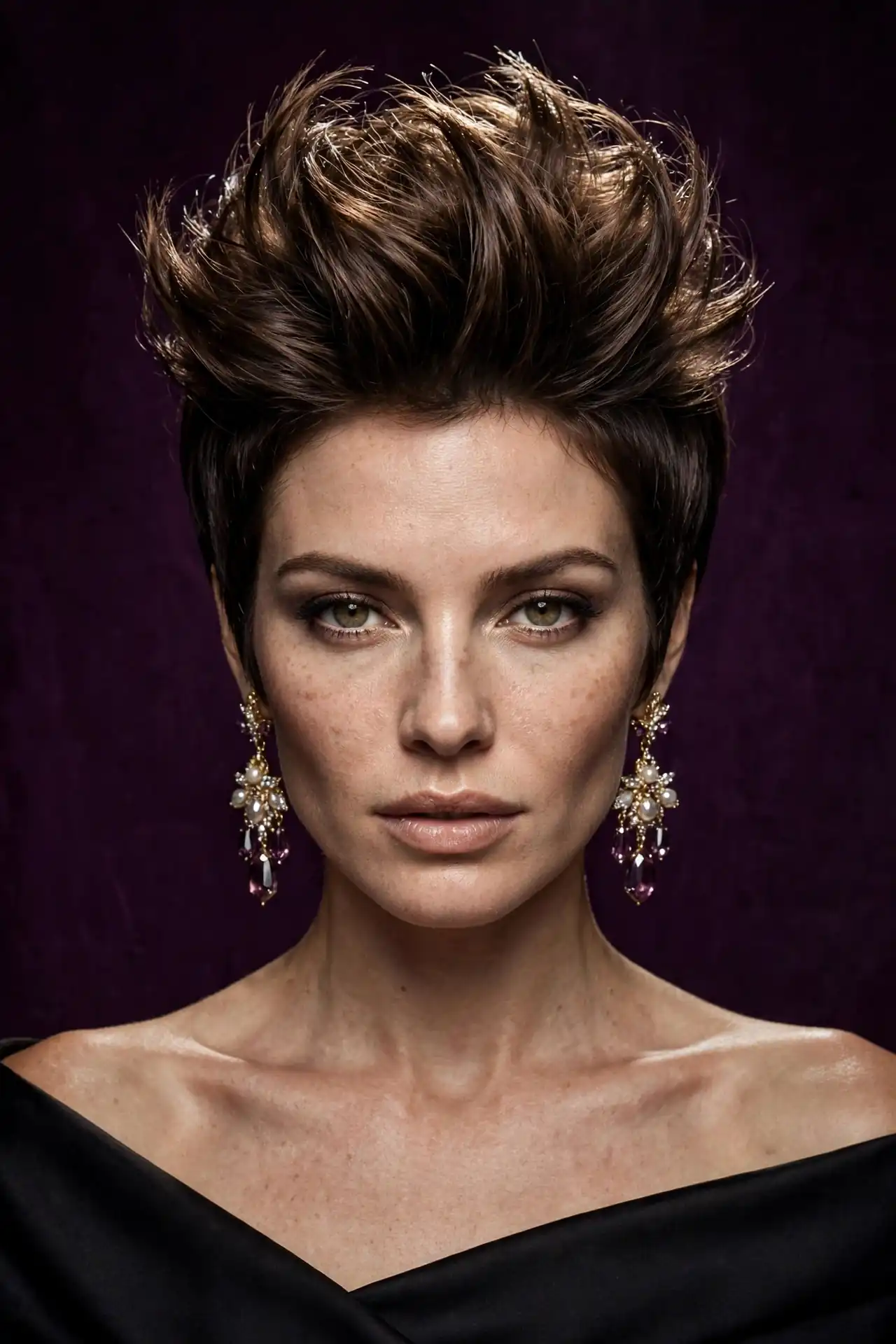
The Shaggy Pixie Bob
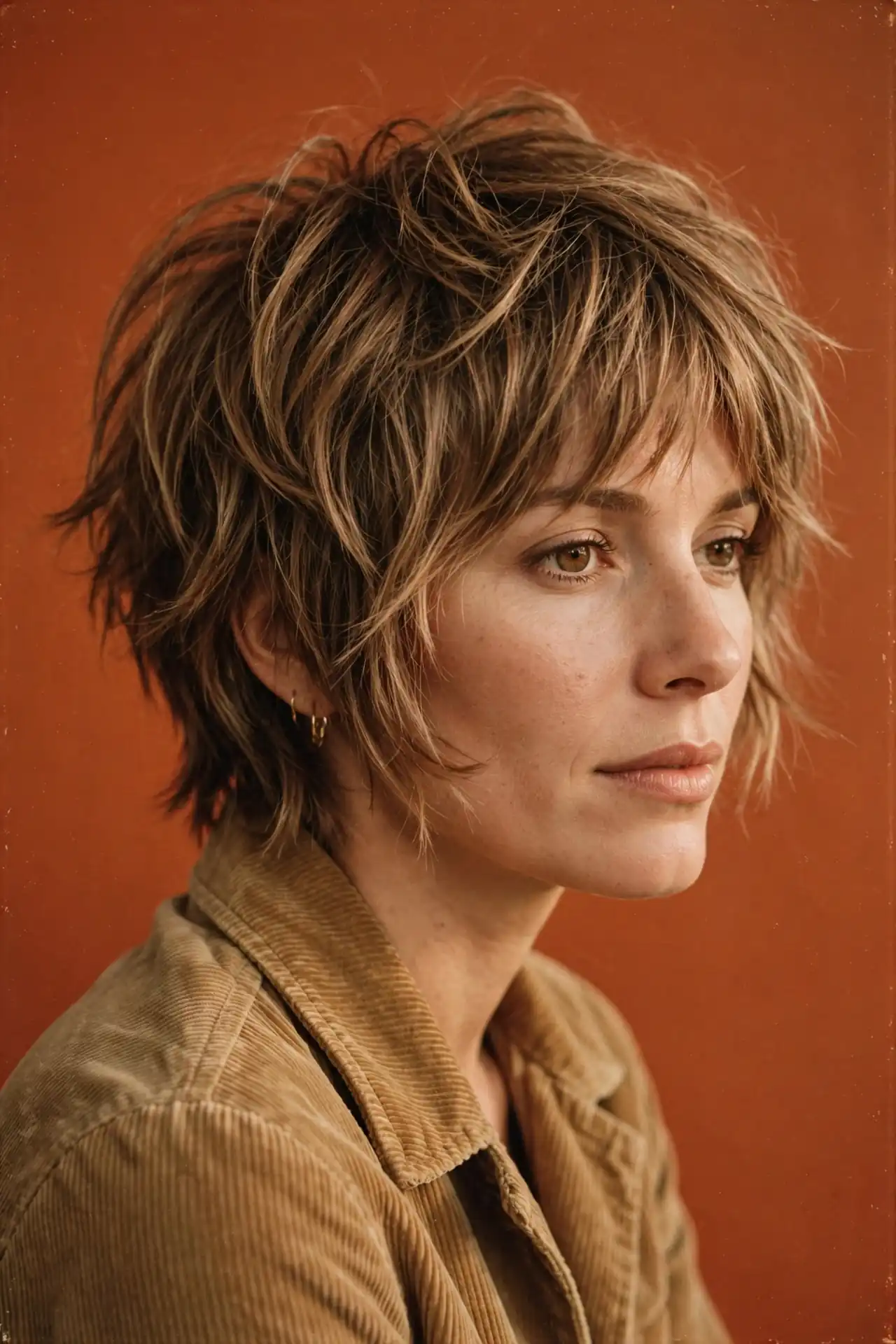
Shag layers deliver volume and a slightly retro edge that contrasts nicely with soft rounded features. The wispy, messy quality is what customises this to the face shape, since your stylist can place the choppy pieces exactly where you need the eye drawn. Scrunch a volumising mousse through, air-dry, and leave it alone.
Fringe Options That Flatter Rather Than Widen
The fringe is where most round-face haircuts go wrong. Blunt, straight-across bangs shorten the face and emphasise width in one move.
The Side-Swept Fringe
A diagonal line across the forehead is one of the most flattering things you can do on a round face, because it creates an angle where none exists naturally and the eye follows it. Korab specifically recommends side-swept or diagonal fringe over anything straight. The sweep should be long enough to reach past the outer edge of your eyebrow. Flip the ends with a straightener to keep them from falling into your eyes.
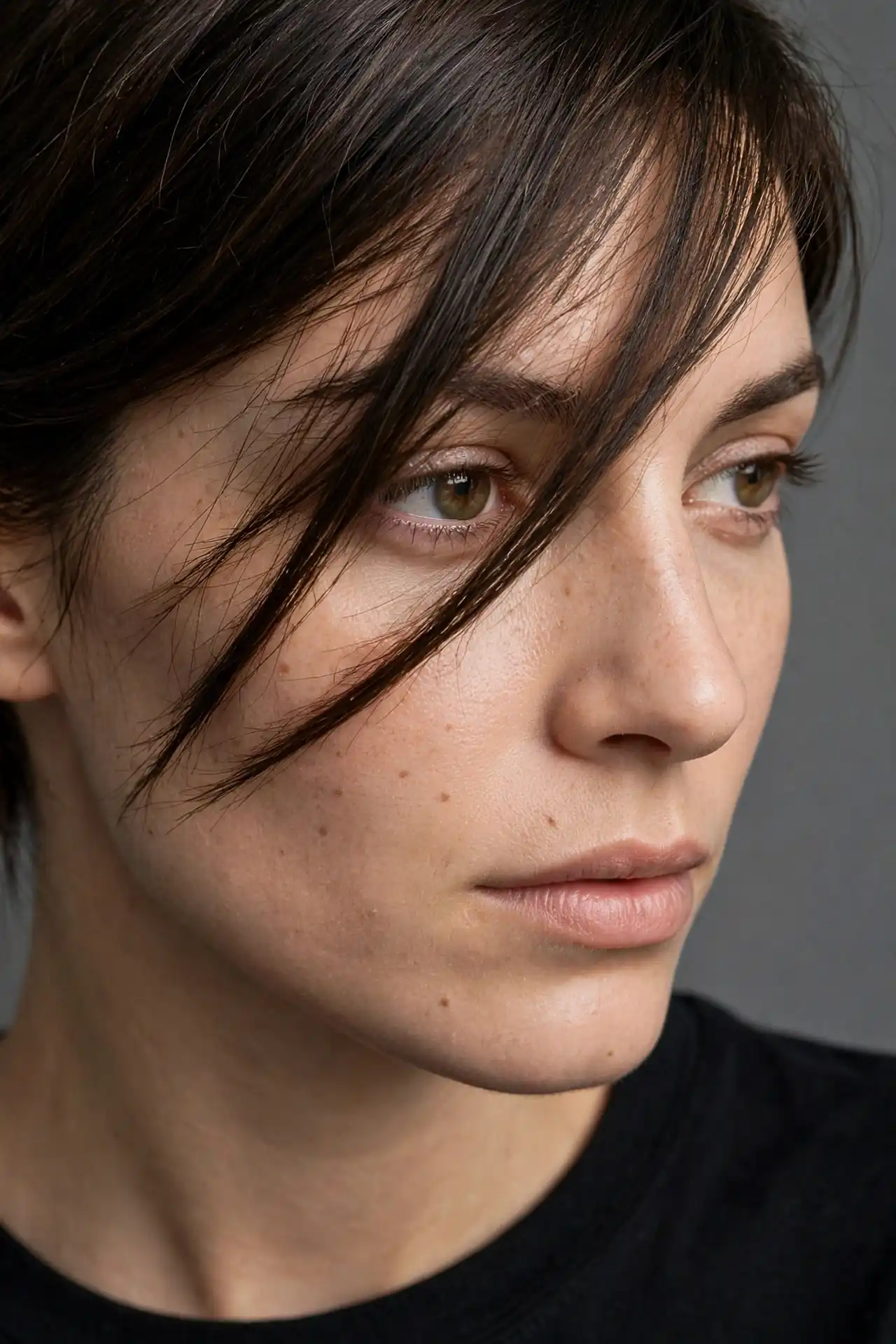
Curtain Bangs
Centre-parted bangs that skim the cheekbones and blend into the front layers give you fringe benefits without closing in the face. They open the forehead rather than covering it, and they grow out into face-framing pieces. Round faces should keep them at cheekbone level or longer.

The Wispy See-Through Fringe
Softness beats density here. A fringe so light it’s almost not there gives you something across the forehead without shortening the face. Fine hair benefits particularly, since a heavy fringe would borrow too much from an already sparse hairline. The trade-off is trims every three to four weeks to keep it behaving.
The Angled Diagonal Fringe
Cutting the fringe on a steep diagonal rather than straight across builds the angle directly into the haircut. Longer on one side, considerably shorter on the other. It pairs naturally with an asymmetrical cut and reinforces the same effect. This is the fringe for anyone who wants the structure without committing to a deep side part every morning.
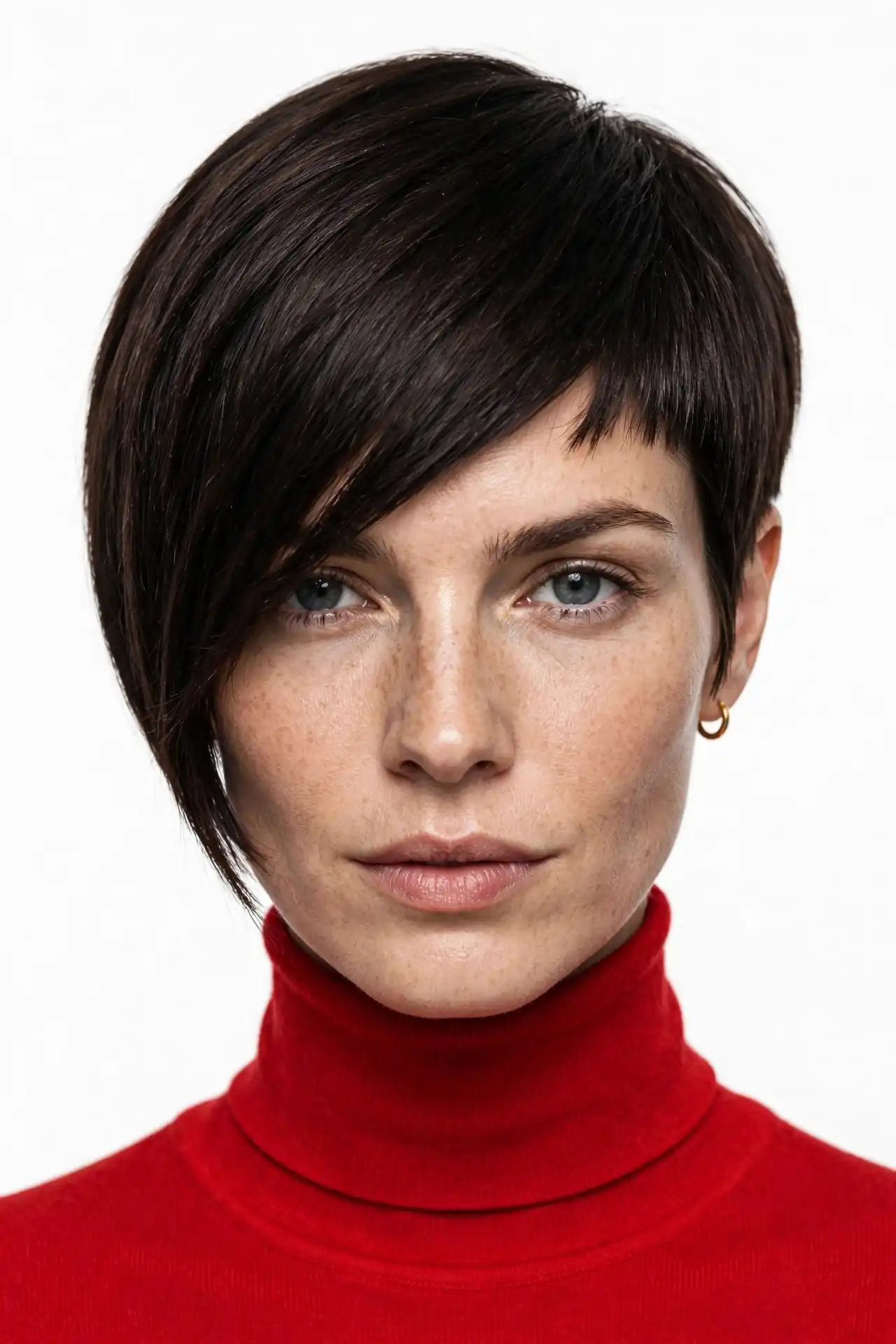
Micro Bangs, With Caution
Baby bangs along the hairline can create a defined face frame that tricks the eye, and some stylists use them deliberately on round faces to establish an oval outline. Honestly though, this is the riskiest option on the list. Micro bangs expose the full width of the forehead and cheeks, so they only work when paired with significant crown height and strong texture. Bring photos and have a real conversation before committing.
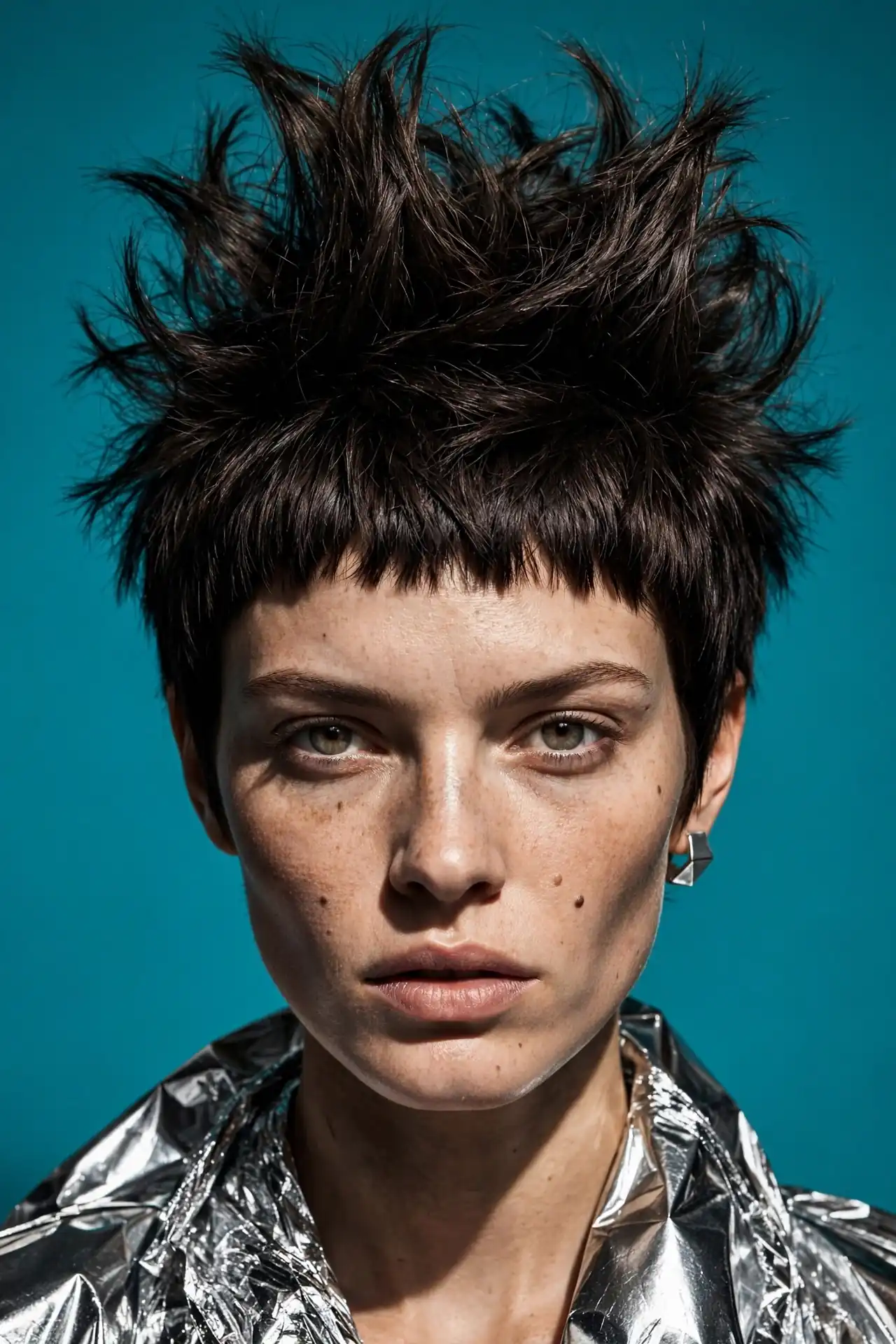
Edgy and Statement Versions
Removing bulk underneath while keeping length on top gives you the narrowest possible sides. Weight reduction at the neck is the practical benefit, and the hidden section can carry a design if you want one. It also makes thick hair genuinely manageable at this length, since the bulk that would otherwise push outward is simply gone.
The Low Taper Fade Pixie Bob
A fade creates a narrowing effect from top to bottom, which is exactly the direction you want the eye travelling. Choose a low or mid fade rather than a high one. A high fade exposes too much of the round temple area and works against the elongation you’re building everywhere else. This detail is worth stating explicitly at the appointment.
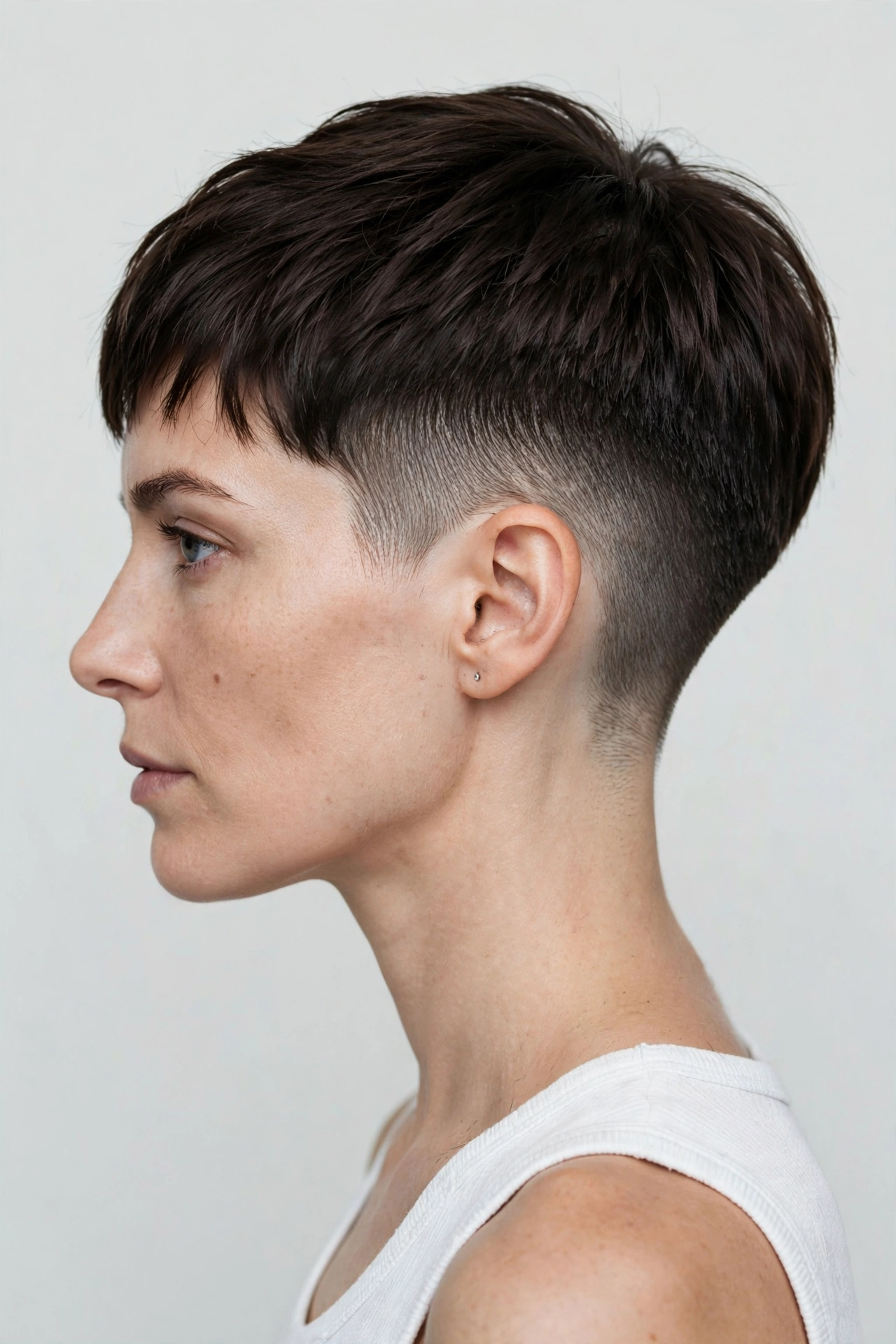
The Faux Hawk Pixie Bob
Height concentrated down the centre with the sides kept flat is the most exaggerated version of the volume principle. No shaving required. Sweep the top section upward and inward with paste, smooth the sides with your palms. It’s a look rather than an everyday shape for most people, but it demonstrates exactly why crown height works.
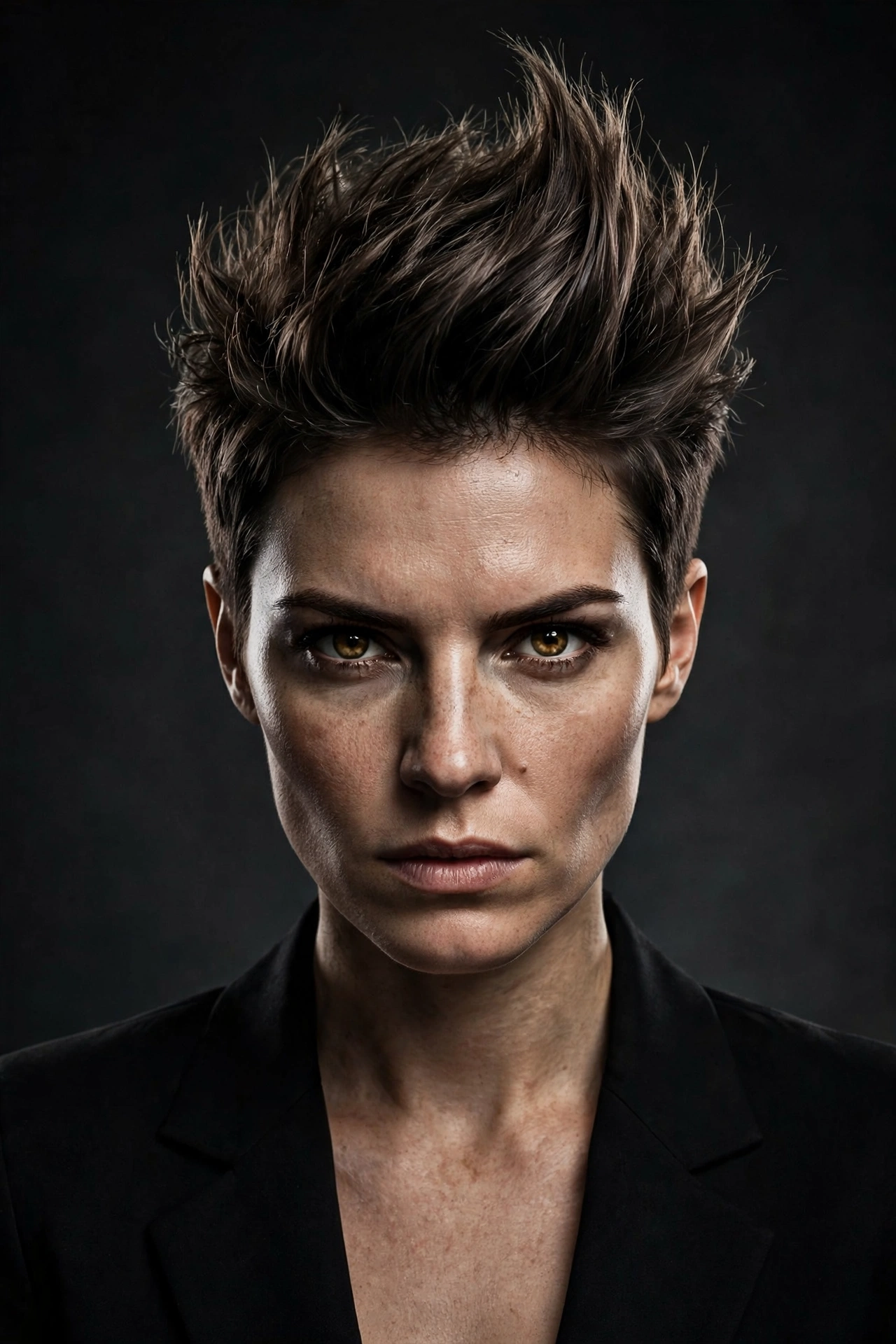
The Disconnected Pixie Bob
Deliberate contrast between a very short side and a much longer opposite side creates a high-impact silhouette. Where the longest piece meets the hair at the temple is where the shape happens. That meeting point creates a diagonal that flatters, provided your stylist places it thoughtfully rather than symmetrically.
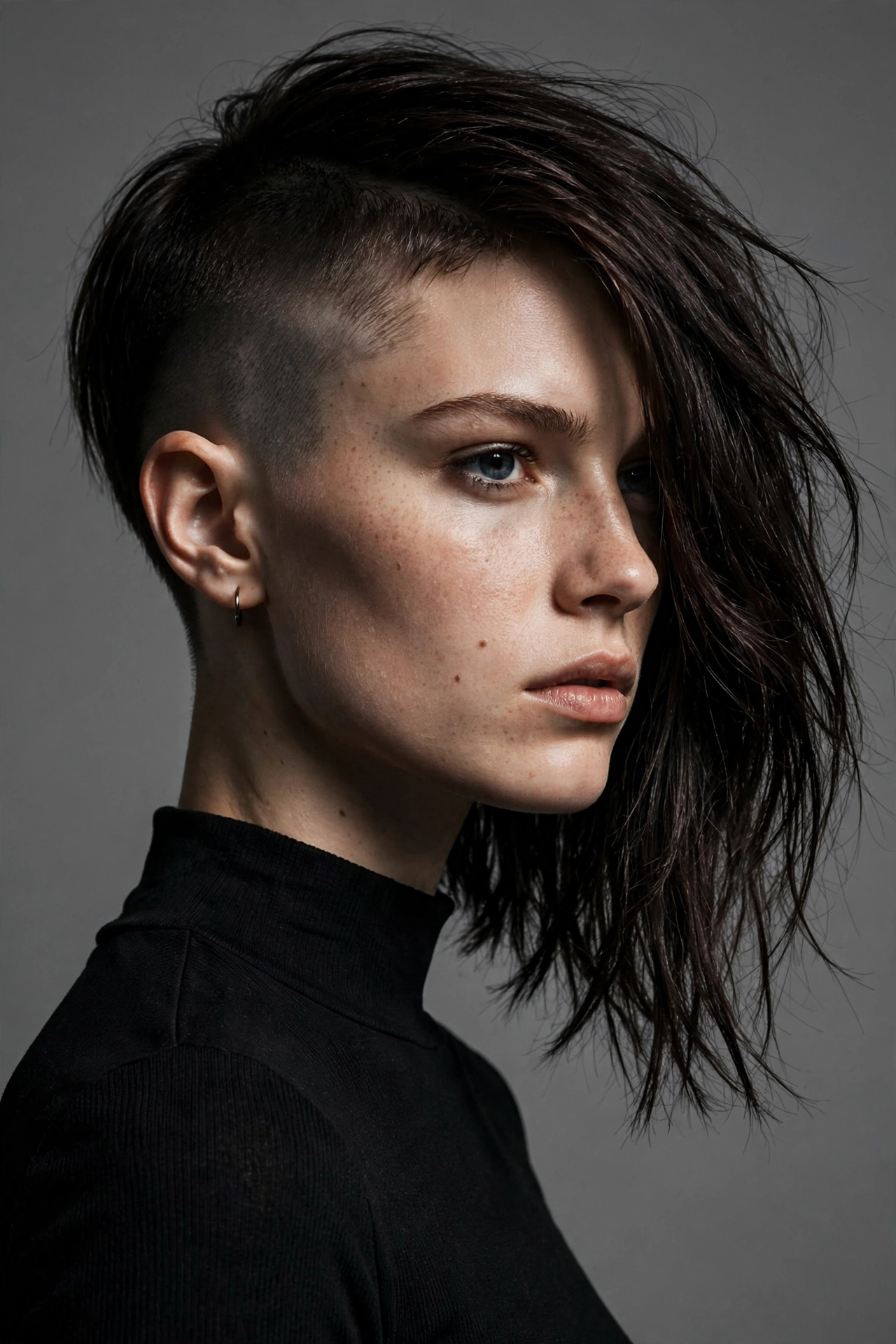
The French Pixie Bob
Why does this version look so polished? Because the shortness sits in the fringe rather than the sides. Short bangs breaking in the middle refine the whole outline, while the sides stay long enough to narrow the face. It’s a more conservative choice that still reads distinctly styled, and it suits professional environments easily.
Texture-Specific and Colour Versions
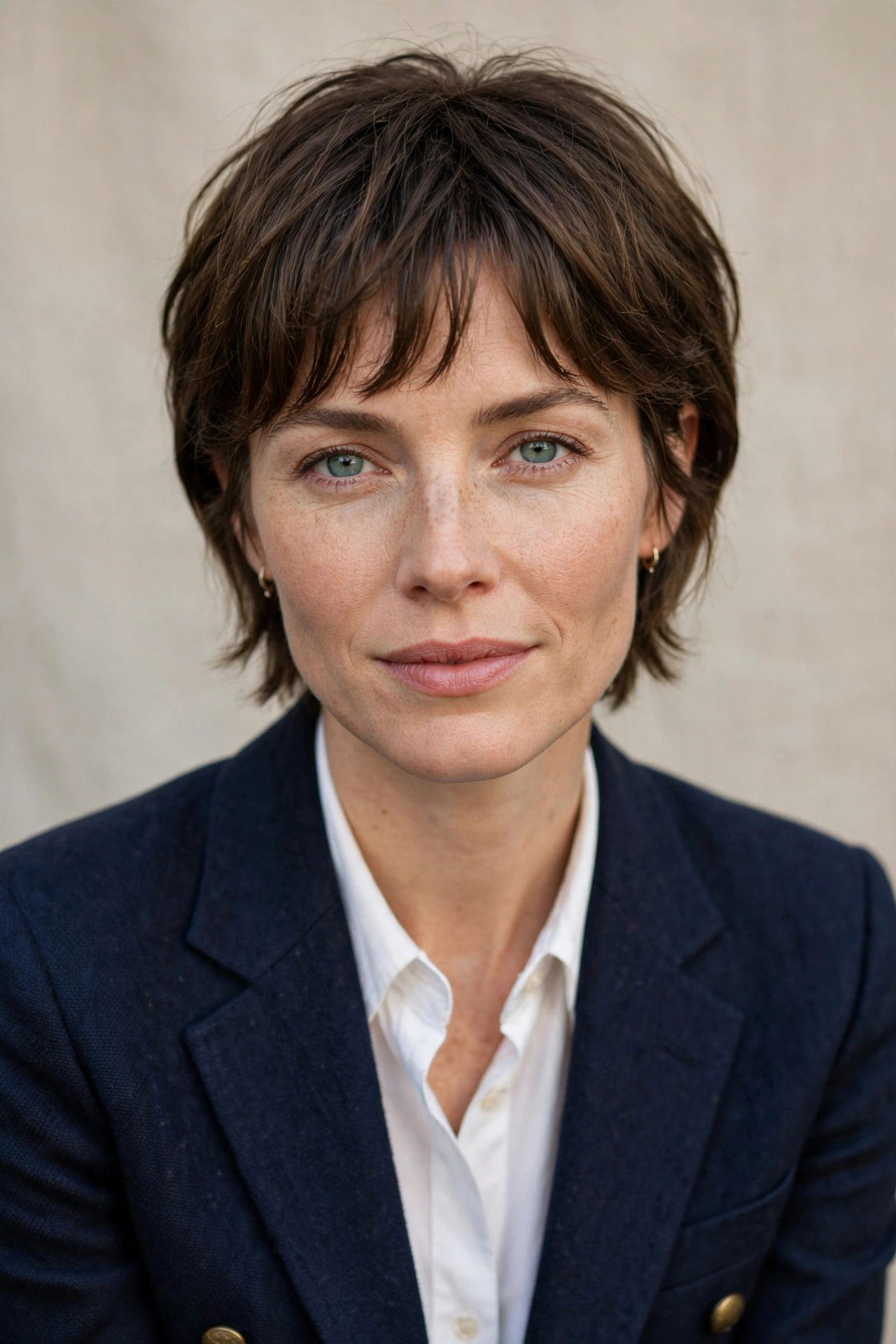
The Curly Pixie Bob
Curly hair and round faces need careful volume management, because curls expand outward at exactly the height where you don’t want width. The answer is removing bulk at the sides while keeping height on top. Cut dry, section by section, so shrinkage is accounted for. Curly bangs should be left longer than your target, since they spring up considerably as they dry.

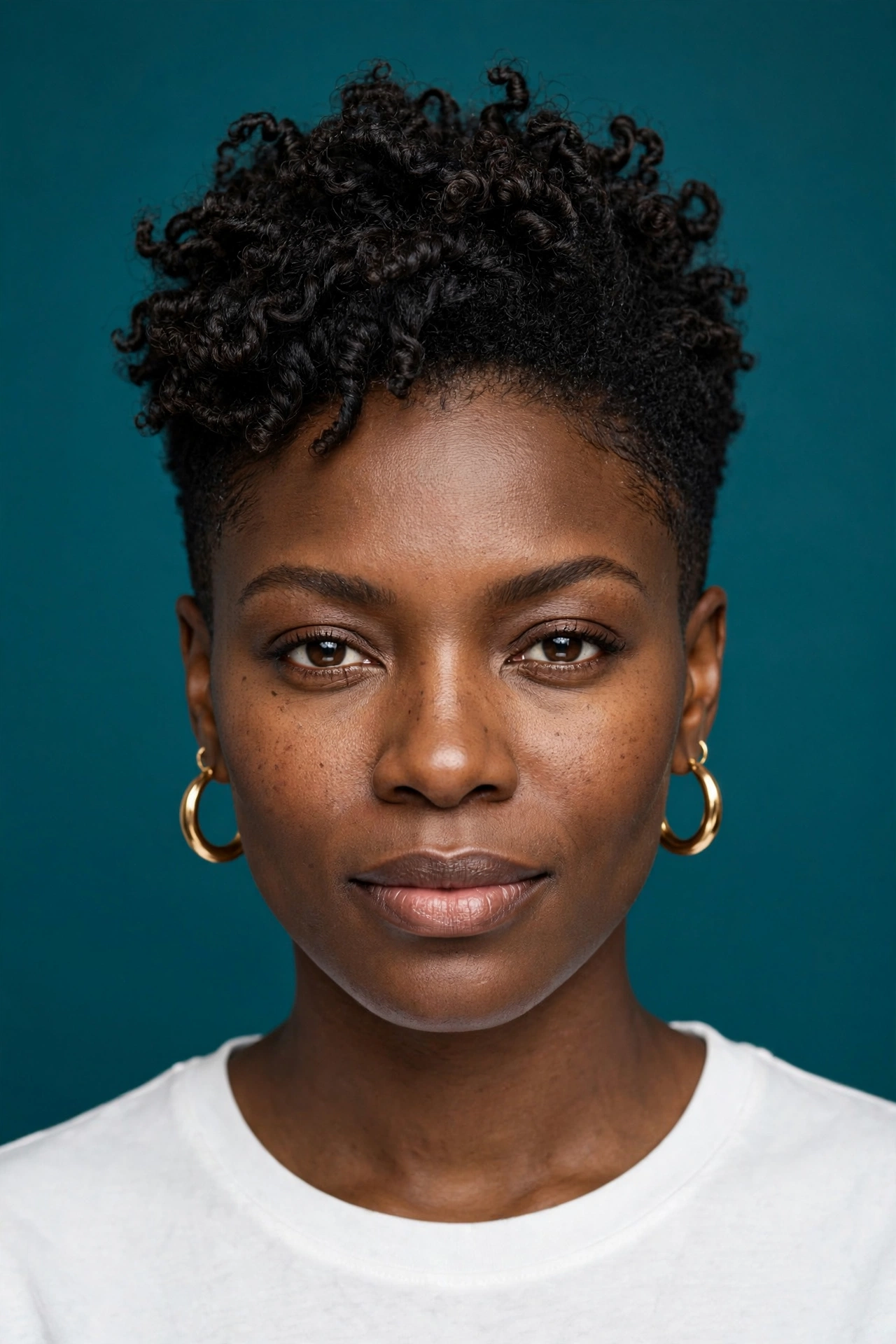
The Coily Pixie Bob
Type 4 textures build height naturally, which is a genuine advantage for this face shape. The considerations that matter:
- Tapered sides to prevent outward width
- Height preserved at the crown, never flattened
- A clean lineup to create a defined outline
- Cut on stretched or dry hair for accurate shaping
- Light cream and a pick, used gently
Contouring Colour Placement
Strategic colour placement creates a subtle contour that works alongside the cut rather than separately from it. Keeping the sides and the area around the ears deeper while placing brightness through the top and the front pieces mimics the effect of makeup contouring. Darker recedes, lighter advances. On a short cut where every section is visible, this is unusually effective and most people never think to ask for it.
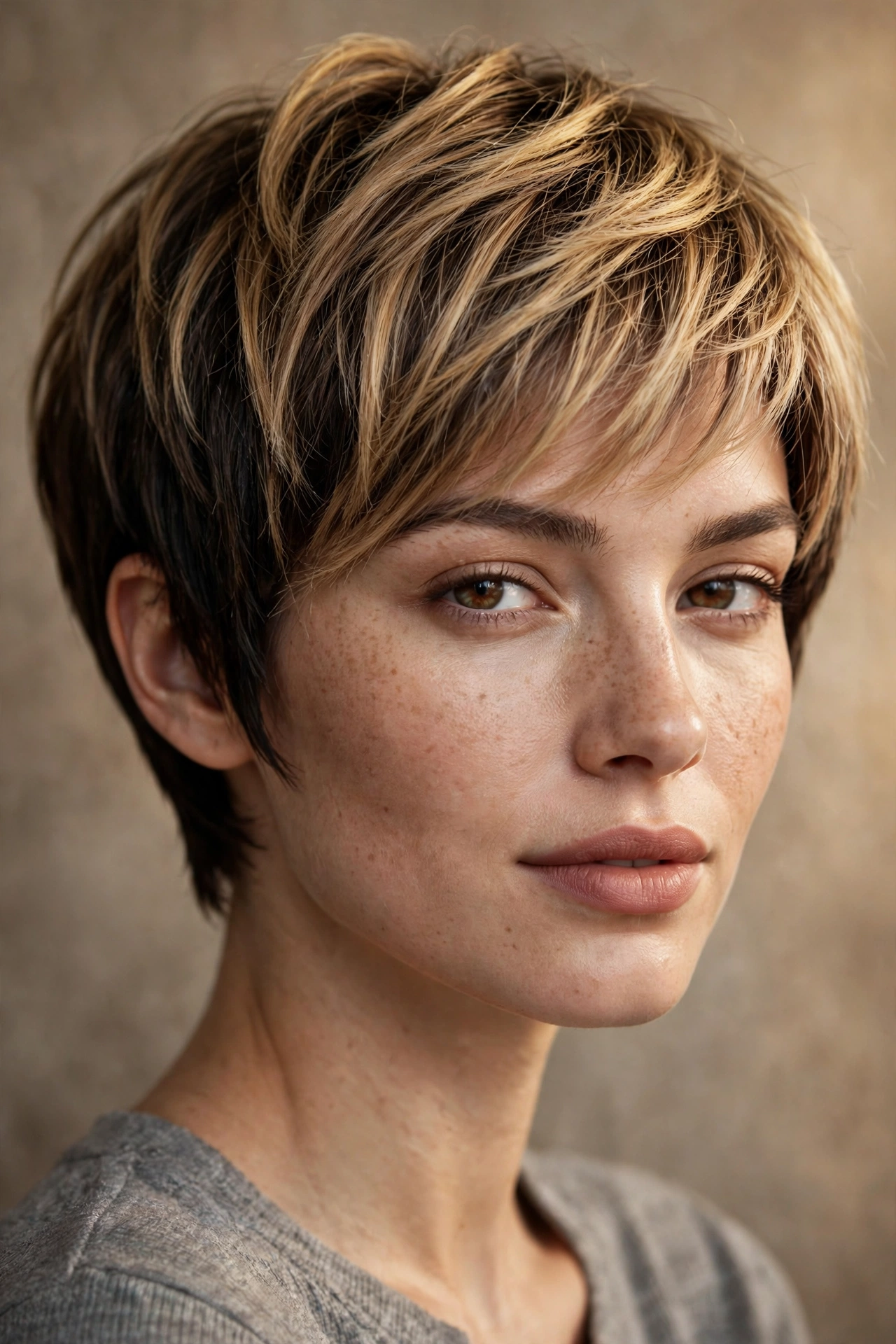
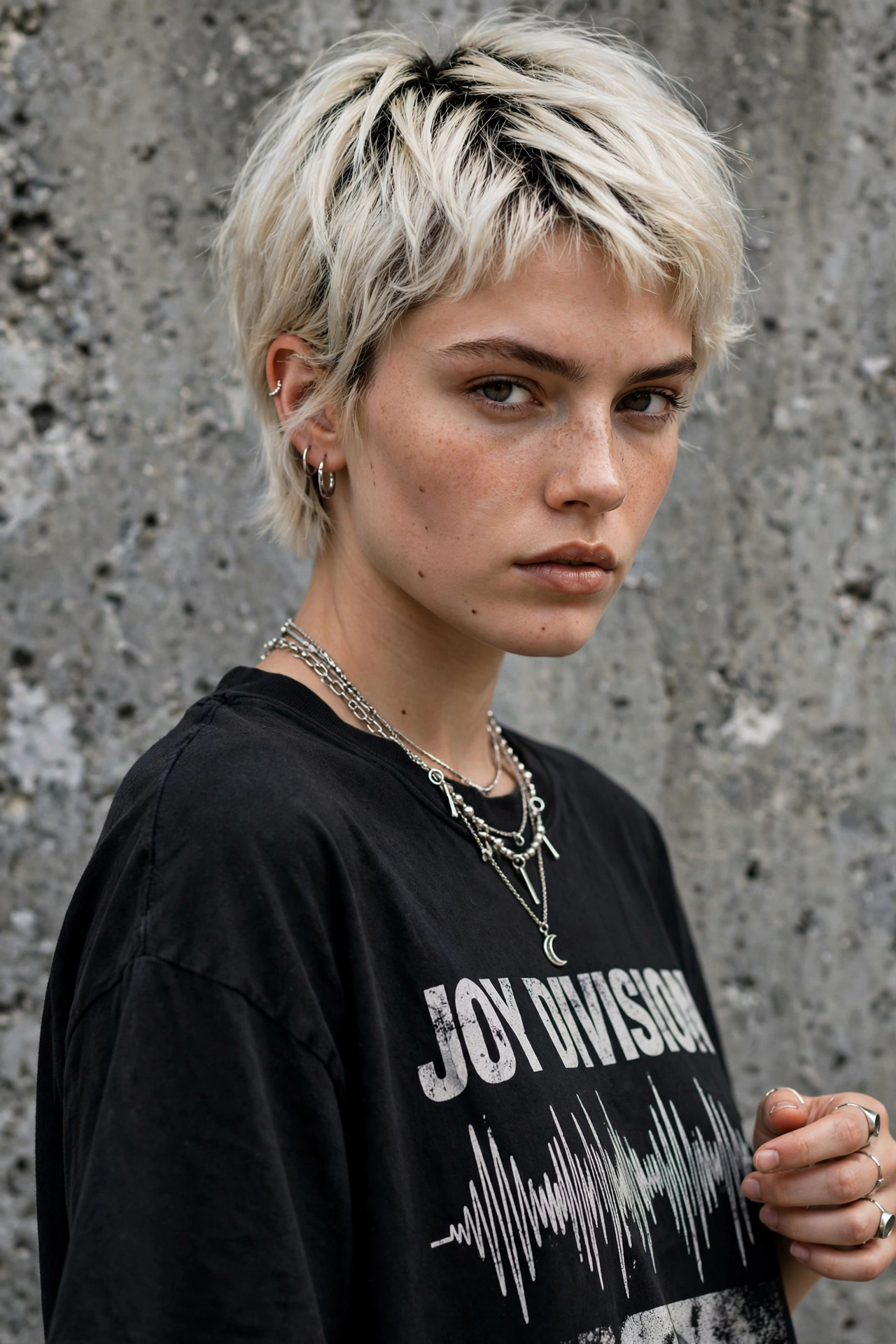
Platinum with Dark Roots
High contrast amplifies geometry, which makes bold colour a genuine structural tool on a sculpted cut. The dark root creates depth at the crown that reads as density, while the bright lengths draw attention to the shape and texture. Grungy and modern rather than polished. Maintenance runs high, with toning roughly monthly.
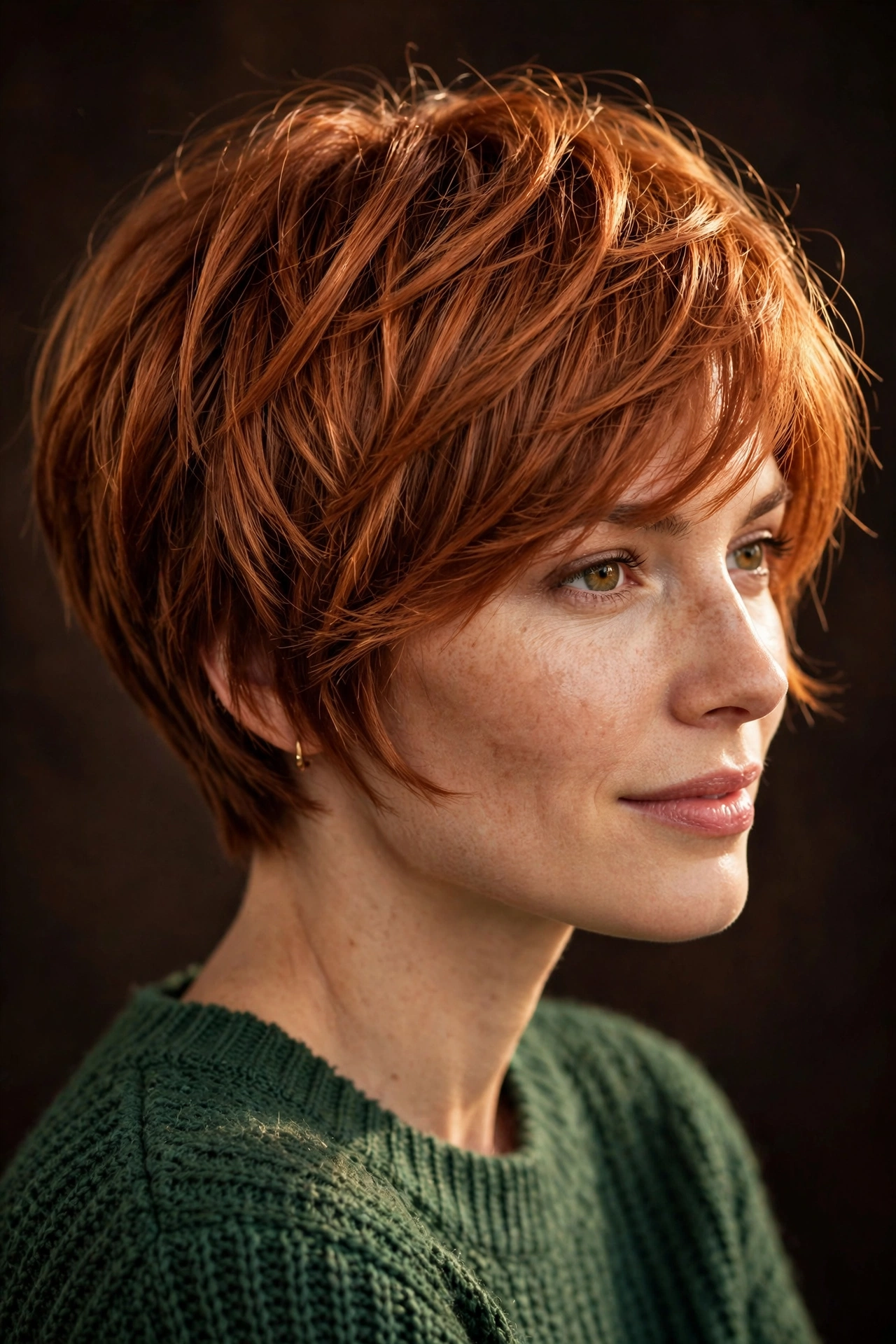
The Warm Copper Pixie Bob
Auburn and copper tones highlight texture by making each layered strand individually visible. That visibility matters more on short hair than long, since the layering is doing the flattering work and flat colour hides it. Warm tones also add softness that offsets a very structured cut, which stops the whole look reading severe.
What Actually Determines Whether This Works
Most roundups show photos and stop. These are the principles underneath every flattering cut above.
The One Rule That Matters Most
Your hair should not stop at the widest point of your face.
That widest point on a round face is usually the cheekbones, with the jaw close behind. Length ending precisely there draws a horizontal line across your broadest measurement, which is the opposite of what you want. Either keep the cut clearly above it, or take the front pieces clearly past it. Stylists consistently identify this as the mistake that ruins otherwise good short cuts on round faces, and it explains why two people can get “the same” pixie bob with completely different results.
Volume Placement Is the Whole Game
Height at the crown, narrowness at the sides. Every flattering variation on this list obeys that one principle.
Volume at ear level widens. Volume at the top elongates. That’s why blow-drying matters here more than on almost any other cut: five minutes lifting the roots at the crown with a round brush changes the entire proportion of your face. Skipping it and letting the top sit flat undoes what your stylist built.
The Round Face Cheat Sheet
| Element | Do This | Avoid This |
|---|---|---|
| Overall shape | Asymmetric, angled, graduated | Blunt, uniform, symmetrical |
| Volume | Height at the crown | Fullness at the ears and cheeks |
| Length | Above or well past the jaw | Ending at the cheek or jaw line |
| Part | Deep side part | Straight centre part with flat top |
| Fringe | Side-swept, diagonal, curtain | Blunt straight-across bangs |
| Layers | Choppy, razored, textured | Heavy uniform one-length |
| Fade | Low or mid | High fade at the temples |
| Colour | Deeper at the sides, brighter on top | Flat single tone all over |
Matching the Variation to Your Hair Type
| Hair Type | Best Variation | Styling Approach |
|---|---|---|
| Fine and straight | Wispy layers, stronger perimeter | Volumising mousse, round brush at crown |
| Medium and wavy | Choppy layered, textured tousled | Texture paste, air-dry, finger style |
| Thick and coarse | Razored, undercut, stacked | Smoothing cream on sides, texture on top |
| Curly | Dry-cut curly pixie bob, bulk removed at sides | Curl cream, diffuse upward at the crown |
| Coily | Tapered sides, height preserved, clean lineup | Light leave-in, pick used gently |
The Trim Commitment Nobody Mentions Before the Chop
Pixie bobs need trimming every five weeks, and any version with a fringe needs the bangs reshaped every three to four.
That’s the honest cost. A shape this precise blurs quickly, and the graduation at the back is the first thing to go. Anyone unable to commit to that schedule should choose a slightly longer variation with softer layering, which holds its shape closer to eight weeks and grows out far more gracefully.
Avoiding the Helmet
Longer pixie shapes carry a real risk on round faces: if the hair sits too uniformly, the whole thing reads as a helmet sitting on top of your head.
Texture is the prevention. Choppy layers, razored ends, a side part, or a slight asymmetry all break up that uniformity. If your stylist blends everything perfectly smooth and keeps the length identical all round, that’s what produces the helmet effect regardless of how well the cut was executed technically.
Final Thoughts
A pixie bob is one of the most flattering things a round face can wear, provided the shape is built rather than copied. Height at the crown, narrowness at the sides, an angled or asymmetric line somewhere in the cut, and length that never stops at your widest point. Those four principles cover almost everything above.
Bring three or four reference photos and be clear about which element you’re pointing at in each, since a stylist looking at a photo doesn’t know whether you love the fringe, the colour or the graduation. Ask specifically for the part to sit deep and off centre. Say out loud that you don’t want the length landing at your jaw. Book the five-week trim before you leave the salon, because that appointment is what keeps the shape doing its job.
Save the versions that stopped your scroll, and take note of which one matches your actual hair type rather than your favourite photo. That match matters more here than at any other length.
Frequently Asked Questions
Do pixie bobs suit round faces?
Yes, and often better than longer cuts. The pixie bob keeps volume at the crown while narrowing the sides and nape, which elongates the face. The versions that work are angled, asymmetric or graduated. Blunt uniform shapes emphasise roundness rather than balancing it.
What length should a pixie bob be for a round face?
Anywhere except at your widest point. Ending precisely at the cheek or jaw draws a horizontal line across the broadest part of your face. Keep it clearly shorter, or take the front pieces past the jaw so they extend downward instead of stopping there.
Which bangs suit a round face with short hair?
Side-swept, diagonal or curtain bangs, because each creates an angle across the forehead. Blunt straight-across fringes shorten the face and highlight width. Wispy see-through versions work well on fine hair, giving the fringe effect without closing in the face.
How often does a pixie bob need trimming?
Every five weeks for the cut itself, and every three to four for any fringe. The graduation at the back blurs first. If that schedule isn’t realistic, ask for a slightly longer, softer version, which holds its shape closer to eight weeks and grows out more gracefully.