23 Haircuts for Thick Wavy Hair That Cut the Bulk, Not the Volume
There’s a specific problem thick wavy hair creates, and most haircut advice misses it entirely. Thick wavy hair carries weight that pulls the wave pattern flat at the roots while simultaneously expanding outward at the ends, which produces the triangle silhouette almost everyone with this texture has worn at least once. The goal isn’t removing volume. Volume is the thing people with fine hair pay money to fake. The goal is redistributing it.
That distinction matters because thick straight hair and thick wavy hair need opposite approaches. Straight density holds a blunt line beautifully. Wavy density almost always needs layering, because the bend in each strand takes up horizontal space that a straight strand doesn’t. Celebrity hairstylist Jennifer Korab, founder of Renaissance Salon & Spa, frames the objective simply: the best cuts for thick hair focus on reducing bulk while enhancing movement and shape.
Twenty-three cuts follow, sorted by length, with the specific techniques worth requesting at each one.
Short Cuts for Thick Wavy Hair
Going short removes weight faster than anything, and it comes with a real trade-off worth understanding before you book.
The Textured Pixie
Cutting close to the head and point-cutting the ends removes serious bulk, so thick hair sits light rather than puffing outward. The pixie works on thick waves specifically because the short length means each wave only has room for one bend, which reads as texture rather than expansion. What ruins it is uniform cutting, where every section is the same length and the whole thing puffs into a helmet by mid-morning.
Ask for texturising concentrated at the crown and nape rather than throughout, which keeps the shape controlled where it needs to be and full where you want it. Styling takes under two minutes with a texture paste worked through with fingertips. Trims land every four to six weeks, which is the honest cost of a shape this precise.

The Razor-Layered Chin-Length Bob
Ask any stylist how to stop a bob going triangular on thick waves and the razor comes up first. Razoring thins the ends and removes bulk exactly where it collects, which keeps the perimeter from expanding outward. Lots of choppy short layers create the movement needed to style a shorter length in that deliberately messy, undone way rather than a rigid set shape.
Chin length shows off the jawline and stays genuinely low maintenance. One caution: shapes sitting above the shoulder take more convincing in the morning than longer hair, because there’s less weight holding anything down. If your hair is very thick, expect a few minutes of styling rather than none.

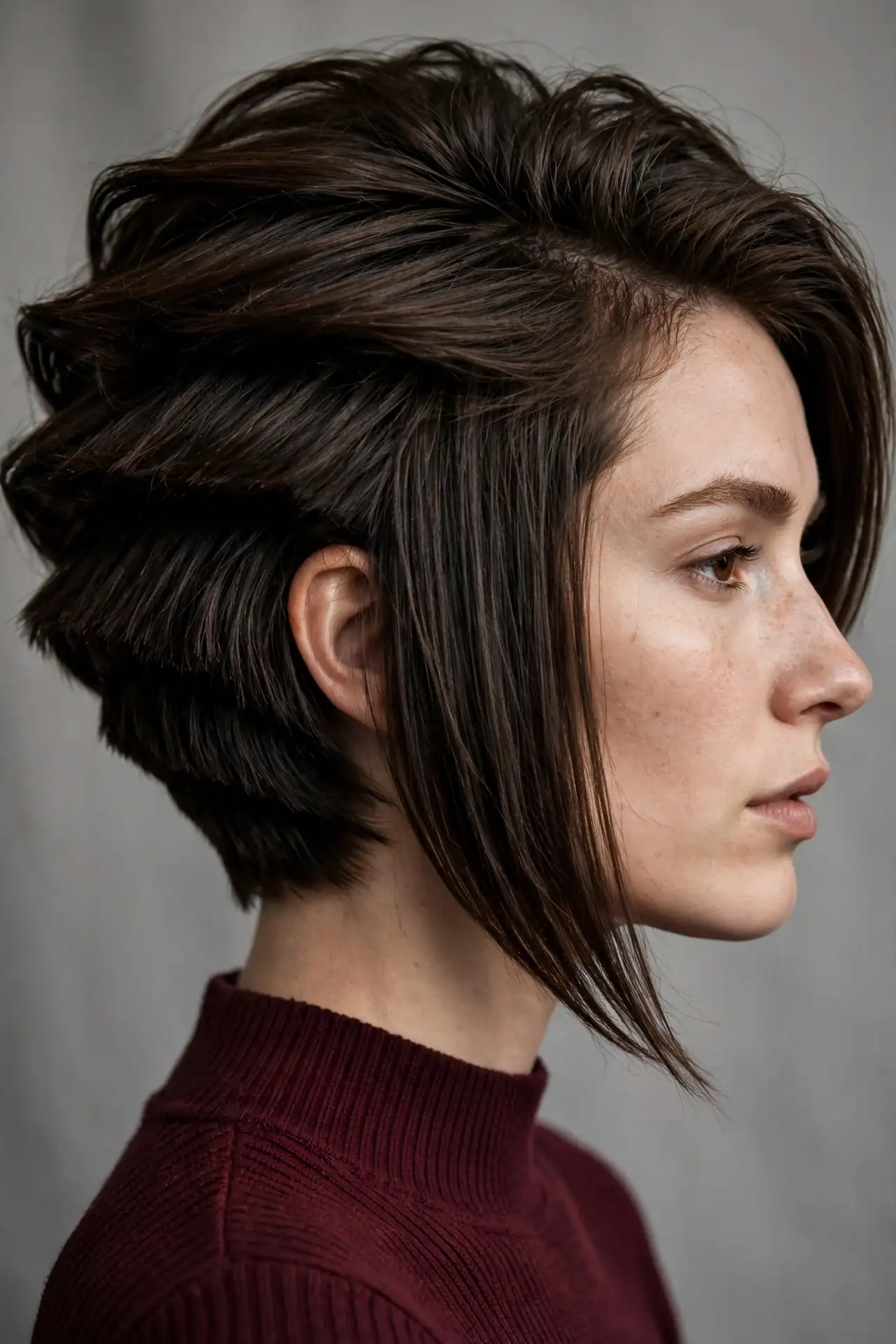
The Graduated Bob
Why does graduation work so well on dense waves? Because it builds the shape vertically instead of letting weight collect horizontally at the bottom. The back is cut shorter and stacked while the front stays longer, creating height at the crown where thick hair usually sits flattest. The length falls at the mid to high neck, which shows off the jawline cleanly.
Carving out negative space is the technical requirement here. Without it, a graduated bob on thick hair becomes helmet-like within weeks. Ask your stylist directly how they plan to remove interior weight, and be wary if the answer is only about the outline.
Six to Eight Weeks: The Flipped Bob
That trim schedule is what keeps this shape working, and the flick at the ends is doing more than looking cute. Flipping the ends outward lifts dense hair off the shoulders, which prevents the pooling that makes thick hair look wider at the bottom than at the top. It’s a small directional change that solves the triangle problem without heavy layering.
Style it with a round brush turning outward at the ends, or with a flat iron flicked at the last inch. On naturally wavy hair the flip often happens on its own, which makes this one of the lowest-effort shapes on the list.

The Cub Cut
Sitting somewhere between a shaggy bob and a wolf cut, the cub cut is heavily textured and deliberately imprecise. Because it has no definitive lines and openly embraces imperfection, it’s a genuinely useful transition shape for anyone growing from short to medium. Thick waves suit it particularly well since the texture the cut wants is texture your hair already has.
The styling routine is a touch of texturising product and nothing else. It’s the cut for people who want their thick hair to look intentional without committing to a blow-dry, and it grows out without ever developing an awkward stage.

Medium-Length Cuts
Medium is where most stylists steer thick wavy clients, and there’s a structural reason for it. There’s enough length to weigh the hair down and stop it going wide, but not so much that the weight becomes unmanageable.
The Layered Lob
The most recommended cut for this texture, and the one that solves the most problems at once. Layers cut through the bottom half take out weight without leaving the ends flat, while the length just below the shoulders provides enough downward pull to keep the silhouette controlled. Keep the interior layering soft and avoid stacking if you want a smooth, rounded fall at the shoulders.
Balayage pairs naturally with it, and there’s a technical reason beyond aesthetics. Vertical colour placement follows the direction of the layers, which makes the movement visible and produces a forgiving grow-out. Trims every eight to ten weeks hold the shape.
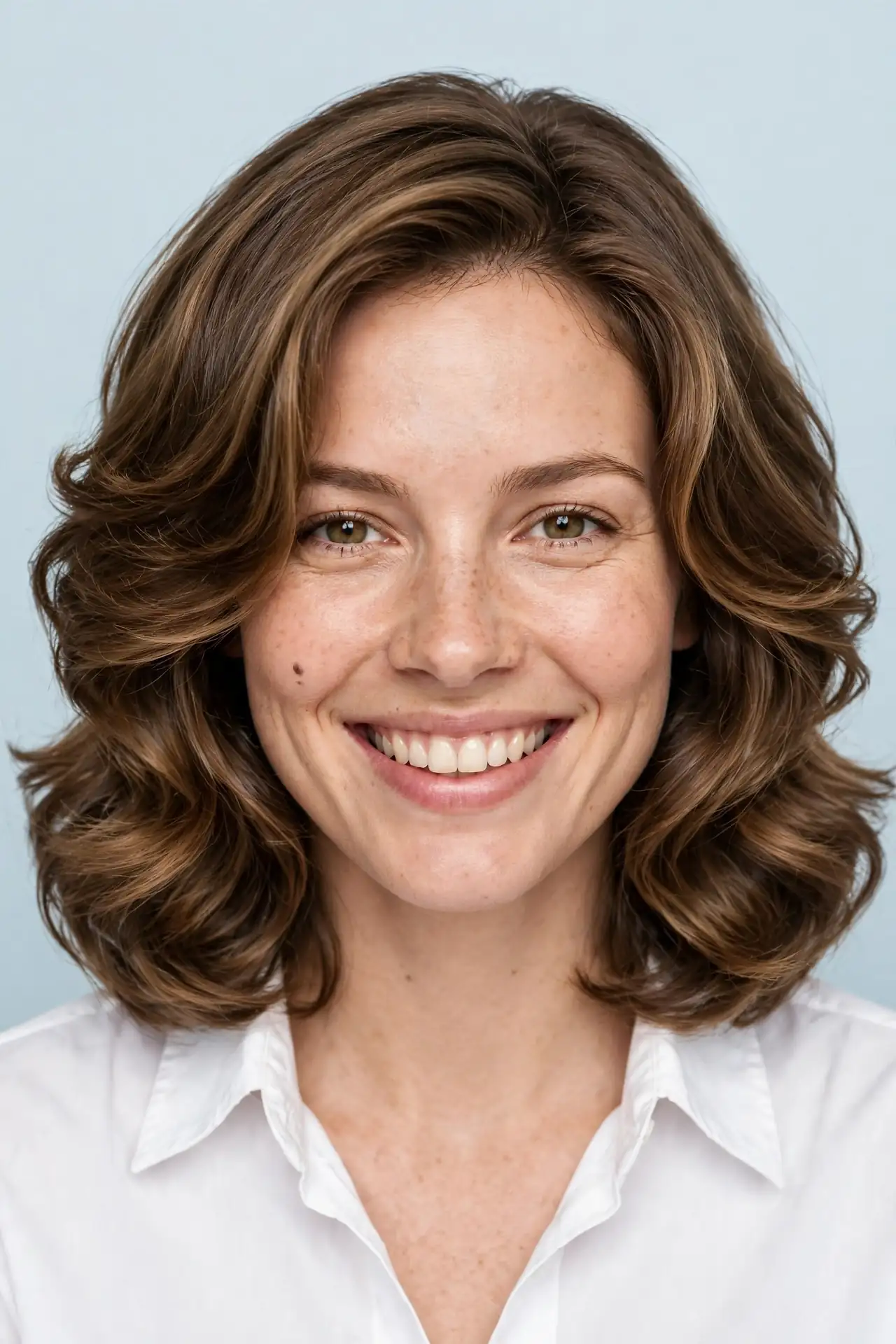
The Choppy Lob with Face-Framing
Stylists often push thick wavy clients toward longer cuts because extra length weighs the hair down and tames frizz, and this shape gets the benefit without going long.
Choppy internal layers break up the density while face-framing pieces around the cheekbones and jaw remove bulk from the heaviest section, which is almost always the front. That front-weight problem is why so many thick-haired people feel their hair swallows their face.
Ask for the face-framing to start at the cheekbone for the most natural, flattering movement. Anything shorter tends to stick out rather than curve on wavy texture.

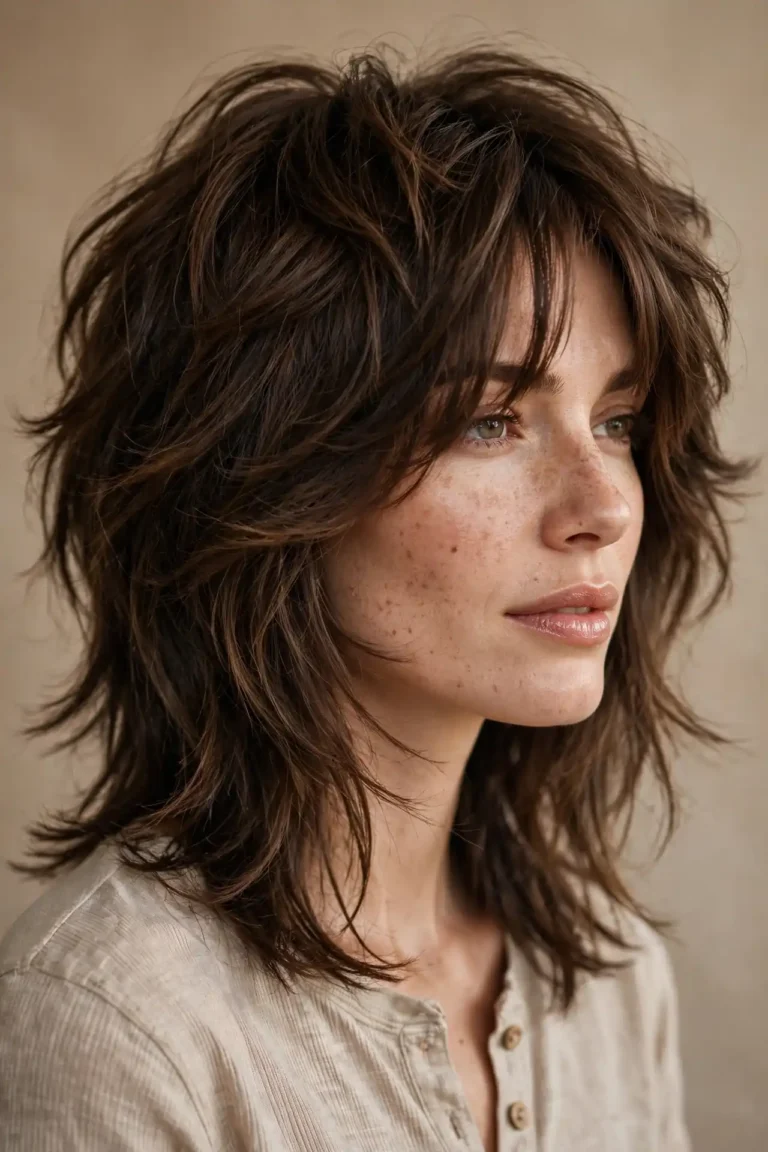
The Medium Shag with a Middle Part
Shag layers spread volume across the whole head rather than letting it collect at the bottom, which is precisely what dense waves need.
What makes it work on this texture:
- Layers distributed from crown to ends rather than only at the bottom
- Soft edges rather than blunt lines anywhere
- Natural wave doing the styling work automatically
- A middle part balancing the volume evenly on both sides
- Air-drying producing a genuinely good result
It’s one of the few cuts that looks better second-day than first, which makes the daily commitment close to zero.

The Butterfly Cut
Two layer lengths, short pieces framing the face and longer ones preserving the perimeter, and thick hair is exactly what this cut was designed to manage.
The layering removes weight that makes dense hair sit heavy and flat, letting it move properly. On wavy texture the layers become visible automatically as the waves form, which means you get the winged effect without a blow-dry.
Request internal and hidden layers rather than heavy surface layering, so the outline stays intact while the bulk underneath disappears. Keep the layers long and flowing rather than choppy, which prevents the shape reading too aggressive.
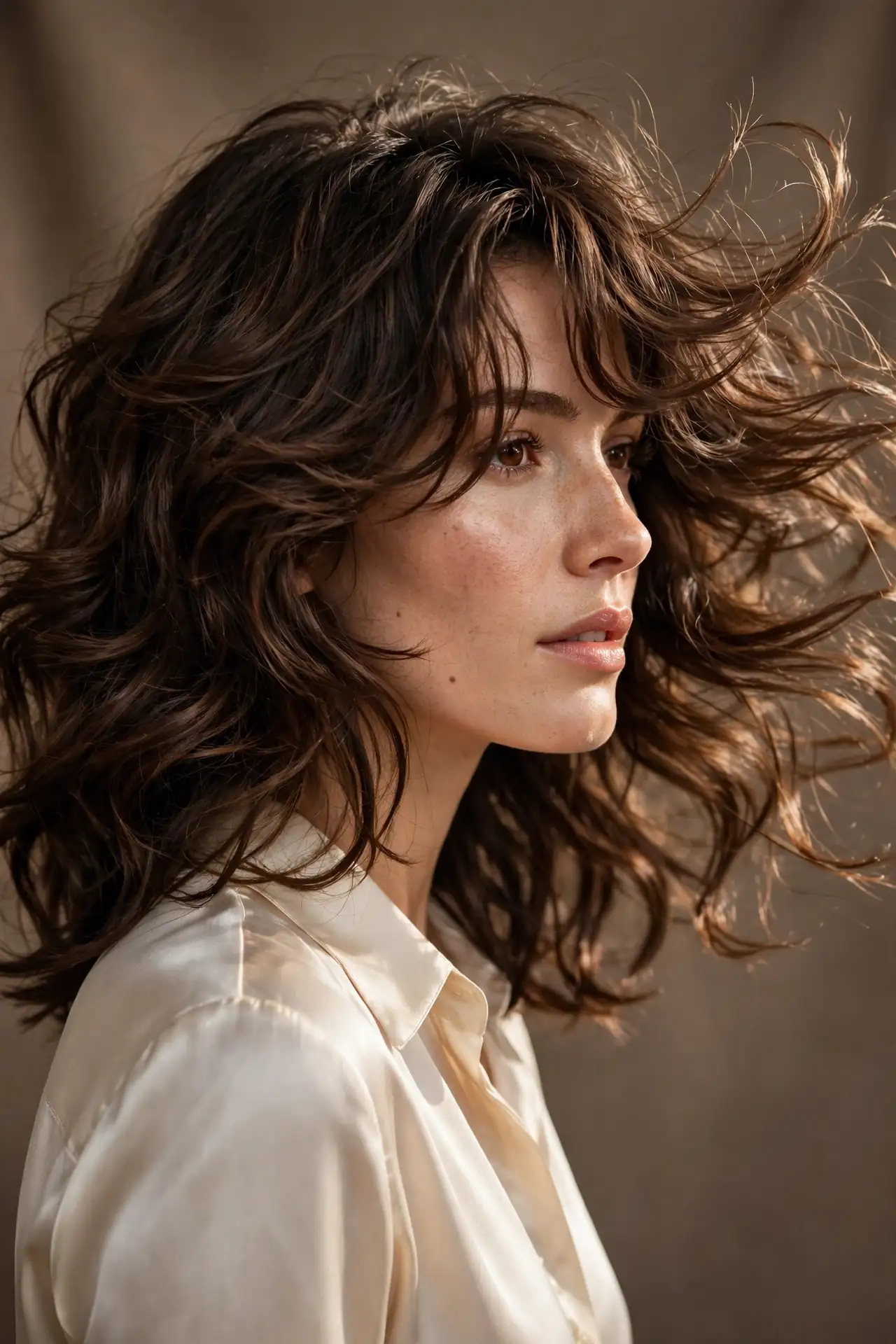
The Wolf Cut
Volume at the crown, lightness at the ends, and a shape that leans into thick waves rather than fighting them. The wolf cut concentrates its shortest layers at the top and crown, which is where thick wavy hair falls flattest, then thins dramatically toward the ends where the bulk usually collects. That’s the exact inverse of how untouched thick hair behaves.
Expect texturising spray daily, since the whole shape depends on a slightly rough finish. It’s the boldest medium option here and it needs some conviction, but on dense waves it delivers a genuinely transformed silhouette.

Shoulder-Length with Curtain Bangs
Curtain bangs remove weight from the heaviest front section while framing the face gently, which is a rare combination. Thick straight or wavy hair holds a curtain fringe’s shape particularly well, so the look stays defined through the day rather than separating. The fringe should blend into the face-framing layers rather than sitting as its own block.
One thing to plan around: hair ending exactly at shoulder level pushes outward against your shoulders and flips. Cut slightly above or slightly below rather than exactly at the line, or accept the flick as part of the shape.

Long Cuts for Thick Wavy Hair
Length weighs the hair down, which helps, but it also concentrates enormous bulk at the bottom unless the layering is right.
Long Layers
Without layers, long thick waves look like a heavy flat triangle. With them, the same hair cascades. Long sweeping layers distribute the volume evenly from mid-shaft down, which lets the wave pattern spring properly rather than being crushed by the weight above it. The cut maintains your length while completely changing how the hair moves.
Ask for vertical and horizontal layers together. That combination cuts down volume while creating genuine lightness and movement, rather than simply shortening some sections. Trims stretch to ten or twelve weeks, which makes this the lowest-maintenance option on the entire list.
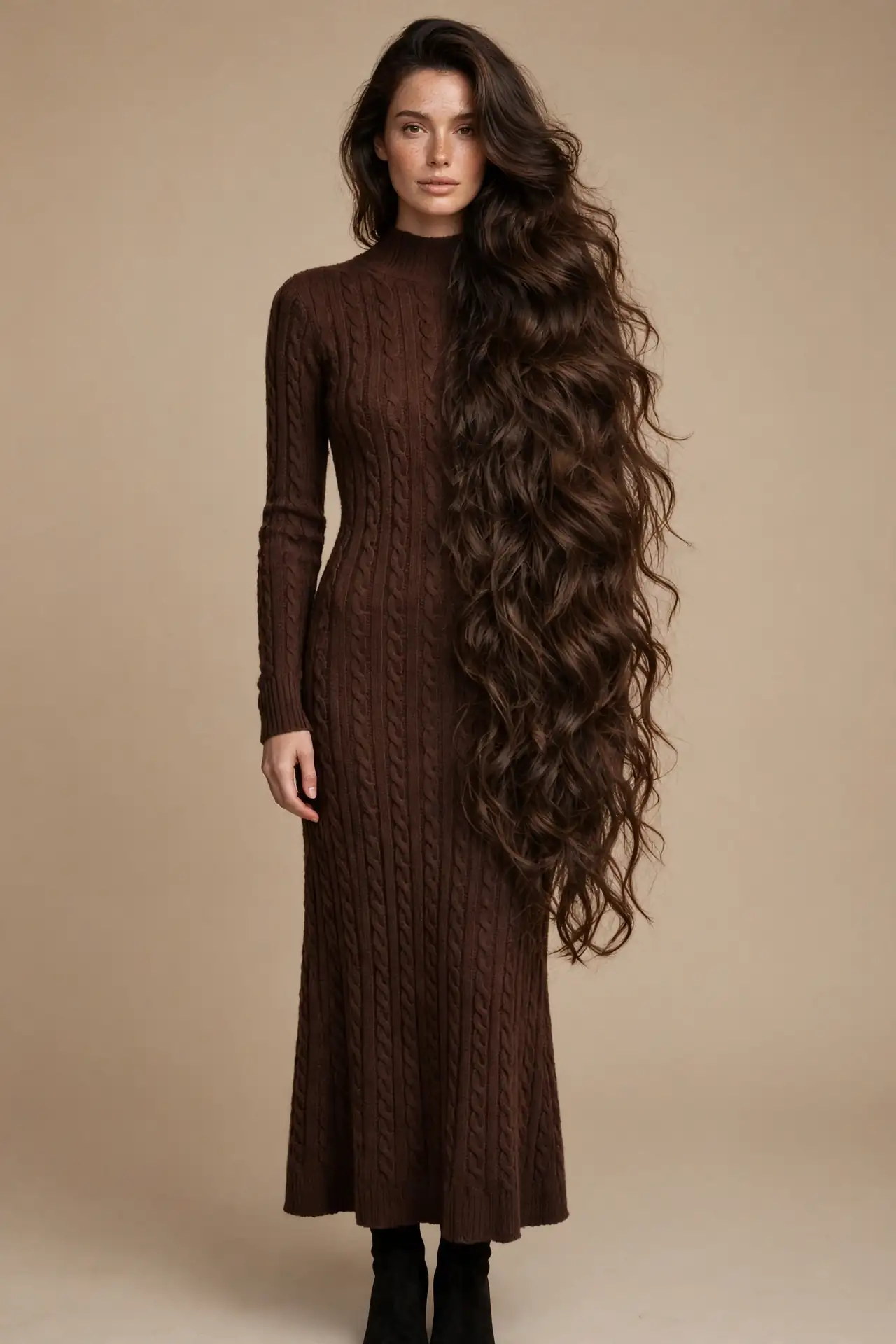
Thirty Percent: The V-Cut
Layering can reduce visible bulk by roughly thirty percent without changing your actual hair density, and the V-cut is one of the most efficient ways to do it. The layers taper into a soft V shape at the back, and that angled structure specifically reduces bulk where thick hair collects most: the bottom centre. Hair falls in a more controlled way, neat but still full of life.
On dense wavy hair the V should be soft rather than severe. A sharp V reads dated and can leave the ends looking thin. Ask for the point to be blended rather than dramatic.
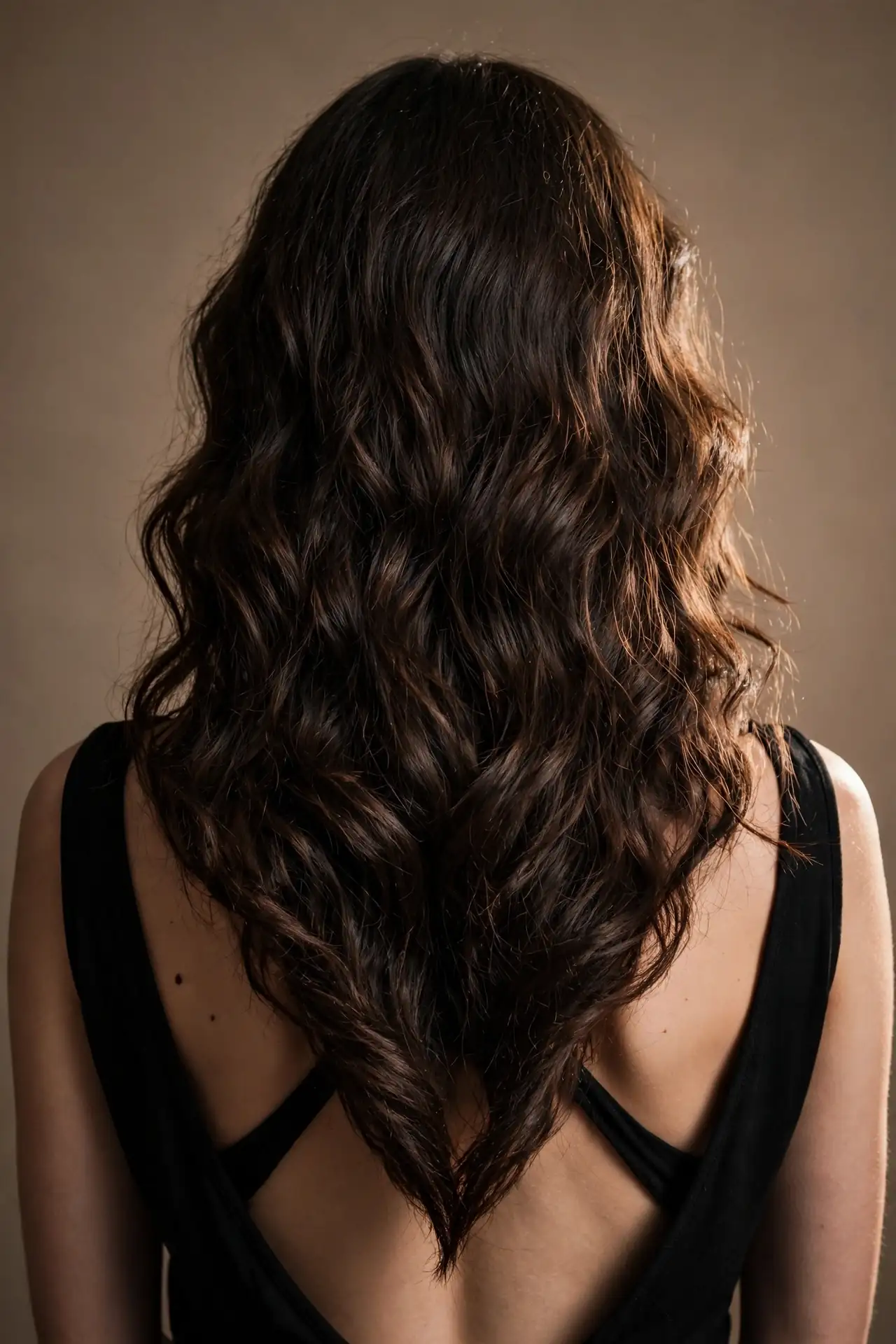
The U-Shaped Cut
A gentler alternative to the V, curving from shoulder to shoulder rather than tapering to a point. The U removes just as much weight from thick ends but with a softer, more blended line, which suits anyone who wants the bulk gone without an obvious shape decision. It reads as simply well-cut hair rather than as a styled silhouette.
Pair it with long razor-cut layers for mussed-up texture, or keep the layers softer for a more polished finish. Both work on thick waves, and the choice comes down to whether you want the cut to look deliberate or effortless.
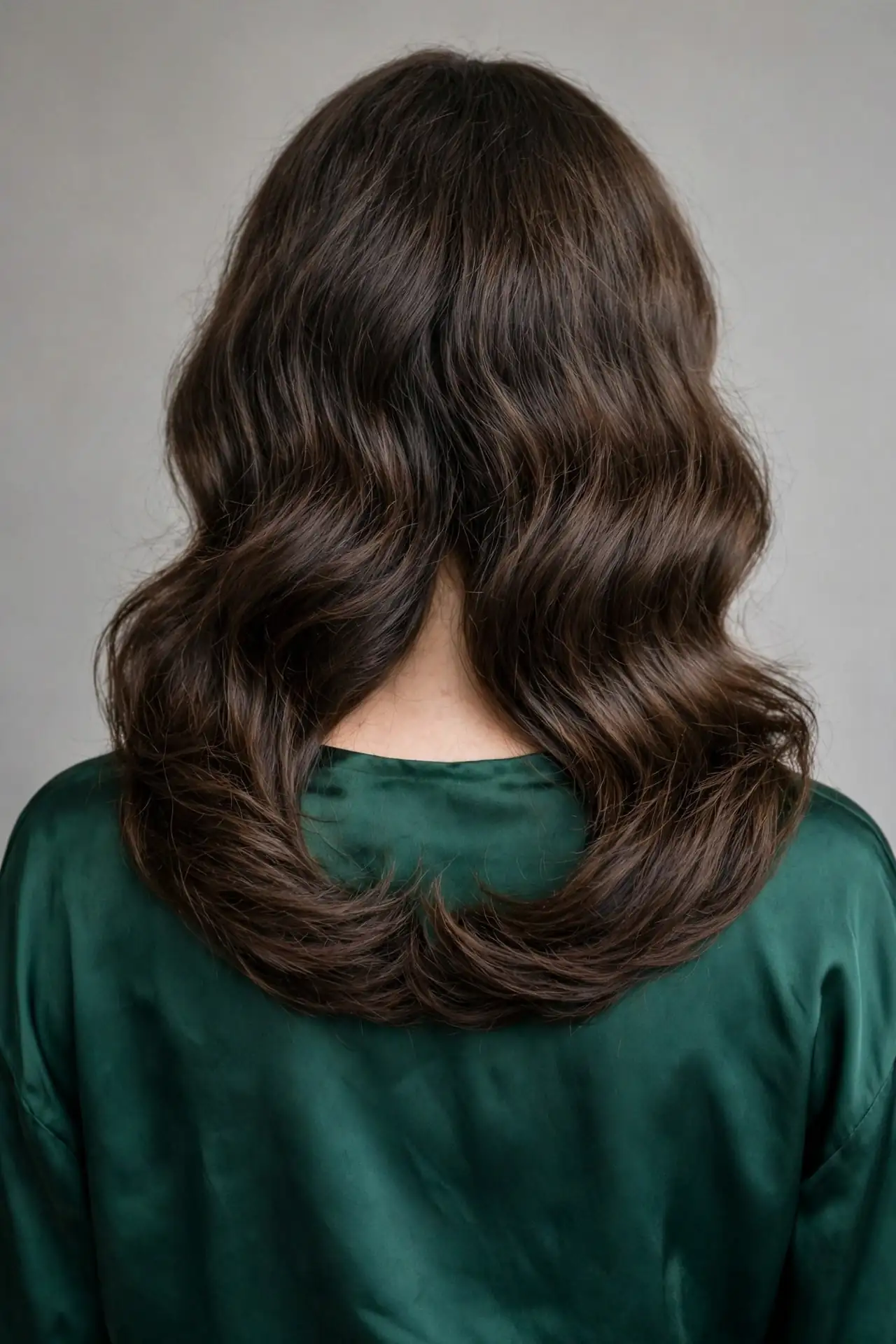
The Long Shag
Longer shags read neater than their medium counterparts while keeping enough attitude to feel current. Disconnected jagged layers create texture and a shattered shape that stops long thick hair reading as a solid mass. Style it so some ends stick out rather than smoothing everything down, since the deliberate irregularity is the point.
Highlights amplify the effect considerably, because the visual break between lighter and darker pieces reinforces the break the layers are creating. On very thick hair this is one of the few long cuts that genuinely looks lighter than it is.

Long Hair with Invisible Layers
Chunky visible layering is what makes some long cuts look dated. Invisible layering removes the same weight without showing a single step. The technique places layers entirely inside the hair, so the outline stays solid and the movement appears only when you move. On thick waves this is often the most flattering approach, because the density means you can remove significant weight without the ends ever looking thin.
It’s the phrase most worth memorising for a consultation. Ask for internal weight removal with no visible steps, and specify that you want the perimeter kept strong.
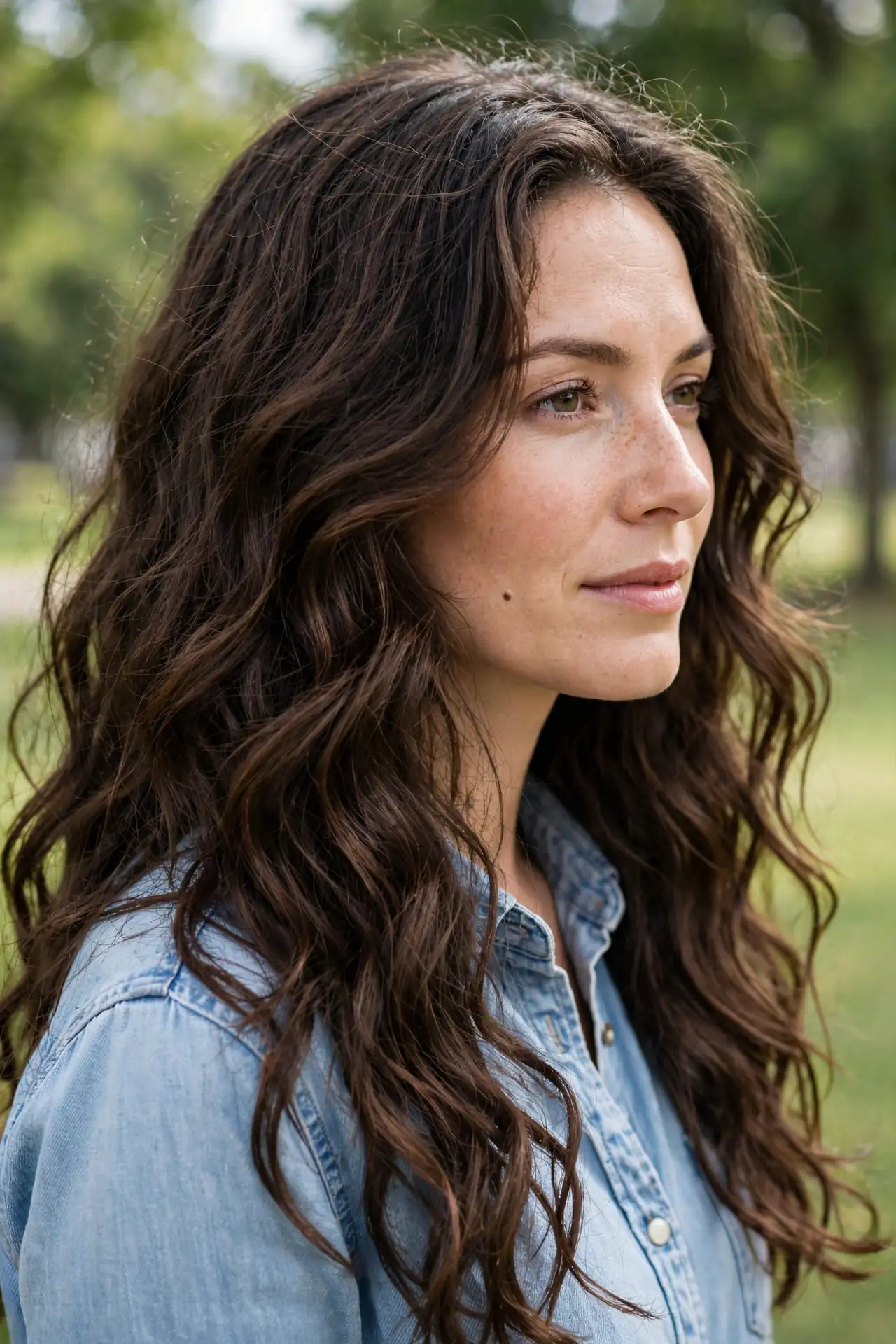
Long with a Money Piece
Two lightened sections at the front, and nothing else touched. On thick hair the money piece does something specific: it visually breaks up the dense wall of colour at the front of the face, which is where thickness reads heaviest. The brightness draws the eye to your features rather than to the volume around them.
It also costs a fraction of full colour and grows out with no line. Anyone with thick hair who has been told full highlights would be too expensive or too damaging should consider this instead.
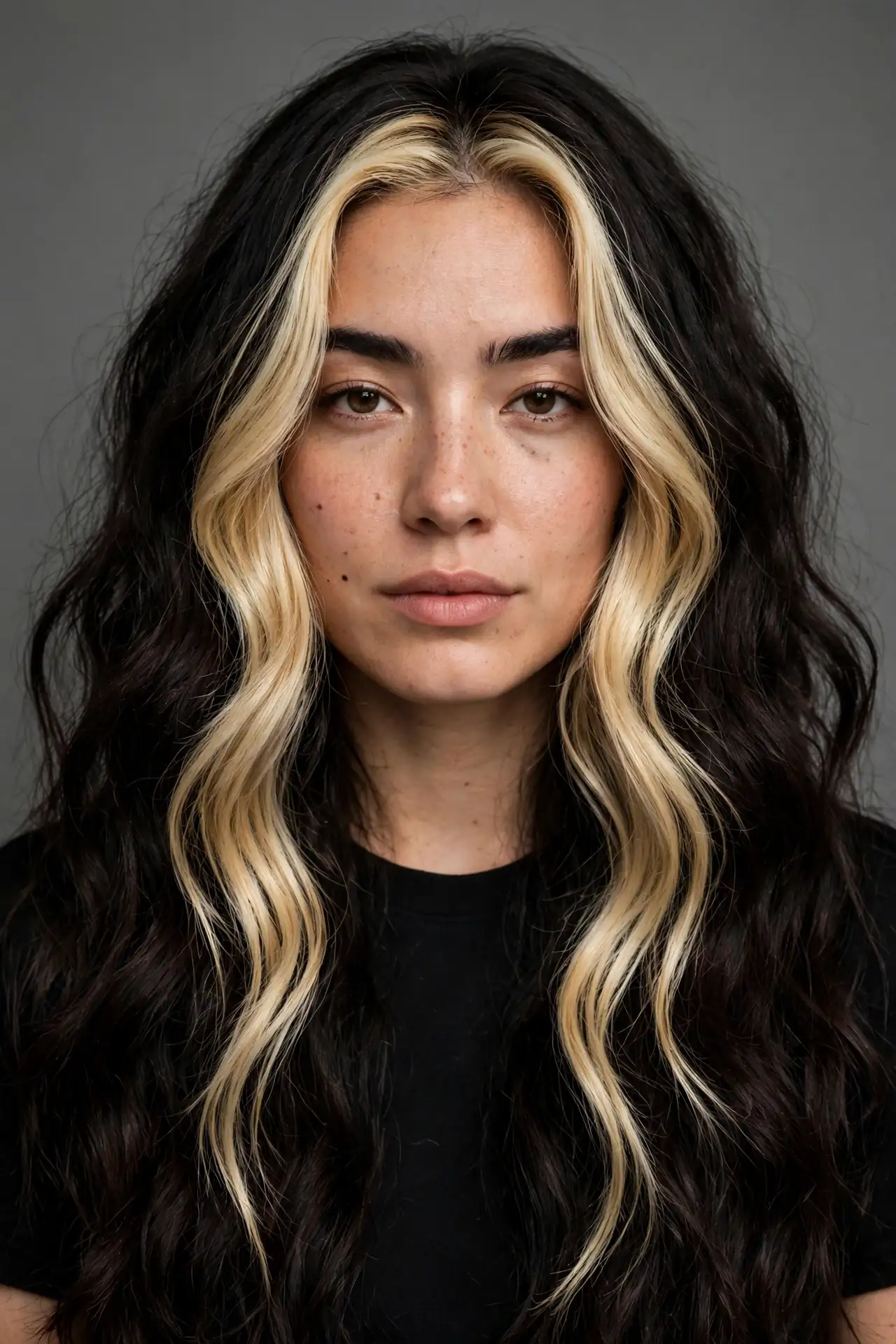
Bangs and Face-Framing on Thick Waves
Fringe choice is where thick hair goes wrong most often, and one common option genuinely doesn’t work.
Curtain Bangs
The safest and most flattering fringe for this texture by a clear margin. Curtain bangs remove weight from the front while giving the face a soft frame, and their length means there’s enough hair to hold a shape rather than puffing. On thick waves they should be cut slightly longer than on straight hair, since the bend lifts them.
Style them by blow-drying downward and away from the face with a medium round brush, then finishing with cool air. Reshape every four to six weeks, and expect the first few weeks after cutting to be the trickiest as the hair learns the direction.
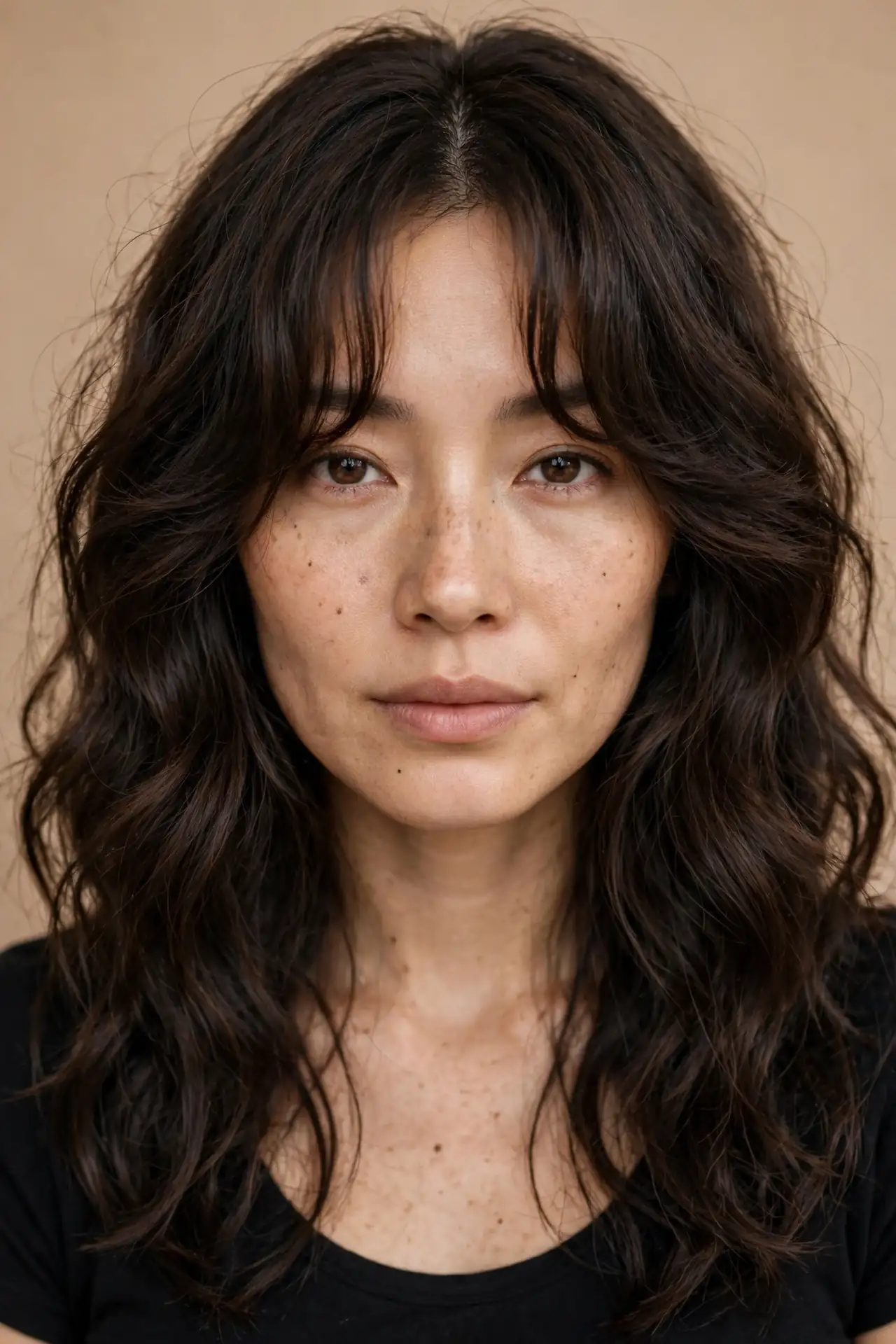
Side-Swept Bangs
A diagonal fringe breaks up the heavy front section while creating an angle that thick, wide-reading hair benefits from. Because the sweep travels across rather than straight down, the weight distributes sideways rather than piling up. It’s also the most forgiving fringe for anyone with a cowlick, since the shape can be built to work with the growth direction.
Longer is better on thick hair. A short side-sweep on dense waves lifts and separates, whereas one reaching past the outer eyebrow has enough weight to lie properly.

Skip the Micro Fringe
Honesty is more useful than options here. Micro fringes and very short blunt fringes often don’t work on thick hair at all. They end up looking too full and puffy, and they’re genuinely difficult to tame day to day. The density that makes thick hair look healthy at length becomes a liability in a two-inch section sitting on your forehead, where there’s no weight to hold it flat.
If you want something short and graphic, discuss it with a stylist who has cut your hair before and can be honest about whether your density and growth pattern can carry it. For most people with thick waves, face-framing pieces achieve the same softening effect without the daily battle.
Colour That Helps the Cut
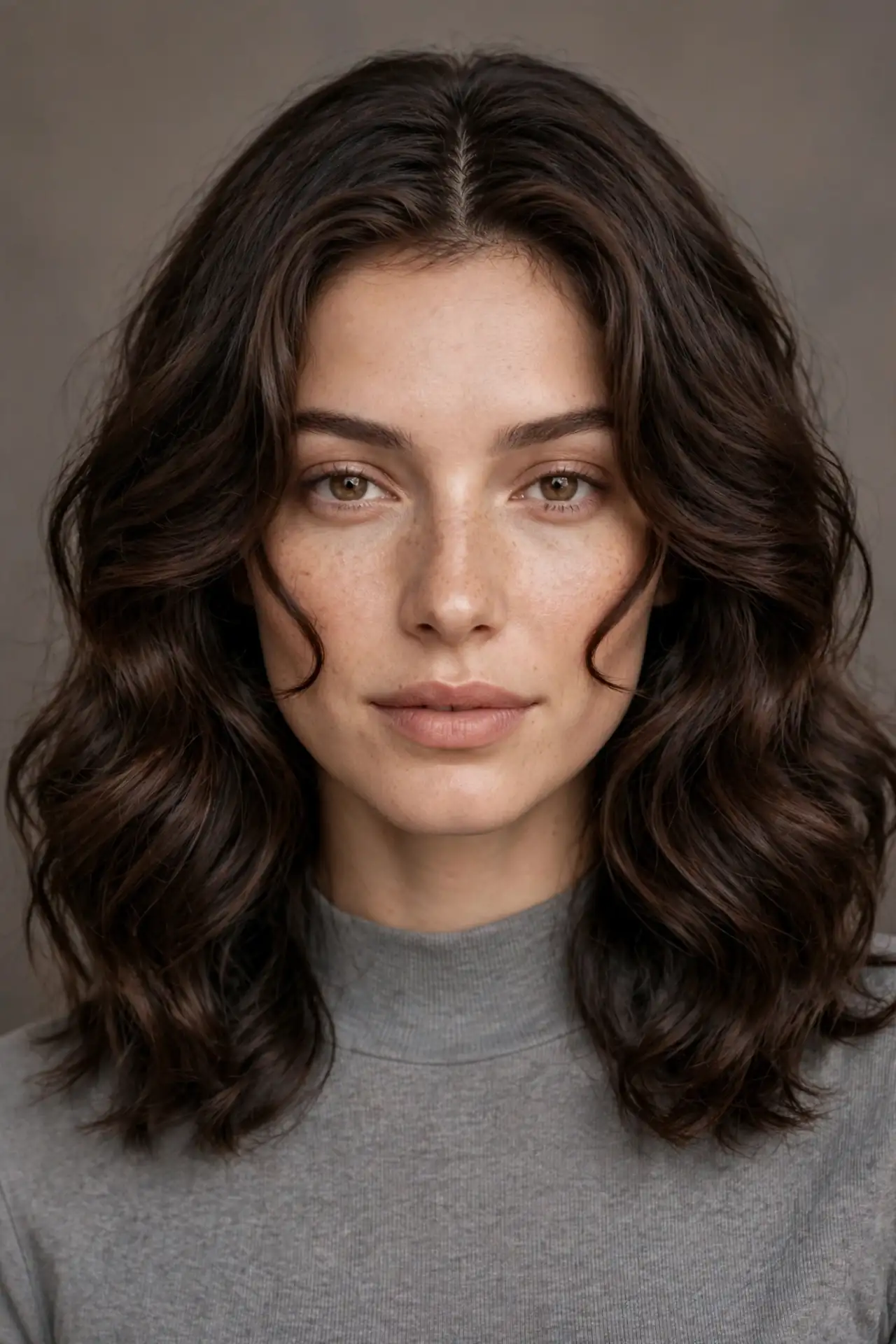
Vertically Placed Balayage
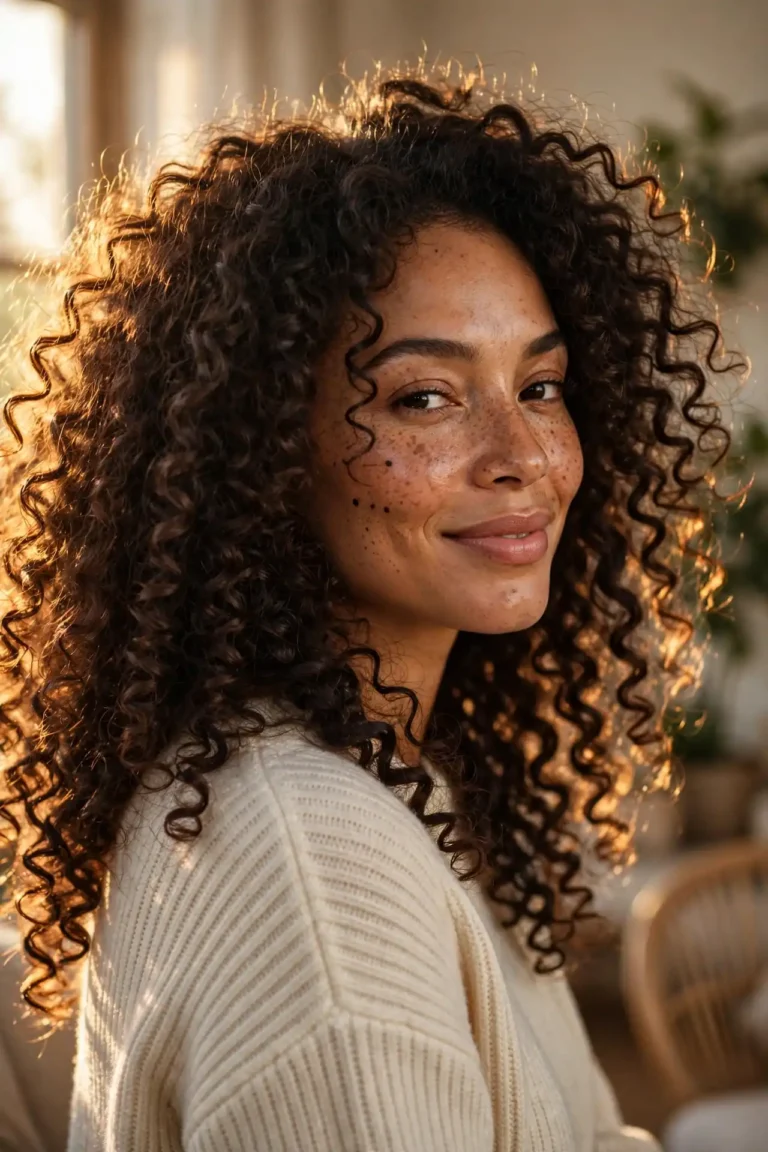
Colour choice affects how heavy thick hair looks, and placement matters more than shade. Balayage allows vertical placement, which follows the direction the layers travel and creates a natural grow-out. On thick wavy hair those vertical bands of light and dark visually break up the mass, making the hair read lighter than it is.
Horizontal or chunky placement does the opposite, creating stripes that emphasise width. Ask specifically for vertical, hand-painted placement concentrated through the mid-lengths and ends.
Warm Caramel Dimension
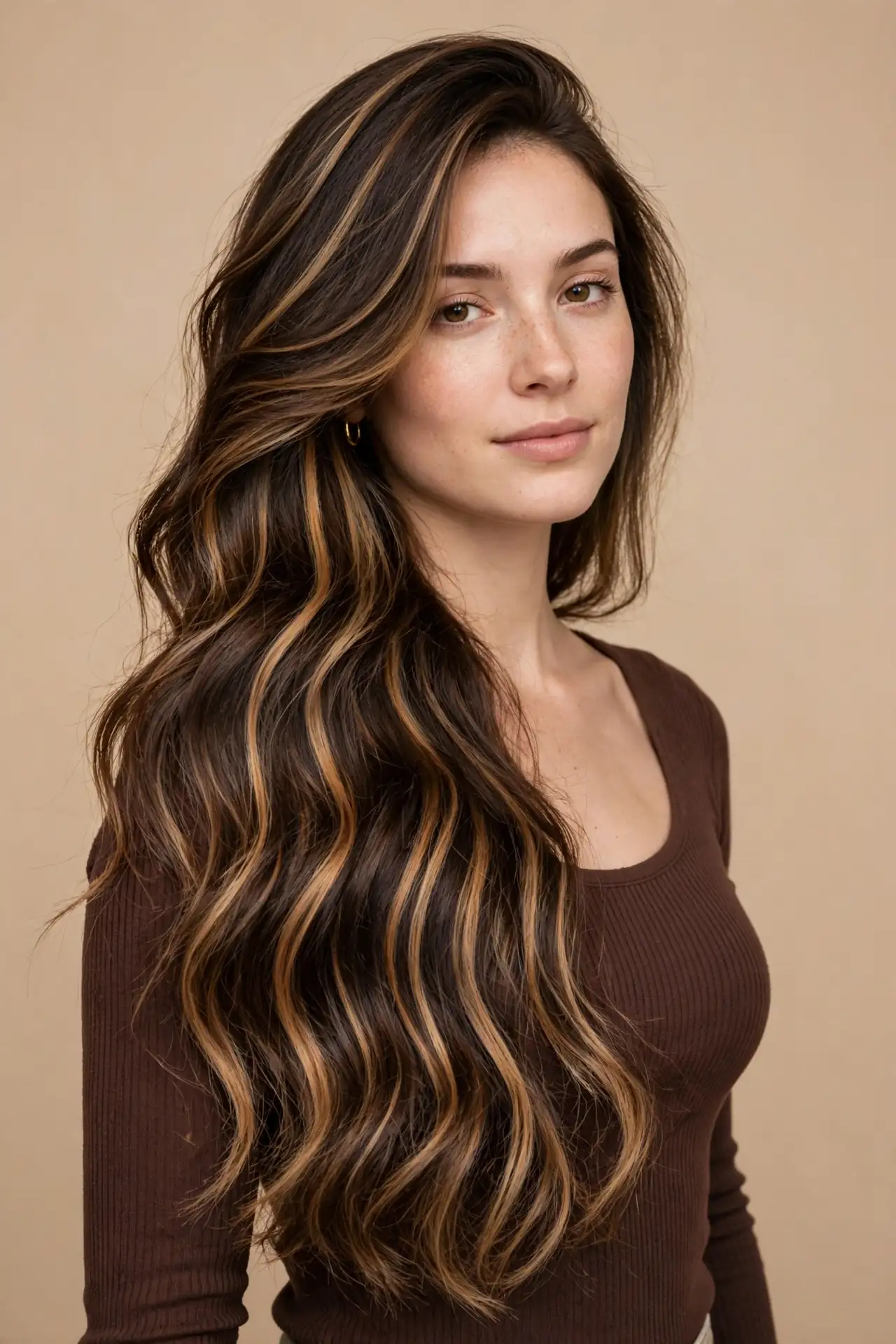
Why do some thick brunettes look heavy and others look expensive? Usually warmth and dimension rather than the base shade. Flat single-process colour on thick hair reads as a solid block, which emphasises exactly the density you’re trying to soften. Weaving caramel or warm brown through a darker base gives the eye multiple depths to read, and the effect is that the hair looks like it has more movement than it does.
Caramel is also one of the easiest highlight tones to maintain, since the grow-out is forgiving and it flatters a wide range of skin tones.
Face-Framing Highlights
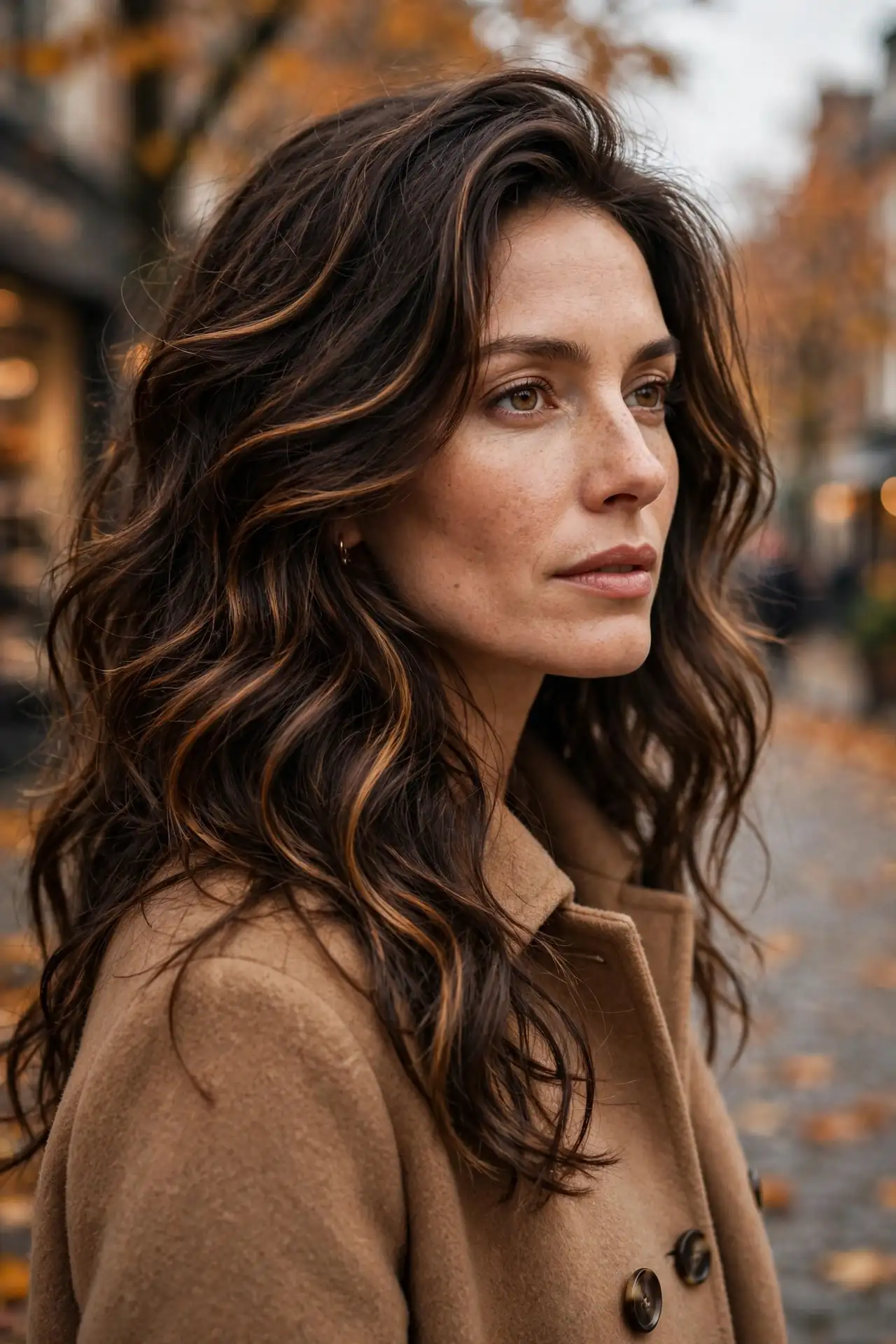
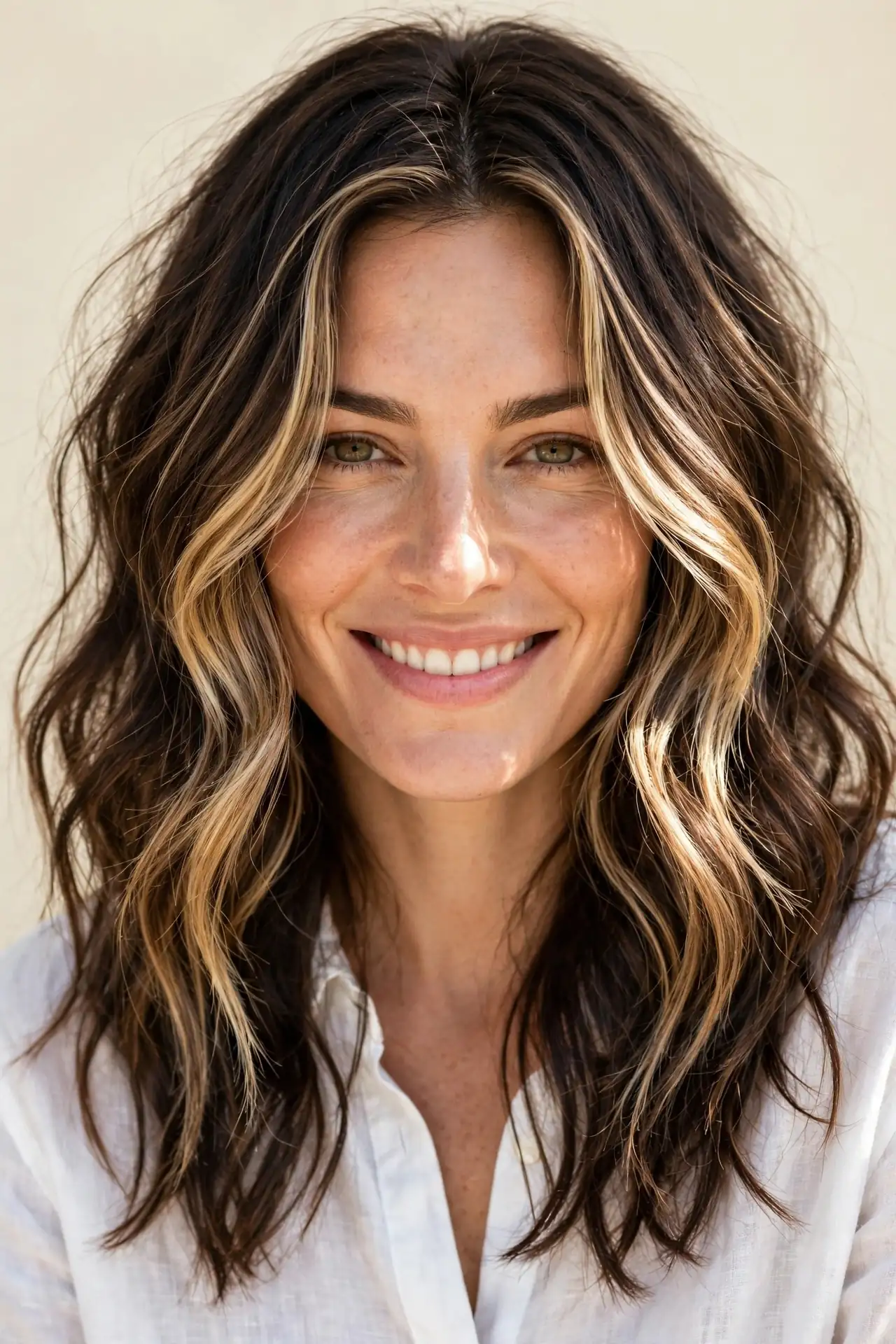
Brightening only the sections around the face lightens the visual weight exactly where thick hair feels most overwhelming. The pieces frame your features, draw attention upward, and require almost no maintenance since the placement is small. Combined with face-framing layers, the two techniques reinforce each other: the cut removes physical weight and the colour removes visual weight from the same area.
It’s the highest-impact, lowest-commitment colour option for this hair type, and most colourists can do it in under an hour.
What Thick Wavy Hair Actually Needs
Most thick-hair advice treats all thick hair the same. These are the distinctions that matter for waves specifically.
Thick Straight and Thick Wavy Are Different Problems
Thick straight hair holds blunt lines beautifully. A blunt bob on straight density looks sharp and deliberate.
Thick wavy hair almost always needs layering, because every bend in the hair occupies horizontal space that a straight strand doesn’t. That’s why blunt cuts on wavy density go boxy and helmet-like unless they’re softened with internal layers or styled with the waves deliberately encouraged.
If an article or a stylist gives you thick-hair advice without asking about your wave pattern, treat it cautiously. Knowing your texture before you sit in the chair is more useful than any reference photo.
The Techniques Worth Asking For By Name
| Technique | What It Does | When to Ask For It |
|---|---|---|
| Internal texturising | Removes 15 to 25% of weight from inside without touching the outline | Any length, when you want bulk gone but shape kept |
| Layering | Reduces visible bulk by around 30% without changing density | Medium to long, the default for thick waves |
| Razor cutting | Thins ends, softens the perimeter, prevents triangle | Short to medium, on healthy hair only |
| Point cutting | Softens ends gently with less removal | Fine to medium density, or damaged ends |
| Slide cutting | Feathers and removes bulk gradually | Long hair wanting airy ends |
| Thinning shears | Blunt weight removal, easily overdone | Rarely, and only from a stylist you trust |
The important line in that table is the last one. Thinning shears are the crudest option and the easiest to overdo, and over-thinned thick hair develops frizzy short pieces that take a year to grow back. Internal texturising achieves the same result with far more control.
Length and Maintenance Reality
| Length | Best Cuts | Trim Frequency | Morning Effort |
|---|---|---|---|
| Pixie to chin | Textured pixie, razor bob, graduated bob | 4 to 6 weeks | 2 to 5 minutes, needs styling |
| Chin to shoulder | Flipped bob, cub cut, shag | 6 to 8 weeks | 2 to 4 minutes |
| Shoulder to collarbone | Layered lob, butterfly, wolf cut | 8 to 10 weeks | Under 5 minutes, air-dry friendly |
| Below collarbone | Long layers, V-cut, U-cut, long shag | 10 to 12 weeks | Minimal, mostly air-dry |
Short cuts remove weight fastest and dry quicker, but they need more precise cutting and more frequent visits. Longer cuts hide grow-out better and air-dry more successfully, but they need genuine internal layering to move at all.
Be Honest About Your Morning
The single most useful thing you can tell a stylist is how many minutes you actually spend on your hair.
If the answer is under ten, you need a cut built for air-drying rather than one that depends on a blowout. That rules out most very short shapes on thick hair, since above-shoulder cuts genuinely need more convincing in the morning without the weight to hold them down.
It also changes the layering. A cut designed to air-dry needs more internal weight removal, because there’s no blow-dryer coming to redistribute anything.
Product Application on Thick Waves
Applying product to your whole head at once is why one side of your hair always looks better than the other.
Work in four sections and apply to each separately, so every wave gets even coverage. Thick hair simply has too much surface area for a single handful of product to reach everything, and the sections that miss out are the ones that frizz.
Apply to soaking wet hair rather than damp, scrunch upward toward the scalp, then leave it completely alone until dry. Every touch mid-dry breaks the wave clumps and creates frizz.
Growing Out a Bad Cut
If you’re currently living with a triangle, the fix is usually not more length.
Adding length adds weight at the bottom, which is where the problem already is. The faster route is a cut that removes interior bulk while keeping the outline, then growing from there. Ask specifically for internal weight removal without changing the perimeter, which lets the shape rebalance while you keep the length you’ve grown.
Final Thoughts
Thick wavy hair isn’t difficult, it’s just badly served by generic haircut advice. The techniques that work all do the same thing from different angles: remove weight from inside the hair while protecting the outline, and place the layers so volume travels vertically rather than collecting at the ends.
Tell your stylist you have thick wavy hair rather than just thick hair, since those two need opposite approaches. Ask for internal texturising by name. Be honest about your morning routine, because a cut designed for a blowout you’ll never do is a cut you’ll resent within a fortnight. Choose vertical colour placement if you’re adding balayage.
Save the cuts that match your length preference and your realistic maintenance appetite, then take two or three to a consultation. On this texture, the conversation before the cut matters more than the reference photo you bring.
Frequently Asked Questions
Why does my thick wavy hair go triangular?
Because weight collects at the ends while the roots stay flat under the mass above them. Every bend in a wave occupies horizontal space, so density expands outward at the bottom. Internal layering and weight removal from inside the hair, rather than only at the ends, corrects it.
Should thick wavy hair be layered?
Almost always, yes. Thick straight hair can carry a blunt cut, but thick wavy hair needs layers to prevent the triangle shape. The layering should be internal, removing weight from inside while keeping the perimeter intact, rather than heavy visible steps.
Are thinning shears good for thick hair?
They’re the crudest option and the easiest to overdo. Over-thinned hair develops short frizzy pieces that take a year to grow out. Internal texturising achieves the same weight reduction with far more control, and it can remove 15 to 25 percent of the bulk.
Do bangs work on thick wavy hair?
Curtain and side-swept bangs work well, since they remove weight from the front and have enough length to hold a shape. Micro fringes and very short blunt fringes usually don’t, because dense hair in a short section puffs outward with no weight to hold it flat.