24 Curly Bob Haircuts That Won’t Turn Triangular
Almost everyone with curls has a bad bob story. Three hours in a chair, a stylist working from a straight-hair mental image, and a walk home with what one client memorably called a triangle head. That single experience puts people off the cut for years, which is a shame, because a well-executed curly bob is one of the most flattering things curly hair can wear. Removing length removes weight, and weight is what drags curls down and flattens the pattern you actually want to see.
The difference between the two outcomes comes down to a handful of technical decisions your stylist makes before the first cut. Where the perimeter sits when the hair is dry, not wet. Whether internal layers break up the weight at the bottom. Whether shrinkage was accounted for. Get those right and the shape stays rounded. Get them wrong and gravity builds a pyramid.
Twenty-four versions follow, sorted by curl pattern first, because a bob for type 2 waves and a bob for 4C coils are genuinely different haircuts wearing the same name.
Curly Bobs for Waves and Type 2 Texture
Looser textures need less layering than tighter ones, and often benefit from a cleaner perimeter than curly hair guides typically recommend.
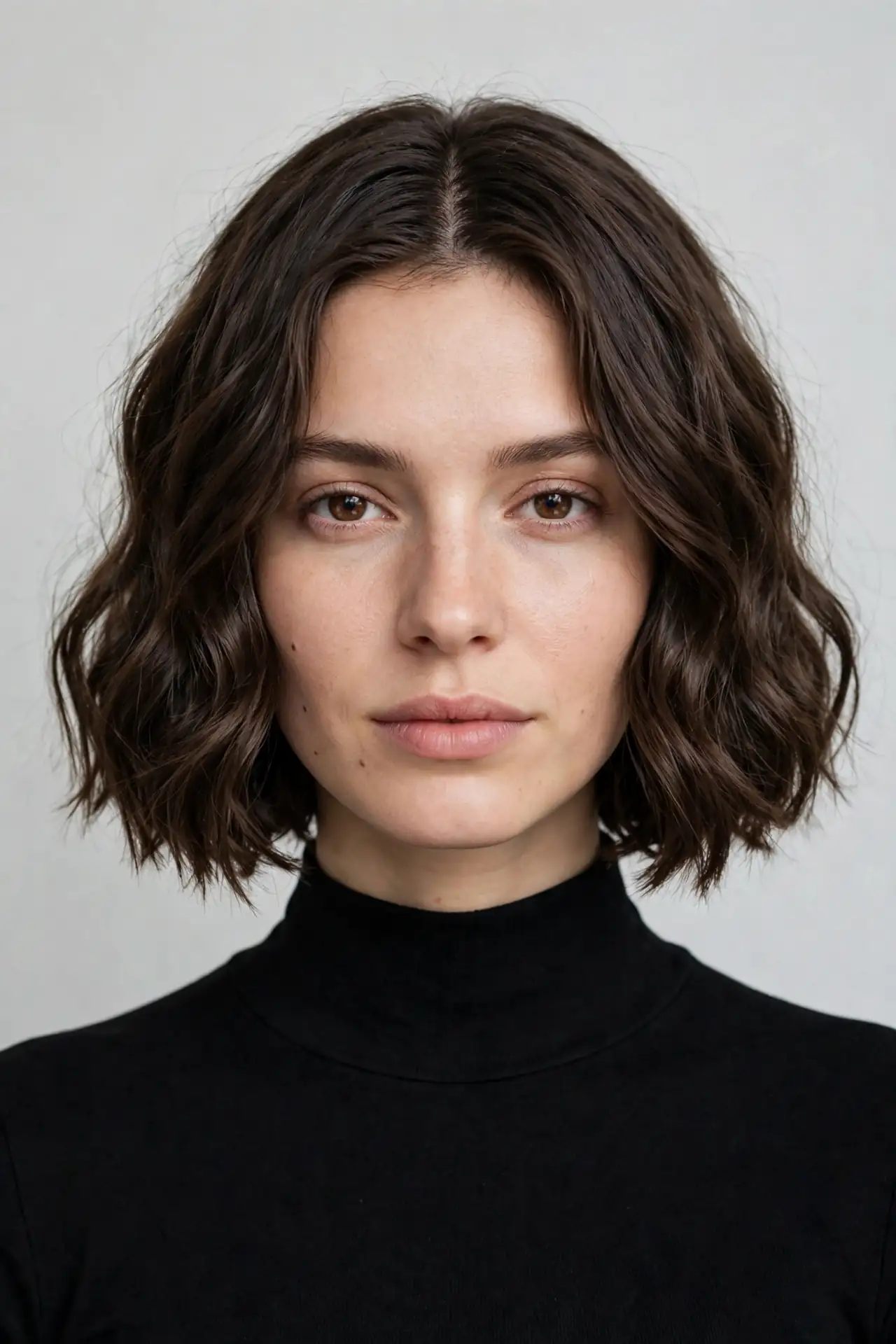
1. The Clean-Perimeter Wavy Bob
Loose waves are the one texture where a relatively solid perimeter genuinely works, because there isn’t enough spring in the pattern to build the triangular bulk that tighter curls create. The shape sits at chin or slightly below with only light internal layering, which keeps the ends looking full rather than wispy. Type 2A through 2C get the best results, particularly anyone whose waves flatten at the crown. Removing the weight of longer length lets the bend at the roots actually show.
Style it by scrunching a lightweight mousse into damp hair and air-drying without touching it. A centre part makes the S-shaped bends most visible, which is exactly what you want on a texture this subtle.
2. The Shaggy Wavy Bob
Ask a stylist for the coolest possible version of this cut and you’ll usually land here. Jordan Jones, colour director and stylist at Taylor Taylor London, describes the shaggy bob as a fusion of sophistication and ease, taking the precision of a classic bob and adding modern undone texture. His point about grow-out is the practical one: it only gets better as it grows, which is unusual among short cuts.
Choppy layers throughout, a slightly rough perimeter, and enough movement that bedhead reads as intentional. It suits people who want volume and a bit of carefree attitude, and it’s noticeably lower maintenance than a precise bob because there’s no clean line to lose.

3. The Curved Wavy Bob
Why do some bobs tuck under beautifully while others flick out at the ends? Length, almost entirely. UK-based hairstylist Issey Cook is direct about it: the curve works best just above the shoulder so the ends naturally tuck under, and if it’s too long they tend to flick out instead. That single measurement decides the whole silhouette.
His technical advice is equally useful. Keep the top slightly heavier and break up the underneath, so the ends feel lighter, move more freely and bend under easily. Natural wave holds the curve without any hot tools, which is why this shape suits type 2 hair particularly well.

4. The Wavy Lob with Soft Layers
Sitting just above the shoulders, this is the most forgiving option on the entire list. Loose waves with gentle layering framing the face reduce visual bulk without removing the length that makes waves look full. Round and heart-shaped faces find layers falling around the chin particularly flattering. Medium density is the sweet spot, since there’s enough hair to support the layer structure without it deflating.
Maintenance is genuinely low, though the shape still needs a trim every eight to ten weeks to stop the layers going shapeless. Diffusing or a quick pass with a curling wand refreshes day-three waves.

Curly Bobs for Type 3 Spirals
Defined spirals need real layering, and this is where the triangle risk begins in earnest.
5. The Classic Layered Curly Bob
The default recommendation for 3A curls, and for good reason. Careful shaping reveals springy defined ringlets while strategic layers prevent the widening that catches out tighter patterns. Layer placement is everything. The layers should be internal, meaning weight is removed from underneath while the outline stays intact, rather than surface layers that create visible steps. Point cutting at the ends creates lots of different lengths, which produces a softer finish and lets individual curls define more clearly.
Face-framing layers or long curly bangs keep movement around the face. Ask specifically for the perimeter to be shaped when your hair is dry, and expect the whole appointment to take longer than a straight-hair cut. That extra time is what you’re paying for.

6. The Rounded Curly Bob for 3B
Most people ask for a bob and get a shape. What they actually need is a rounded shape, and saying that word changes the result. One length rarely works on curly hair because it becomes triangular and builds weight around the face and neck. A rounded bob distributes that weight evenly, keeping the silhouette circular rather than conical. The layering follows the curl pattern rather than a predetermined guide.
There’s a second risk worth naming. Over-layer a curly bob and it stops reading as a bob at all, drifting into curly shag or curly mullet territory. The line between “layered bob” and “shag” is thinner than most clients realise, so bring a photo of the exact silhouette you want.
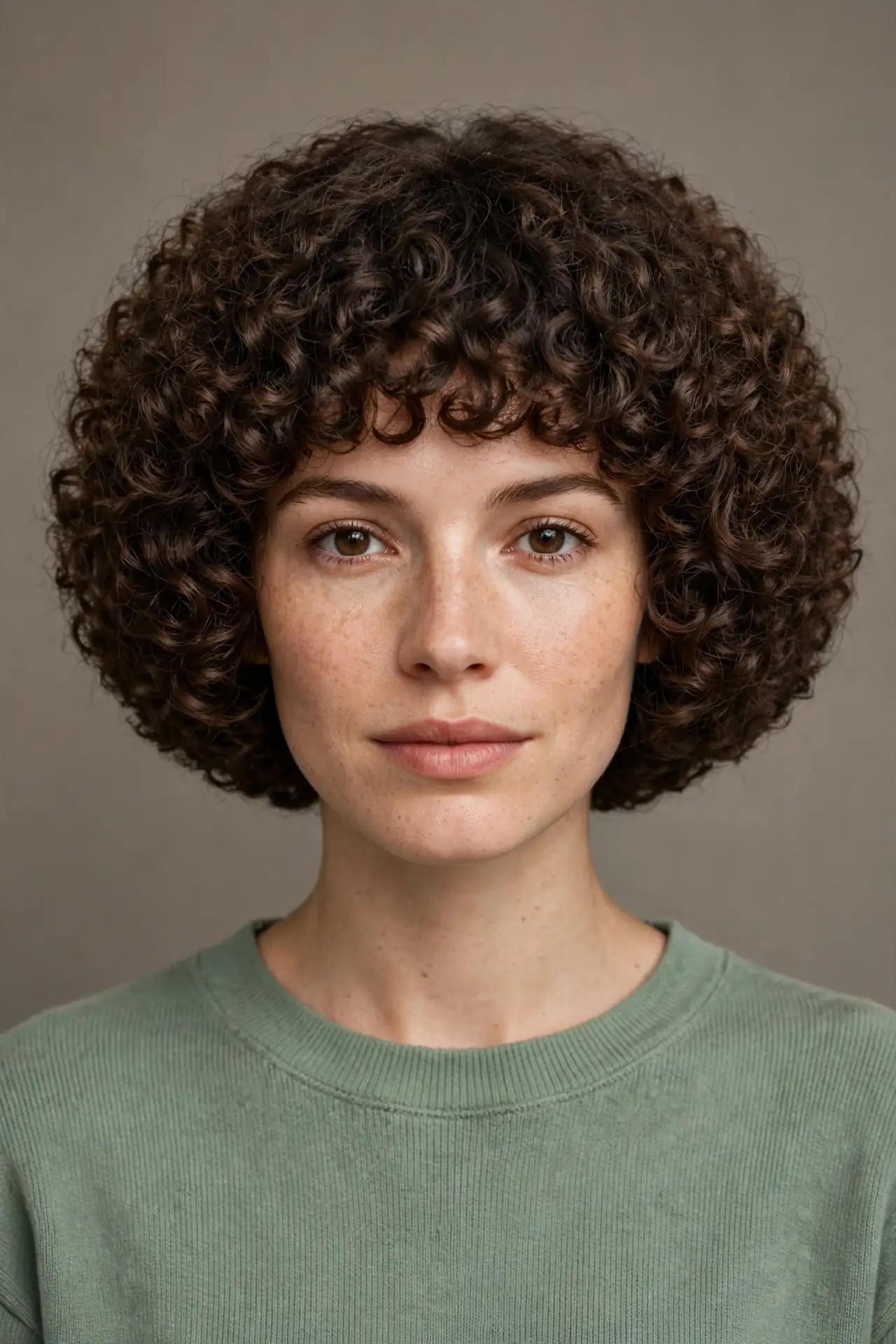
7. The Chin-Length Bouncy Bob
Chin length is where curls spring most freely, because there’s almost no weight left to pull them down. The bounce is the whole appeal, and 3B and 3C patterns get the most dramatic transformation. What surprises people is how much shorter it looks than expected, since a curl sitting at chin level when dry was somewhere near the collarbone when stretched.
Ask for it to be cut longer than your target length to allow for spring-back. Anyone nervous should go slightly longer than they think and take more off at the next appointment, which costs one extra visit and saves three months of regret.

8. The Curly Bob with Curtain Bangs
Curly curtain bangs turn a good bob into a deliberate one, adding intent to a shape that might otherwise read as simply short. What to get right:
- Cut dry, always, since curly bangs shrink dramatically
- Longer than your target, ideally to the cheekbone or below
- Shaped curl by curl rather than in a straight line
- Blended into the front layers, not cut as a separate block
- Refreshed with water and a little cream rather than restyled
The bonus is grow-out. Curtain bangs on curly hair become face-framing layers within a few months, so there’s no awkward stage to survive.

9. The Asymmetrical Curly Bob
One side cut noticeably longer than the other, with the contrast dialled up or down depending on how bold you want it. Asymmetry solves a specific problem on curly hair: symmetrical curly shapes can read heavy and static, while an uneven perimeter creates movement the eye follows. It’s particularly flattering on round faces, since the diagonal line introduces an angle the face doesn’t naturally have.
Be aware that the shorter side needs more frequent attention than the longer one. Trims every six to eight weeks keep the contrast reading as a design choice rather than an accident of growth.
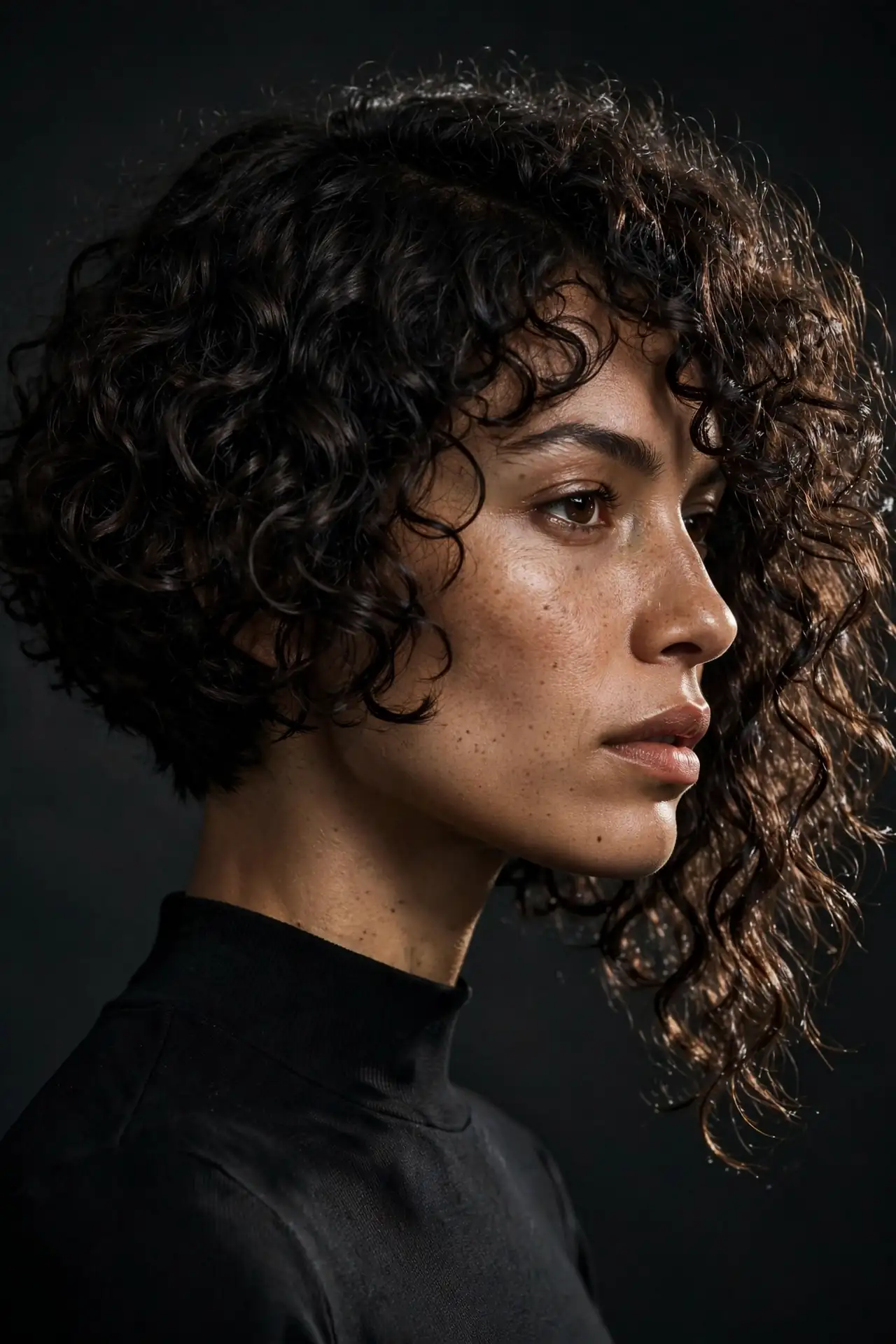
Curly Bobs for Type 4 Coils
Tighter patterns need weight placed deliberately, and shrinkage becomes the dominant variable rather than a footnote.
10. The Tapered Coily Bob
Tapering the sides and back while keeping fullness on top is the shape that consistently works best on tighter curl patterns. For 4C hair specifically, a tapered or layered bob adds dimension and volume where a one-length cut would simply expand outward. The taper controls the width at the sides, which is precisely where coily hair grows out rather than down. That narrowing creates the rounded silhouette the cut needs.
Cutting happens on stretched or dry hair, section by section, with the stylist checking the shape as it shrinks back. Expect the finished cut to sit several inches higher than it appeared during the cutting process, which is normal and not a mistake.
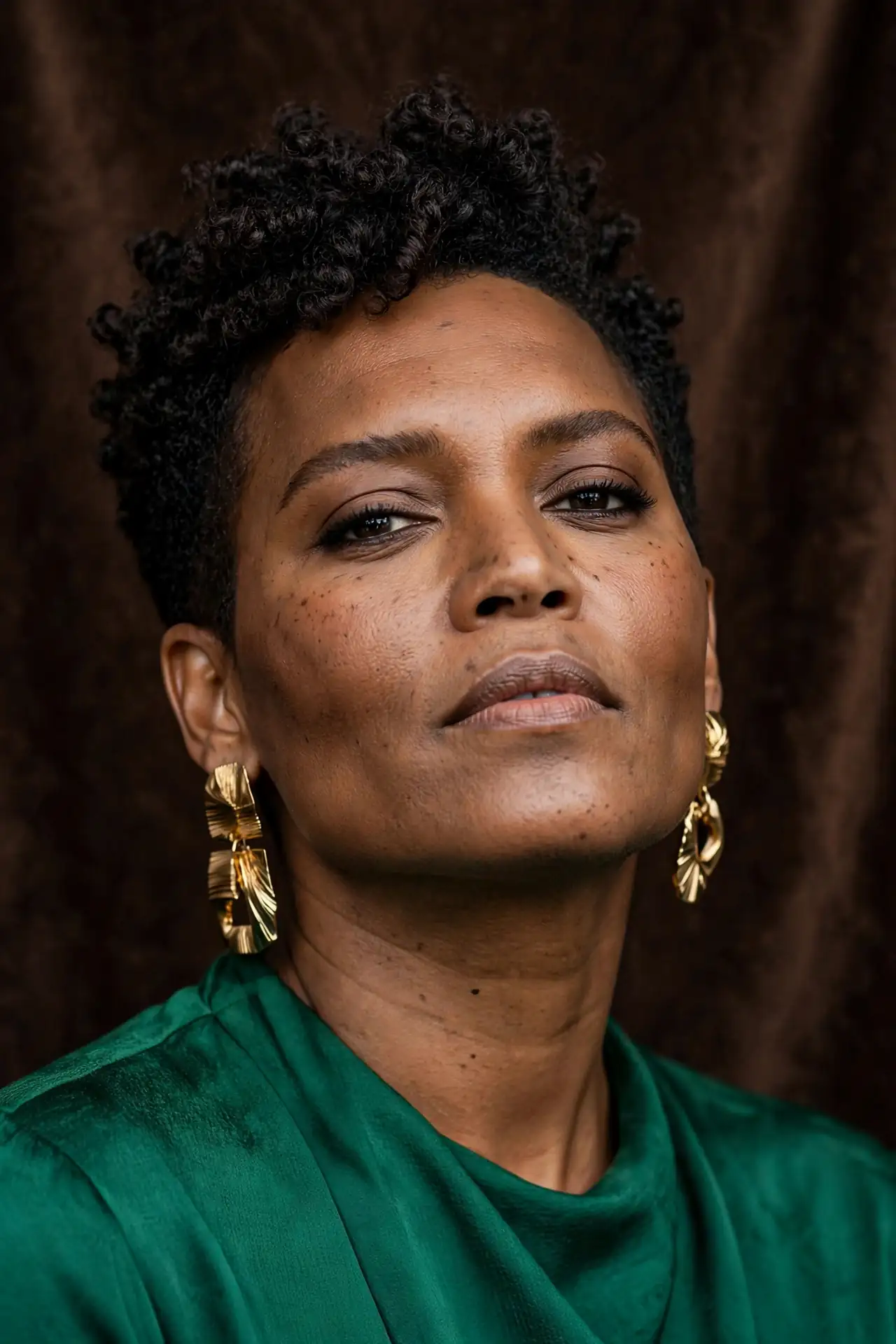
11. The Stacked Coily Bob
Shorter layers building up through the crown give the profile real height, which is the specific thing tight coils often lack. The stacking at the back plays a supporting role rather than being the feature. Its job is stopping the shape from expanding outward unchecked while adding lift where the hair falls flattest. Viewed from the side, the profile reads as a soft wedge rather than a round ball.
This cut needs a stylist who understands shrinkage intimately, because what looks like a chin-length curl when stretched is really sitting at ear level once it springs back. The shape is beautiful and genuinely unforgiving if the layers land wrong, so portfolio-check before booking.
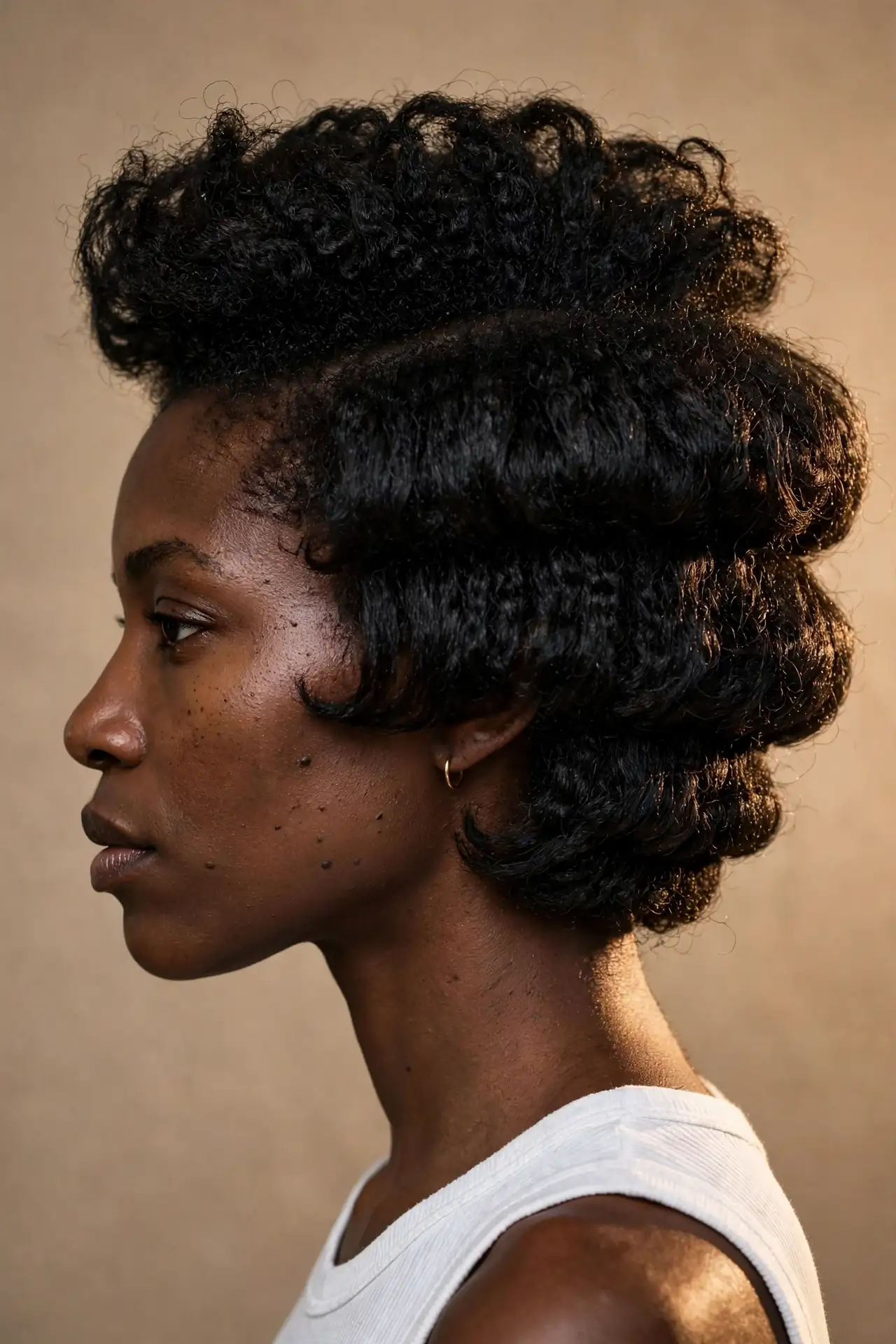
12. The Rounded Afro Bob
Sculpted into an even, rounded silhouette with the curl pattern doing the volumising work naturally. Type 4 texture stacks into a rounded form on its own, which means the stylist is carving shape into existing density rather than manufacturing volume. That’s a fundamentally different job from cutting a bob on straight hair, and it’s why a curl-competent stylist matters more here than anywhere else.
A light leave-in and a pick used gently keeps the shape full. Sleep in a satin bonnet, because a flattened side on this shape is immediately visible and takes a full refresh to fix.
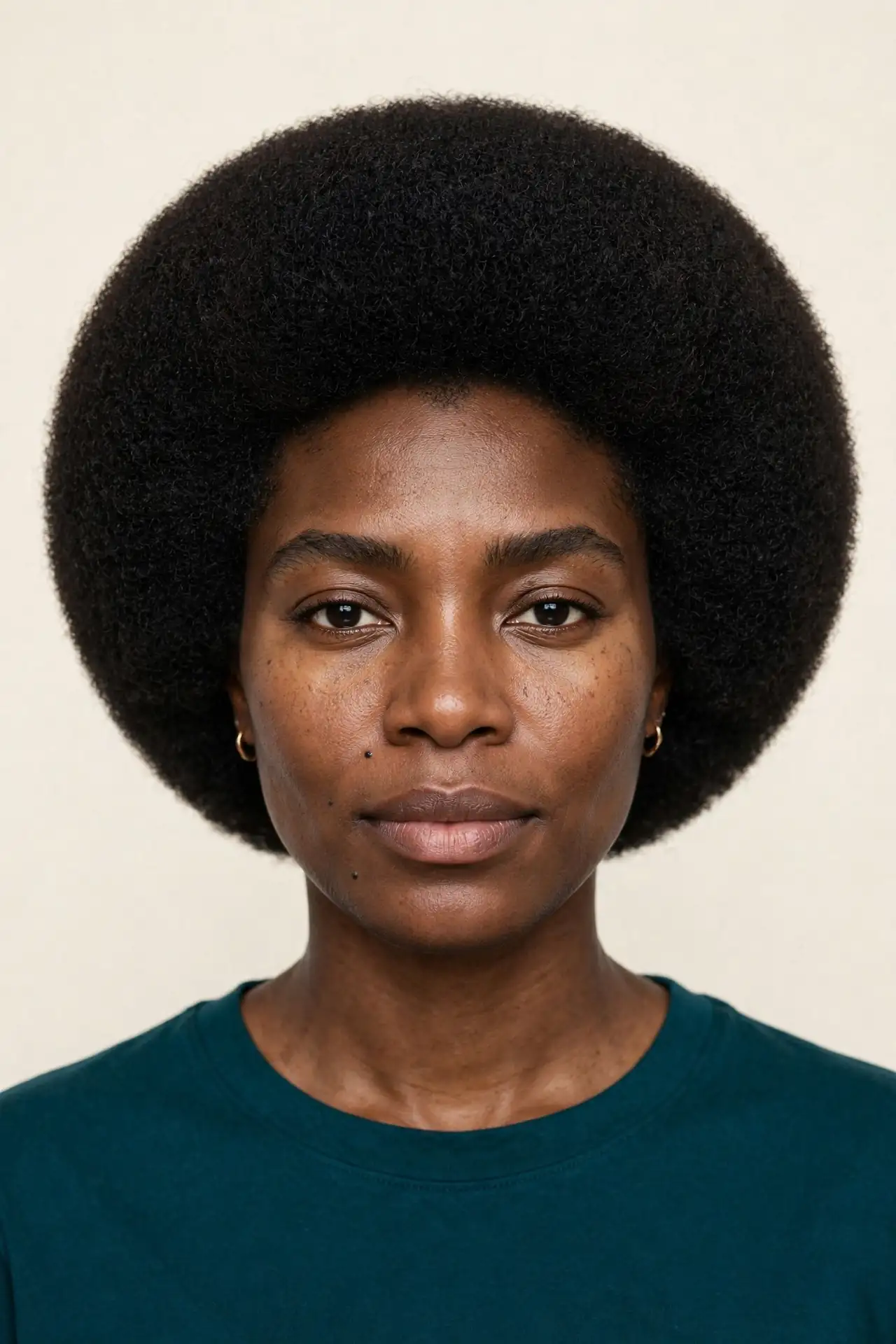
13. The Coily Bob with a Defined Perimeter
Six to eight weeks. That’s the trim schedule this version needs, and the perimeter is the first thing to blur. A crisp, deliberate outline is what separates this from an overgrown afro, and it’s the detail that makes the cut read as intentional. Some people pair it with a subtle lineup at the forehead for extra definition, which sharpens the whole face.
The perimeter should be cut on dry, unstretched hair so the outline you see in the mirror is the outline you’ll actually wear. Cutting it stretched produces a shape that looks entirely different once it springs back.
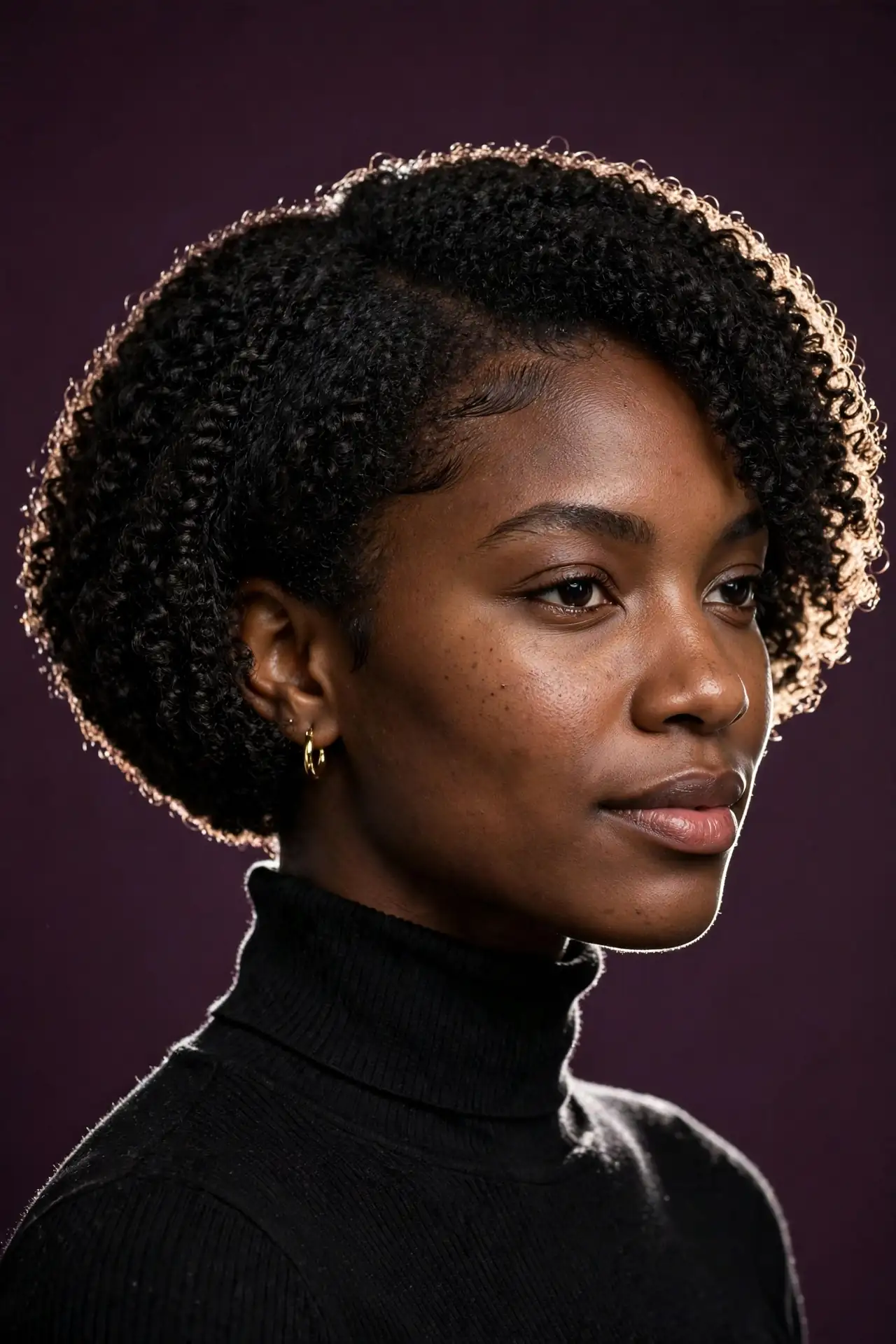
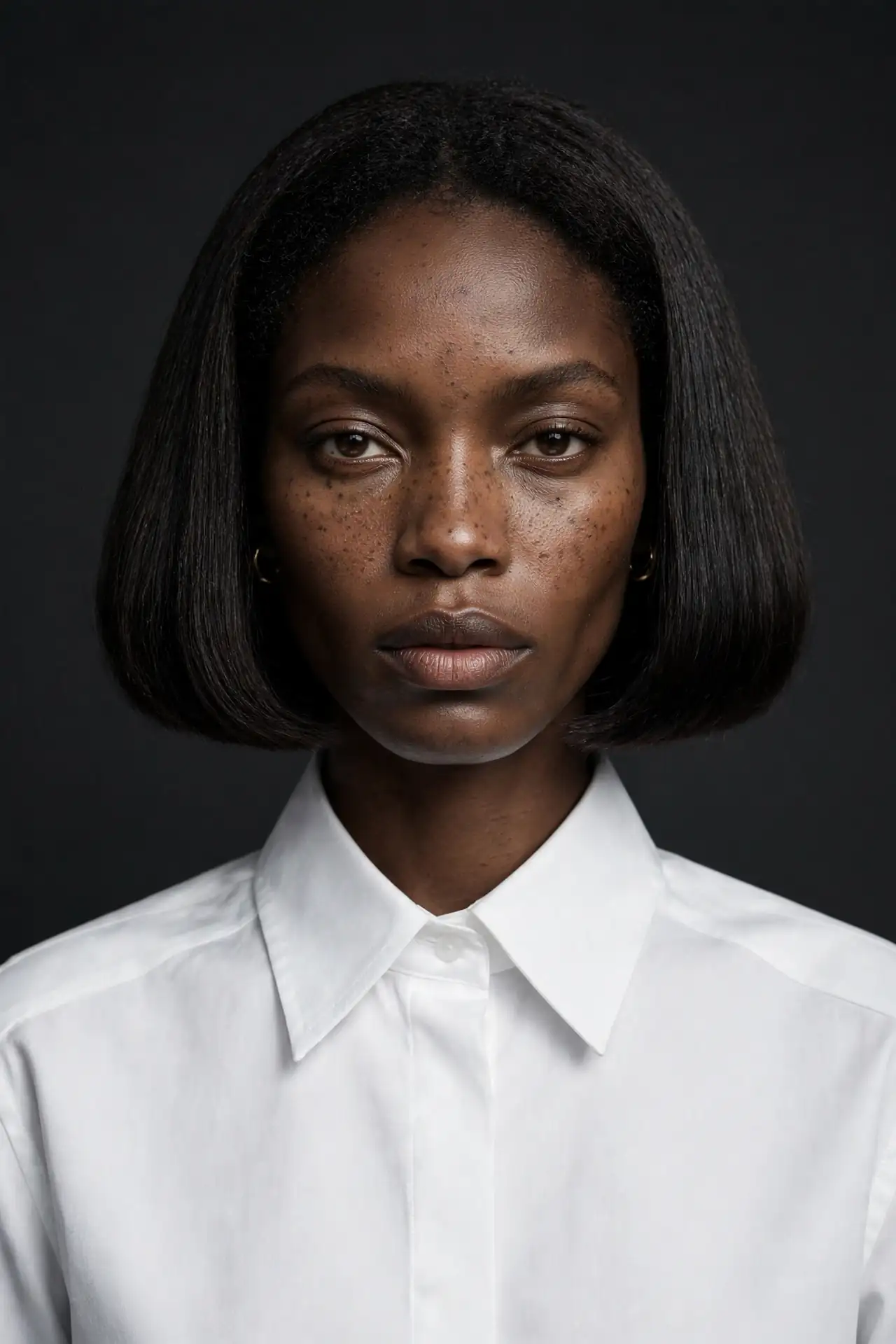
14. The Blunt Coily Bob Worn Stretched
Cut and worn stretched, this version delivers a sleek architectural bob while the curl pattern stays intact underneath. The appeal is versatility. Stretched, it reads as a precise blunt bob. Worn in its natural coil pattern, the same cut reads full and rounded. Two completely different looks from one appointment, which is unusual value.
The caution is heat. Regular stretching with a blow-dryer or flat iron accumulates damage on coily hair faster than on other textures, so keep tools below 350°F, use heat protectant every time, and build in wash-and-go weeks between stretched periods.
Shape and Structure Variations
15. The Graduated Curly Bob
Graduation means the back is cut shorter and stacked while the front stays longer, creating a wedge-like profile with genuine height at the crown. It works nicely on curly hair, provided the graduation stays gentle. Too steep and the shape tips into a 2000s inverted bob, which reads dated. The goal is a soft build rather than a dramatic angle.
Medium density suits it best, since the stacked back needs enough hair to hold structure without collapsing. On very fine curly hair the graduation can leave the back looking sparse, which is worth discussing at consultation rather than discovering afterwards.
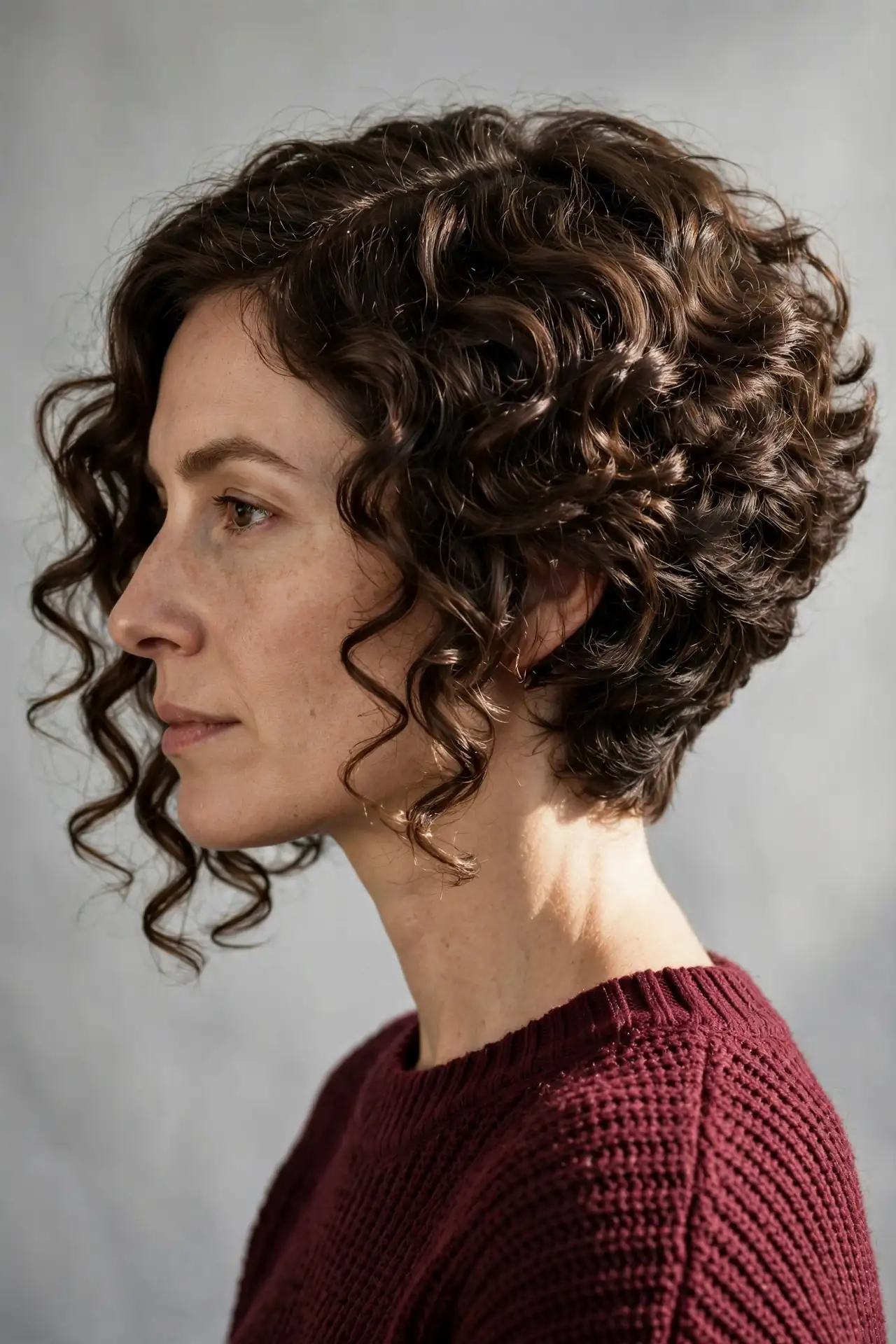
16. The Stacked Curly Bob
Short layers concentrated at the back build volume exactly where curly hair often falls flattest. Ask for the stacked layers to end at the occipital bone rather than higher, because anything above that line starts reading as an inverted bob rather than a stacked one. The front stays one length, grazing the jaw.
This shape is genuinely useful for anyone whose hair collapses at the back of the head, which is a common complaint among people with looser curls or lower density. The stacking builds height where most bobs fall short.
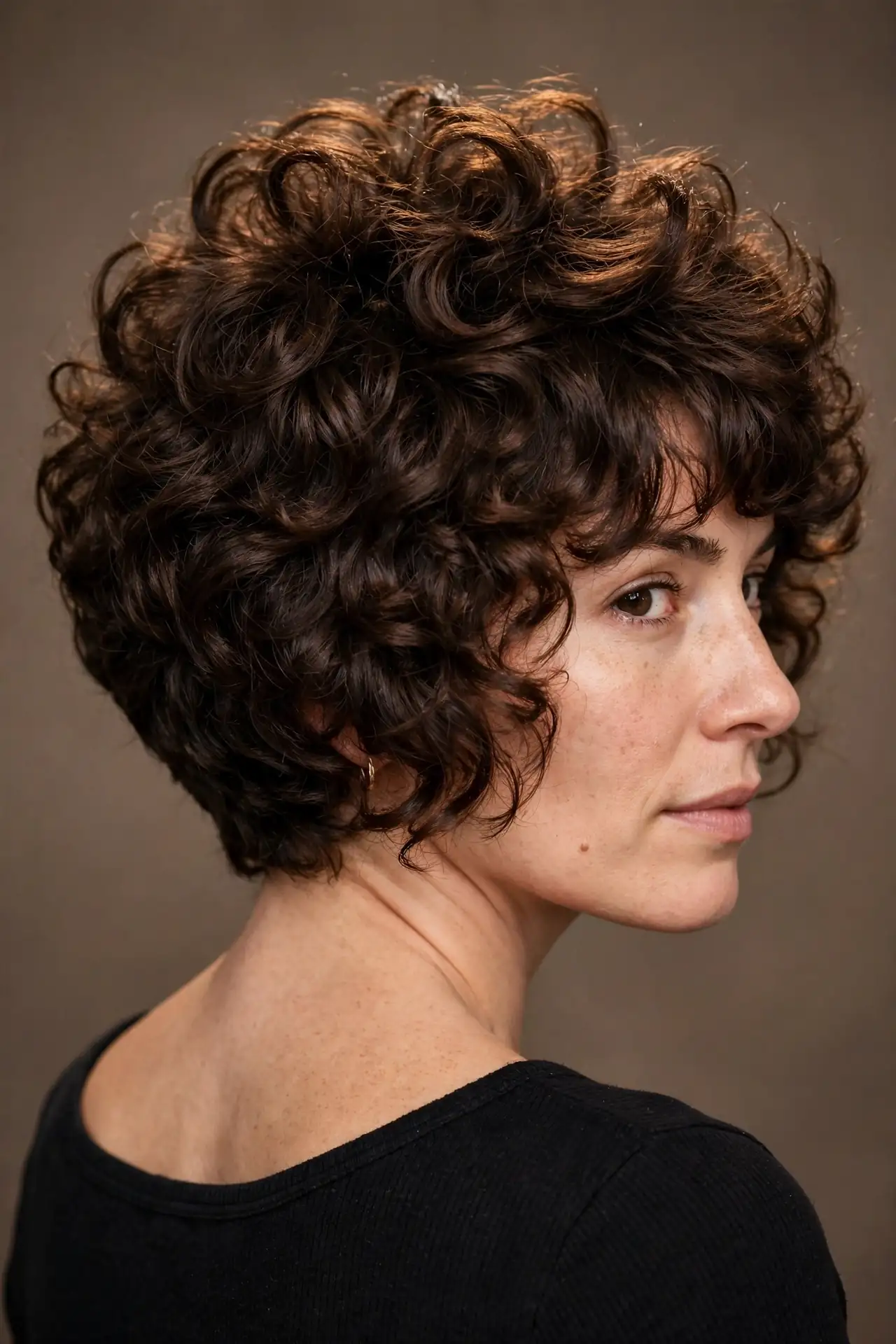
17. The A-Line Curly Bob
Cut longer at the front and shorter at the back, producing a forward-angled line that elongates the face. Round faces benefit most, since the downward diagonal counteracts width. The angle should be visible from the front rather than only in profile, otherwise it’s doing nothing for you.
On curly hair the A-line needs careful weight management, because the longer front sections carry more mass and can pull the whole shape forward and down. Internal layering through the front keeps everything balanced.

18. The Blunt One-Length Curly Bob
This is the version that produces the triangle, and it’s worth being honest about that rather than including it uncritically. One length rarely works well on defined curls, because with no layers breaking up the weight at the bottom, the hair sits close to the head at the crown and expands at the ends. Physics does the rest.
It can work on two specific textures: loose type 2 waves, where there’s not enough spring to build bulk, and very fine curly hair with low density, where there simply isn’t enough hair to form a pyramid. Everyone else should ask for internal layering. If a stylist offers you a one-length curly bob without discussing weight removal, that’s a signal worth paying attention to.

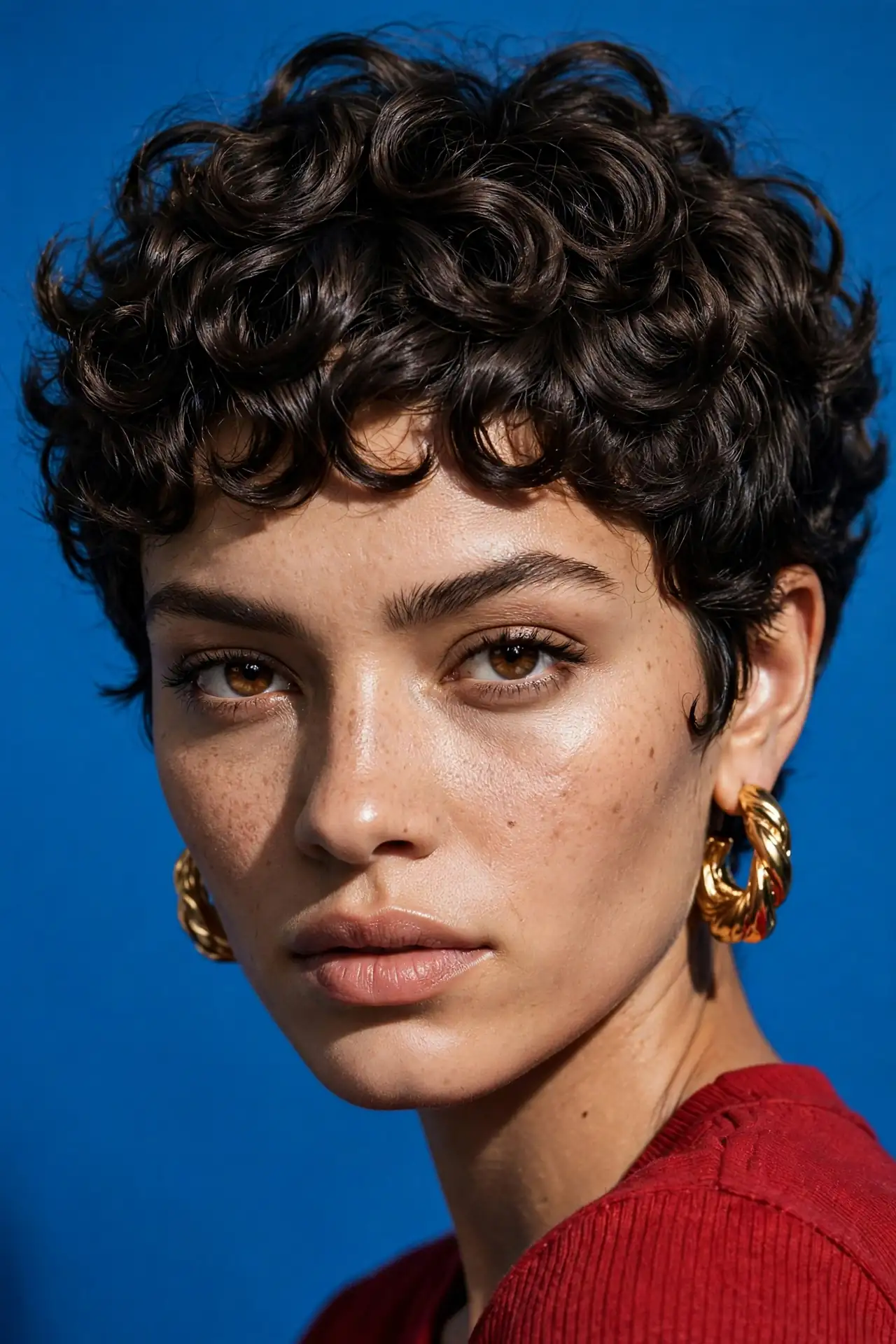
19. The Curly Pixie Bob
Sitting between a pixie and a bob, this shape keeps enough length to form curls while cropping close at the nape. The pixie bob is returning strongly, and on curly hair it produces sculpted volume around the face with a clean finish at the back. It’s the shortest option here that still reads as curly rather than cropped.
Trims move to every four to six weeks, which is the honest trade for the shape. Styling is minimal though, usually a curl cream applied to soaking wet hair and a low diffuse, which makes the daily commitment lower than the salon commitment.
Fringe, Colour and Styling Versions
20. The Curly Bob with Wispy Bangs
Delicate airy bangs that frame the eyes and melt into the shape rather than sitting apart from it. On curly hair, wispy means fewer curls rather than thinner ones, since you cannot actually thin a curl without creating frizz. The stylist selects individual curls to leave in the fringe area and blends the rest back into the front layers.
Fine curly hair benefits most, because a dense fringe borrows too much from an already sparse hairline. Expect to refresh the bangs with water and a little cream most mornings, since they’re the first section to lose definition overnight.

21. The Deep Side Part Curly Bob
Two inches off centre. That’s roughly how far the part needs to travel before it reads as a design decision rather than an accident. A deep side part creates instant root volume on the heavier side, which is genuinely useful on curly hair where the crown often sits flattest. It also introduces asymmetry, softening a square jaw and adding height.
The styling cost is real though. Maintaining a deep part means the other side needs attention too, or it flattens by comparison. Clip the heavier side back at the root while your hair dries to set the lift.

22. The Balayage Curly Bob
Hand-painted colour suits curly bobs better than almost any other cut, because every curve catches light differently and the dimension reads immediately. Painting brightness through the mid-lengths and ends makes each curl individually visible, which is exactly the effect a good curly cut is trying to achieve. Keeping the roots darker also means touch-ups stretch to twelve weeks.
One honest caution: lightening curly hair affects the curl pattern, sometimes permanently loosening it. Ask for a bond-building treatment at every appointment, and consider starting with a subtle version before committing to significant lift.
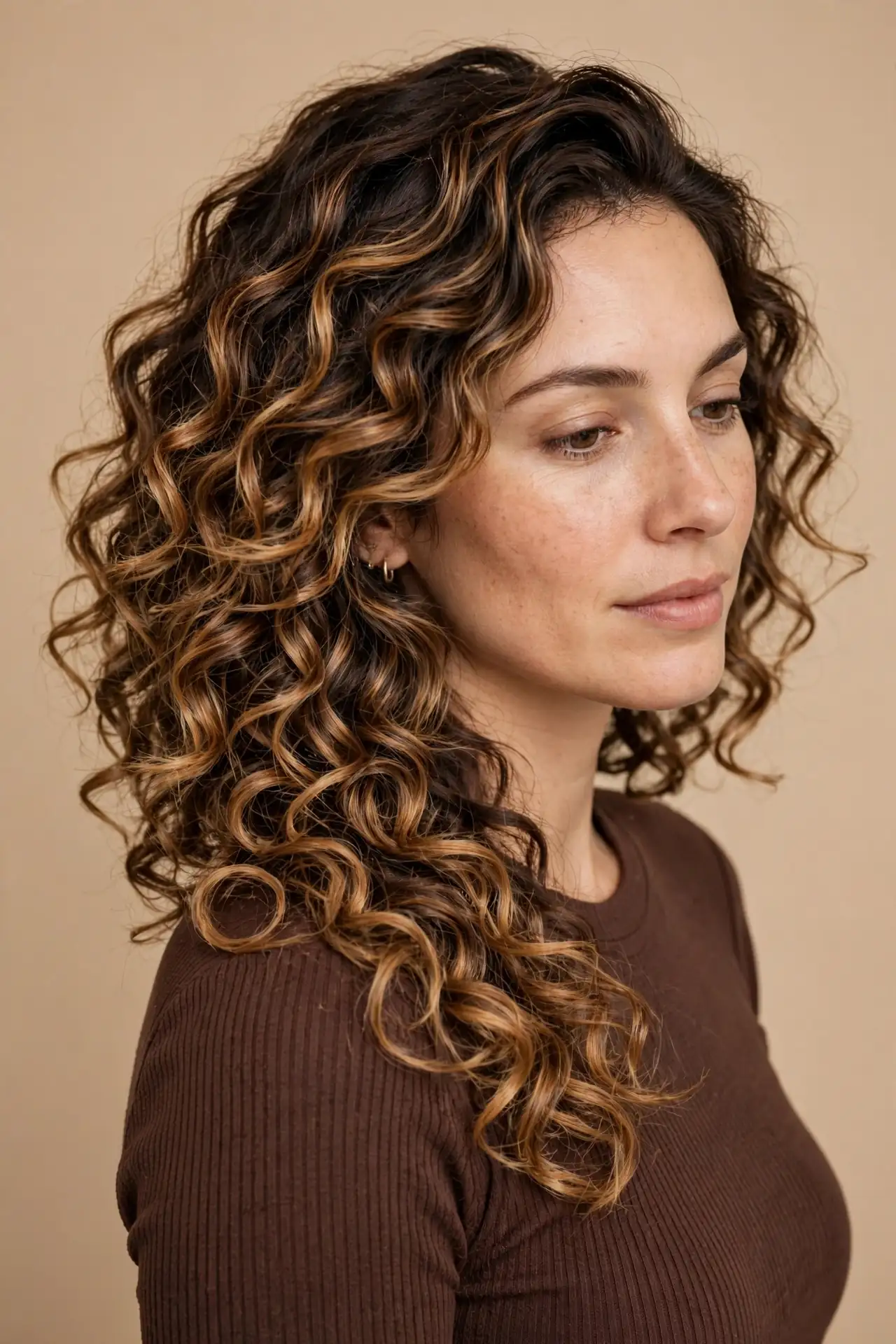
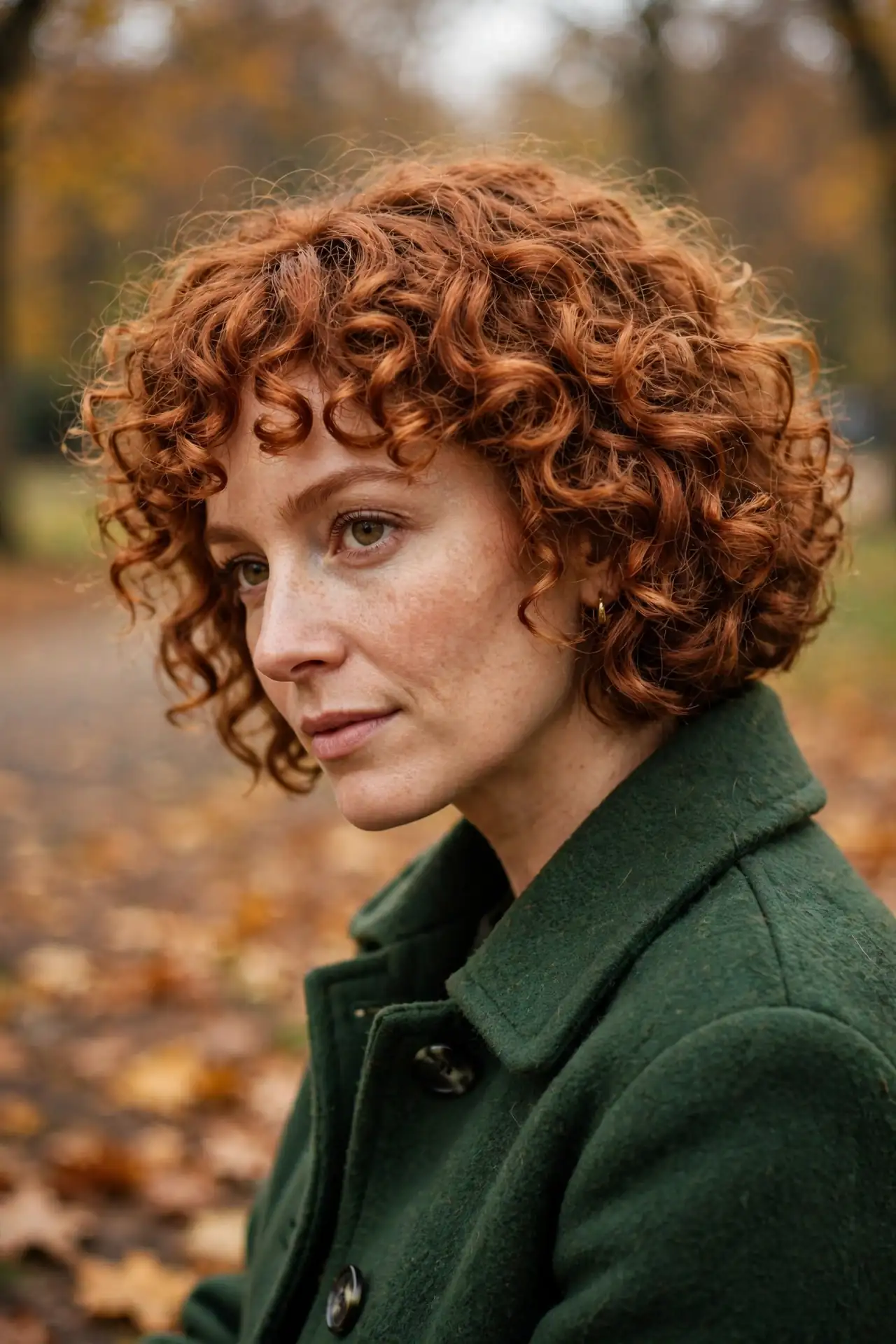
23. The Warm Copper Curly Bob
Copper and auburn tones make curl definition read more clearly than any other colour family, because warm shades reflect more light than cool ones. Medium brown shades lacking warmth tend to look muddy and dull on short hair, particularly around the face. Adding a little copper into the formula is a small technical decision that separates a lively brunette from a flat one, and it’s worth asking your colourist about specifically.
Red pigment fades faster than anything else, so plan on a colour-depositing conditioner weekly and a gloss every four to six weeks. Auburn holds considerably longer than bright copper if maintenance is a concern.
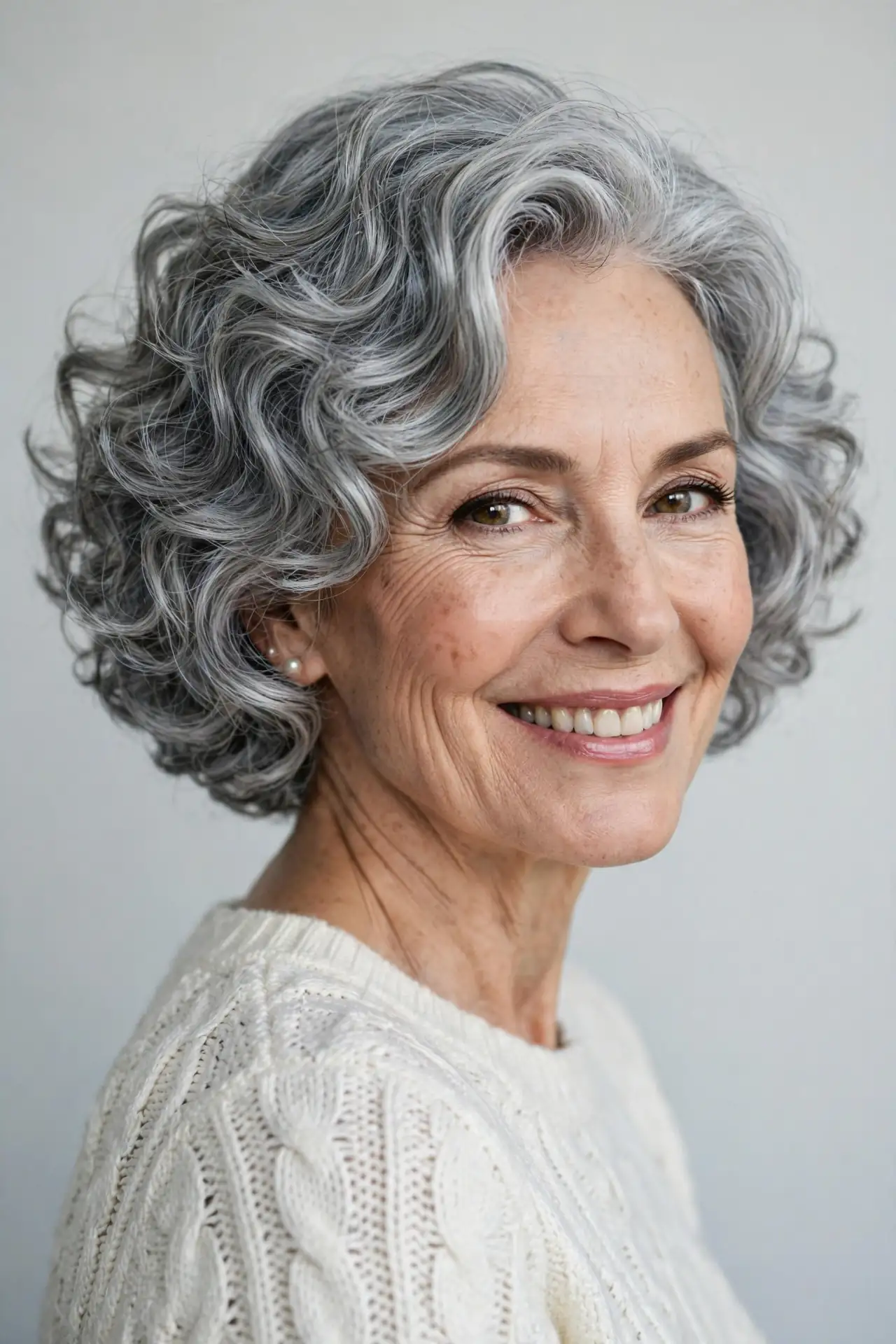
24. The Silver Curly Bob
Grey curls and a well-shaped bob are an unusually strong pairing, largely because the structure of the cut makes the colour read as a decision. The same silver on shapeless long hair often reads as neglect. On a defined rounded bob it reads as style. Blending rather than covering is the approach most colourists recommend now, weaving cool-toned lowlights so regrowth appears as dimension.
Keep the tone clean with a purple or blue gloss every six weeks, since silver picks up yellow from water, product and sun faster than any other shade. A little warmth left in, whether from remaining natural pigment or deliberate golden pieces, stops the overall look feeling too cool.
What Actually Prevents the Triangle
Most curly bob roundups show photos and skip the mechanics. These are the decisions that determine which version of this haircut you get.
Why the Triangle Happens, and How to Stop It
The pyramid shape occurs when there are no layers to break up the weight at the bottom of the cut.
Hair sits close to the head at the crown, where there’s least mass, and expands outward at the ends where all the weight has collected. On curly hair this happens faster than on straight hair because curls already occupy more horizontal space.
The fix is internal layering, sometimes called weight removal or debulking. Weight comes out from underneath while the outline stays completely intact, which allows the bottom of the cut to sit closer to the head. Ask for it by name. Saying “I don’t want it to go triangular” tells your stylist the outcome you fear; saying “I’d like internal layers to remove weight at the bottom” tells them the technique to use.
Dry Cutting and the Shrinkage Problem
Curls look entirely different wet and stretched than they do dry and sprung, which is why wet-cutting a curly bob is such a common source of disappointment.
Dry cutting lets the stylist see exactly where each curl will fall and place the perimeter accordingly. It takes longer and often costs more, and it’s worth both. If a salon won’t cut your curls dry, book elsewhere.
There’s no honest universal shrinkage percentage. Some patterns pull up a third, some pull up more than half, and density affects it too. That’s precisely why the outline should be designed on dry hair rather than calculated from a wet measurement.
The Reference Photo Problem Nobody Mentions
Two photos of the same haircut can look like completely different cuts depending on the lighting.
Curls photographed under studio lights show sharper definition and often lighter-looking colour than the same hair in natural daylight. Bring that up when you show your stylist a reference. Telling them whether the photo was taken in a salon under professional lighting or outdoors in natural light prevents a specific and common miscommunication about how defined you expect your finished curls to look.
Better still, bring two or three photos of the same shape in different settings.
Choosing Your Shape by Curl Pattern
| Curl Type | Best Bob Shape | Layering Approach |
|---|---|---|
| 2A to 2C waves | Clean perimeter, curved bob, shaggy bob | Light internal layering only |
| 3A loose spirals | Classic layered bob with face framing | Moderate internal layers, point-cut ends |
| 3B to 3C spirals | Rounded or graduated bob | Significant internal weight removal |
| 4A to 4B coils | Tapered or stacked bob | Sectioned layering on stretched hair |
| 4C coils | Tapered bob, rounded afro bob | Deliberate weight placement, dry cut |
| Fine curly, low density | Blunter perimeter, minimal layering | Very light, weight kept at the ends |
Troubleshooting a Curly Bob
| Problem | Cause | Fix |
|---|---|---|
| Triangular silhouette | No internal layers to break weight | Ask for weight removal from underneath |
| Cut far shorter than expected | Wet-cut without allowing for shrinkage | Dry cut next time, ask for extra length |
| Looks like a shag, not a bob | Over-layered | Fewer, deeper layers next appointment |
| Flat at the crown | No lift built into the cut | Graduated or stacked shape, root clipping |
| Ends look thin and stringy | Over-thinned or point-cut too far up | Grow out, then cut a cleaner perimeter |
| Frizzy surface, defined underneath | Touched while drying | Apply product, then don’t touch until dry |
The Practical Trade-Offs
A curly bob is genuinely easier day to day, and there are honest downsides worth knowing before you commit.
Tying it into a full ponytail becomes difficult or impossible. Bedhead is considerably more visible on short curly hair than long, so a satin bonnet stops being optional. And finding a stylist who cuts curly bobs well is genuinely harder than finding one who cuts straight bobs well, which means you may need to travel or pay more.
Trims land every six to eight weeks, sometimes stretching to ten on looser patterns. Curly cut services typically run higher than standard cuts, often $60 to $200 depending on whether wash, definition and diffusing are included.
Refreshing Between Washes
Rather than washing, mist your hair damp with a spray bottle and focus on the areas people actually see: around the face and over the top.
Layer on a curl cream, then twist sections roughly an inch square, which acts a bit like a curling iron and reminds the hair how to spin. A Denman or bounce curl brush used on wet hair during your initial styling smooths the surface and prevents day-one frizz.
If shrinkage bothers you, dry your hair completely as normal first, then use a blow-dryer to stretch the roots downward. Trying to stretch while the hair is still wet just creates frizz without any lasting length.
Final Thoughts
A curly bob is not a risk when it’s cut properly. It’s one of the few haircuts that genuinely improves curly hair by removing the weight that flattens the pattern, and the shapes above work across every texture from loose type 2 waves to tight 4C coils.
Ask for internal layers by name. Insist on a dry cut. Bring reference photos and mention what lighting they were taken in. Be specific about where you want the curls to land when they’re dry and sprung, not when they’re wet and stretched. Then be honest with your stylist about how much time you actually spend on your hair in the morning, because a shape that needs a deep part maintained daily is a different commitment from one you scrunch and forget.
Save the versions that match your curl pattern rather than the ones you simply liked most. On this cut, that distinction is the whole difference between the bob you wanted and the triangle you feared.
Frequently Asked Questions
Why does my curly bob go triangular?
Because there are no internal layers breaking up the weight at the bottom. The hair sits close to the head at the crown and expands at the ends where the mass collects. Ask your stylist for weight removal from underneath while keeping the outline intact.
Should a curly bob be cut wet or dry?
Dry, in nearly every case. Curls look completely different wet and stretched, and there’s no reliable shrinkage percentage to calculate from. Dry cutting lets the stylist see exactly where each curl falls and shape the perimeter around your real texture.
How often does a curly bob need trimming?
Every six to eight weeks for most patterns, stretching to ten on looser waves. The perimeter blurs first, and on shorter versions like the curly pixie bob you’ll want a trim closer to every five weeks to keep the shape defined.
Which curly bob suits tight 4C coils?
A tapered or stacked bob works best, since tapering controls the width at the sides where coily hair naturally expands. Cut on stretched or dry hair section by section, with the stylist checking the shape as it springs back to account for shrinkage.