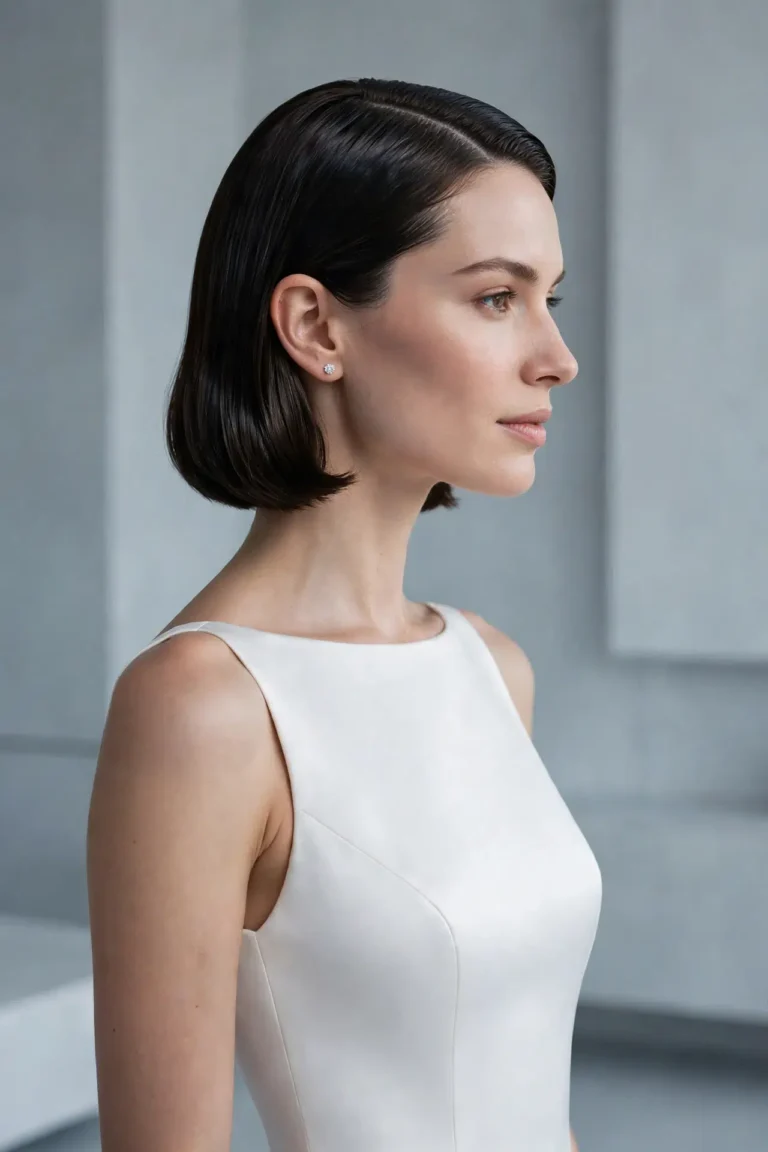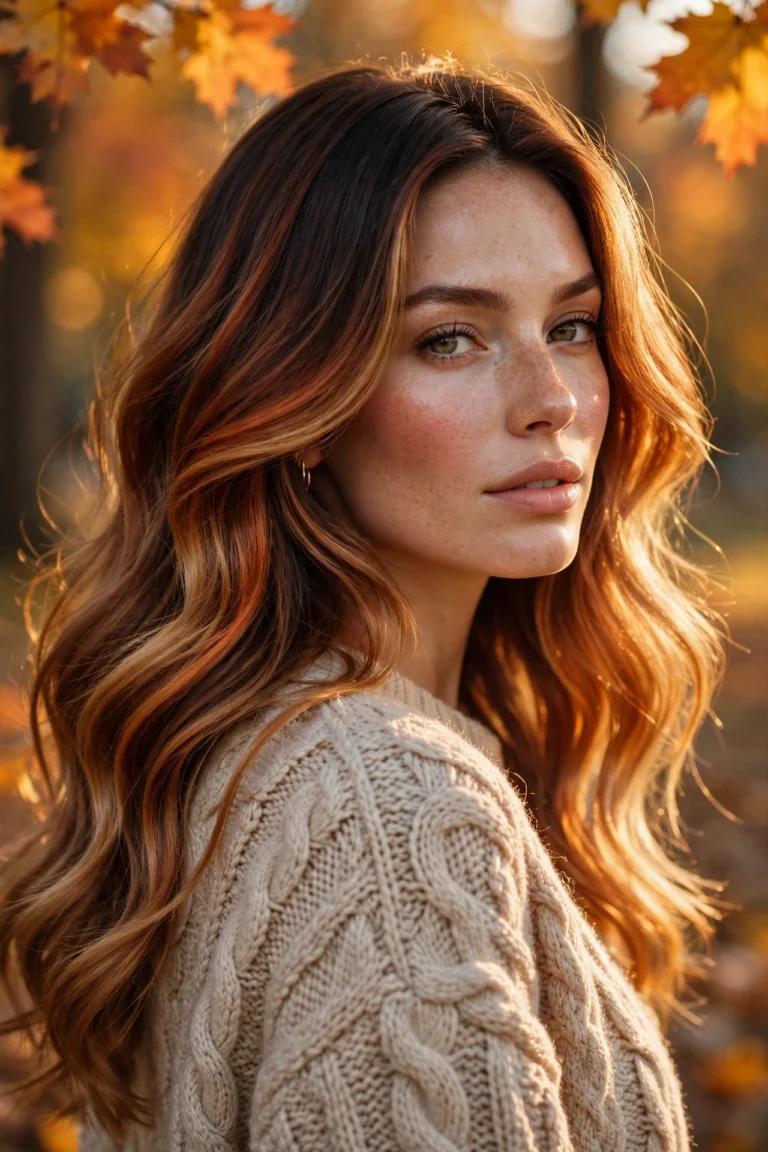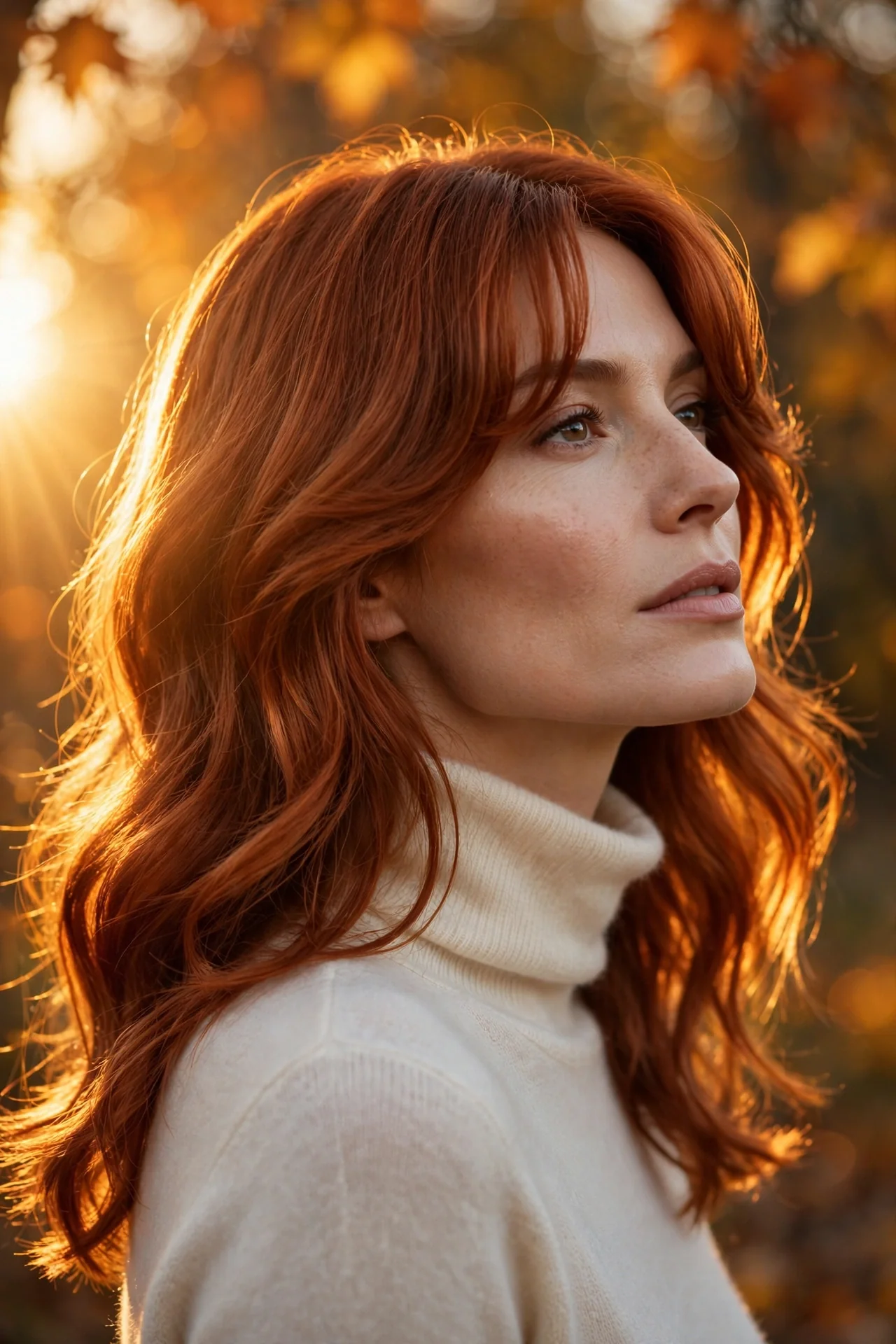
27 Stunning Copper Curtain Bangs Ideas for 2026
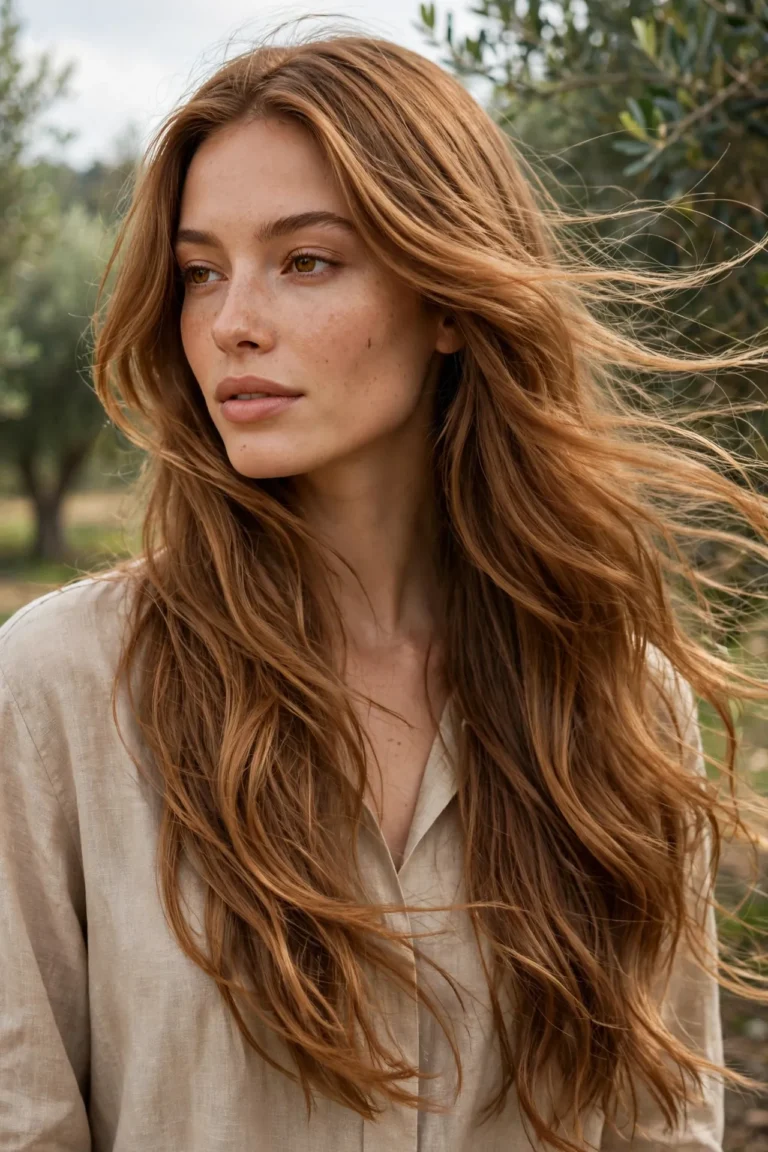
There’s a reason your salon’s booking page keeps filling with the same two requests. Copper curtain bangs have become the defining hair combination of 2026, pairing the warmest colour family in the business with the most forgiving fringe ever cut. One brings glow to your complexion. The other frames your bone structure without demanding anything from you on a Monday morning.
Copper itself has changed this year. New York celebrity colourist Jeremy Cohen has said plainly that copper is here to stay, and his point about execution matters more than the shade itself: the tone needs gloss and dimension, otherwise it reads loud instead of expensive. Richy Kandasamy, vice president of R+COLOR development, describes the 2026 direction as burnt, rose-tinted and elegant. Less fire, more glow.
Curtain bangs have evolved alongside it. The current version parts at the centre and tapers into the cheekbones, more sculpted than the soft seventies curve everyone wore in 2021. What follows are 27 combinations worth bookmarking, sorted by shade, cut, texture and colouring technique.
Copper Shades Defining the Year
Your exact tone matters more than your fringe shape. Copper spans an enormous range, and the wrong end of it will drain your face.
Burnt Copper Curtain Bangs
Burnt copper is a deep, slightly desaturated tone that sits at the darker end of the family, and it holds pigment noticeably longer than brighter versions. Because the shade starts dark, fading arrives as a soft dulling rather than an obvious change, which stretches most people to eight weeks between full colour appointments. Curtain bangs cut into this tone catch light at the tapered ends, creating dimension without a single foil.

Penny Copper
Walk into any salon with the word “copper” and this is the photo most clients pull up. Bright, clean, unmistakably metallic.
Fair to medium complexions with warm undertones wear it best. The clarity that makes penny copper beautiful is also what makes it high maintenance, since every shade of fading shows immediately against that saturated base. A copper-depositing conditioner stops being optional here and becomes a weekly appointment with yourself.
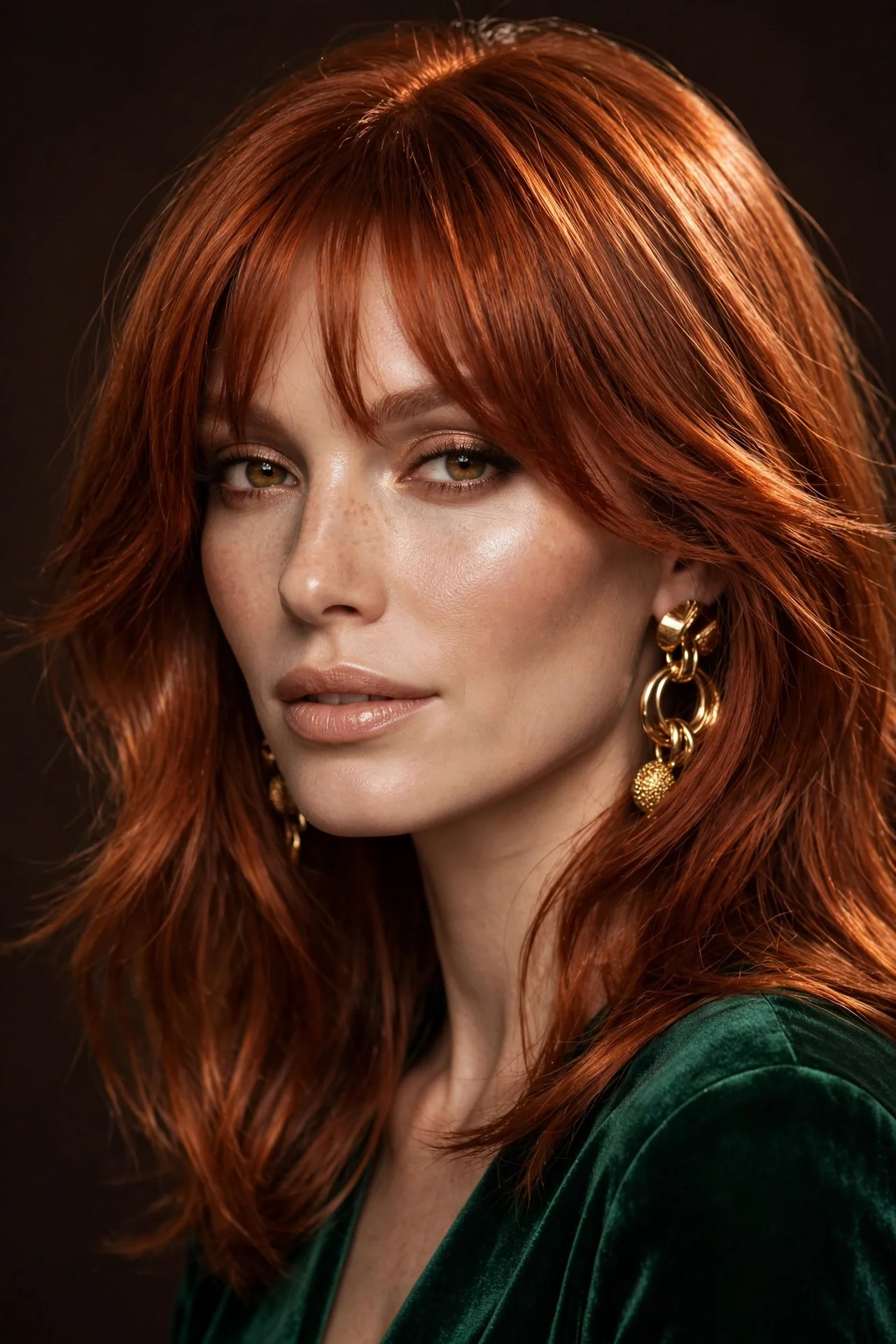
Strawberry Copper
Tried copper once and felt like your face went orange? This is the fix. Soft pink undertones blended into a light copper base soften the warmth just enough for cool complexions, and celebrity colourist Rachel Bodt has described this territory as sitting somewhere between strawberry blonde and copper.
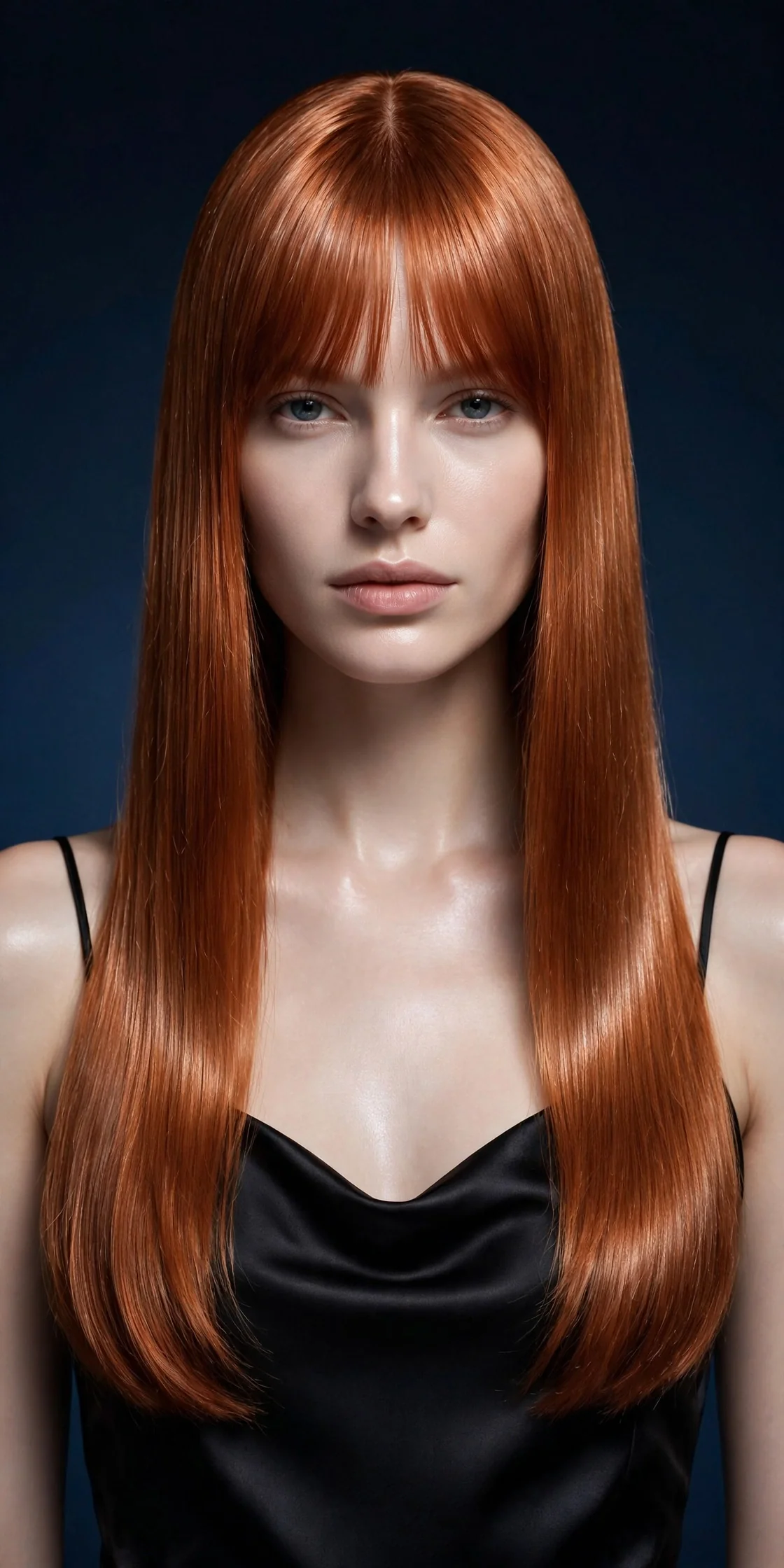
Cowboy Copper
Four seasons on social media and still climbing. Cowboy copper became the entry point for thousands of first-time redheads, and colourists are still expanding it rather than replacing it. LA-based celebrity hairstylist Laurie Heaps lists it alongside burnt sienna, muted cinnamon and warm amber as the shades her clients keep requesting, noting they flatter an unusually wide range of skin tones.
Louise Rusk, master colourist and founder of Jes + Lou Beauty, has talked about the next stage of the trend involving nutmeg, cinnamon and smoky paprika tones woven through the base. The practical result is a shade with genuine depth, where regrowth blends softly instead of announcing itself in week three. Curtain bangs sit in the brightest section of the colour, pulling warmth straight toward your face.
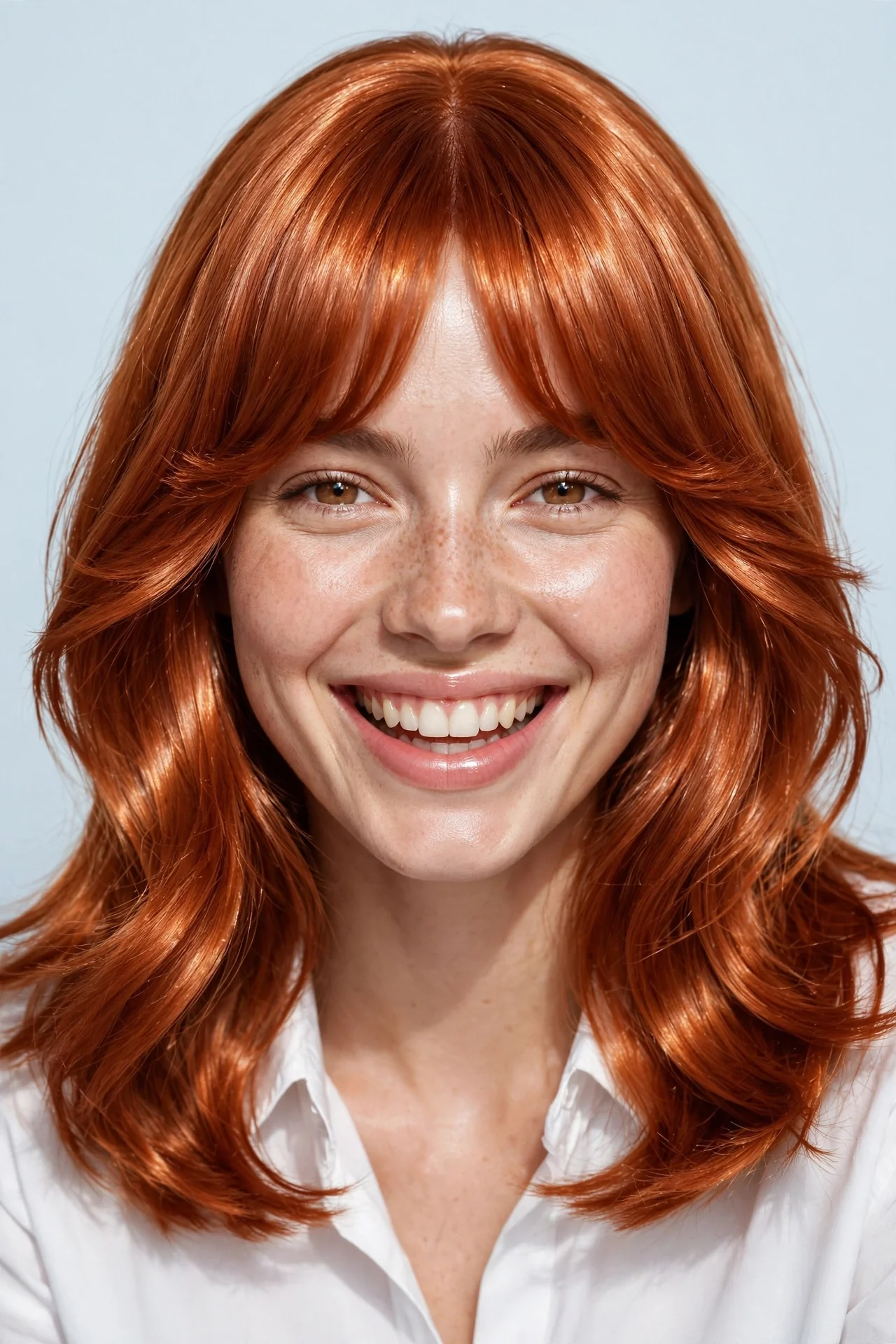
Ginger Brunette
Ginger brunette fuses copper warmth with brunette depth, producing the most forgiving shade on this entire list. Brunettes testing copper for the first time should start here rather than jumping to something bright. The brown base keeps the tone grounded while the copper adds glow, and grow-out looks intentional instead of neglected. Maintenance is genuinely low, roughly one gloss every eight weeks.

Rose Copper
Most people assume pink-toned copper is a cool-weather novelty. It isn’t. Kandasamy’s rose-kissed direction has become one of the most requested variations of the year, precisely because it reads modern rather than costume.
Cool undertones benefit most. What you need to know before booking is the fade rate, because pink pigment washes out faster than anything else in the copper family, sometimes noticeably within four shampoos. A tinted mask at home isn’t a nice extra here, it’s the thing keeping the colour alive between visits.
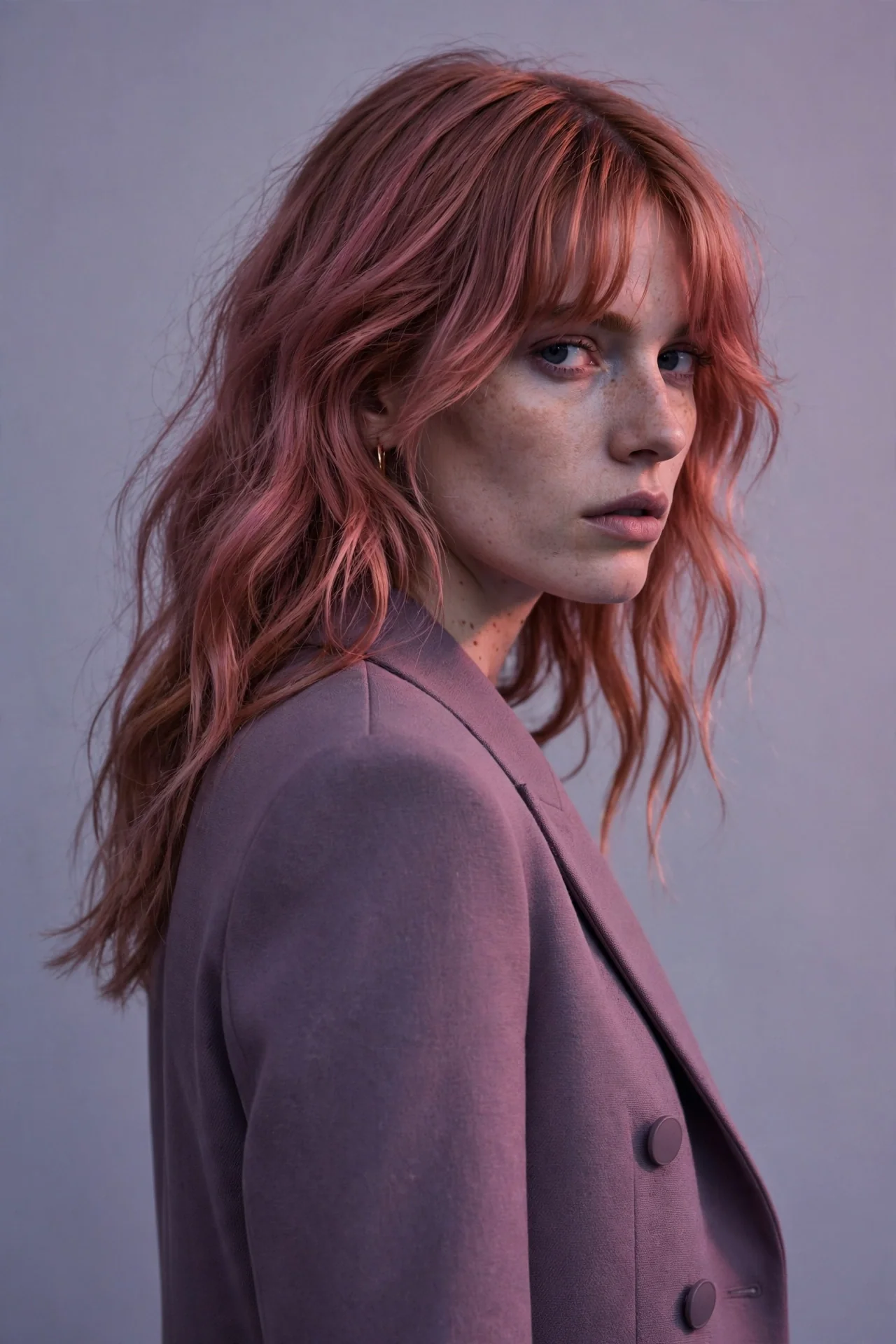
Sienna and Rust Copper
Ask a colourist where copper is heading and the answer usually lands on earthy tones rather than bright ones. Devin Graciano, professional hairstylist and CEO of Goldie Locks, has framed this shift as warm reds moving away from fire engine brightness into more nuanced sienna and rust territory that looks grounded and editorial.
His recommendation is to pair those tones with soft balayage placement so the colour grows out with a lived-in glow instead of a hard line. In practice that means longer stretches between appointments, often twelve weeks or more. Rust suits textured and curly hair particularly well, because the matte quality of the tone lets the shape and movement carry the look rather than competing with it. Anyone who has felt too visible in bright copper usually finds their comfort zone somewhere in this range.
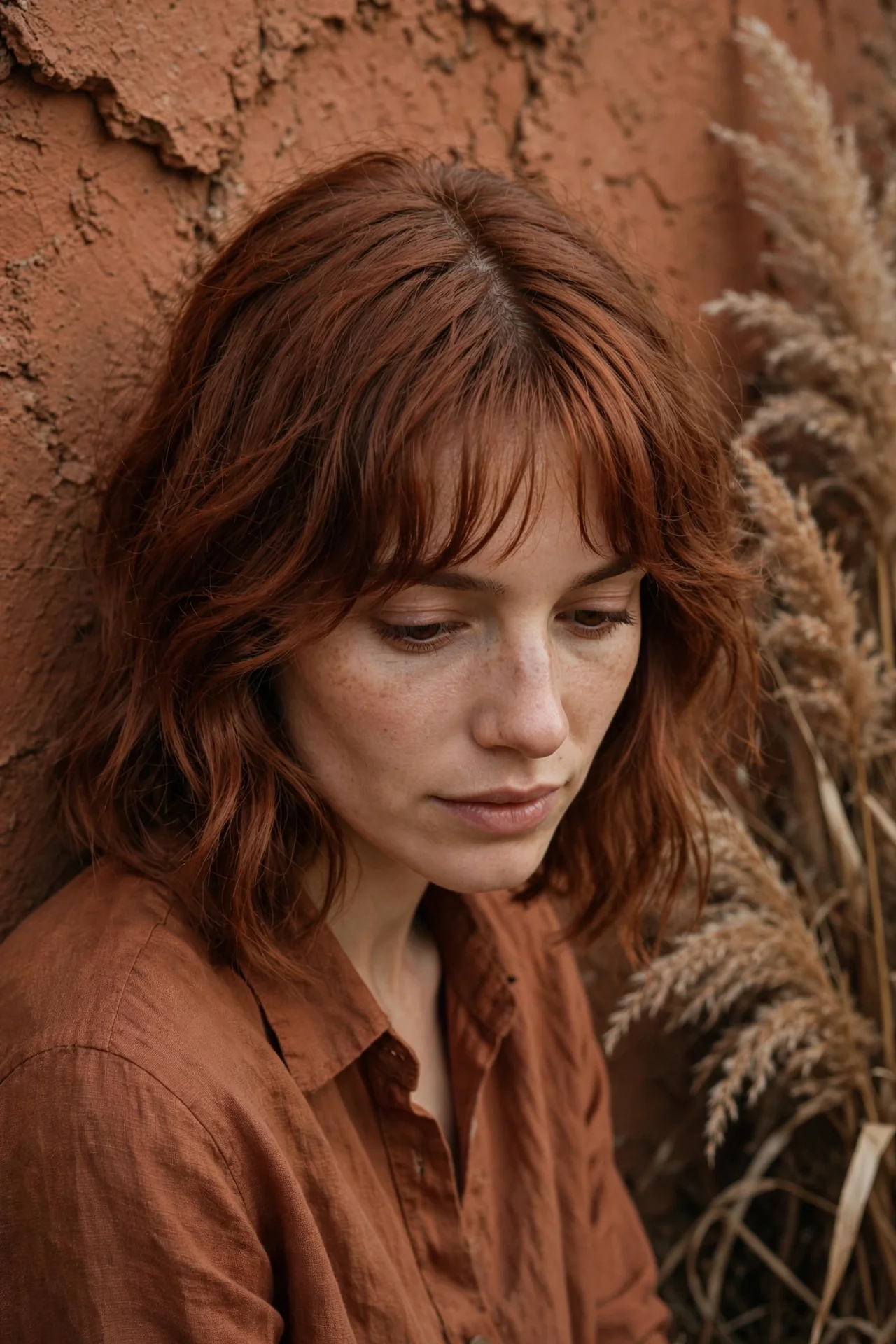
Auburn Copper
Rich auburn threaded with copper warmth is the most universally flattering combination in the red family, and celebrity hairstylist Dimitris Giannetos has singled out this pairing as especially striking on warm skin tones.
Why it works so consistently:
- The darker base holds pigment far longer than bright copper
- Copper highlights add movement without the commitment of full lightening
- Deep skin tones look extraordinary in it, which is not true of every copper shade
- Regrowth is soft enough to skip a touch-up without anyone noticing
Curtain bangs cut just below the cheekbone catch the copper reflect whenever you turn your head.

Copper Curtain Bangs Matched to Your Haircut
The same colour behaves completely differently depending on the shape around it.
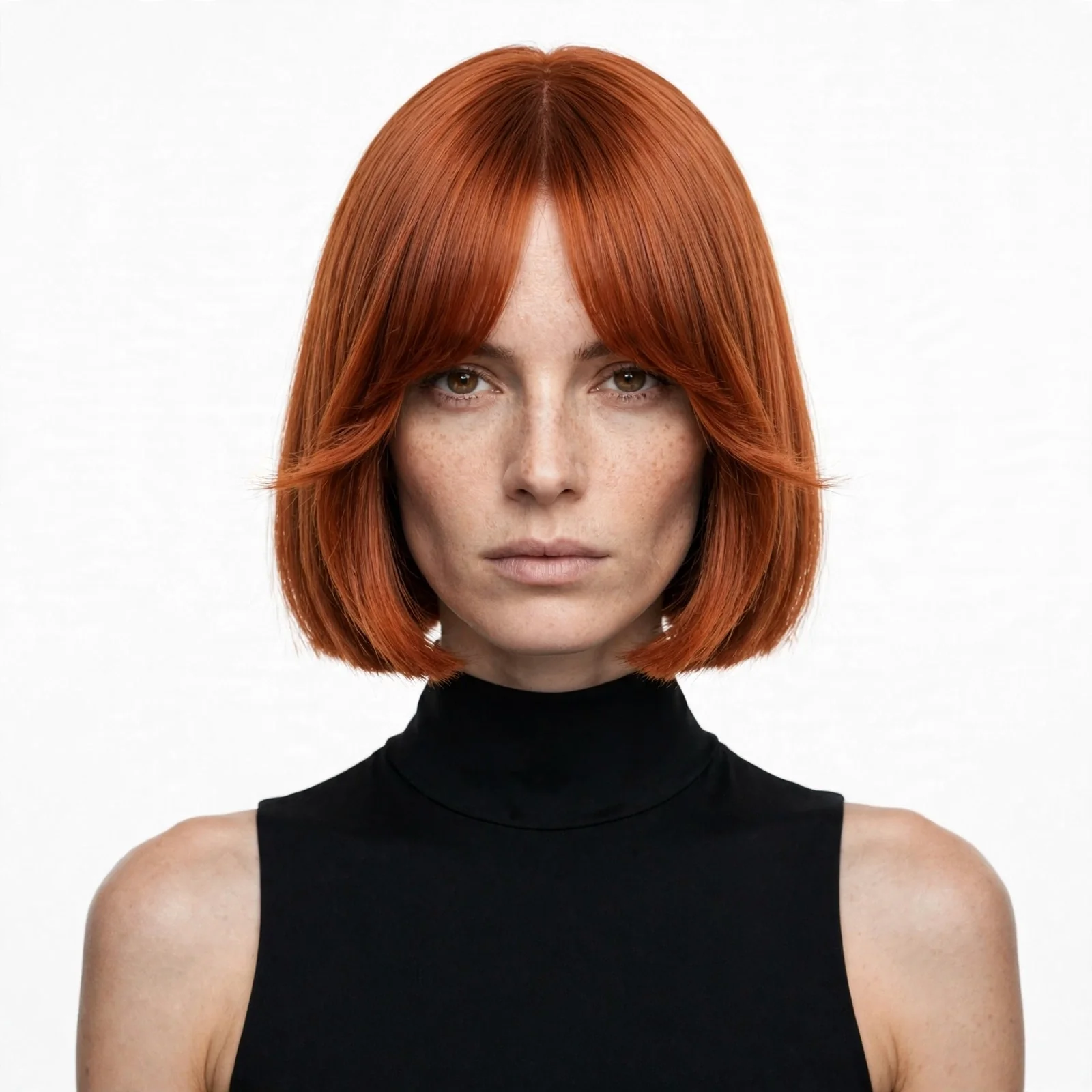
Blunt Bob with Copper Curtain Bangs
The blunt bob is dominating short hair conversations this year, and copper gives its clean lines a warmth that neutral brown never manages. Sharp perimeter, soft fringe. That contrast is the entire appeal.
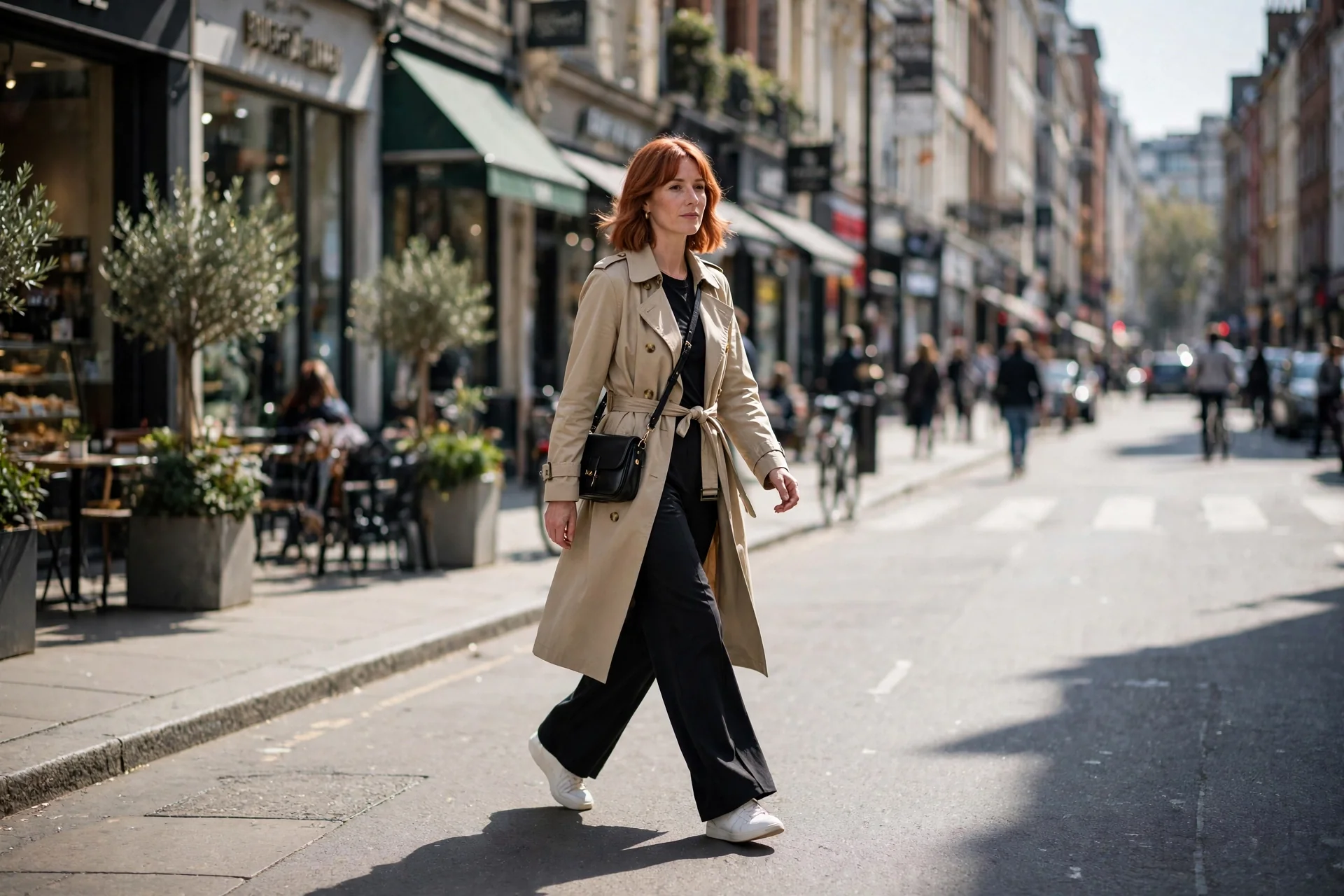
Copper Lob with Curtain Bangs
Shoulder-grazing length offers enough surface area for dimensional colour to actually read, which is why lobs photograph so well in copper.
Curtain bangs break up the horizontal line at the shoulders and add vertical interest around the face. For anyone nervous about committing to either the colour or the fringe, this combination is the safest possible starting point.
Wolf Cut in Copper
Ever noticed how a wolf cut can tip from cool into severe? Copper is what stops that from happening. The warmth softens all those aggressive layers while the built-in movement keeps the colour shifting as you walk. Expect to use texturising spray daily, since the whole shape depends on that deliberately rough finish.

Butterfly Cut with Copper Bangs
Clients with fine hair walk out of butterfly cut appointments looking like they gained a whole head of hair, which explains why the cut refuses to fade from popularity.
Short face-framing layers blend over longer lengths, and curtain bangs merge into the shortest layer so nothing looks bolted on. Copper concentrated in those front pieces brightens the complexion directly. Blow-dry the top layers forward and the lengths back to get the shape to sit properly.
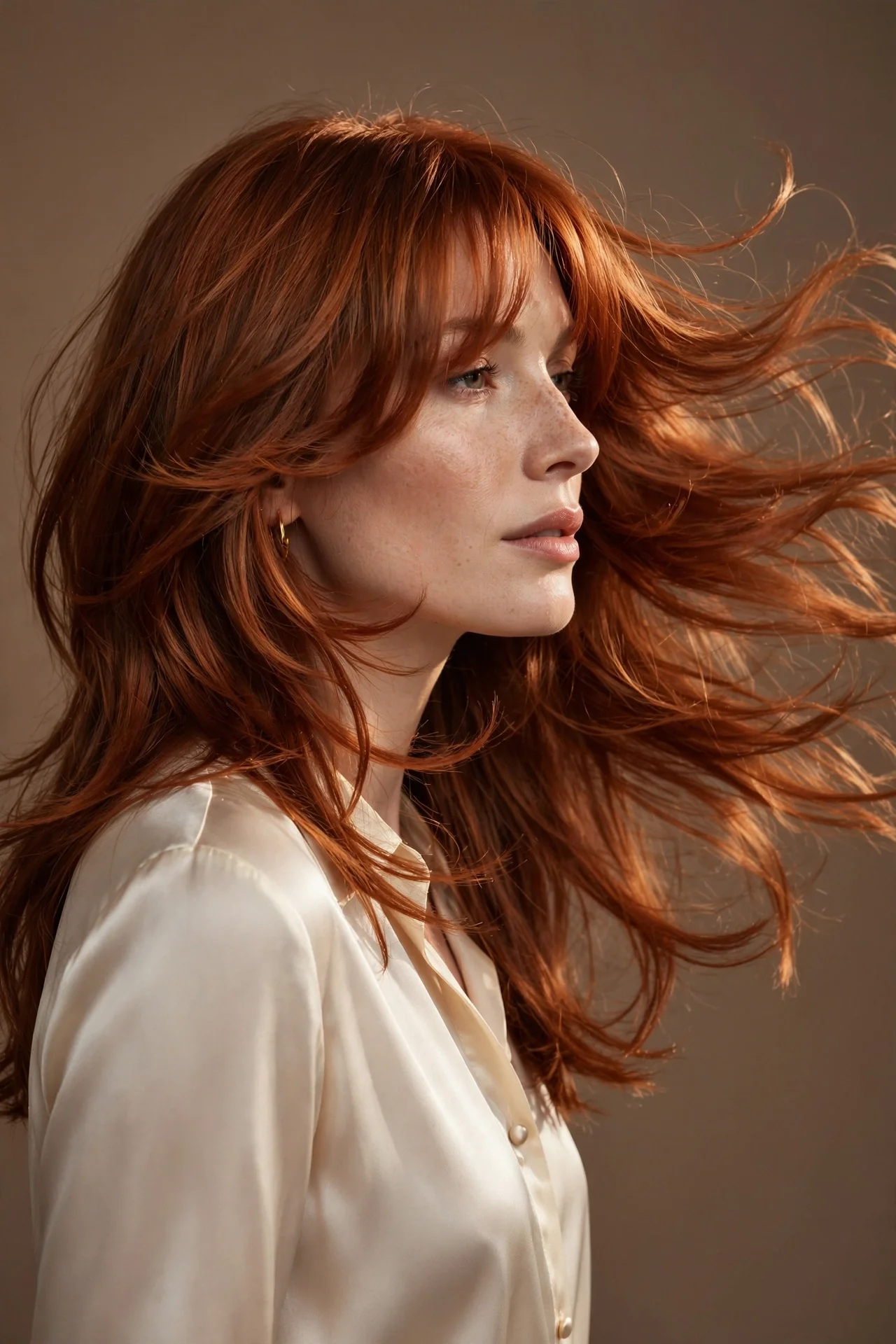
Copper Shag with Curtain Bangs
Fifty years and counting. The shag survived every trend cycle since the seventies, and copper has been its companion for most of them. Bangs here sit slightly shorter than standard, closer to the brow, which delivers the attitude the cut is known for.

Long Layers with Sweeping Copper Bangs
Long layers give copper room to develop real depth from root to end, which is why dimensional techniques read so clearly on this cut. Sweeping bangs that pass the cheekbone look expensive rather than trendy. Book a trim every ten weeks, because layers that grow out unevenly turn the whole shape shapeless faster than most people expect.
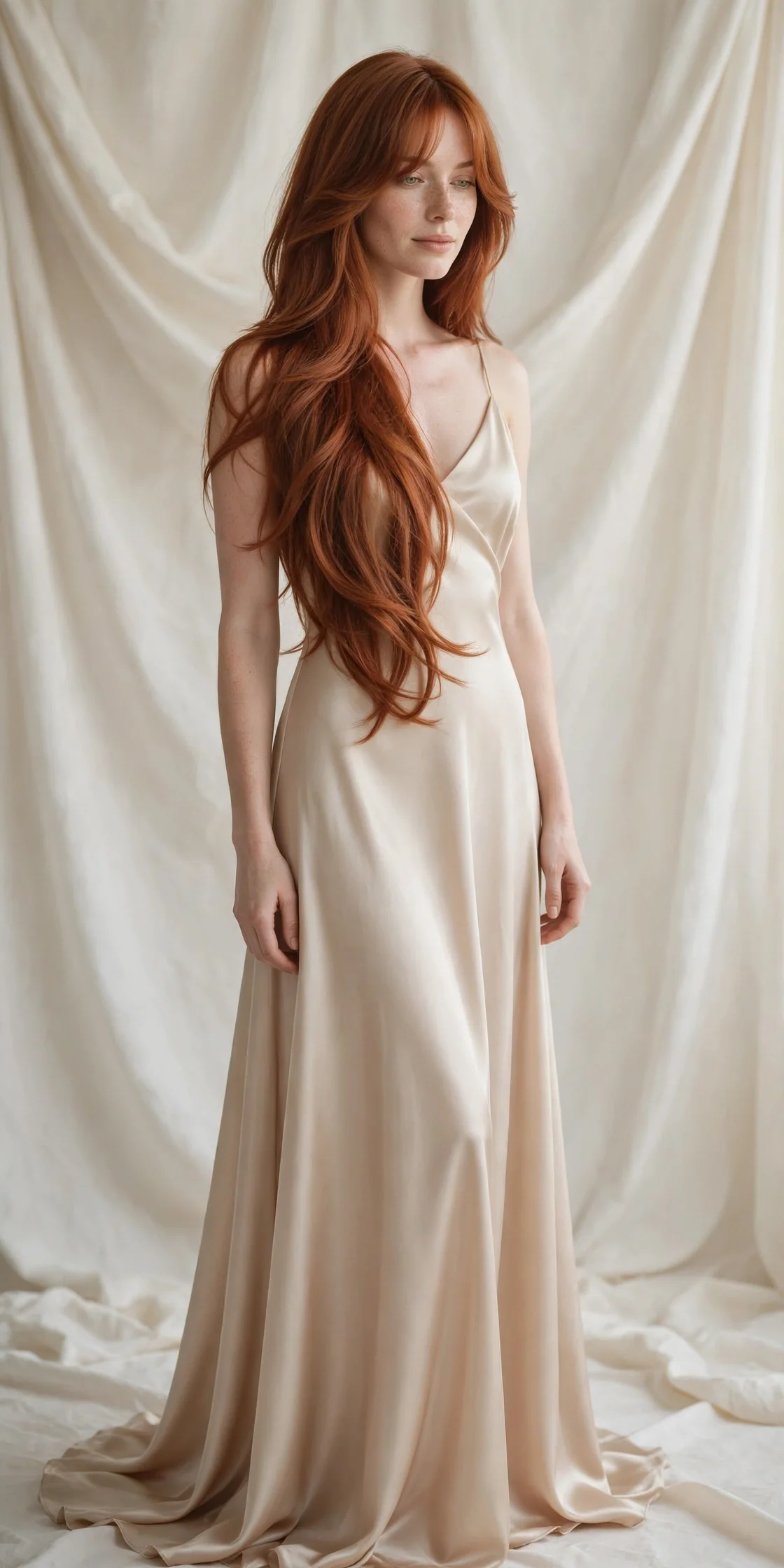
Copper Pixie with Micro Curtain Bangs
Short hair and bangs supposedly don’t mix. That rule has been quietly dead for a few years now. Micro curtain bangs on a pixie, parting at the centre and barely reaching the brow, look sharp and deliberate. Celebrity hairstylist Marcos Diaz has pointed out that clients increasingly want freedom without giving up styling versatility, and this cut delivers exactly that trade.
Copper is extremely visible on a pixie since every strand is on display, so the tone selection matters more here than anywhere else on this list. Budget honestly before booking: cuts every four weeks, colour every five, which adds up quickly. What you get in return is a look almost nobody else in the room is wearing.

Copper Bixie with Curtain Bangs
Half bob, half pixie, and the most useful cut in existence for anyone growing out short hair. Choppy layers create natural shadow that makes copper look dimensional even on a single-process colour. Curtain bangs soften the edges.

Copper Curtain Bangs for Every Hair Texture
Texture changes both how the fringe is cut and how the colour reads. These four cover the main scenarios.
Curly Copper Curtain Bangs
Curly curtain bangs need cutting on dry hair, full stop, because shrinkage will otherwise leave you with something two inches shorter than you asked for.
What keeps them looking good:
- Lightweight cream or mousse rather than heavy gel
- A diffuser on low speed, never a concentrated nozzle
- Rounded shapes rather than blunt lines at the edges
- Refreshing with water and a little product instead of restyling from scratch
Copper on curls is arguably the best pairing on this list, since every curve catches light at a different angle and creates dimension that straight hair has to fake with foils.

Beachy Waves with Copper Curtain Bangs
Salt spray and copper have a difficult relationship, which nobody mentions in the summer inspiration posts. Sea salt does deliver that undone texture, but combined with UV exposure it strips warm pigment faster than almost anything else.
A UV-protective leave-in used alongside the salt spray solves most of it. Use a large-barrel iron, leave the ends straight for a modern finish, and accept that summer copper needs a gloss appointment roughly every five weeks instead of eight.

Sleek Straight Copper Curtain Bangs
Glass-smooth copper with a precisely parted fringe reads polished and slightly editorial, and shine is what carries the whole look. A gloss treatment every six weeks keeps the reflect strong. Straightening does accelerate colour loss though, so keep tools below 350°F and use heat protectant every single time, without the occasional skipped morning.
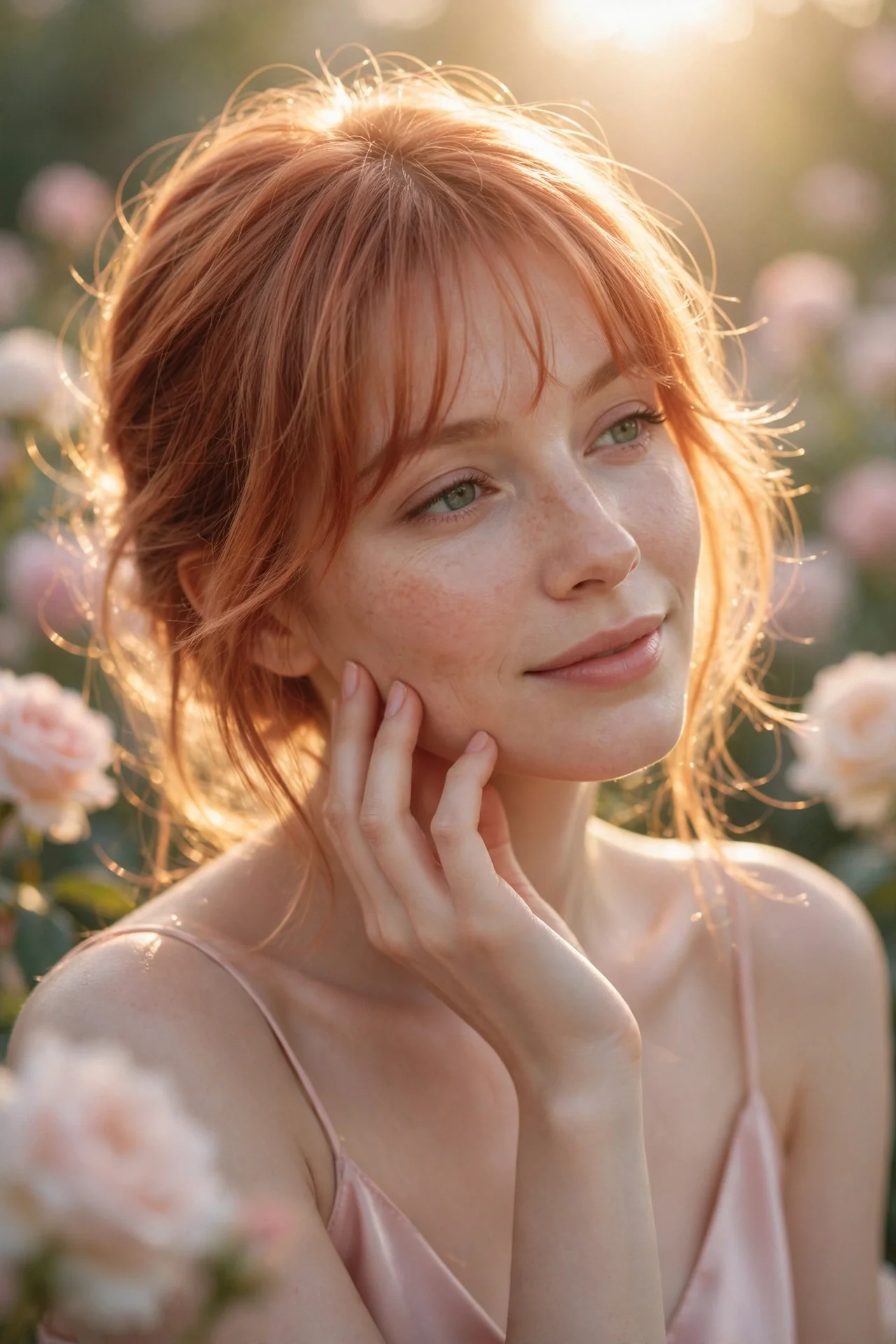
Wispy Copper Bangs for Fine Hair
Fine-haired clients almost always ask for thicker bangs, believing density will create the illusion of fullness. The opposite happens. Heavy fringes pull hair away from an already sparse crown, leaving both sections looking thinner. Wispy, point-cut curtain bangs use far less hair and create more visual impact.
Copper helps for a reason most people don’t know: warm tones reflect more light than cool ones, which makes individual strands appear fuller in photographs and in daylight. Ask specifically for point cutting rather than a straight scissor line, and keep the density light enough that you can still see through the fringe when it falls forward.

Colouring Techniques That Elevate the Look
Placement often matters more than the shade you picked. These seven techniques change how copper behaves.
Copper Money Piece Curtain Bangs
Two sections. That’s all this technique touches, and it costs roughly a third of a full head of colour. Concentrating the brightest copper on the face-framing pieces while leaving the rest of your natural colour intact gives you the visual impact with minimal damage and easy grow-out. Anyone testing whether copper suits their complexion should do this before committing to anything larger.
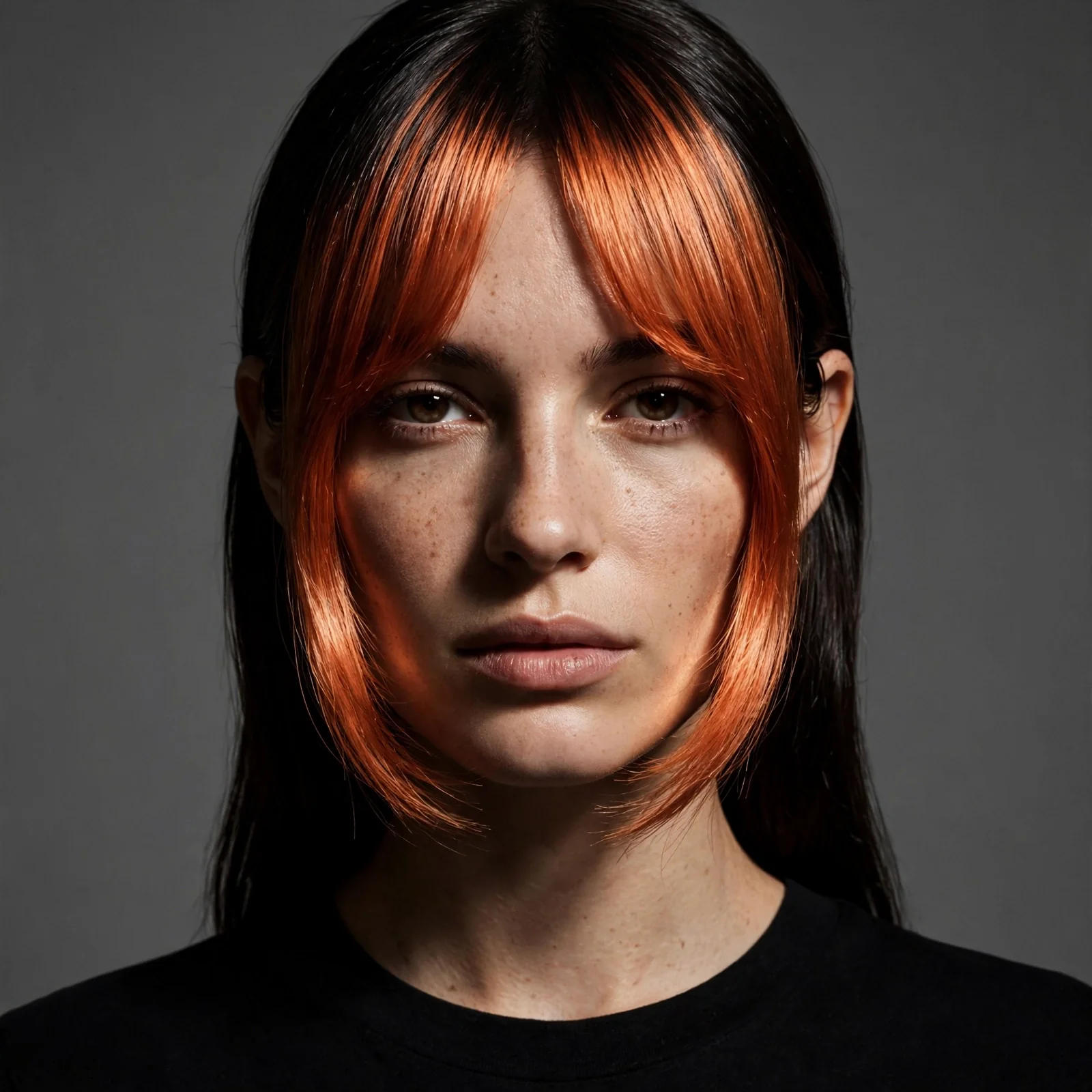
Copper Babylights Through the Fringe
Want brightness without a visible highlight pattern? Ultra-fine babylights woven through the bangs create the effect of sun exposure rather than salon work, and they grow out almost invisibly, which suits people who genuinely cannot commit to a schedule.

Copper Balayage with Curtain Bangs
Balayage remains the lowest-commitment way to wear copper, with hand-painted colour starting mid-length and building toward the ends. Graciano’s advice about pairing earthy copper tones with soft balayage applies directly here. Painting a little extra brightness into the curtain bang section brings warmth up to the face while the roots stay soft, and touch-ups every twelve weeks are usually enough.
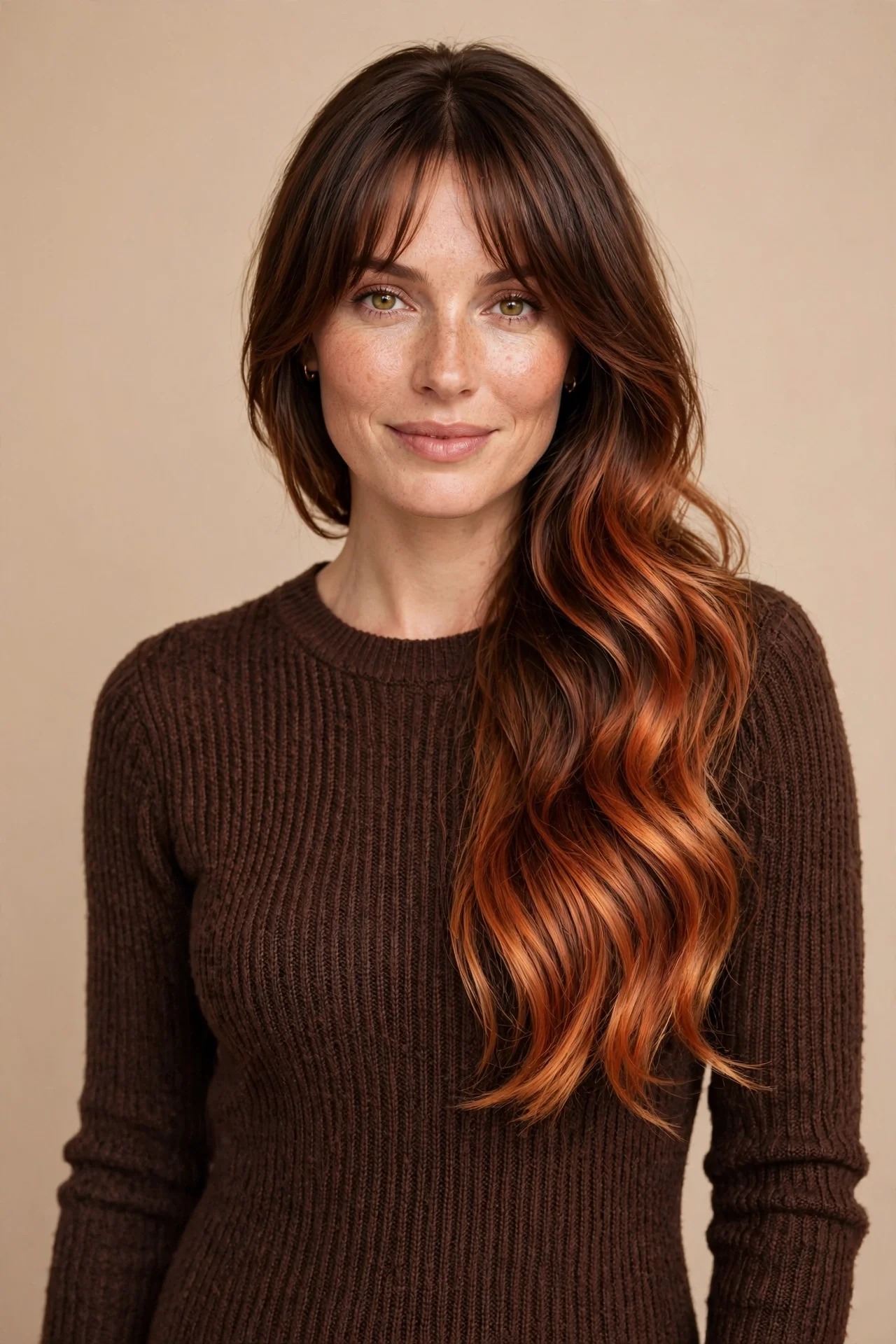
Copper Colour Melt
Colour melting has become the defining technique of 2026, replacing contrast with seamless transition.
A typical copper melt runs:
- Deep auburn or shadowed brown at the root
- Classic copper through the mid-lengths
- Bright penny or amber at the ends
No visible line appears anywhere, and the curtain bangs sit within the mid tone. This technique genuinely requires an experienced colourist, so check portfolios for melts specifically rather than assuming any balayage specialist can do it.
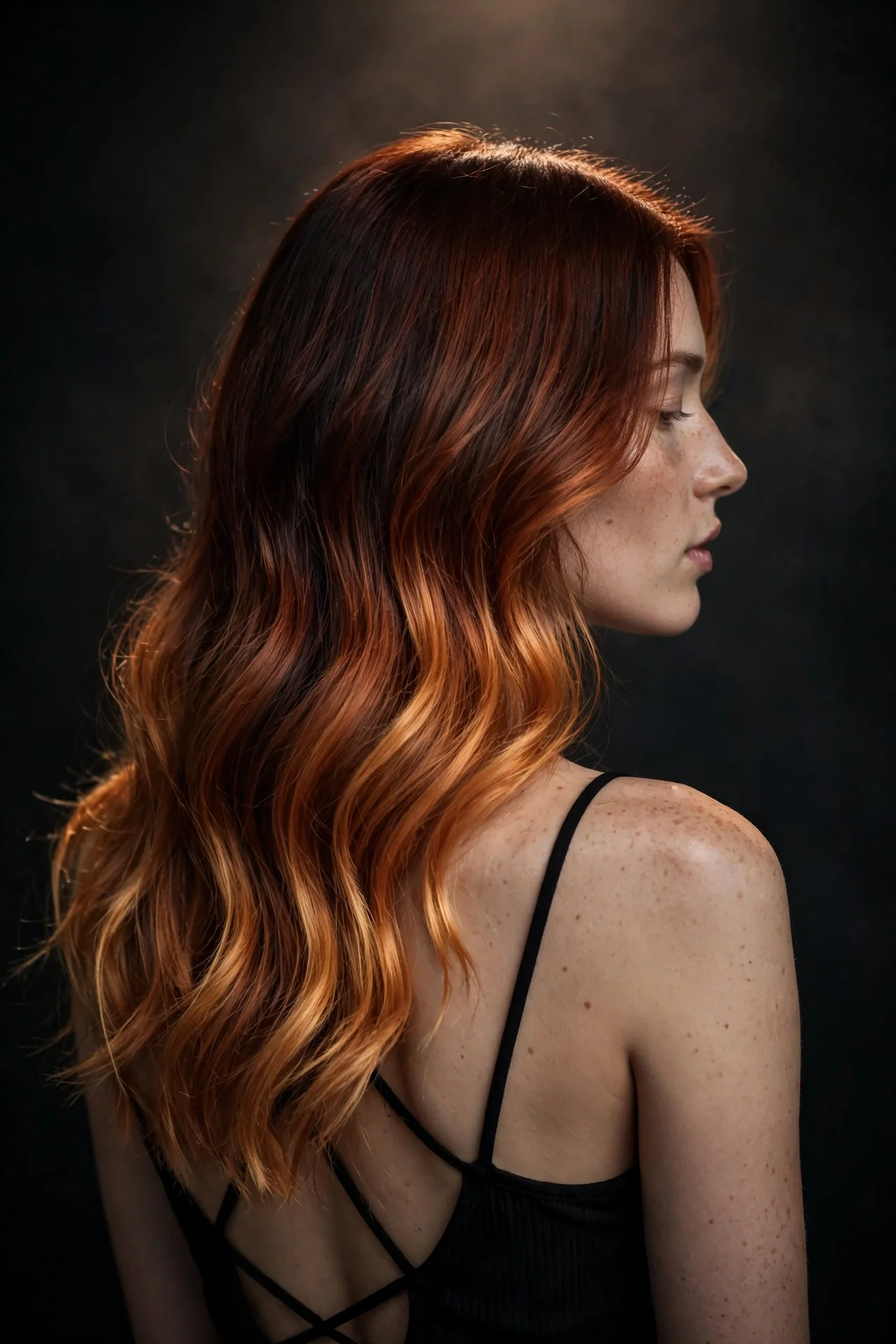
Peekaboo Copper Under Dark Hair
The client who books this is usually working somewhere with a dress code and quietly refusing to accept it. Copper hidden beneath a dark top layer appears only when you move, tuck your hair or tie it up. Fading matters far less here, since the surprise is doing the work rather than the saturation.

Copper with a Deep Root Shadow
Twelve weeks. That’s roughly how long shadow rooting stretches a copper appointment, compared to five or six without it. Leaving the roots intentionally dark before melting into copper removes the harsh regrowth line that sends most people back to the salon early.
The added contrast also creates perceived depth and volume. Curtain bangs benefit specifically, because the darker root at the fringe casts a subtle shadow that strengthens the whole face-framing effect.

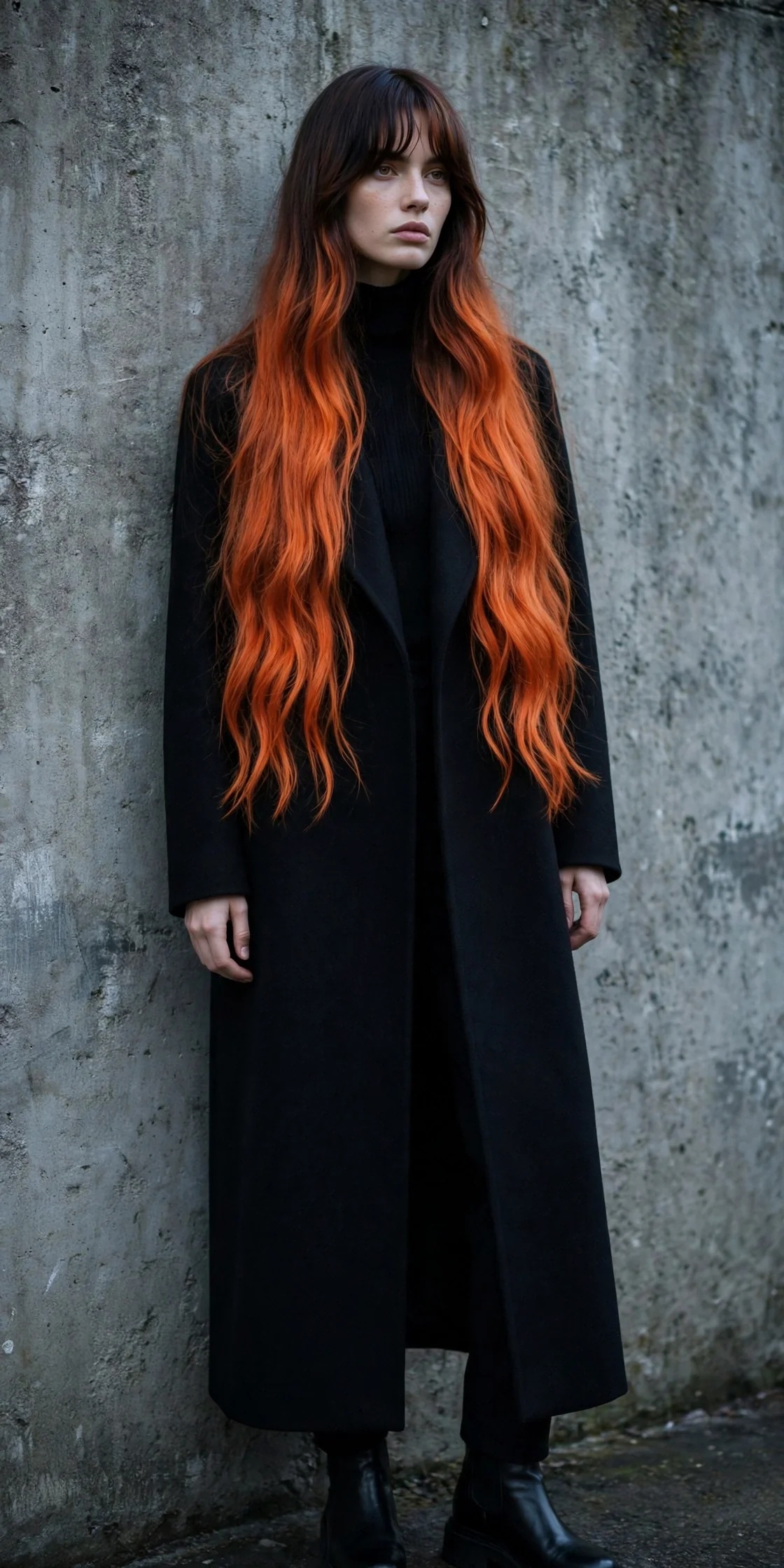
Two-Tone Copper Ombre
A gradual shift from dark base to bright copper ends delivers maximum drama with surprisingly manageable upkeep, since the roots are never part of the equation.
Longer hair displays ombre best, as the gradient needs room to develop. Most colourists keep the curtain bangs in the darker zone so the brightness stays concentrated at the ends, though brightening the fringe deliberately is an option worth discussing before the foils go in.
What Nobody Tells You Before Going Copper
Style roundups show photos and stop there. These are the details that decide whether you still love your copper in month three.
Why Copper Fades Faster Than Every Other Colour
Red pigment molecules are physically larger than other colour molecules, which means they sit less securely inside the hair shaft and wash out more readily. Understanding this changes how you feel about it. Your colour dulling after a few weeks is chemistry, not a mistake anyone made.
Four variables control the speed: washing frequency, water temperature, heat styling and sun exposure. Managing them is the entire maintenance game.
The routine that actually holds colour:
- Wash two to three times weekly, no more
- Finish every rinse with cool water to seal the cuticle
- Use sulfate-free, colour-safe shampoo
- Apply a copper-depositing conditioner once a week
- Heat protectant every time, tools below 350°F
- Book an in-salon gloss every four to six weeks
- Add UV protection through summer
Chase Kusero, celebrity colourist and co-founder of IGK Hair Care, recommends a clear gloss top coat for maintaining brightness between salon visits. IGK’s version runs around $34, and similar clear glosses from Redken and Garnier work on the same principle.
Matching Your Copper Shade to Your Skin Tone
| Copper Shade | Best Suited To | Fade Speed |
|---|---|---|
| Strawberry copper | Fair, cool undertones | Fast |
| Penny copper | Fair to medium, warm undertones | Fast |
| Rose copper | Cool undertones, any depth | Very fast |
| Cowboy copper | Medium, neutral to warm | Moderate |
| Ginger brunette | Almost universal | Slow |
| Burnt copper | Medium to deep | Slow |
| Auburn copper | Medium to deep, warm | Slow |
Bring photos of yourself taken in natural daylight to your consultation. Salon lighting distorts undertone badly, and most colourists would rather see how you actually look outside the chair than guess.
Choosing Curtain Bang Length for Your Face Shape
| Face Shape | Recommended Bang Length | Avoid |
|---|---|---|
| Round | Longer, tapering below the cheekbone | Short, cheek-level cuts |
| Oval | Almost any length works | Very heavy density |
| Square | Soft, wispy, chin-grazing | Blunt straight edges |
| Heart | Cheekbone length, side sweeping | Very short micro fringes |
| Diamond | Soft wispy pieces at the temple | Tight centre parts |
| Long | Fuller, brow-skimming | Long sweeping curtains |
Styling Curtain Bangs at Home Without Frustration
Blow-dry your bangs first, while the rest of your hair is still damp. They set into whatever shape they dry in, and correcting them afterwards almost never works.
Use a round brush roughly two inches in diameter. Direct the airflow downward, roll the brush under and away from your face, then finish with a blast of cool air to lock the shape. Plenty of stylists suggest a Velcro roller left in for ten minutes while you do your makeup, which honestly produces a cleaner result with less skill required. A little dry shampoo at the roots stops them collapsing by mid-afternoon.
Final Thoughts
Copper curtain bangs work because both halves of the equation earn their place. The colour warms your complexion and adds depth that a neutral shade can’t produce. The fringe sculpts your face without committing you to a difficult routine. Together they create something that reads deliberate and expensive, even on mornings when you barely tried.
Choose your shade by undertone rather than by whichever photo you liked most, because the tone that looks incredible on someone with warm olive skin can flatten a cool complexion entirely. Be realistic about upkeep, since copper genuinely asks more than brown ever will. Buy colour-safe products on day one instead of waiting until the fade sets in.
Save the ideas that stopped your scroll and take them to your consultation. Every colourist would rather see five reference photos than hear the words “something warm, but not too orange.”
Frequently Asked Questions
How long does copper hair colour last before fading?
Most copper shades fade noticeably within four to six weeks, because red pigment molecules are larger and wash out faster than other colours. Darker versions like auburn and burnt copper hold considerably longer. A salon gloss every four to six weeks refreshes the tone between full appointments.
Do curtain bangs suit every face shape?
Nearly every shape works, which explains their staying power. Length is the variable that matters. Round faces suit longer bangs tapering below the cheekbone, while longer faces look better with a fuller, brow-skimming version that adds horizontal width across the face.
Can I get copper hair without bleaching?
Yes, if your natural hair is light to medium brown. Deposit-only and demi-permanent copper work beautifully on lighter bases. Dark brown and black hair usually need lifting first for the copper to show, which adds cost and requires bond protection during processing.
How do I style curtain bangs so they don’t separate?
Dry them first, before the rest of your hair, using a round brush rolled under and away from your face. Finish with cool air to set the shape. A light texture spray at the roots prevents separation and stops them falling flat.