19 Trendy Teen Boy Haircuts That Are Stylish and Easy to Maintain
The best haircut is the one that still looks decent on a Thursday morning when you’ve slept badly and have four minutes before the bus. That’s the honest standard, and it’s the one teen boy haircuts are finally being judged against. Barbershops in 2026 report a clear shift away from the ultra-sharp, product-heavy styles of a few years ago toward softer fades, natural texture and cuts that grow out cleanly instead of collapsing after two weeks.
Fades still dominate, but the emphasis has moved. Low tapers are outselling high skin fades, textured tops are outselling gelled spikes, and the fringe has grown longer and more relaxed rather than being pushed upward into a structured quiff. Timothée Chalamet’s version of the Edgar cut and Olly Alexander’s low fade with a textured fringe have both been widely referenced as style templates by salon groups this year.
Below are 19 cuts worth taking to your barber, with the real maintenance attached to each one.
Fades and Tapers: The Foundation
Almost every modern teen cut starts with a decision about the sides. These five are the options that matter.
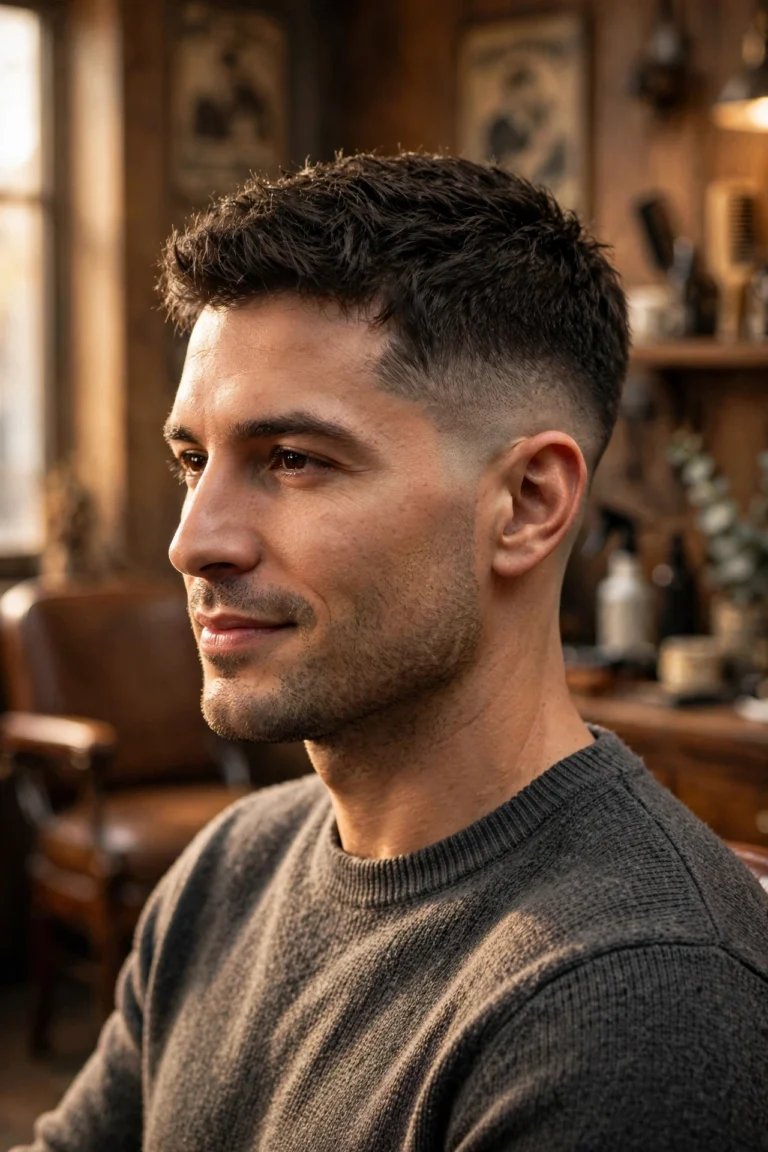
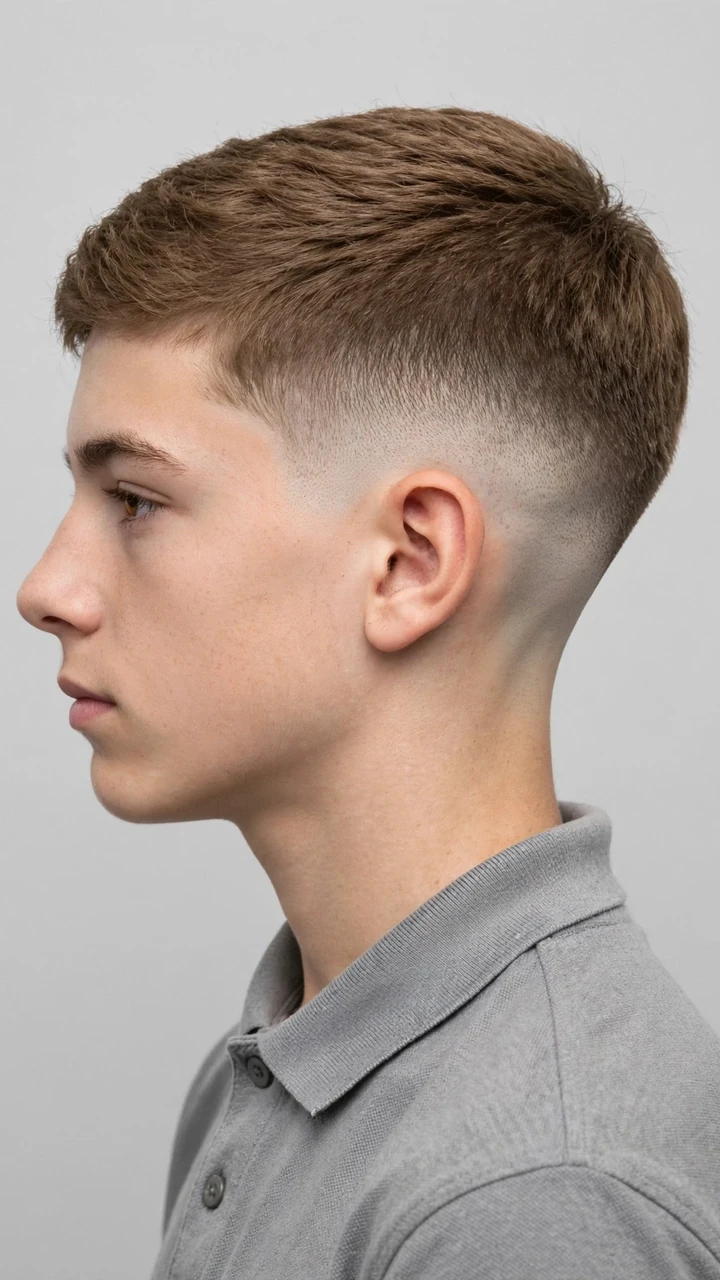
The Low Taper Fade
The low taper fade keeps the fade line sitting just above the ears and along the neckline, blending gradually rather than cutting to skin. It has quietly become the most requested cut of the last two years, not because it’s dramatic but because it works on nearly everyone. Straight, wavy or curly hair all take it. Trims every four to five weeks keep it sharp, and even overgrown it still reads tidy.
The Mid Fade with a Textured Fringe
Walk through any high school corridor this year and this is the cut you’ll see most. The sides fade at temple height while the top stays long enough to fall forward across the forehead. What’s changed from previous years is the fringe itself: longer, more textured, and styled forward rather than up. Blow-dry the front forward while damp, then work a small amount of light styling cream through it. Keep it soft rather than stiff.
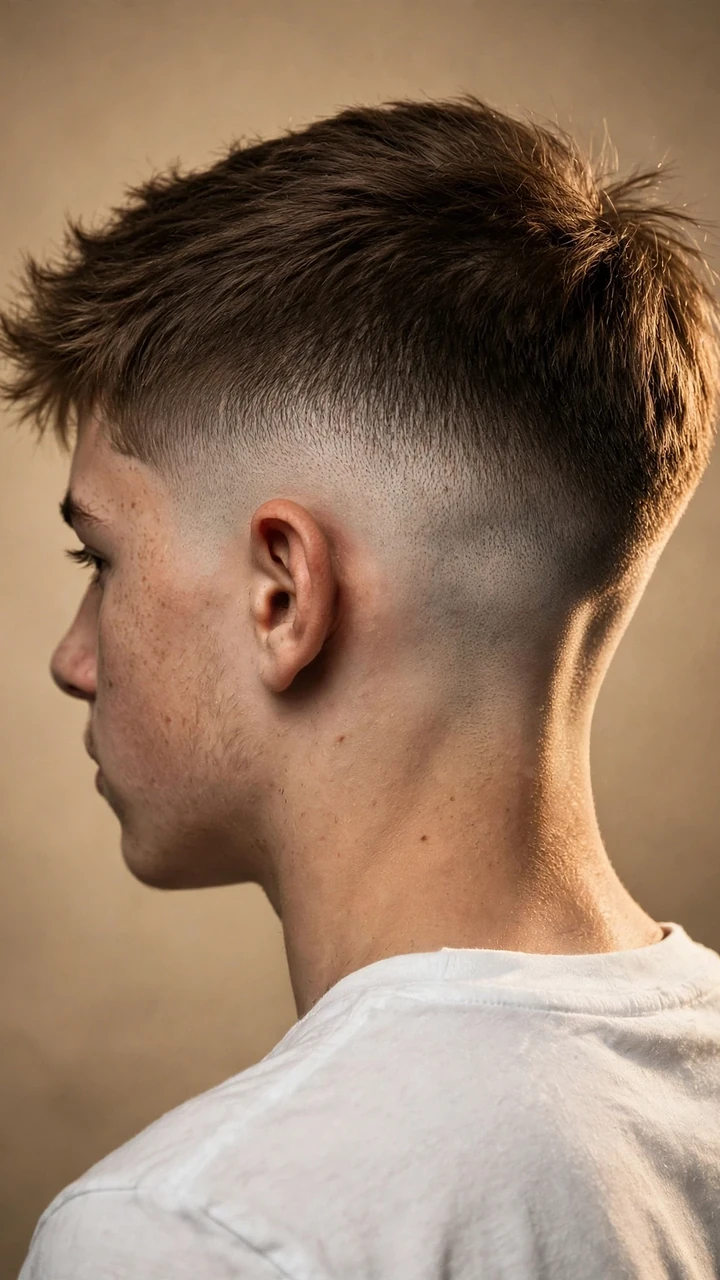
The Burst Fade
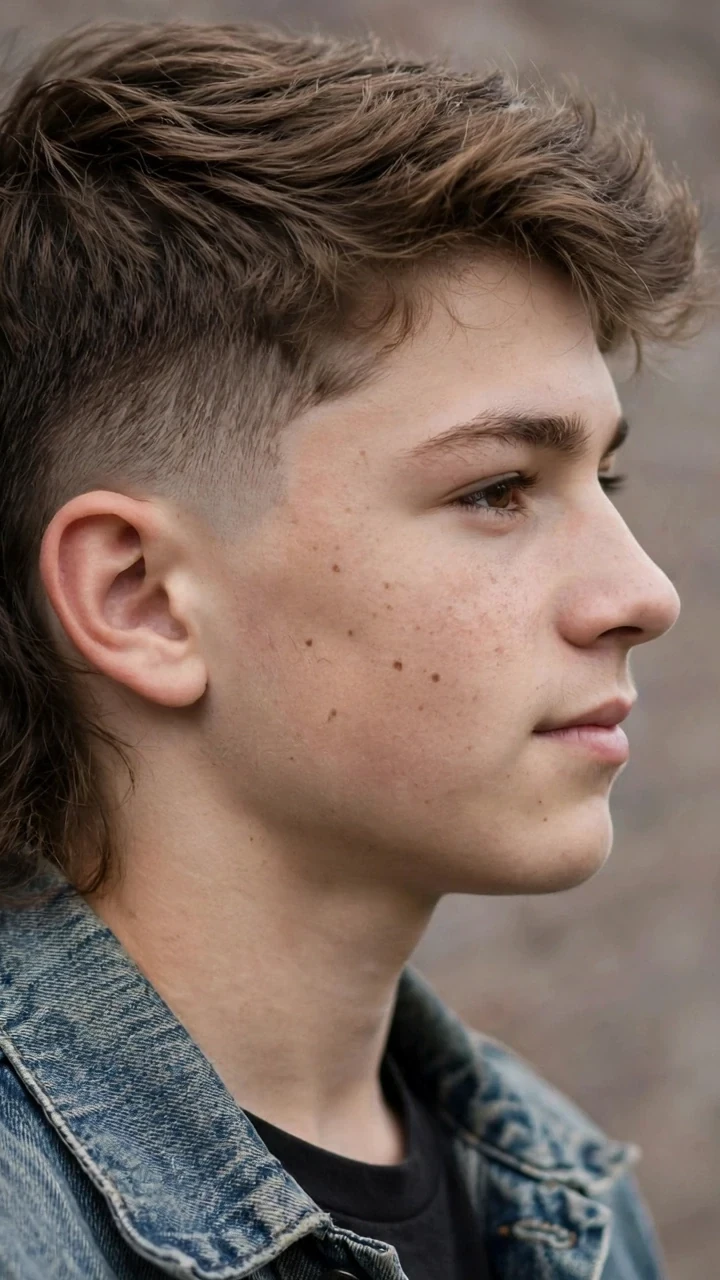
Why does this fade look different from the others? Because it curves. Instead of running in a straight line around the head, a burst fade arcs around the ear and fades out toward the back, leaving weight in the centre. It pairs especially well with mullets and longer tops. The curved shape does require a barber who’s done it before, so ask to see examples on their page first.
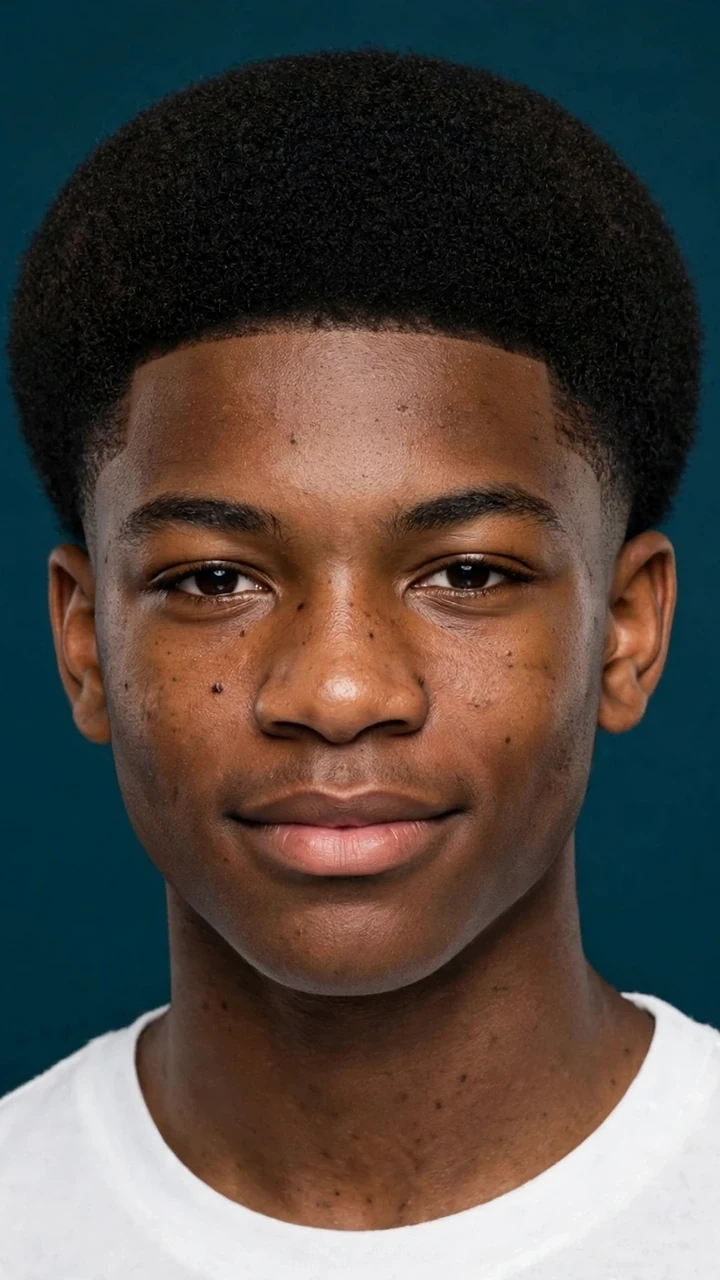
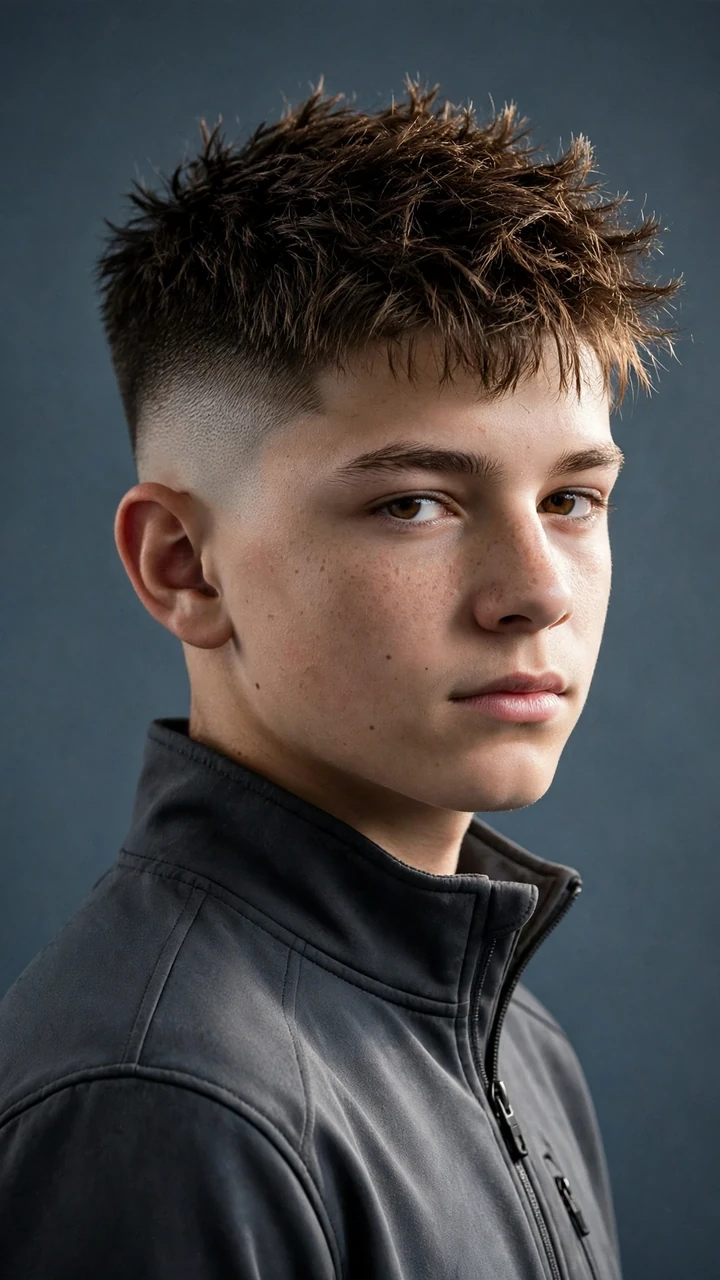
The Skin Fade with a Textured Top
Three weeks. That’s realistically how long a skin fade stays looking intentional before the regrowth line becomes obvious. Fading right down to the scalp creates the sharpest contrast available, and the effect against a choppy, point-cut top is genuinely striking.
Thick straight hair holds it best. Before committing, check your school’s dress code, because a number of schools still restrict skin fades and shaved designs, and finding that out afterwards is an expensive lesson.
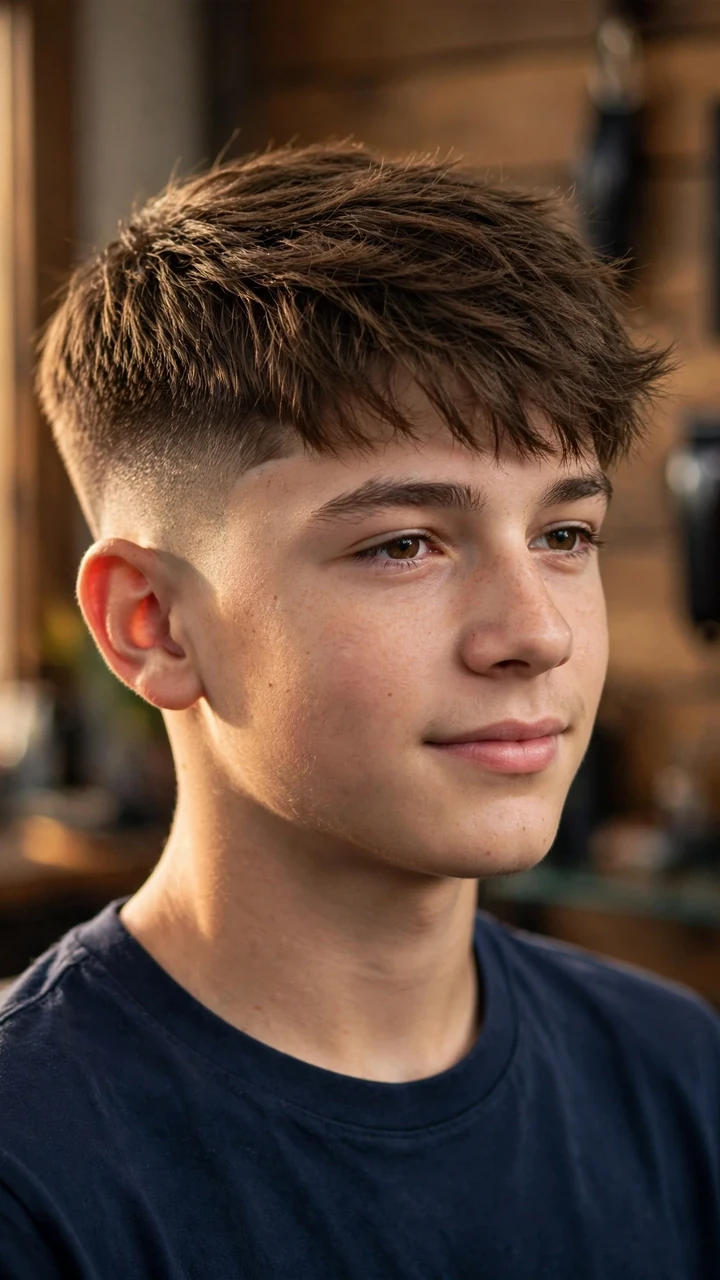
The Tapered Buzz Cut
A buzz cut with a subtle taper around the sides and neckline gives you a clean, sharp shape with essentially zero daily styling. It’s the lowest-maintenance option in this entire article. Sports, summer, early mornings, all handled. Adding the taper is what separates it from a plain clipper cut and stops it looking accidental.
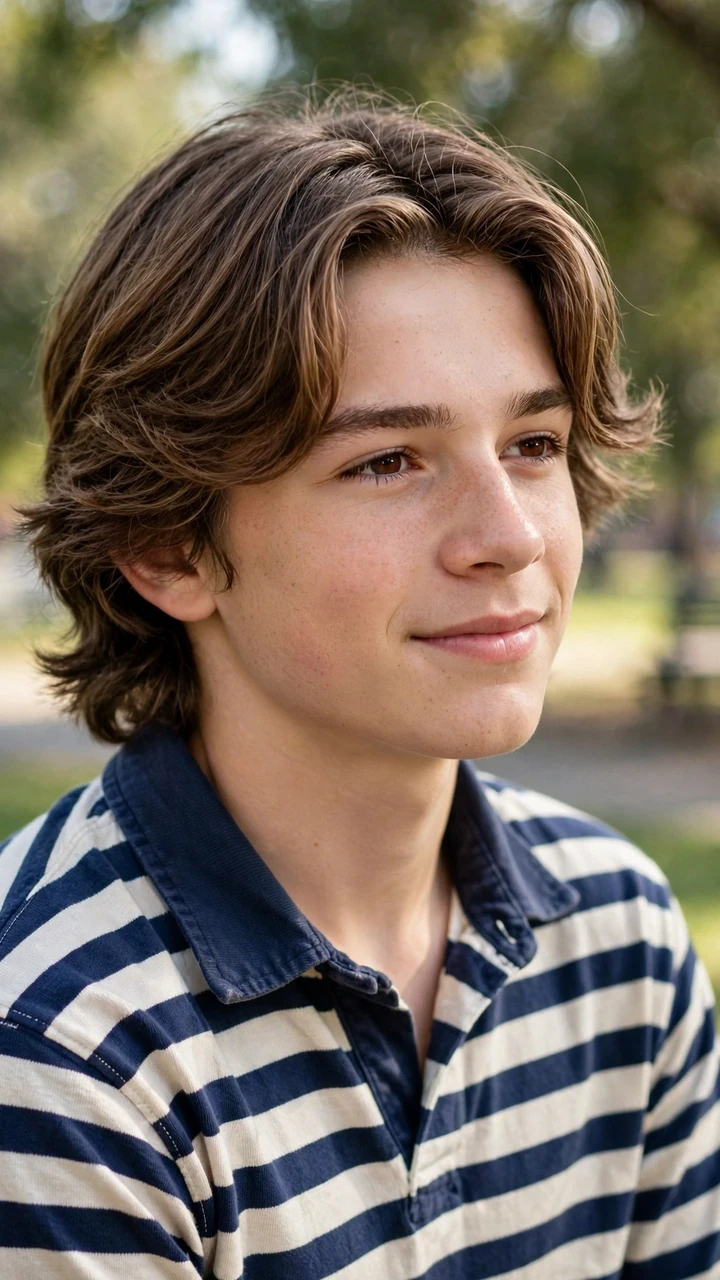
Textured and Fringe-Forward Cuts
Texture is the defining feature of teen hair right now. These five put it front and centre.
The Textured Crop
Most people think a crop is just short hair. It isn’t, and the difference is in the cutting technique. Point cutting through the top creates choppy, uneven layers that produce movement without length. The fringe sits short and slightly forward, the sides fade or taper. Fine hair benefits enormously because the layering creates the appearance of density. Matte clay applied to damp hair, not dry, gives the best result.
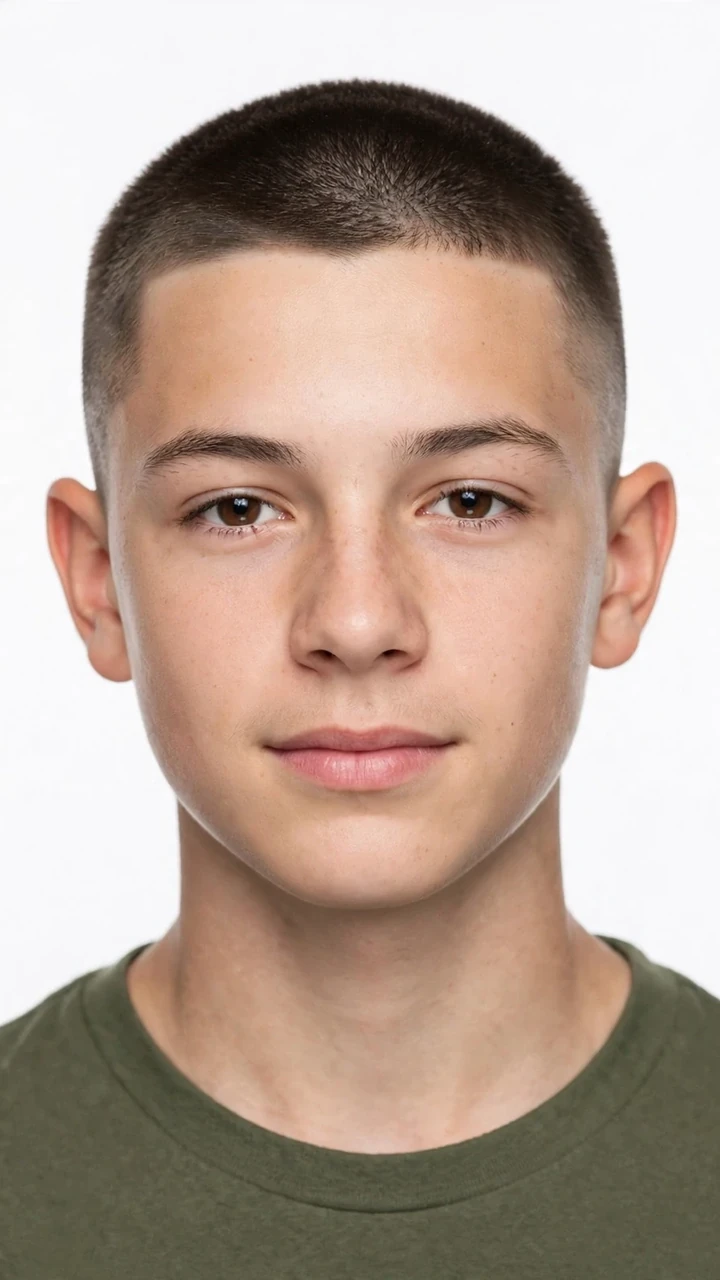
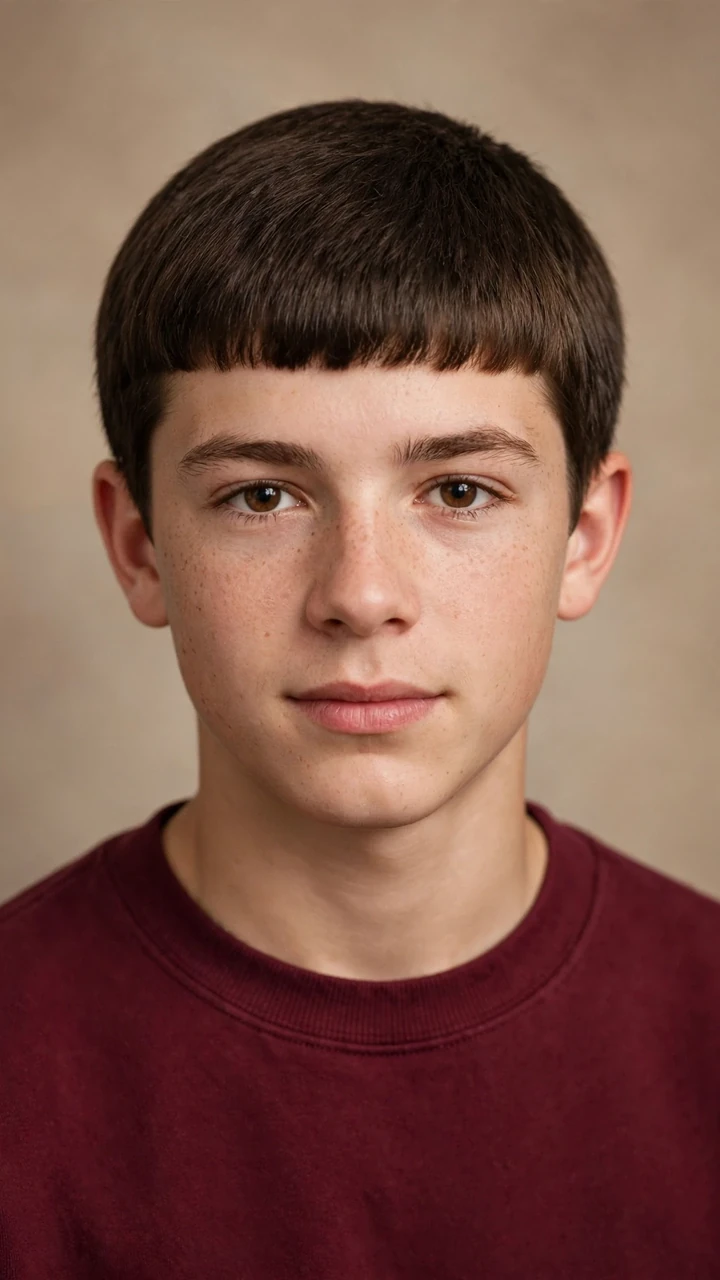
The French Crop
The French crop keeps a short, neat fringe cut straight across with softly textured length behind it, and the sides faded or tapered.
Cleaner and more conservative than the textured crop, it suits school environments with stricter grooming rules. Straight and fine hair take it particularly well. Styling is minimal, usually a matte texture cream worked through with fingers and nothing else.
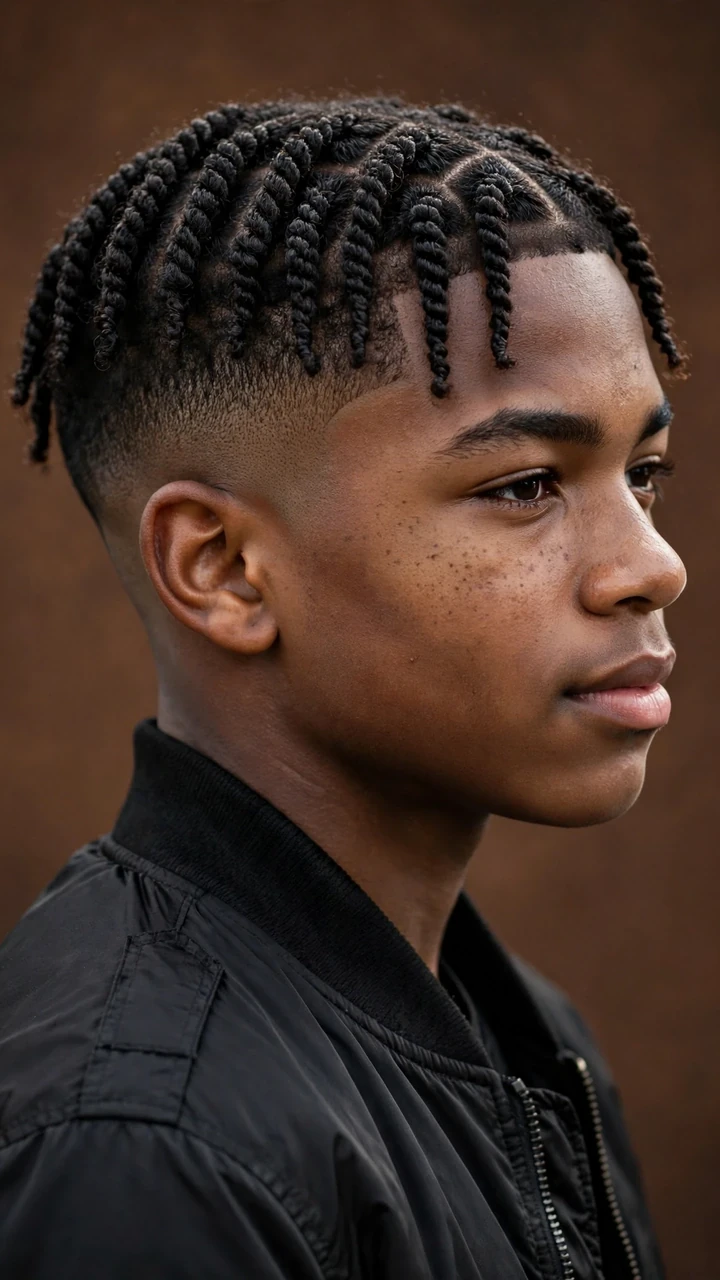
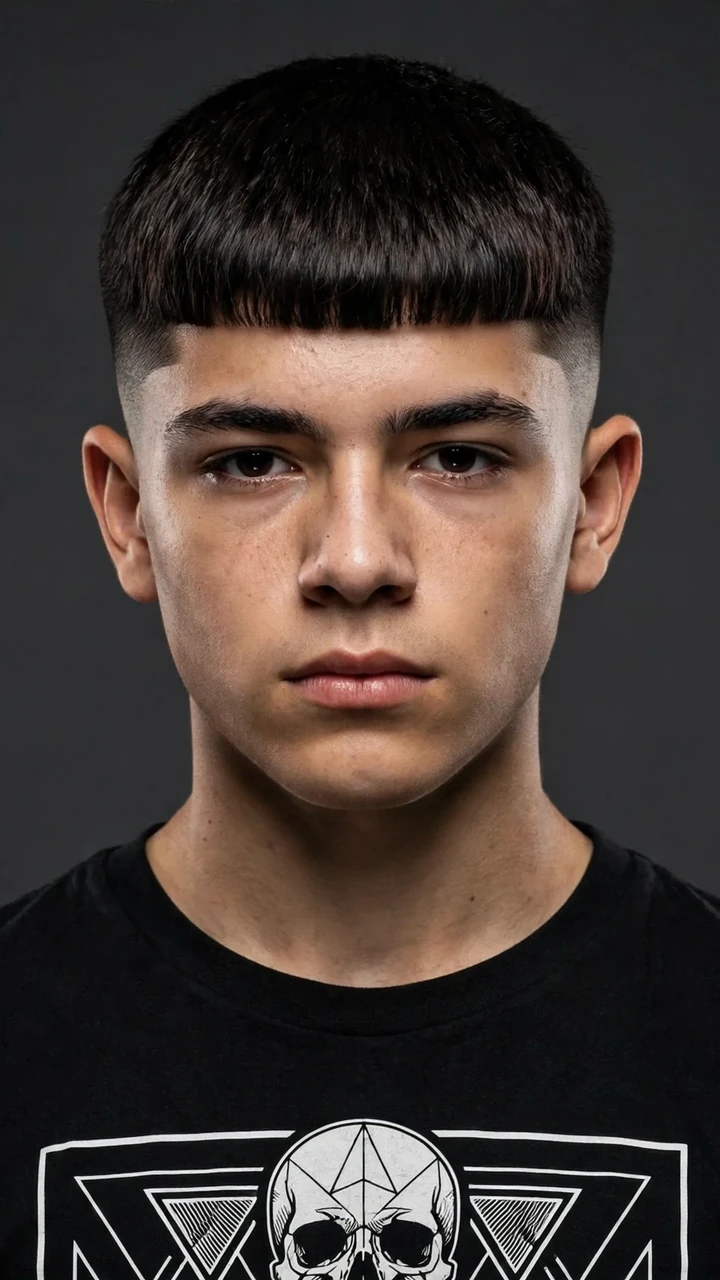
The Edgar Cut
An Edgar is defined by a blunt or textured fringe hanging low, sometimes right down to the eyebrows, paired with a sharp fade.
What to know before booking:
- Works best on straight, thick hair
- Needs a barber comfortable with a straight fringe line
- Style with matte pomade or volume powder, never shine products
- Grows out fast, so expect three-week visits
- Check school rules, since the sharp line up counts as a design in some codes
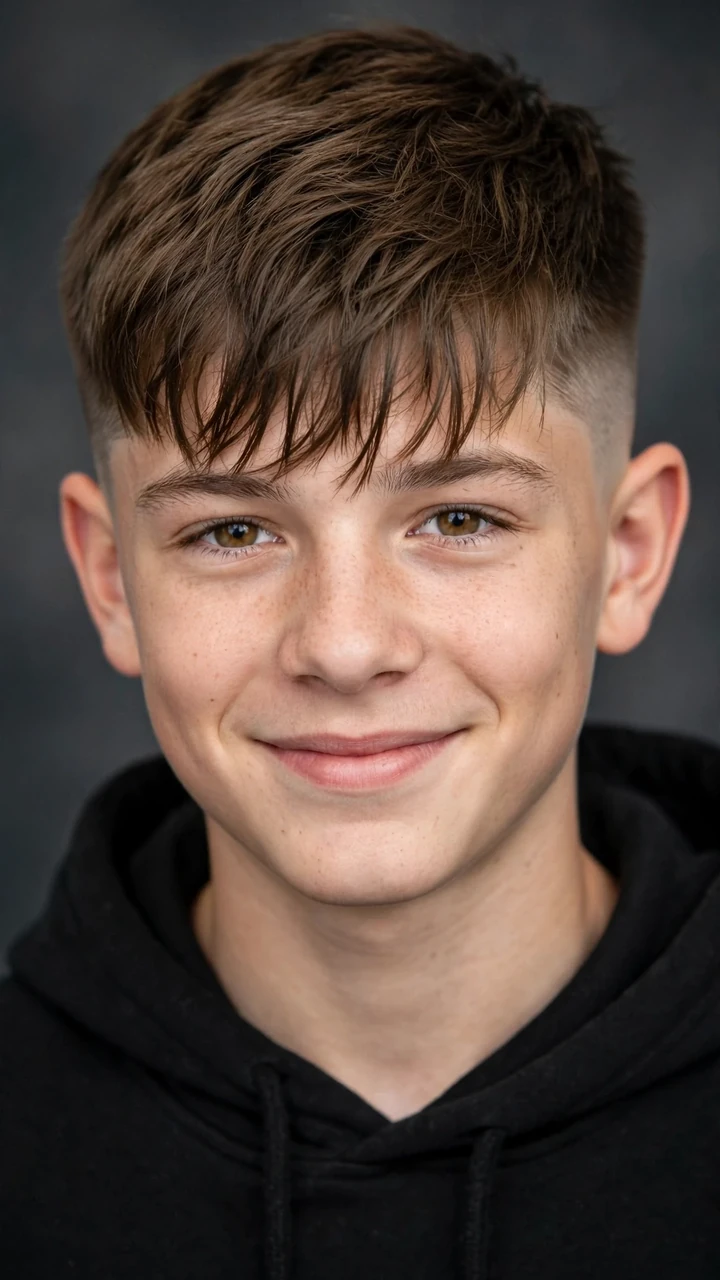
The Fluffy Fringe with a Low Taper
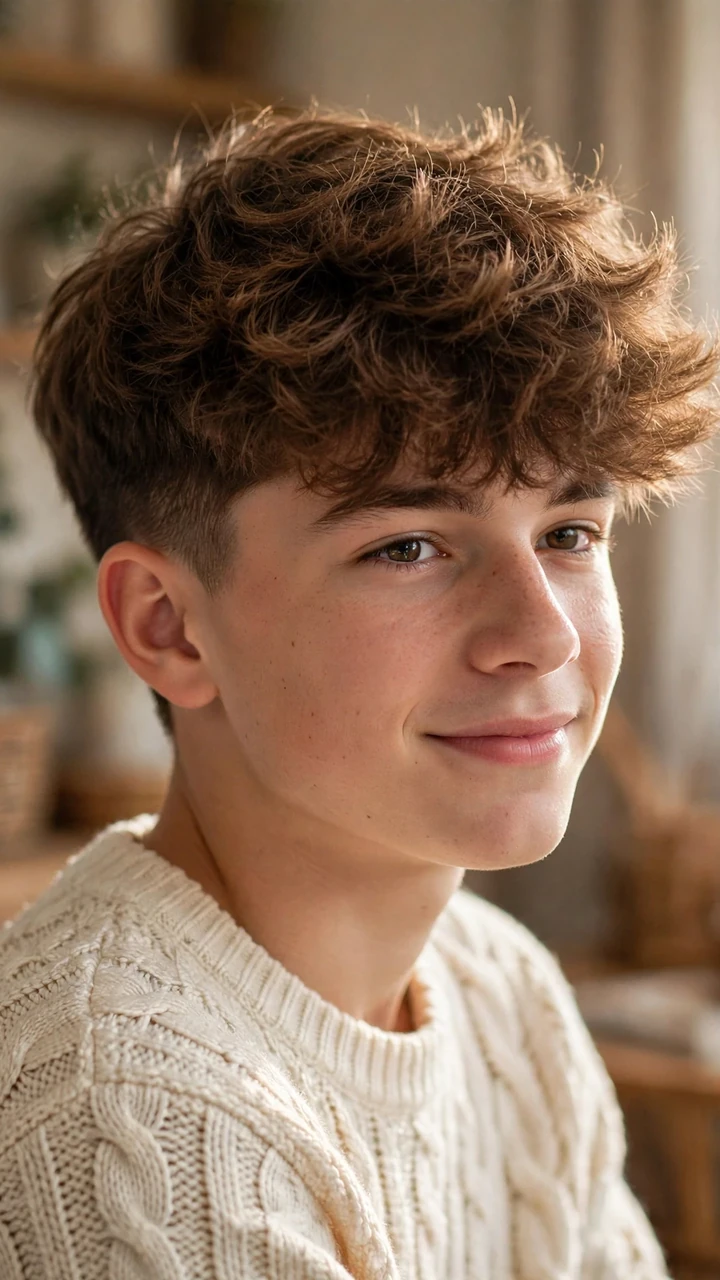
Soft volume falling forward over the forehead with a low fade underneath keeps the whole thing balanced. It’s one of the most school-appropriate cuts on this list while still looking current. Blow-drying the fringe forward for thirty seconds is the only real effort required, and skipping it leaves the front flat.
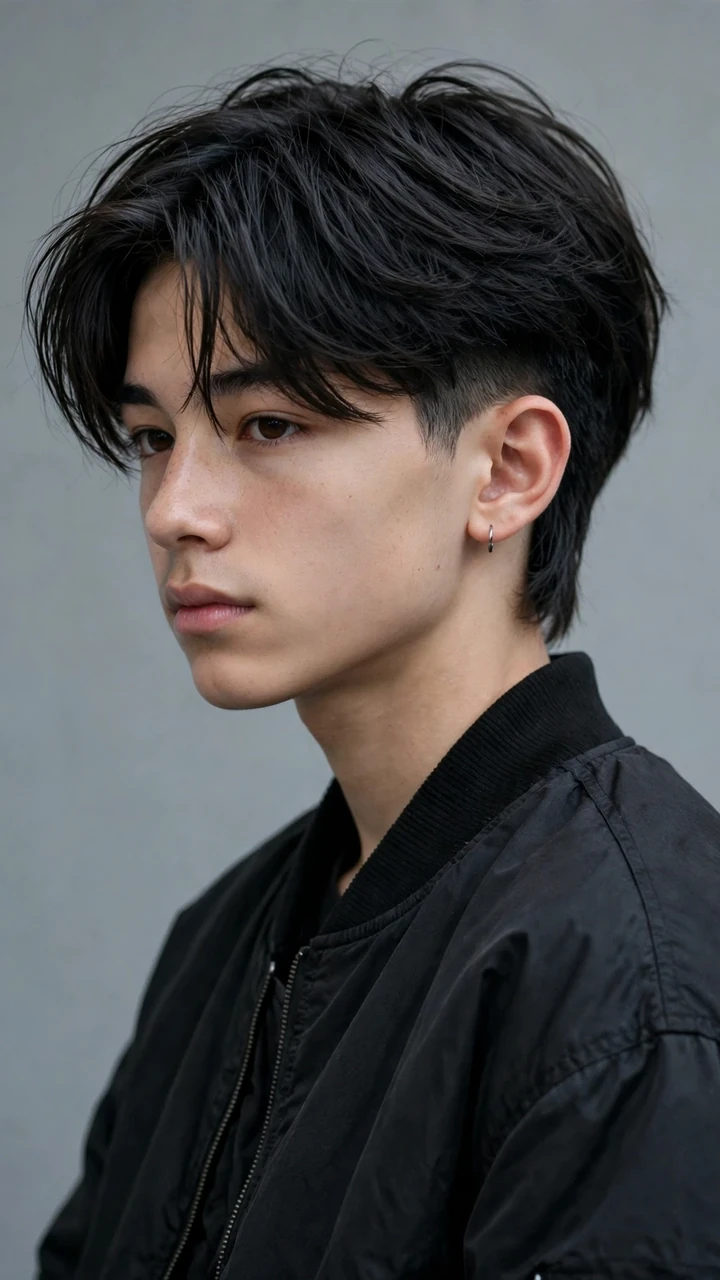
The Caesar Cut
Short, horizontally straight fringe, even layers all round, and a fade or taper on the sides. Big foreheads are the specific problem this cut solves, since the forward fringe covers ground that other styles expose. It’s also one of the easiest to maintain, needing little more than a brush through when damp.
Longer Styles with Movement
Not every teen wants short sides. These five keep length while staying manageable.
The Curtain Hairstyle
Is the middle part still in? Yes, and it’s arguably stronger now than when it returned. Medium-length hair parted down the centre falls in soft layers on either side, framing the face. Straight and wavy hair suit it best. Layers are essential, because without them the whole thing goes heavy and sits flat against the head. Expect a slightly awkward growing-in phase of about six weeks.
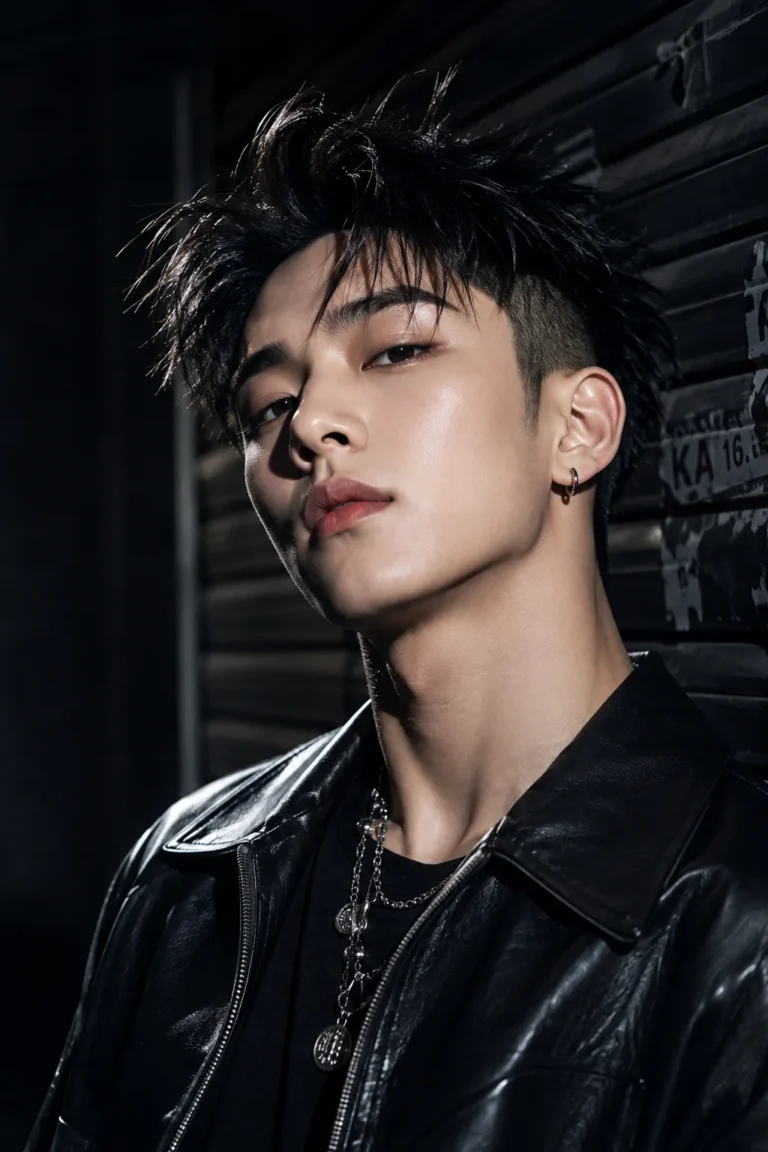
The Korean Two-Block
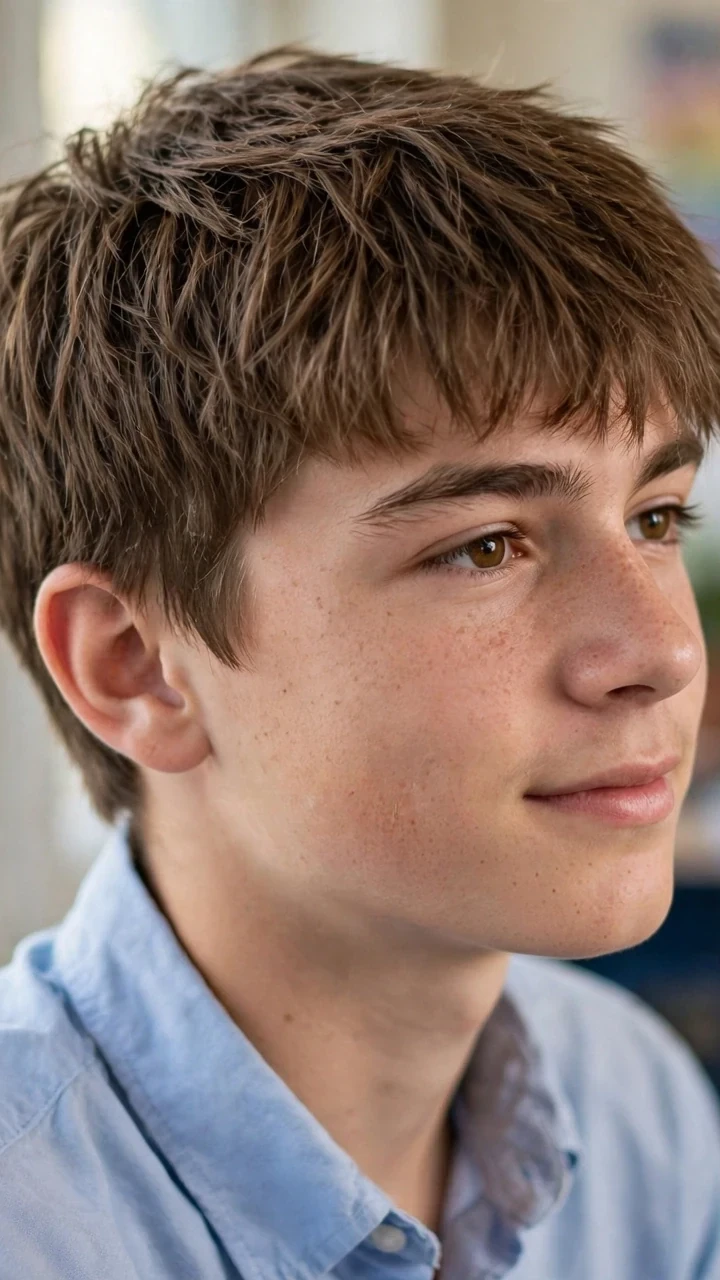
Two lengths, clearly separated. The under-section is clipped short around the sides and back while the top layer stays long enough to fall over it.
Popular through K-pop and gaming culture, the two-block has become a genuine mainstream option. It’s practical too, since the hidden short section removes bulk and keeps the head cooler without sacrificing visible length.
The Modern Mullet
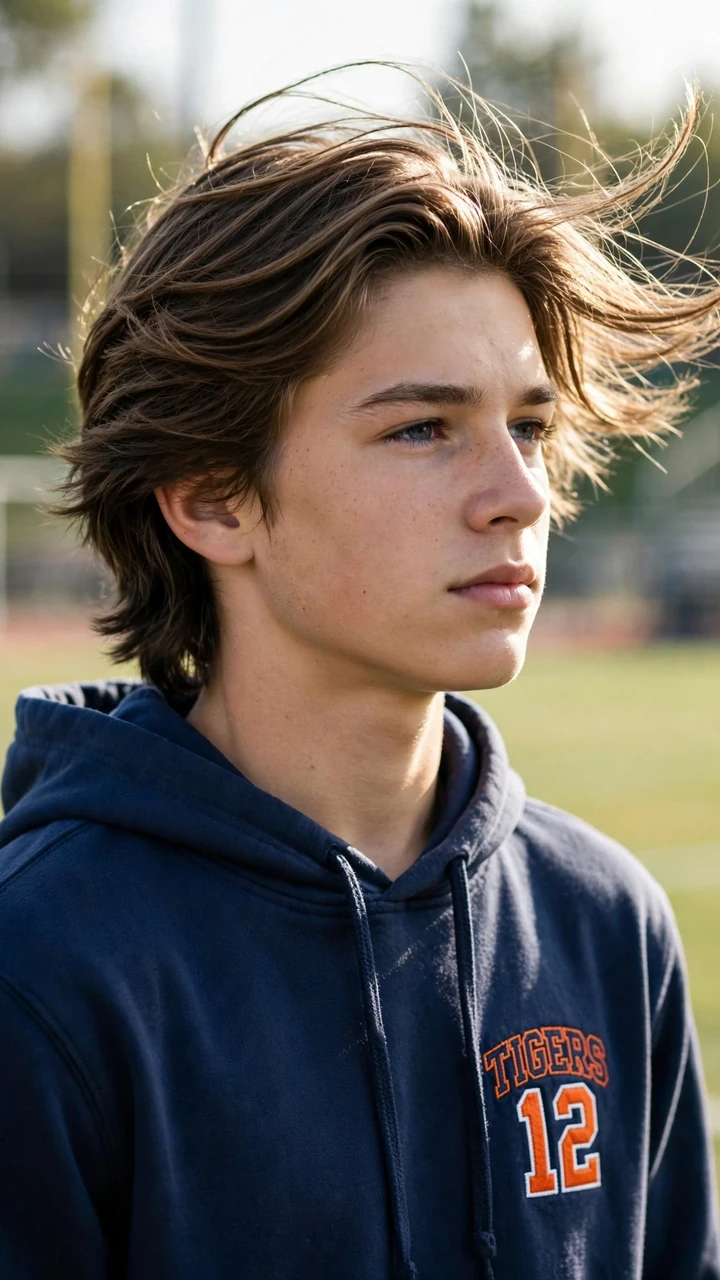
Four decades of ridicule, then a complete reversal. The mullet is back and teens are wearing it seriously. The modern version keeps the sides short or faded while leaving length through the back, usually with heavy texture rather than the blunt eighties shape. Burst fades pair with it constantly. It does need conviction to pull off, and it’s one of the few cuts here that some parents will actively object to, so factor that in.
The Flow Cut
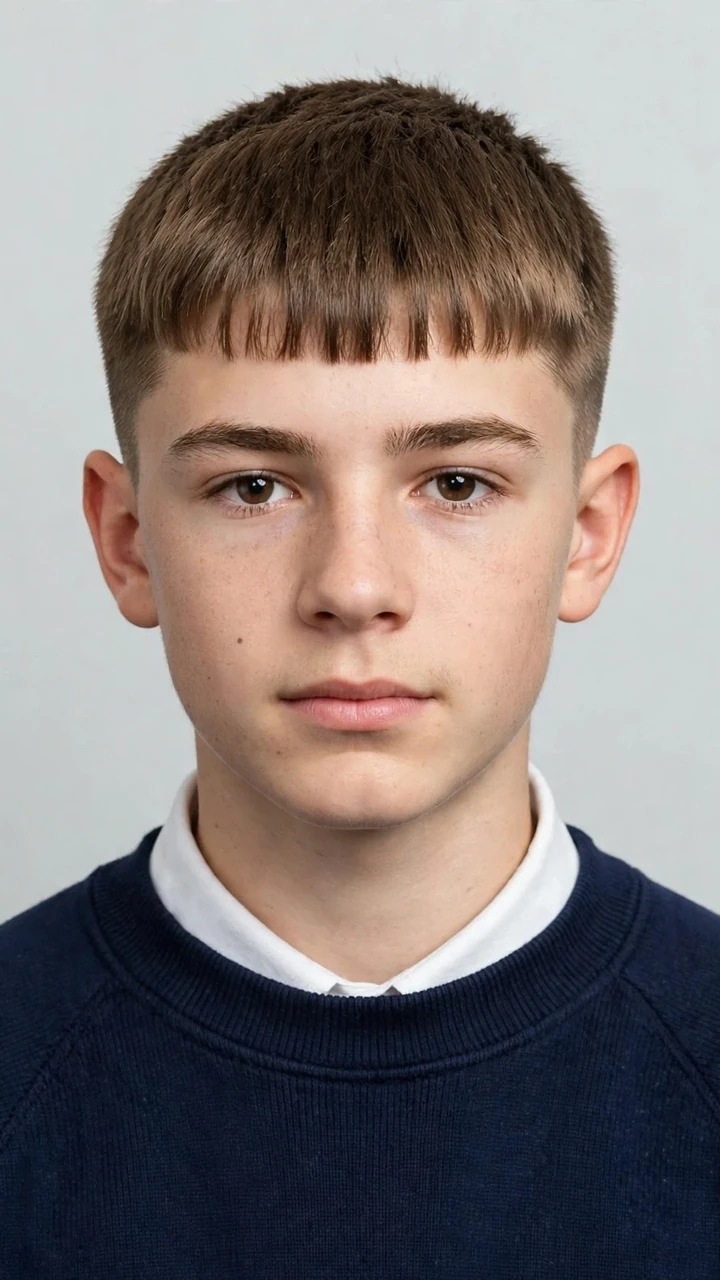
Medium to long hair grown out and swept back away from the face, tapering naturally at the neckline. Athletes and skaters have kept this style alive for years. Minimal cutting is involved, mostly just shaping the neckline and removing weight, which makes it the cheapest cut on this list to maintain.
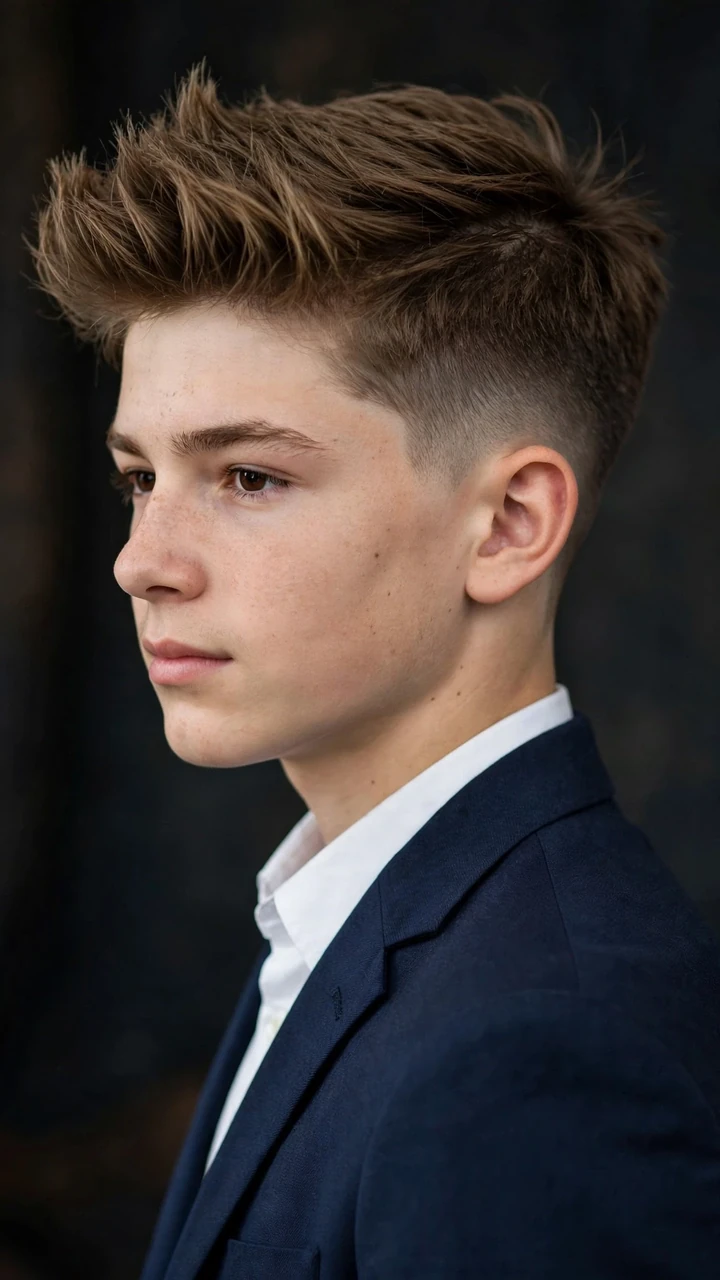
The Textured Quiff with a Low Taper
Volume at the front, tapered sides that stop short of skin. It’s the polished option for anyone who wants something that works at a formal event as easily as at school.
Building the quiff properly takes a blow-dryer and about two minutes, brushing upward and back while drying. Matte clay holds it without the wet shine that makes a quiff look dated. Skip pomade entirely.
Cuts for Curly and Coily Hair
Curly hair needs a different approach, and generic fade advice often makes it worse. These four are built around texture.
The Curly Taper Fade
Tapering the sides removes bulk while leaving curls full and defined on top, which is exactly what curly hair needs. Bulk at the sides is the main enemy. Without it removed, curly hair grows outward instead of upward and the shape goes wide and shapeless. A low taper suits most curl patterns better than a skin fade, since the softer blend lets the curls transition naturally into the shorter section.
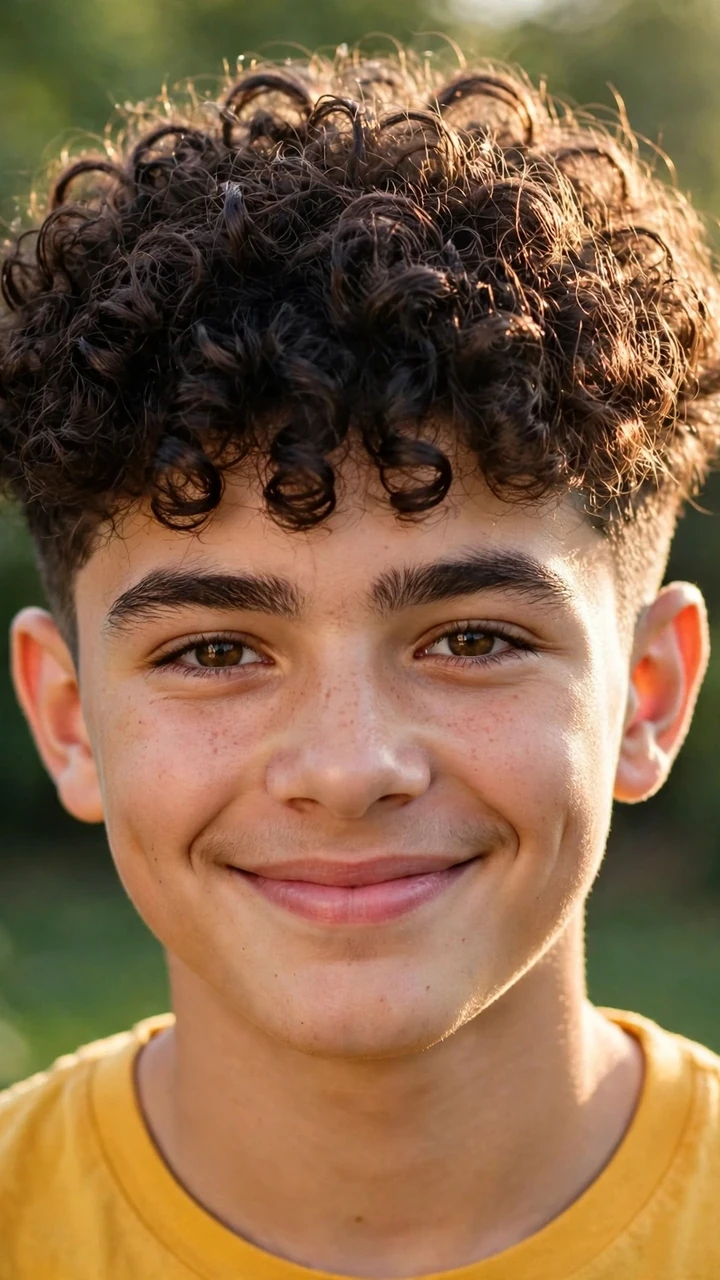
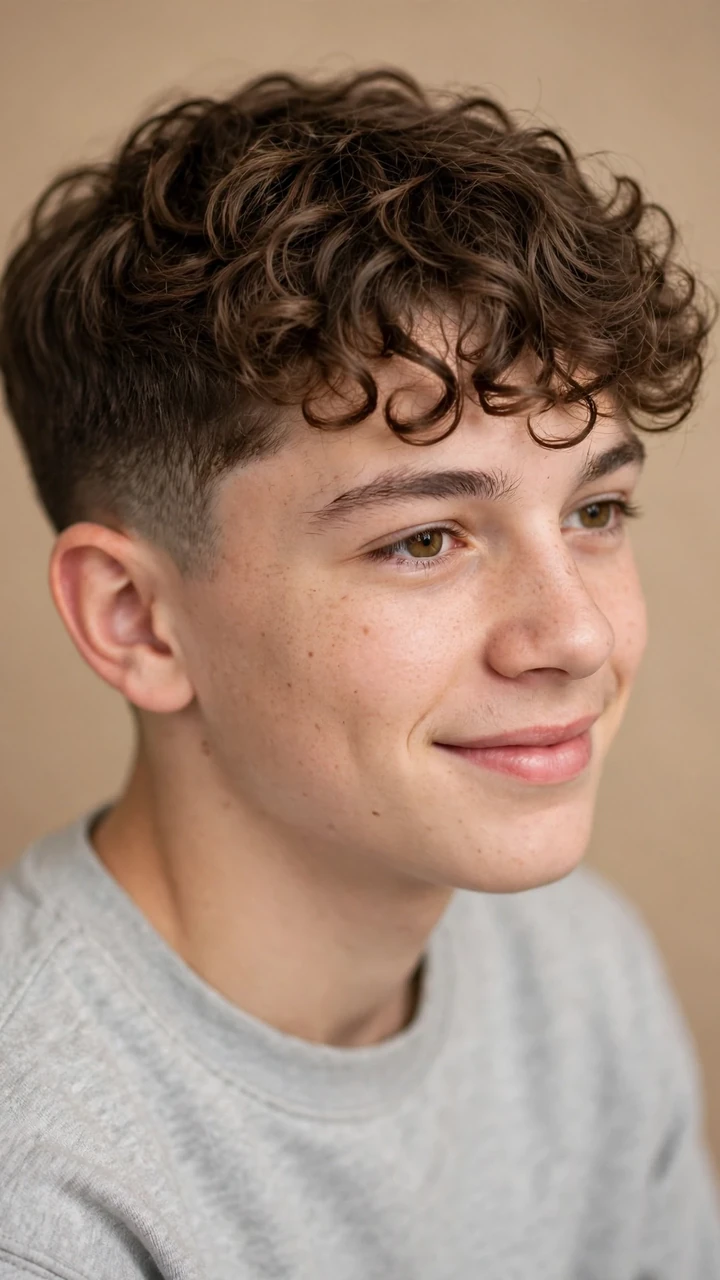
The Curly Fringe with Tapered Sides
Keeping the top short enough that curls form naturally over the forehead, with tapered sides for shape.
The specifics worth requesting:
- Tapered sides cut first, before the top
- Top left short enough that curls spring forward, not down
- Fringe blunt cut rather than point cut
- No thinning shears, which cause frizz on curly textures
Loose and soft curl patterns get the best results from this one.
The Sculpted Short Afro with a Line-Up
Rounded, evenly shaped and finished with a crisp line up at the forehead and a tapered neckline. Tight and coily textures hold this shape beautifully because the curl pattern stacks naturally into a rounded form. Line ups need refreshing every two to three weeks to stay sharp, which is the main maintenance cost. A light leave-in and a pick used gently keeps the shape full without frizz.
Twists with a Taper
Two-strand twists across the top with tapered or faded sides give you defined texture with a clean, structured outline. Sponge twists are the fastest version, taking about five minutes with a twist sponge. Retwist every week or two. It’s a genuinely low-effort way to wear texture while keeping the sides sharp.
What Nobody Tells Teens Before the Barber Chair
Most haircut lists stop at the photos. These are the details that actually determine whether you like your cut in week three.
How to Ask for What You Actually Want
Bringing a photo is the single most important thing you can do, and the photo should show someone with hair texture similar to yours.
Vague words cause most bad haircuts. “Fade” and “taper” mean different things to different barbers, and “short on the sides” covers about eight possible outcomes. Describe height and length instead: where you want the fade to start, how much length you want left on top, whether you want the fringe to sit above or below your eyebrows. Phrases like “low taper fade with texture on top” or “mid skin fade with a fringe” communicate far more than “the usual but shorter.”
Check Your School’s Rules First
Plenty of schools still restrict skin fades, shaved designs, extreme contrast and coloured hair. Getting a cut on Saturday and being told to fix it on Monday is a genuinely common and avoidable problem. Low tapers, French crops, textured crops and Caesar cuts almost always pass. Skin fades, hard parts, surgical lines and mullets are the ones that occasionally don’t. A quick look at the student handbook before booking saves the argument.
Match the Cut to Your Hair Type, Not the Trend
Thick hair holds volume in a textured crop. Fine hair looks better with layered taper cuts that create the illusion of fullness. Straight hair lies flat and needs light layering on top. Curly hair needs bulk removed at the sides rather than length removed from the top.
Choosing a cut that works with your natural texture instead of against it saves you time every single morning. The cut that looks best on someone with completely different hair will fight you daily.
Cost, Trim Frequency and Styling Time
| Style | Trim Frequency | Daily Styling | Product |
|---|---|---|---|
| Tapered buzz cut | 3 to 4 weeks | Under 1 minute | None needed |
| Low taper fade | 4 to 5 weeks | 1 to 2 minutes | Light clay |
| Mid fade with fringe | 3 to 4 weeks | 2 to 3 minutes | Styling cream |
| Skin fade | 2 to 3 weeks | 2 minutes | Matte clay |
| Textured crop | 4 weeks | 2 minutes | Matte clay |
| Edgar cut | 3 weeks | 2 minutes | Volume powder |
| Curtain hairstyle | 6 to 8 weeks | 3 minutes | Light cream |
| Flow cut | 8 to 10 weeks | 1 minute | Sea salt spray |
| Curly taper fade | 4 to 6 weeks | 2 minutes | Curl cream |
| Modern mullet | 4 to 5 weeks | 2 minutes | Texture spray |
Barber prices vary widely by area, though most teen cuts land somewhere between $20 and $45, with skin fades and detailed line ups at the higher end. A cut needing visits every two weeks costs roughly twice as much per year as one needing them every five, which is worth calculating before you commit to a high-maintenance style.
Choosing by Face Shape
| Face Shape | Best Cuts | Why |
|---|---|---|
| Oval | Almost anything | Balanced proportions suit any style |
| Round | High taper, angular fringe, quiff | Adds height, reduces width |
| Square | Textured crop, curtain hair | Softens a strong jawline |
| Long | Fringe styles, low fades | Shortens visual face length |
| Heart | Mid fade with fringe, flow cut | Balances a wider forehead |
The Product Mistakes Almost Every Teen Makes
Using too much, using the wrong type, and applying it to dry hair. Those three account for most bad hair days.
Matte clay creates texture and hold without shine, and it’s the right choice for crops, quiffs and fringes. Pomade adds shine and works for slicked styles, but on a textured cut it makes hair look greasy rather than styled. Volume powder is for lift at the roots and should be used sparingly, since a heavy hand makes hair feel gritty. Gel has largely fallen out of favour because the hard, crunchy finish reads dated.
Start with an amount the size of a pea. Rub it fully between your palms before touching your hair, and apply to damp hair rather than dry for better distribution. Heavy product along the hairline can also aggravate breakouts on the forehead, which is worth knowing if you’re already dealing with that.
Washing and Scalp Care
Teen scalps produce more oil than adult scalps, which is why hair can look greasy by the second day even with a fresh cut.
Washing every day strips the scalp and often makes it produce more oil in response. Every other day suits most people better. Rinse product out properly rather than letting it build up, especially with clay, which is stubborn. If your scalp is flaking, that’s usually product build up or dryness rather than poor hygiene, and switching to a gentler shampoo generally sorts it.
Final Thoughts
The best teen haircut isn’t the trendiest one on your feed. It’s the one that suits your hair texture, fits your school’s rules, matches how much time you’re actually willing to spend in front of a mirror, and grows out without looking rough. Low tapers, textured crops and fringe-forward cuts dominate 2026 precisely because they tick all four of those boxes.
Bring a photo of someone with hair like yours. Describe the height of the fade and the length on top rather than using vague words. Be realistic about trim frequency, because a skin fade booked every five weeks looks worse than a low taper booked every five weeks. Buy one good matte clay instead of three cheap products.
Save the cuts that caught your eye and take two or three of them to your next appointment. Barbers would far rather see reference photos than guess.
Frequently Asked Questions
What is the most popular teen boy haircut in 2026?
The low taper fade with a textured top leads by a clear margin, followed by the mid fade with a longer fringe. Both dominate because they suit almost every hair type and face shape, look tidy at school, and grow out cleanly without needing frequent barber visits.
Which teen haircut needs the least maintenance?
The tapered buzz cut requires almost no daily styling and no product. The flow cut is the cheapest overall, needing shaping only every eight to ten weeks. French crops and textured crops also sit at the low-effort end, usually needing under two minutes each morning.
How often should a teen get a haircut?
Every three to five weeks for most styles. Skin fades and sharp line ups need visits every two to three weeks to stay crisp. Longer styles like curtain hair and flow cuts can stretch to eight or ten weeks between shaping appointments.
Do fade haircuts work with curly hair?
Yes, and they often improve it. Tapering the sides removes the bulk that makes curly hair grow outward, letting the curls on top look fuller and more defined. A low taper usually suits curls better than a skin fade because the blend is softer.