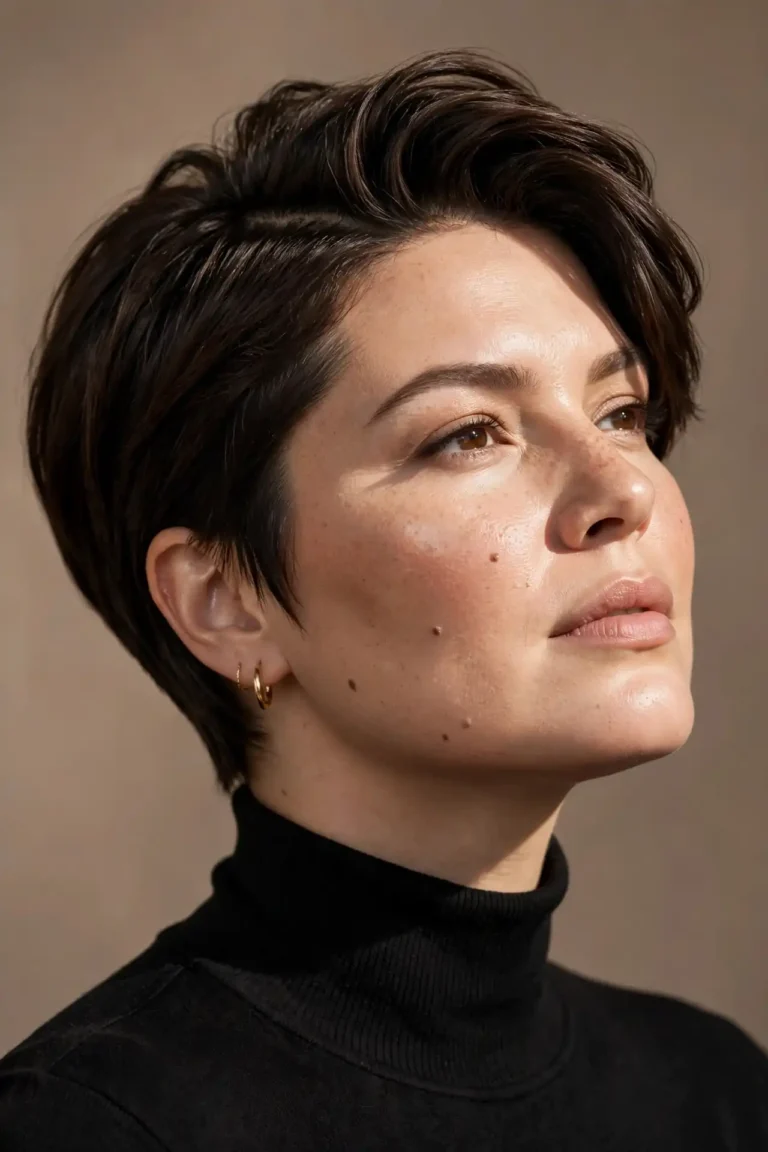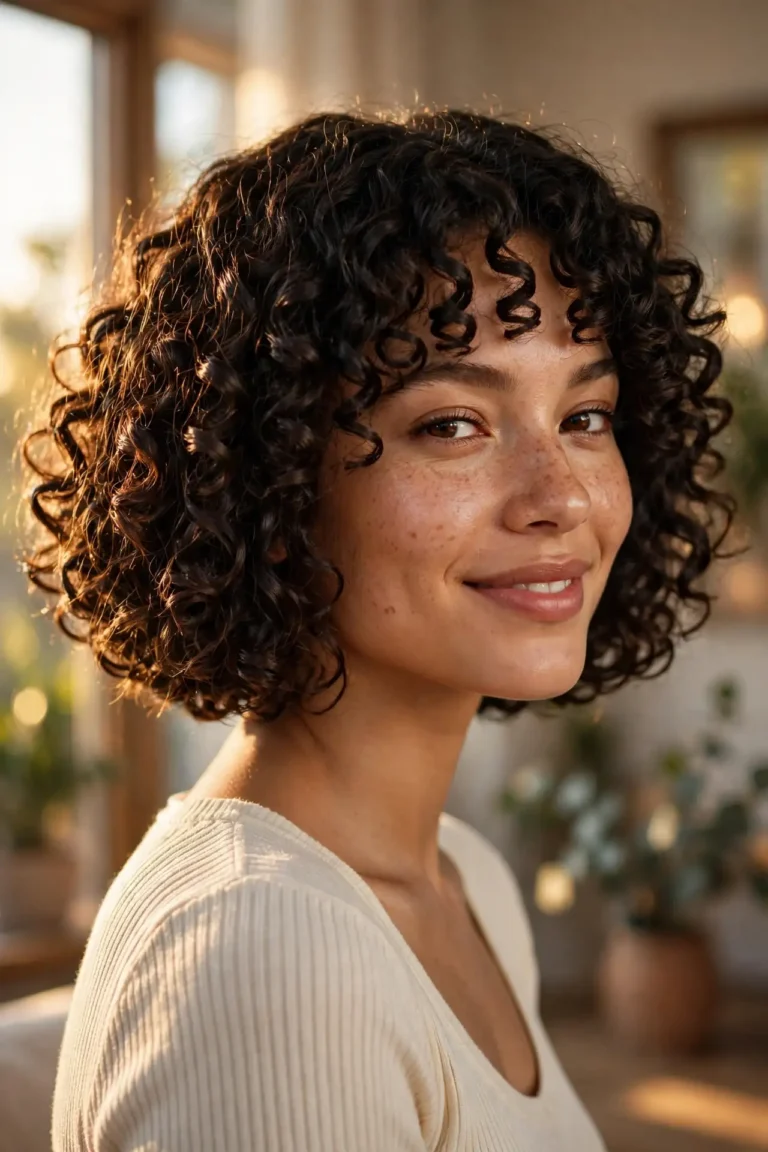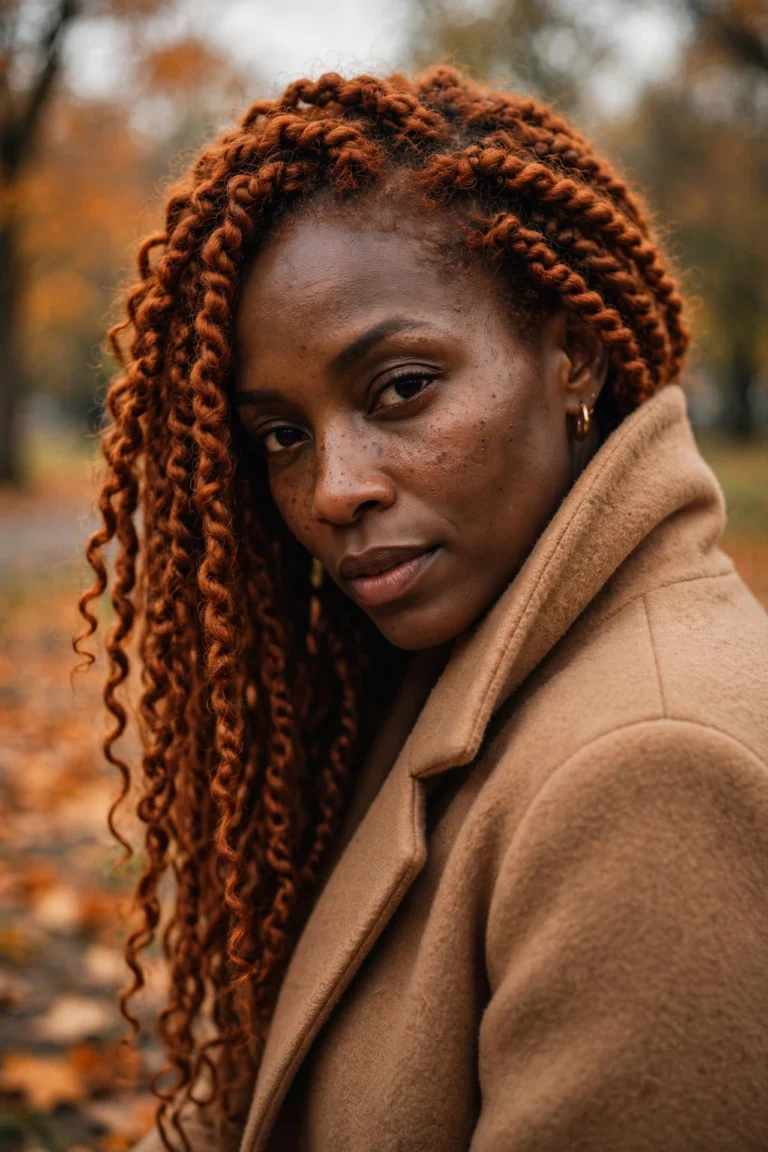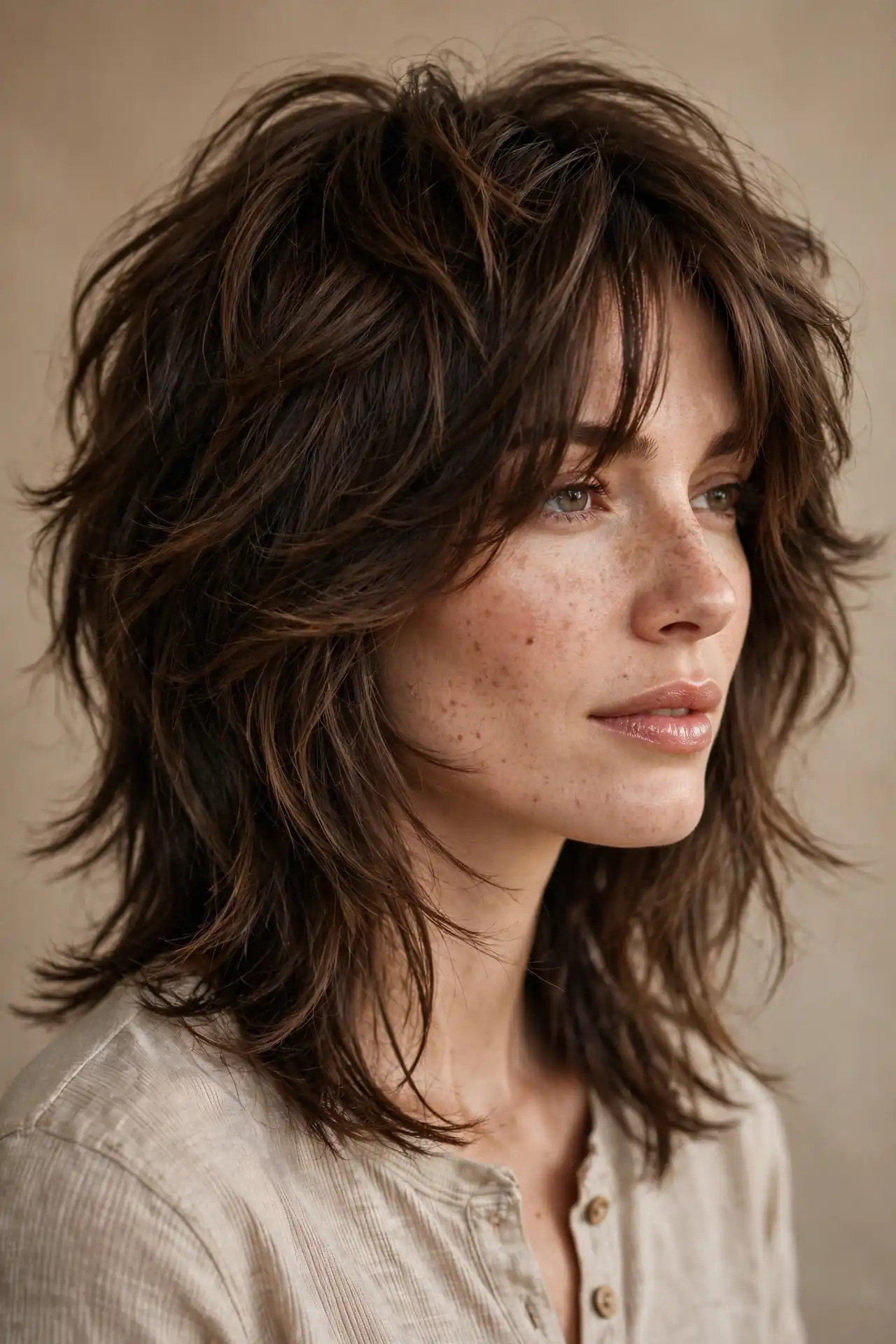
30 Wolf Cut with Curtain Bangs Hairstyles That Never Go Out of Style
People have been calling it a trend for five years now. The wolf cut with curtain bangs arrived through Tik Tok around 2021, was supposed to disappear by 2022, and has instead become one of the most consistently requested cuts in salons worldwide. That longevity tells you something: it works on real people with real hair, which is more than most viral cuts manage.
The pairing makes sense structurally. A wolf cut sits halfway between a shag and a mullet, heavy layering through the crown giving way to longer, wispier lengths below. Curtain bangs soften the front of that shape so it reads face-framing rather than aggressive. Celebrity hairstylist Dimitris Giannetos has noted that bangs of every type are back and staying, singling out wispy fringes and curtain bangs specifically. Hadley Yates, stylist and co-founder of Hadley Yates Salon, describes the 2026 curtain bang as softer, longer and more blended through the sides than previous versions.
One thing worth knowing before the thirty ideas below: the bar for execution has risen. When this cut first circulated, almost any version looked fresh because it was new. Now the difference between modern and dated is about half an inch in the wrong direction.
Wolf Cuts by Length
Length changes the entire character of the cut. These six cover the realistic range.
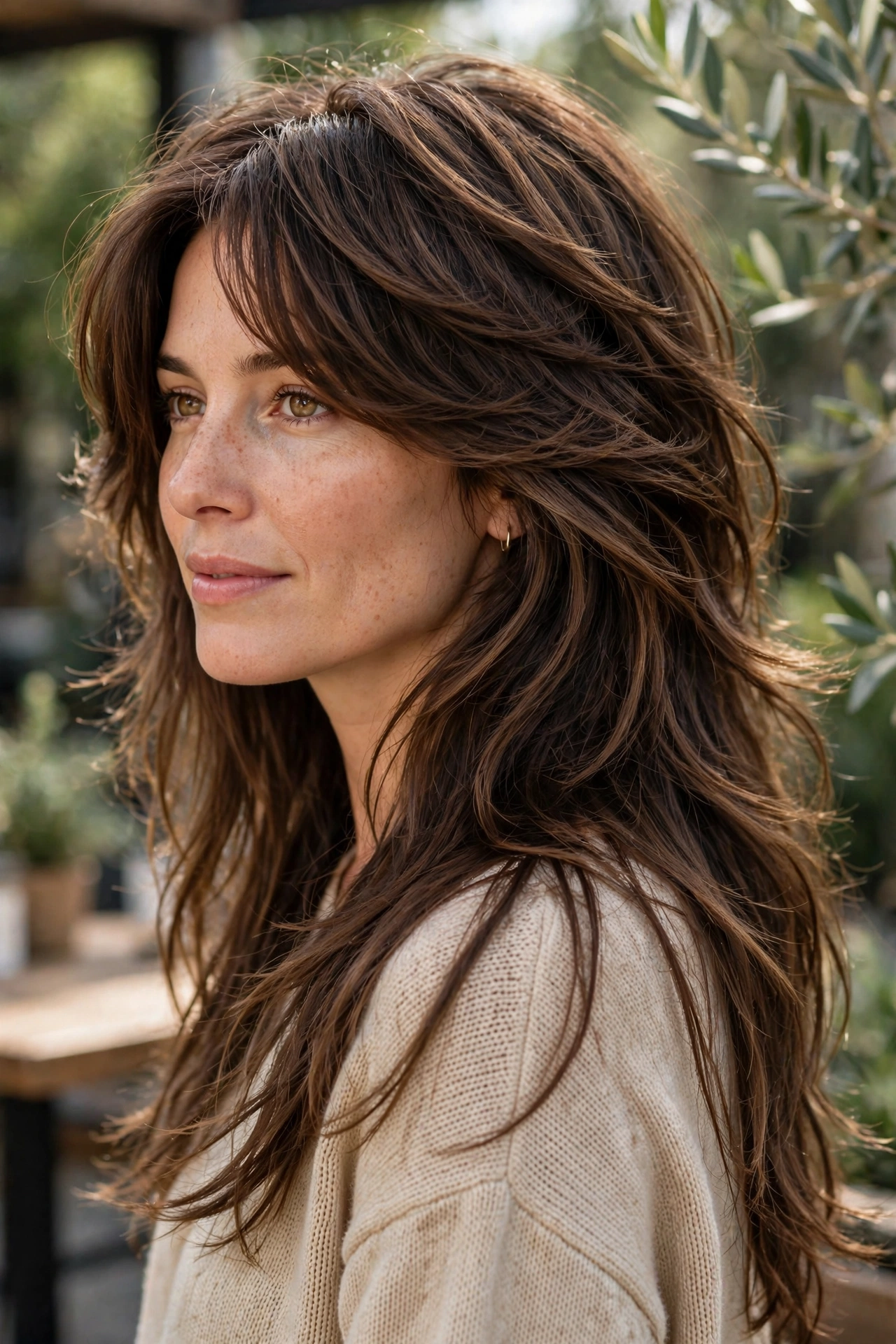
The Long Wolf Cut with Curtain Bangs
Long layers through the crown over length that stays well below the shoulders gives you volume up top and movement below without sacrificing what you spent years growing. The critical detail is where the first layer starts. Without meaningful layering, a long wolf cut is just a U-shape with bangs. Ask for the shortest crown layers to begin no lower than the chin so there’s genuine contrast.
The Mid-Length Wolf Cut
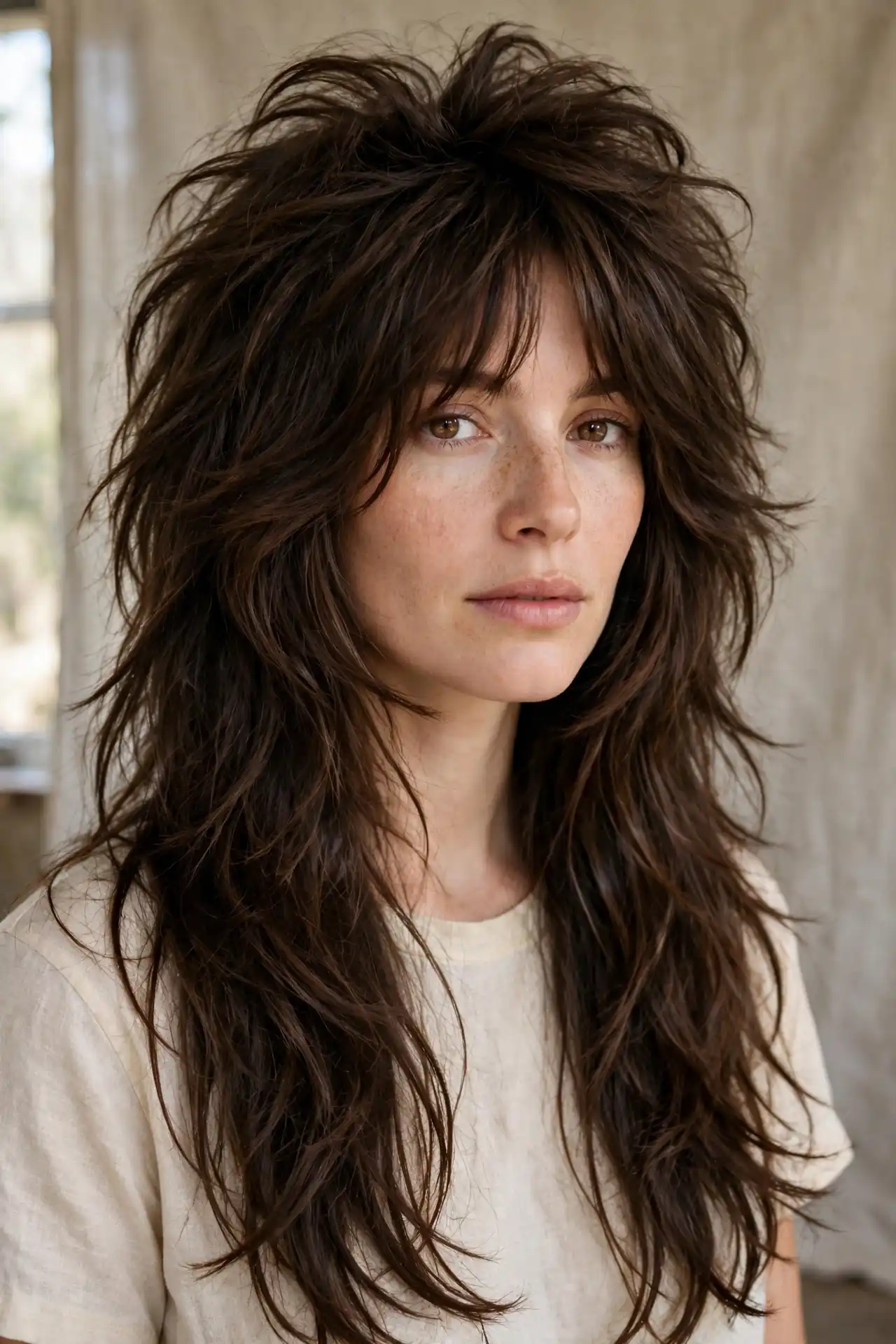
Ask any stylist where this cut performs best and the answer lands at mid-length nearly every time. There’s enough weight to keep the shape grounded, but not so much that the layers disappear into the bulk. Shoulder to collarbone is the sweet spot. It’s also the easiest version to style at home, since you’re never fighting a metre of hair to get the crown to lift.

The Shoulder-Grazing Wolf
Why does this length photograph so well? Because the layer contrast sits right at eye level in most photos. The shortest crown pieces and the longest ends are both visible in a single frame, which is exactly what makes the silhouette read as intentional. It also happens to be the length that survives the most between trims, holding shape for eight weeks comfortably.
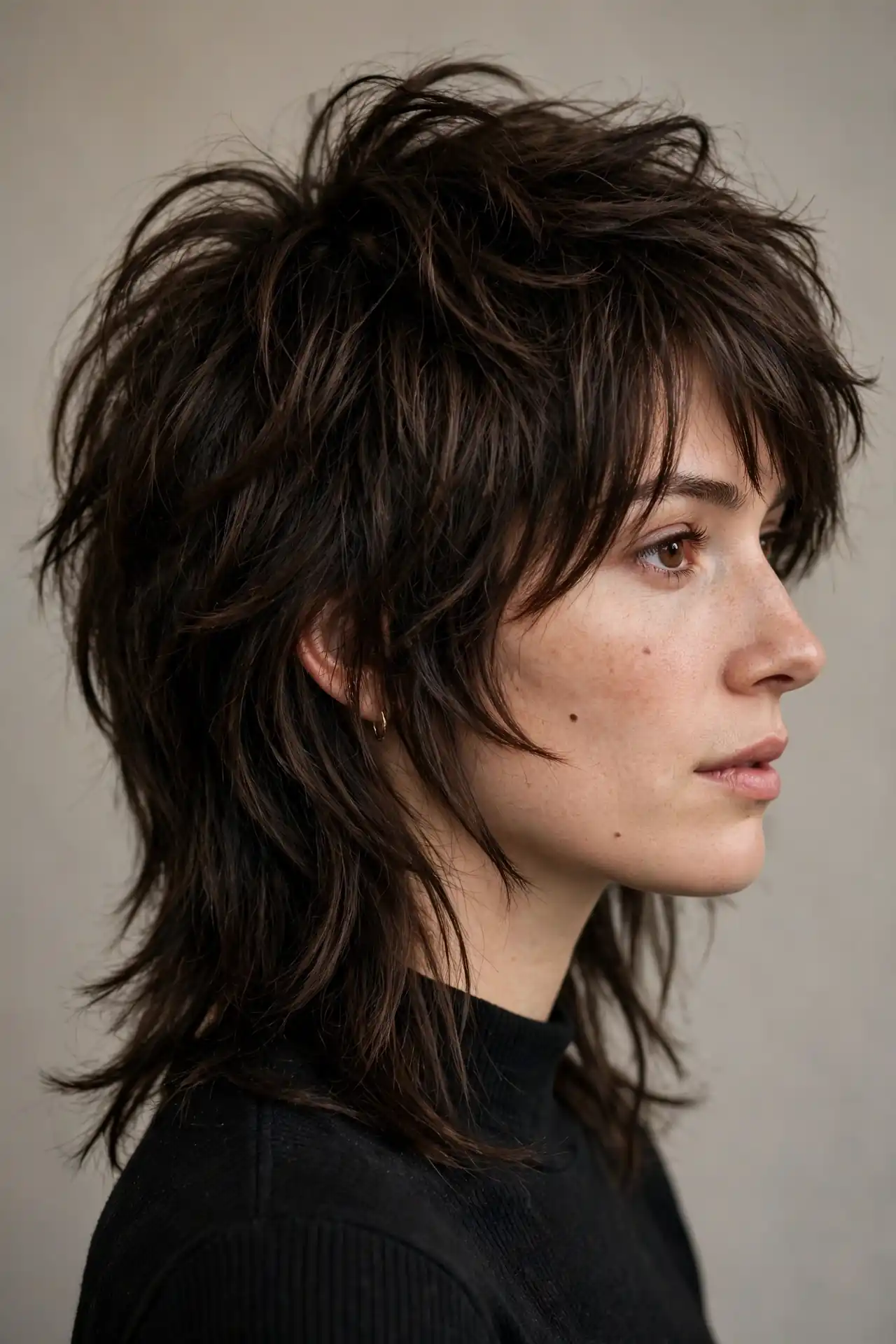
The Short Wolf Cut
Four to six weeks. That’s the honest trim schedule above the shoulders, and it’s the main thing people underestimate before committing. Going short maximises the texture and frees you from heavy styling, but the shape blurs faster because there’s less length to disguise growth. Thick hair carries it best. Fine hair at this length can end up looking sparse rather than piecey, which is the opposite of the goal.
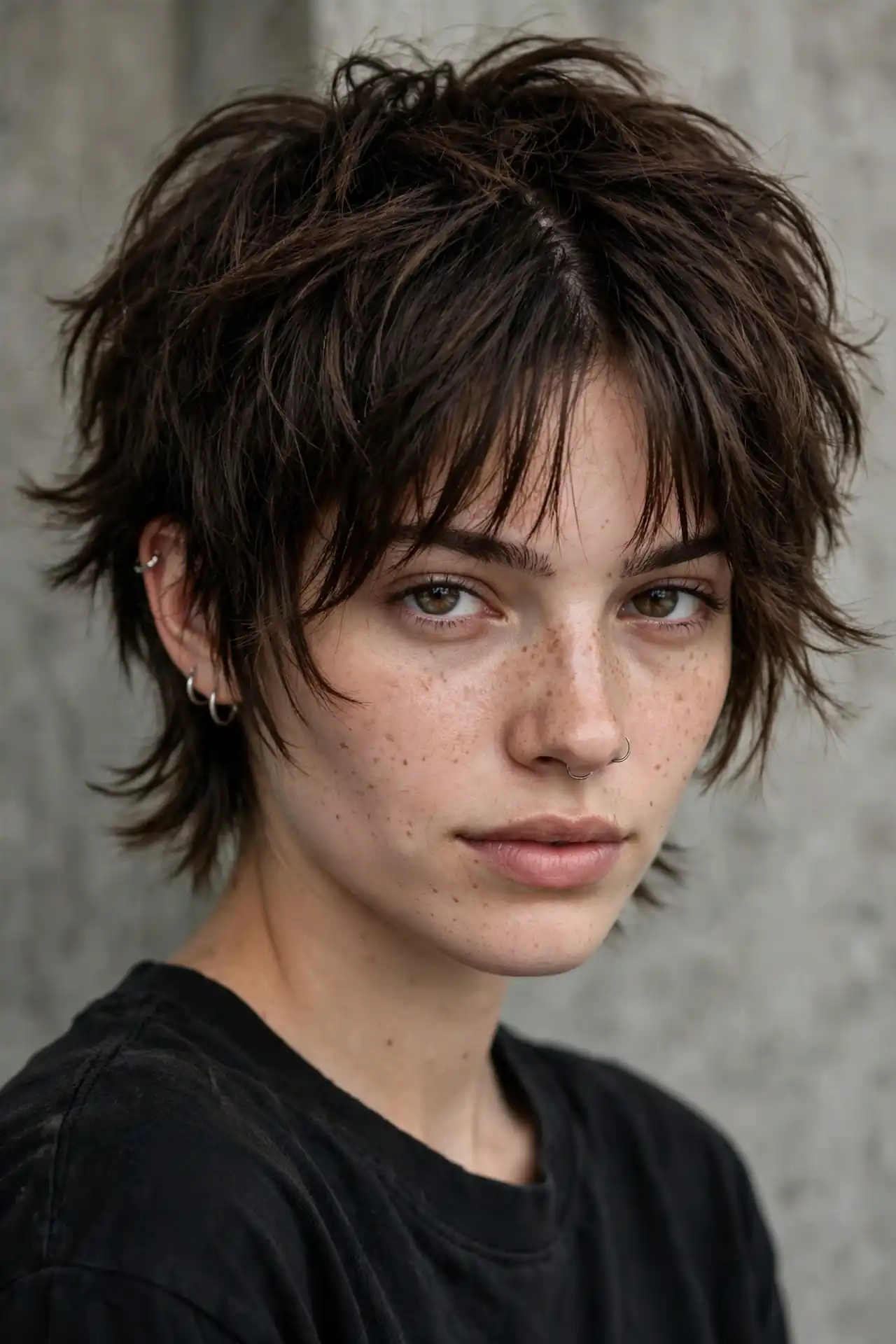
The Micro Wolf
A softer, shorter version that acts as a gateway for anyone not ready to commit fully. Layers are gentler, contrast is lower, and the whole thing sits closer to a shaggy bob than a true wolf. It grows out invisibly, which makes it the lowest-risk entry point on this list.

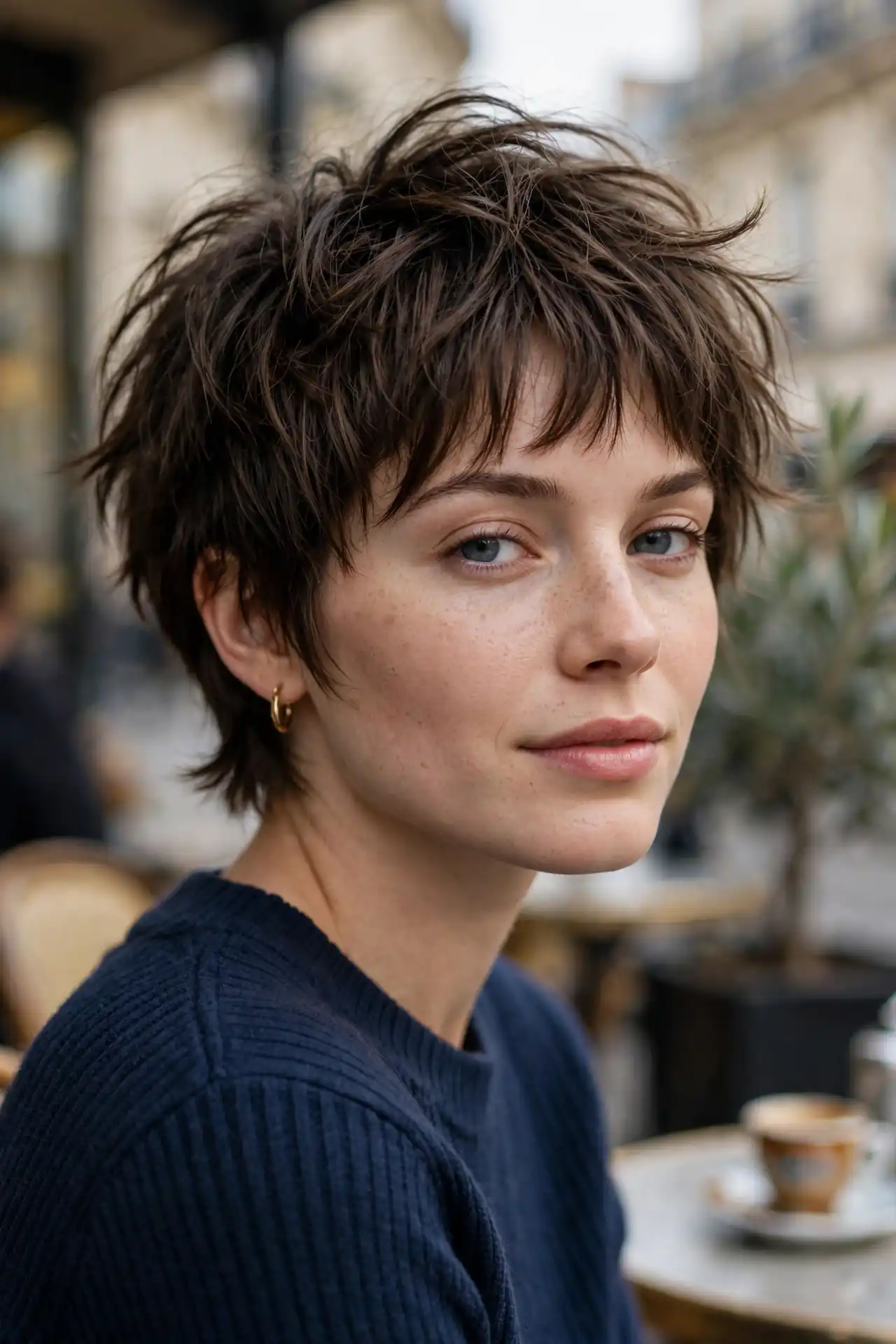
The Bixie-Meets-Shag
Most people assume the wolf cut requires length. The shortest versions prove otherwise. Blending bixie shaping with shag texture produces a cut that keeps the cool, effortless quality without sacrificing fullness. Stylists have been building more of these for clients who want the attitude at a length they can actually manage. Airy French bob variations sit in the same family.
Wolf Cuts by Hair Texture
Texture determines whether this cut flatters you or fights you. Getting the approach wrong here is why some people love it and others regret it within a month.
Straight Hair Wolf Cut
Straight hair can absolutely wear a wolf cut, but the layers have to be executed precisely. Too soft and the cut falls flat, losing all the texture that defines it. Too sharp and the steps look uneven rather than deliberate. The goal is visible texture without losing the overall shape. A texturising spray or dry texture powder is essentially mandatory here, since straight hair won’t create separation on its own.
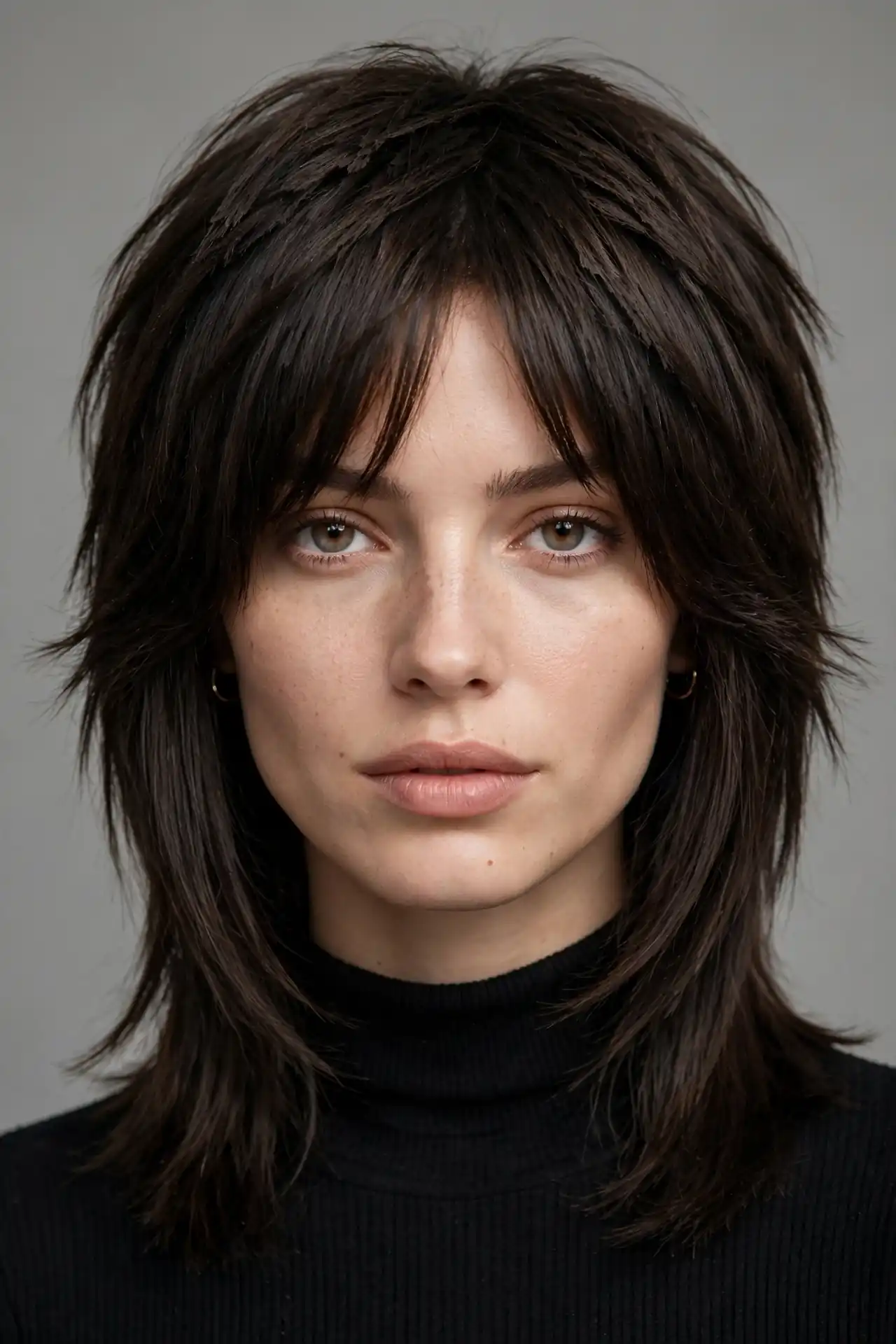
The Wavy Wolf Cut
Natural waves and this cut were made for each other, since the bend in the hair separates the layers without any help from you. What makes it work:
- Layers become visible automatically as the waves form
- Air drying produces a genuinely good result
- Sea salt or texture spray on damp hair enhances separation
- Second-day hair often looks better than first-day
- Minimal styling time, usually under five minutes
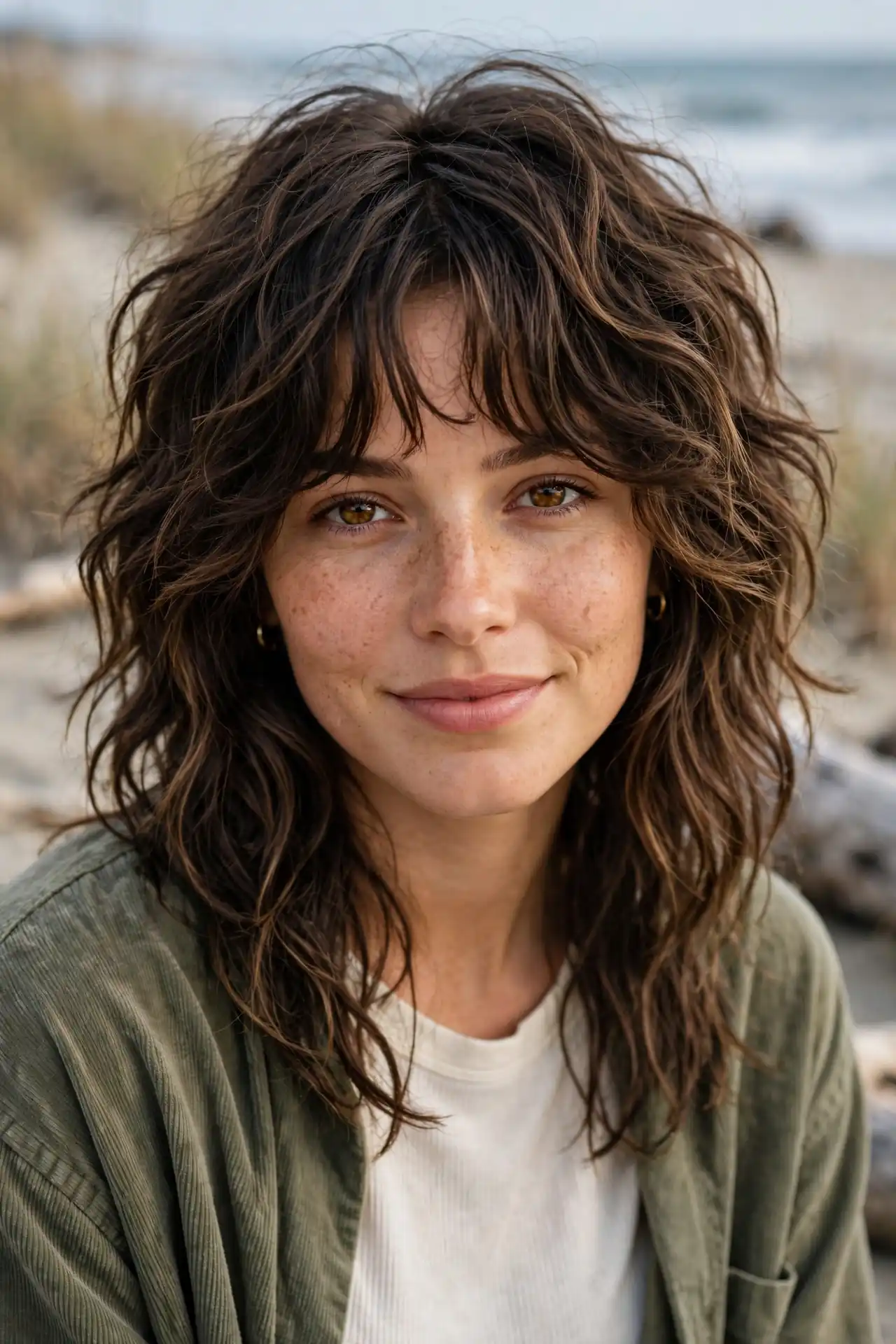
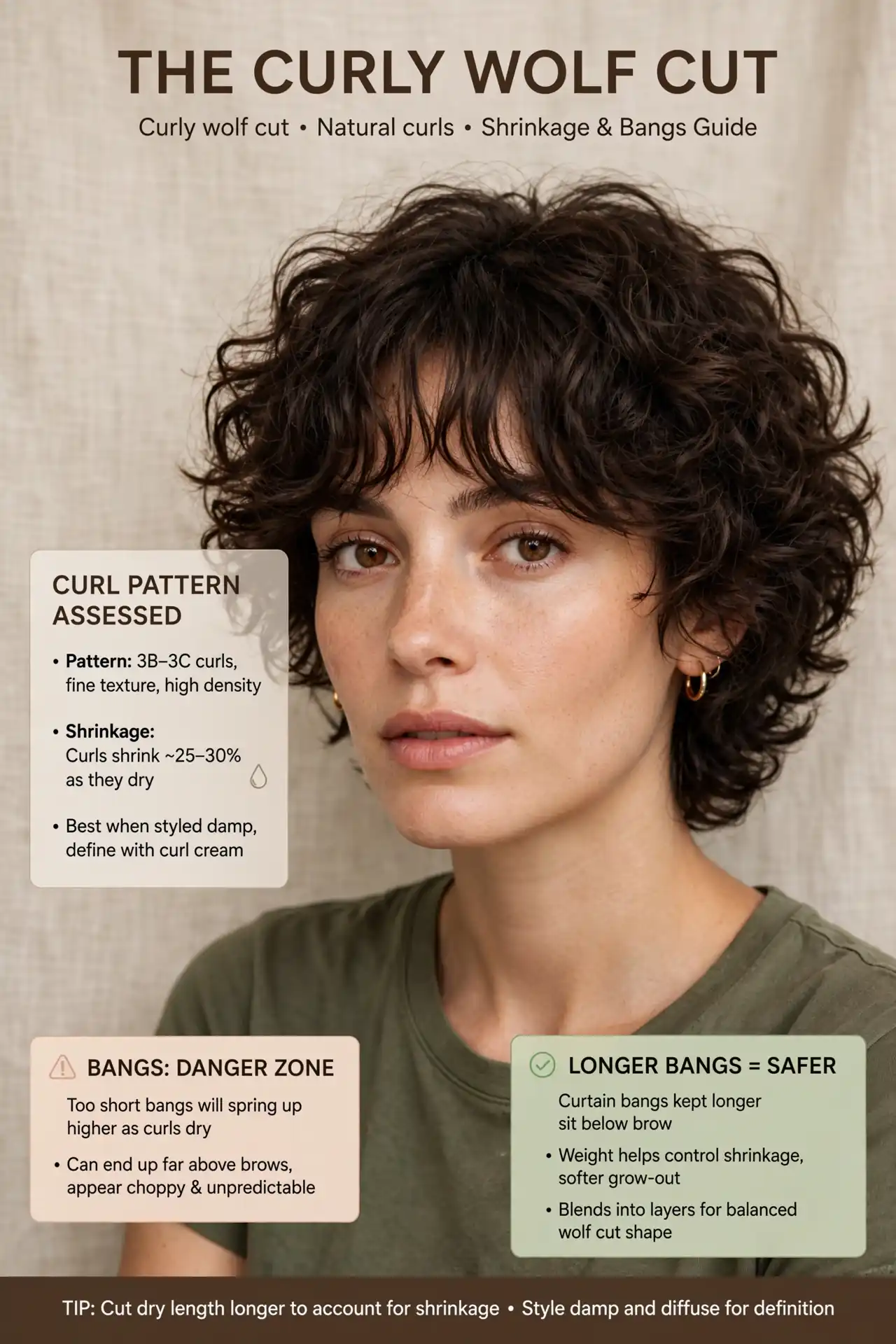
The Curly Wolf Cut
Curls shrink as they dry, sometimes by half, which means the bangs are the danger zone. A stylist should assess your curl pattern before touching the front sections, and cut them longer than the target length to allow for spring-up. Cutting curly curtain bangs too short is the single most common mistake in this whole category. Longer bangs are always the safer choice with curls.
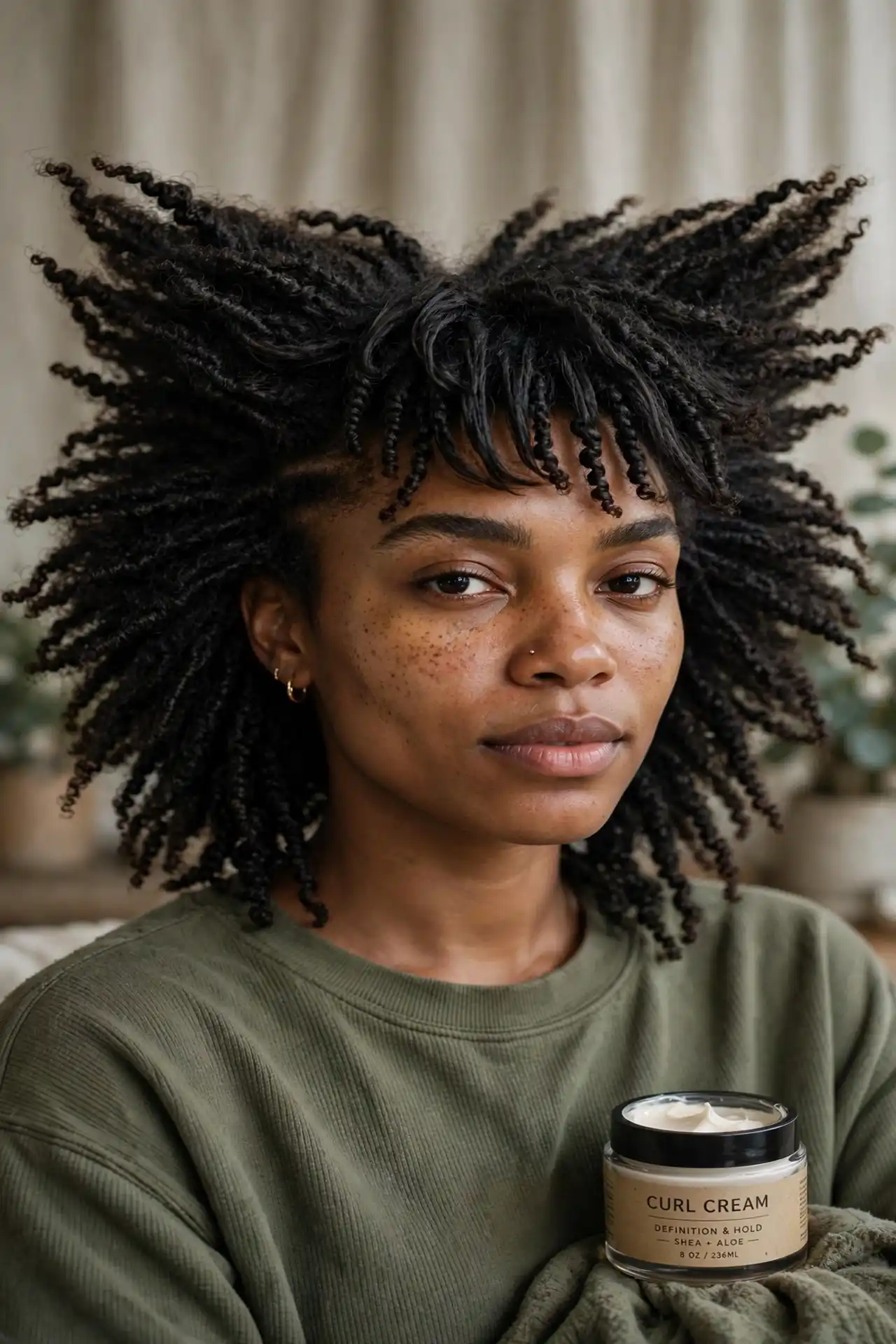
The Coily Wolf Shape
Type 4 textures carry the winged silhouette naturally, since the volume is already there. The layering job becomes about carving shape into existing density rather than creating volume from nothing. Cut on stretched or dry hair, section by section, checking the shape as shrinkage happens. Curl cream on soaking wet hair followed by a low diffuse brings the layers out cleanly.
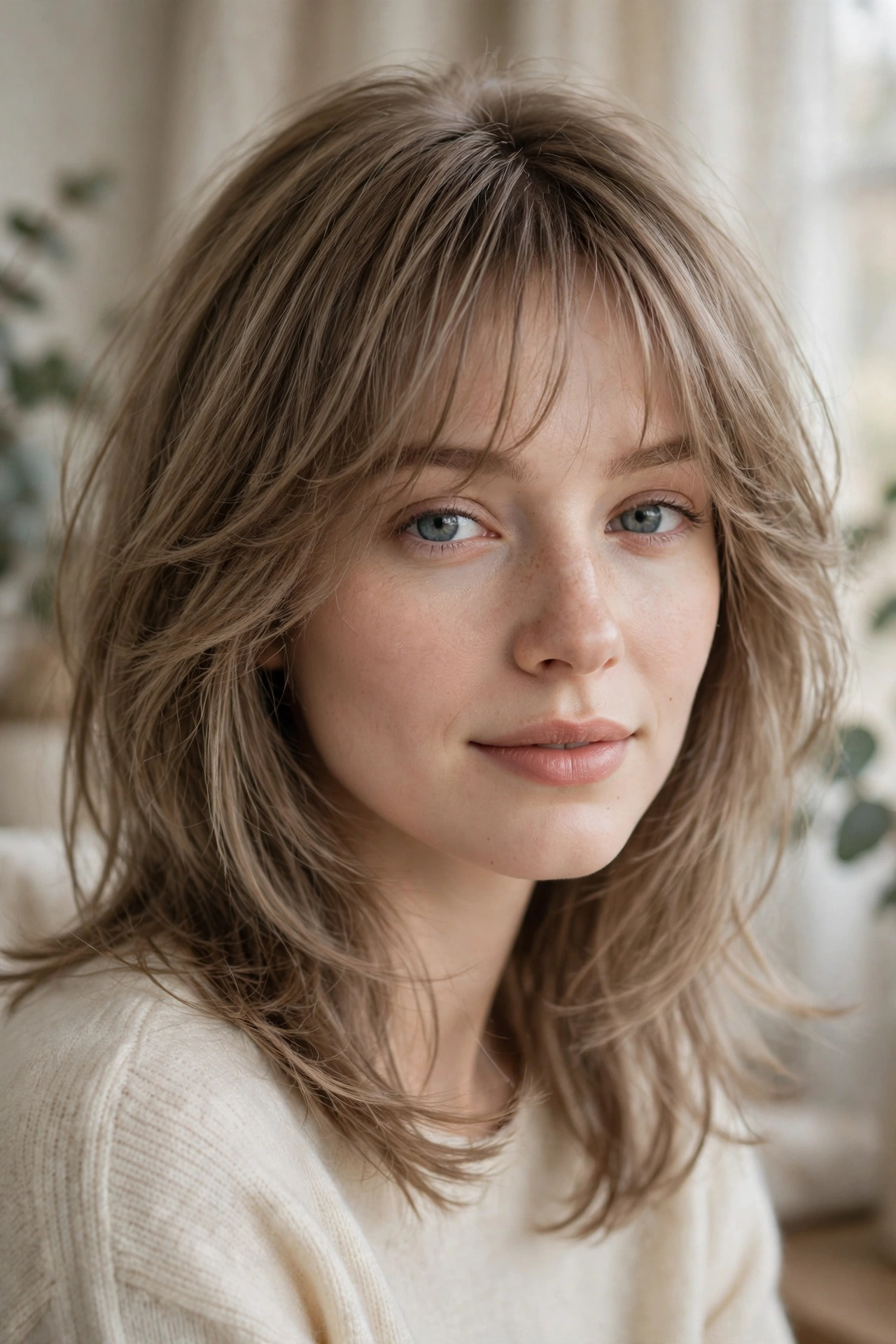
The Soft Wolf for Fine Hair
Fine hair needs a gentler version, and this is where most people go wrong. Too many layers on fine hair makes it look thinner rather than fuller, and the ends turn stringy. Ask for soft blended layers instead of heavy disconnected ones, and keep more weight at the perimeter. A wispy or scattered fringe borrows the least hair from the hairline, which preserves density where you need it.
The Debulked Wolf for Thick Hair
Thick hair is the ideal candidate, since the layering removes the weight that makes hair fall heavy and flat. Request internal and hidden layering rather than heavy surface layers, which keeps the outline intact while removing bulk from underneath. Keeping the layers long and flowing rather than choppy is what prevents the eighties rock band effect people fear.
Curtain Bang Variations
The fringe decides everything. Wolf layers absorb almost any bang shape, which is exactly why this pairing dominates Pinterest.
Soft Blended Curtain Bangs
Yates’ guidance is the clearest instruction you can bring to a salon: ask for a centre-parted fringe that skims the cheekbones and melts seamlessly into the rest of the haircut. That word melts is doing the work. The curtains should merge into the shortest crown layer so the fringe and the cut read as one design rather than two decisions. This version also grows out invisibly. To style it, blow-dry away from the face with a medium round brush and stop there.
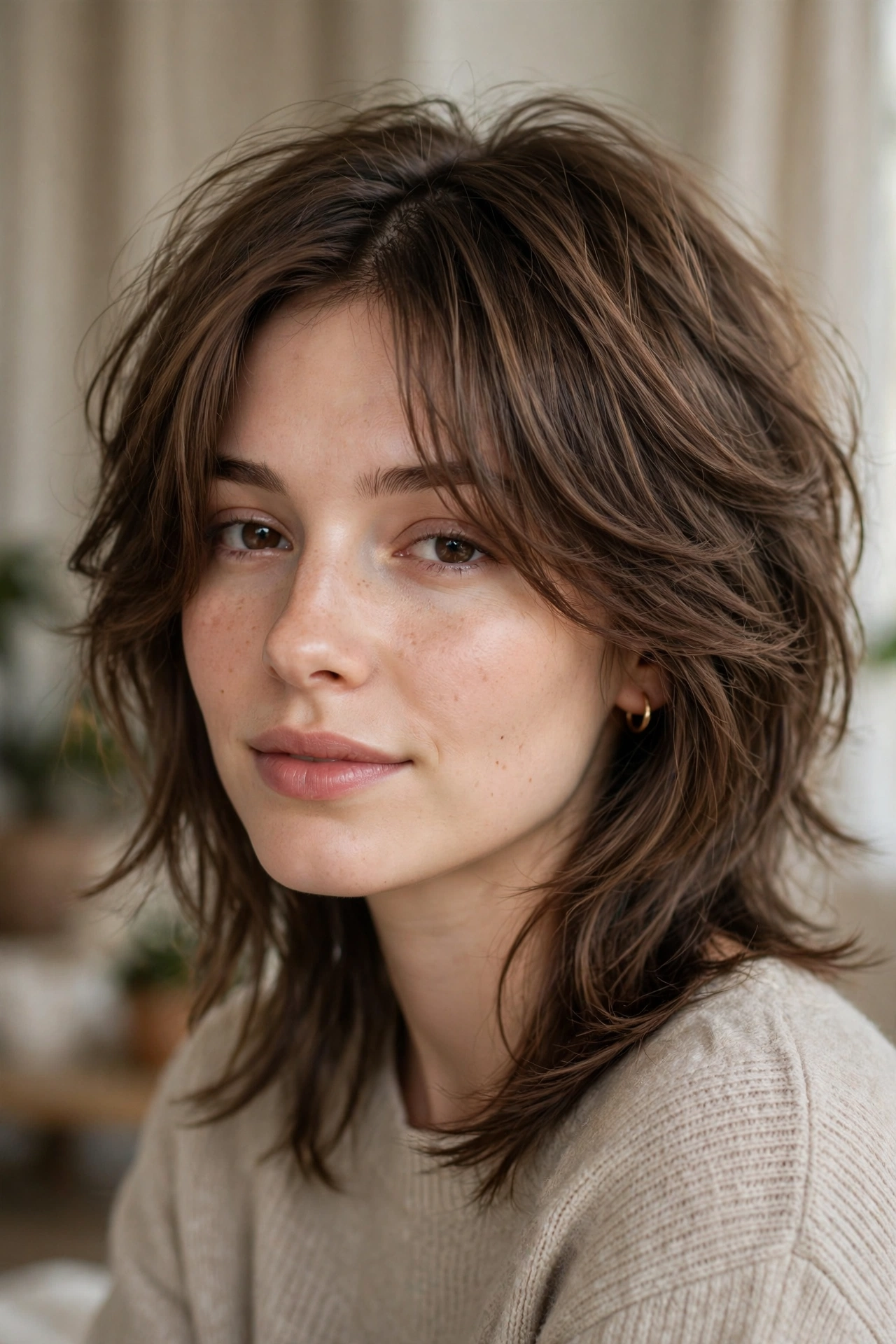
Wispy See-Through Curtain Bangs
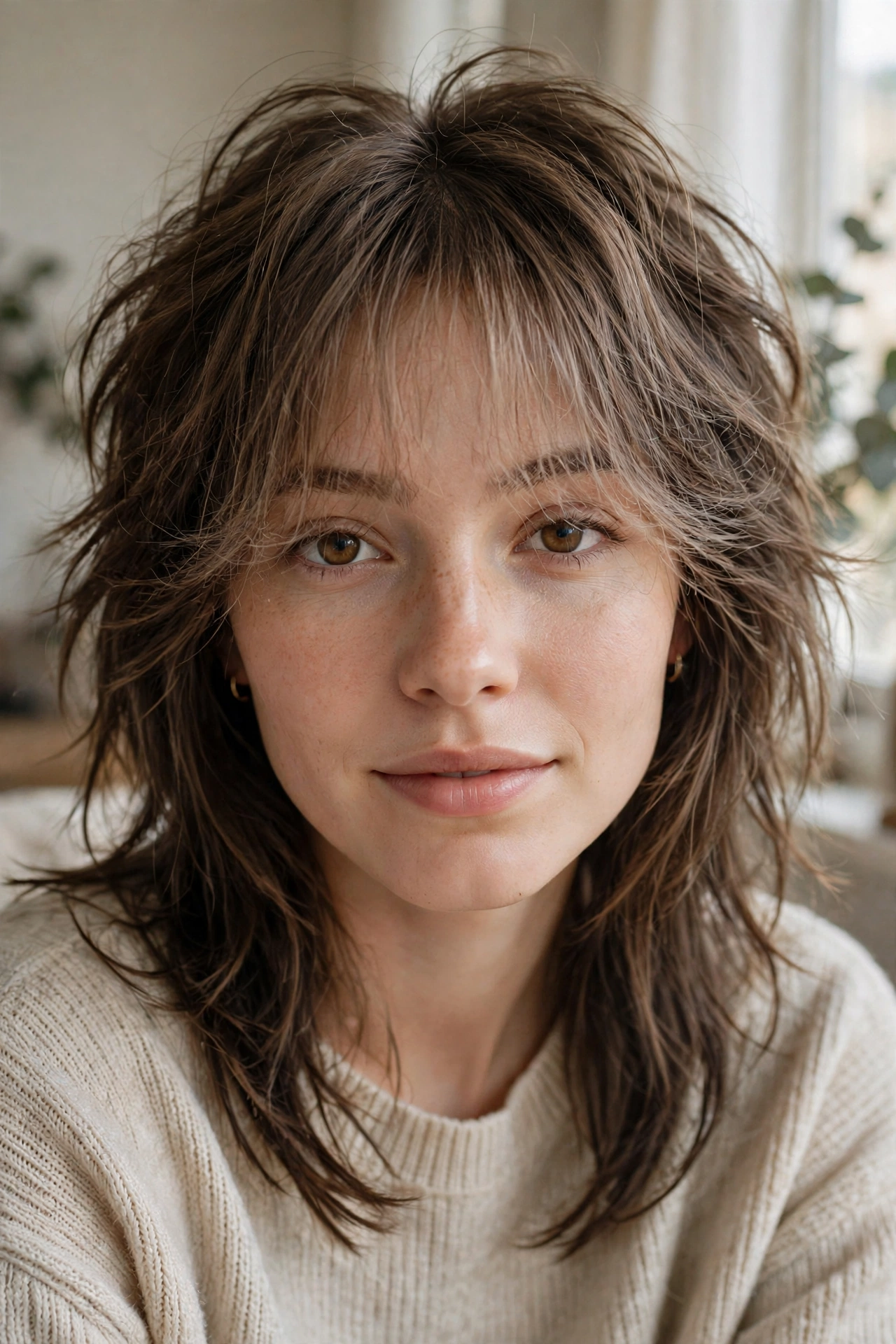
Airy, translucent and forgiving, with your eyes staying visible through the fringe, which keeps the whole cut looking light rather than heavy. This is the fringe for first-timers and for anyone with fine hair. Point cutting rather than a straight scissor line is what creates the softness.
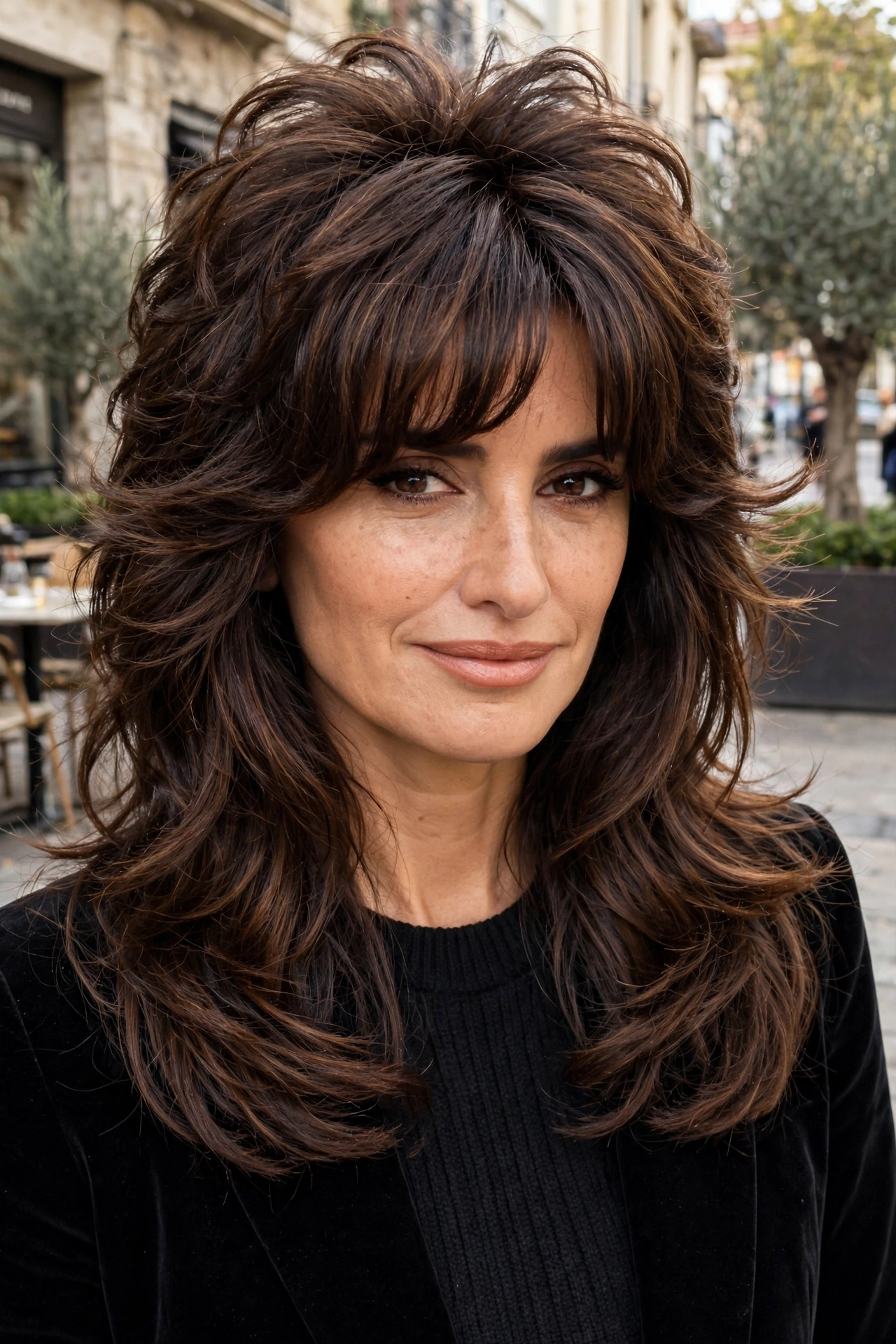
Thick Dramatic Curtain Bangs
Not everyone wants subtle. Denser, fuller curtains make a genuine statement and balance a heavily layered crown. Thick hair carries this best, since the fringe needs real density to hold its shape. Penélope Cruz’s swooping fringe is the reference most clients bring in. Budget one fringe trim a month, because dense bangs lose their shape faster than wispy ones.
Long Grown-Out Curtains
Bangs falling past the brow rather than into the eye read more sophisticated and considerably more office-appropriate. They also require almost no maintenance, since the length gives you room before a trim becomes urgent. This is the version that ages best across the year rather than just the season.

Deep Side-Swept Curtains
Shifting the part several inches off-centre changes the whole balance of the face. Where it helps:
- Softens a strong or square jawline
- Adds visible height at the crown
- Creates asymmetry that draws the eye horizontally
- Works well when your natural part refuses to sit centrally
Blow-dry the heavier side away from your face first so it holds volume through the day.
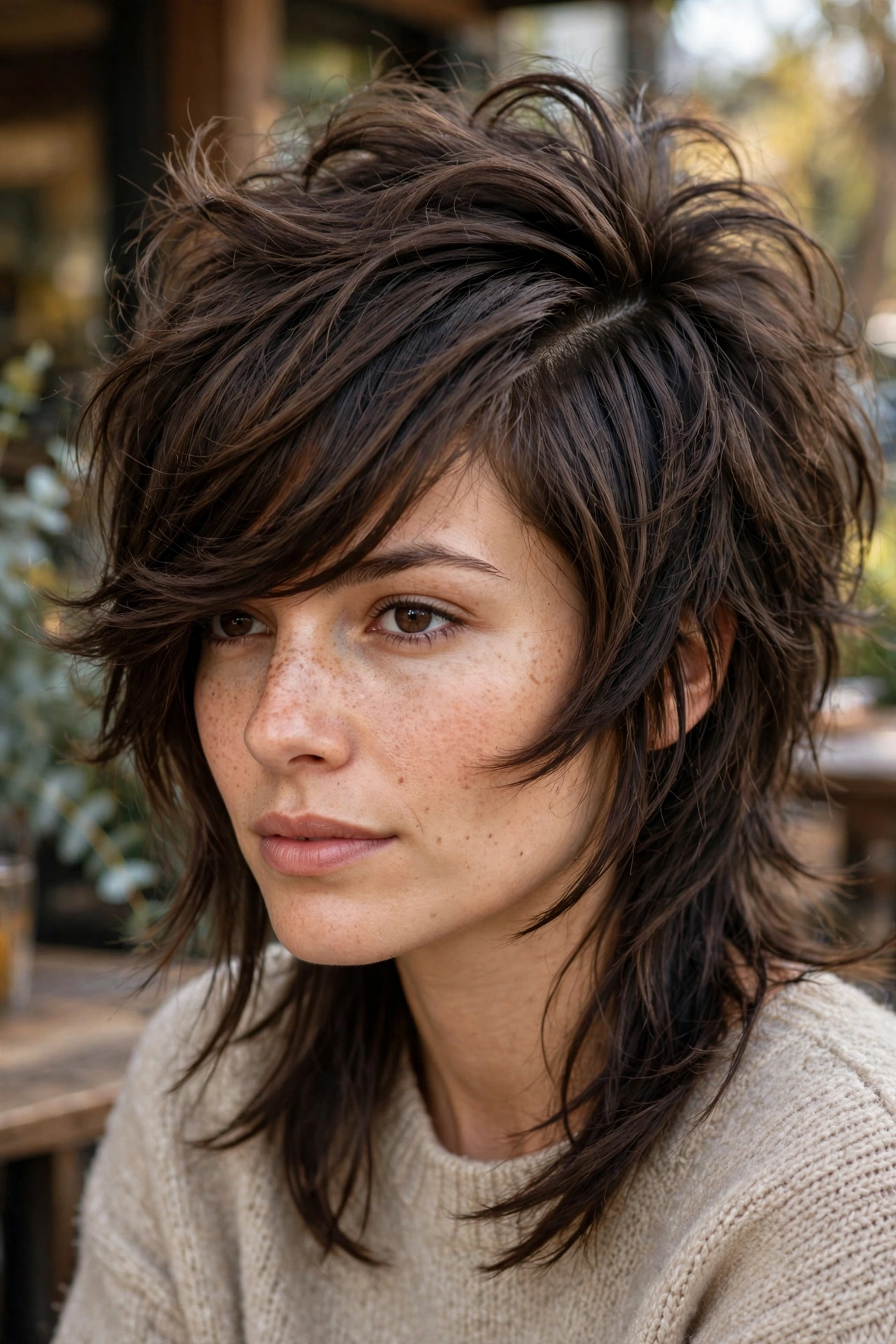
Micro Curtain Bangs
Shorter curtains sitting closer to the brow bring an editorial edge, though they demand commitment. Round faces should avoid them specifically, since anything above cheekbone level adds width exactly where you don’t want it. Longer, wide-set bangs are the correct geometry for a rounder face.
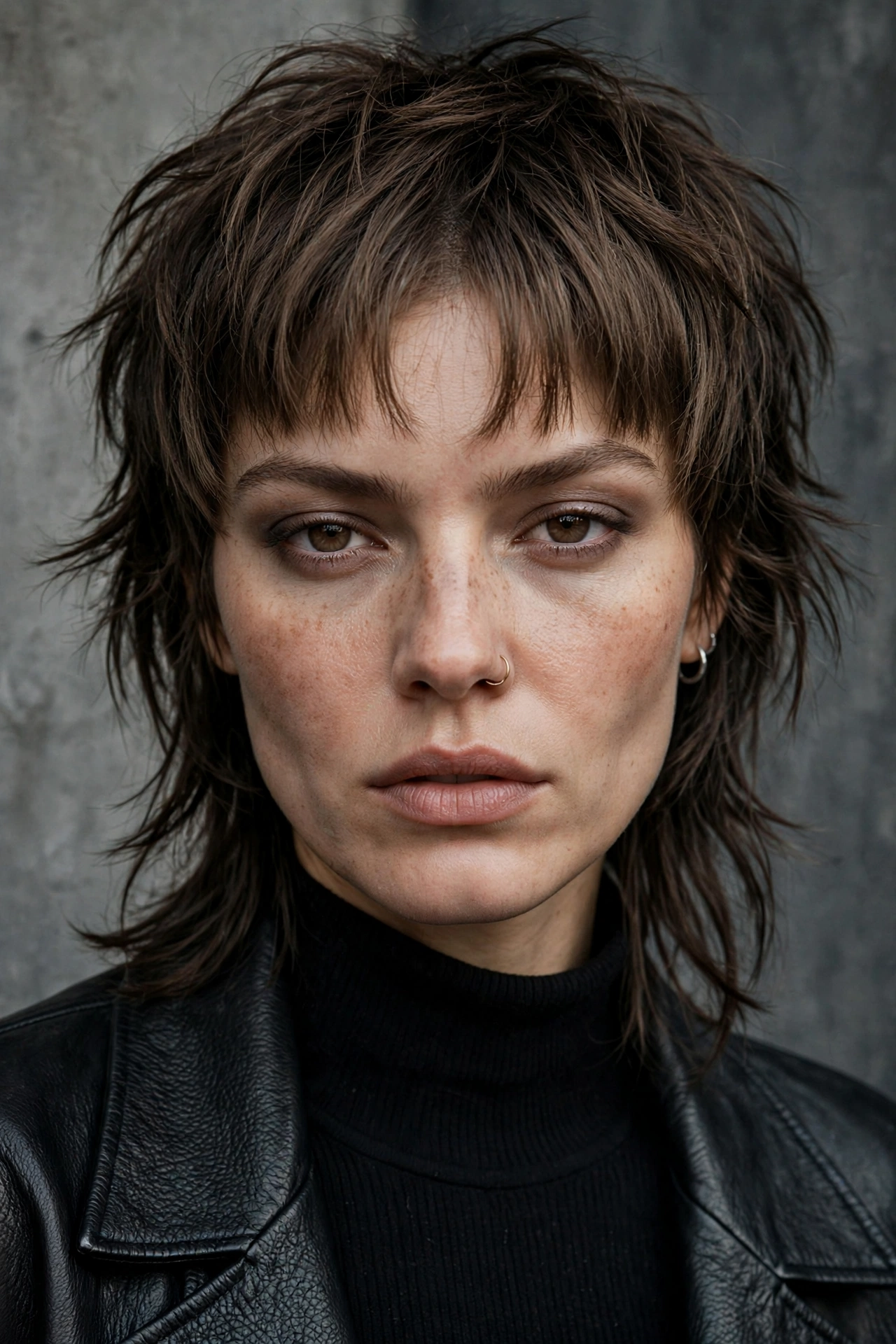
Colour Pairings That Make the Layers Visible
Flat single-process colour is the fastest way to waste a good wolf cut, because it makes every layer look like a different length of the same thing rather than a deliberate shape.
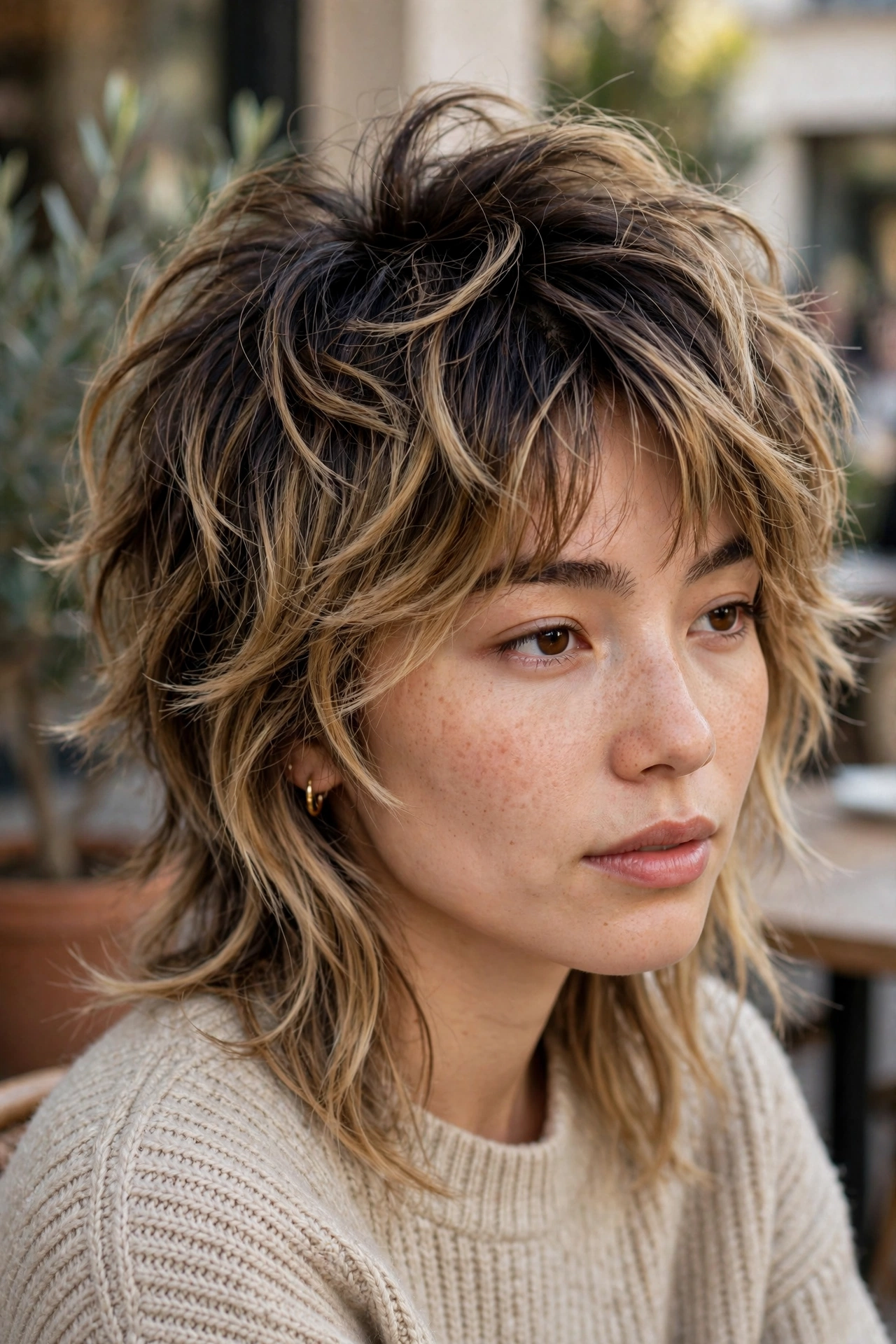
Balayage Wolf Cut
Hand-painted colour through the lengths makes every layer visible as it moves, which is precisely why balayage remains the most requested pairing with this cut. Touch-ups stretch to twelve weeks. Painting a little extra brightness into the curtain bang section brings warmth to the face without lightening the whole head.
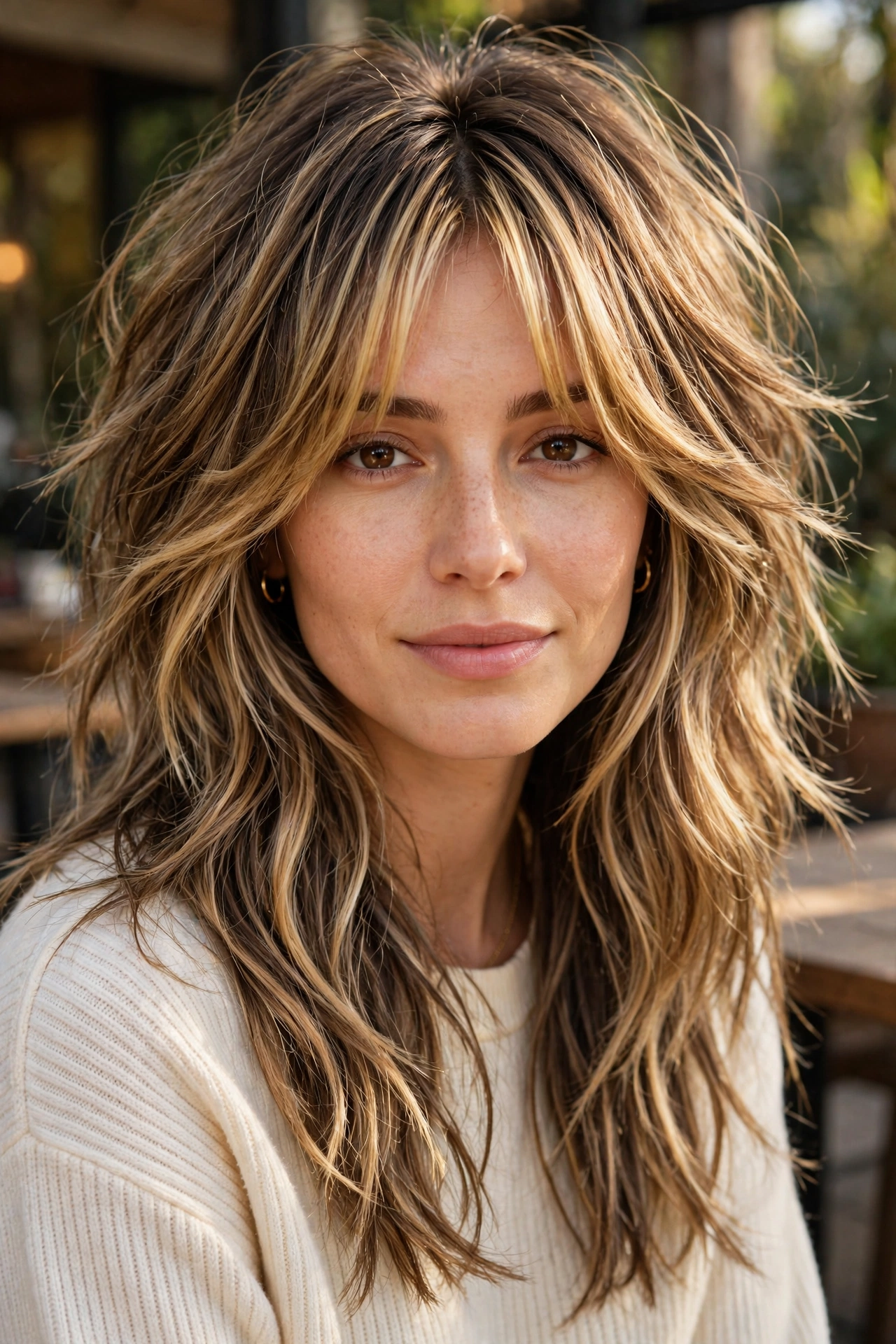
The Money Piece Wolf
Two bright sections framing the face, and nothing else touched. Lightened pieces sitting on the curtain bangs draw attention exactly where the cut is doing its most interesting work. It costs a fraction of full colour, grows out with no awkward line, and is reversible in a single gloss appointment.

Warm Mocha Brunette
Dark chocolate and mocha tones are the shades office environments forgive most readily, which matters if you want the cut without the creative-industry associations. Warmth is what keeps the depth from reading flat. A mocha base with subtle internal highlighting catches light without announcing itself as a highlight job.

Honey Blonde Wolf Cut
Why does honey blonde suit this cut so well? Because warm dimensional blonde creates natural shadow between the layers. Highlights that look placed by the sun rather than by foils are the current direction. The tone also softens the choppiness of a heavily razored cut, which makes it a good pairing for anyone worried the shape reads too harsh.
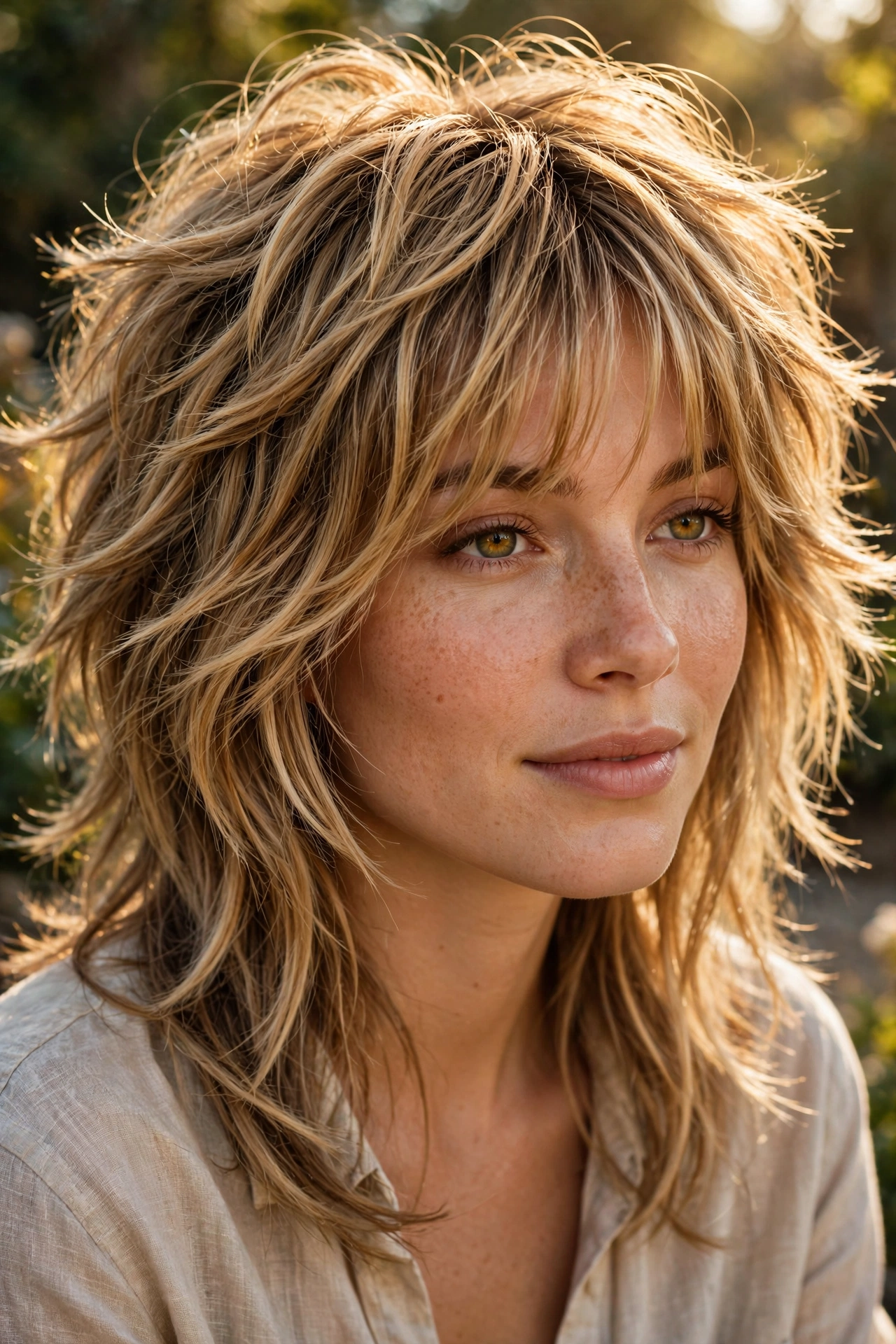
The Root Shadow Wolf
Leaving the roots intentionally deeper before melting into your colour stretches appointments to twelve weeks or more. The added depth at the crown also creates the illusion of thickness exactly where the shortest wolf layers sit, which is genuinely useful since that area can look sparse on finer hair.
Bold and Vivid Colour
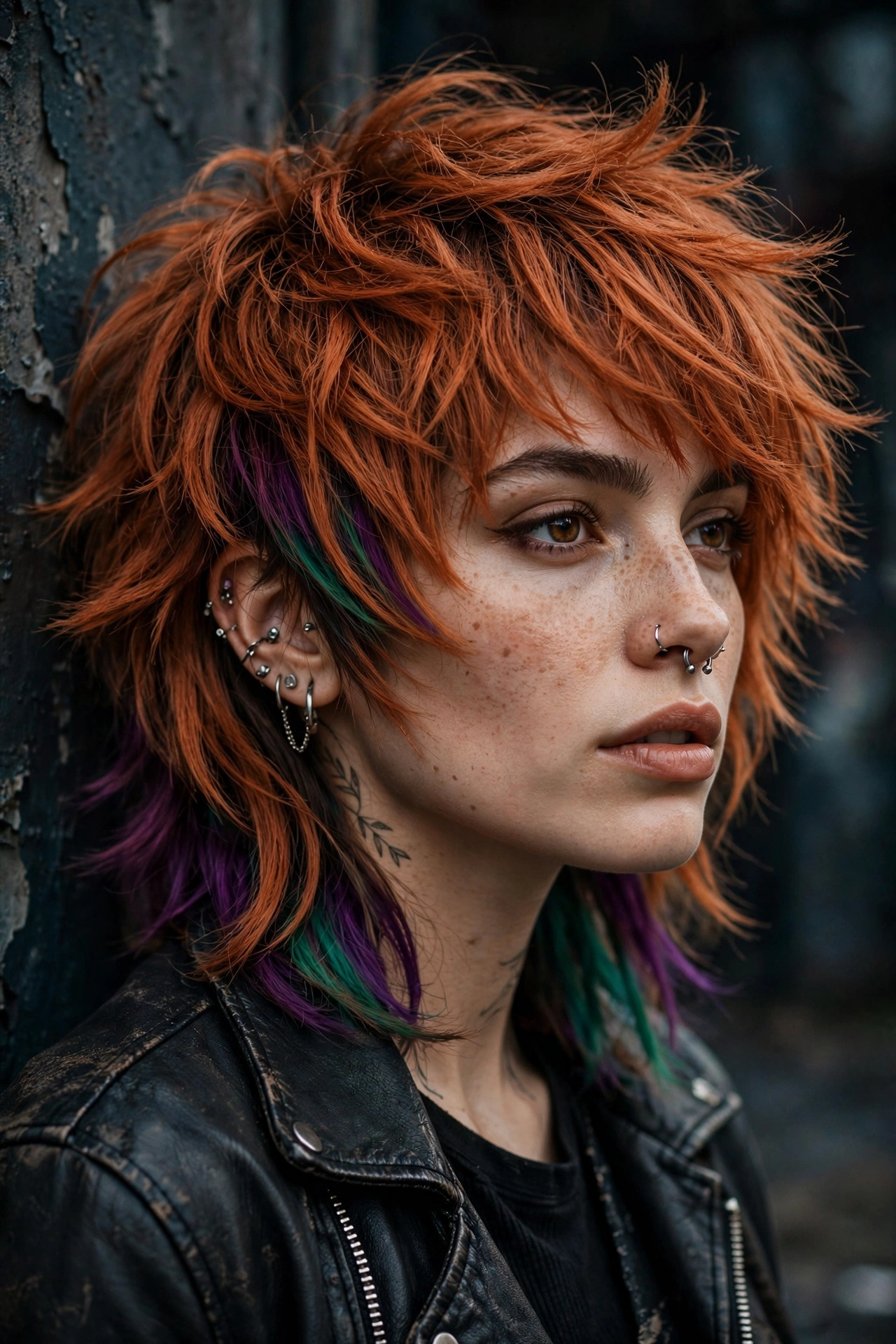
The wolf cut has always carried a rebellious streak, and vivid colour leans into it. Where it lands well:
- Copper and rust, which read warm rather than costume
- Peekaboo panels hidden beneath the top layers
- Jewel tones like plum and emerald on dark bases
- Two-tone contrast between crown and lengths
Pre-lightening is required for the brighter options, so factor bond protection into the appointment.
Styling and Statement Versions
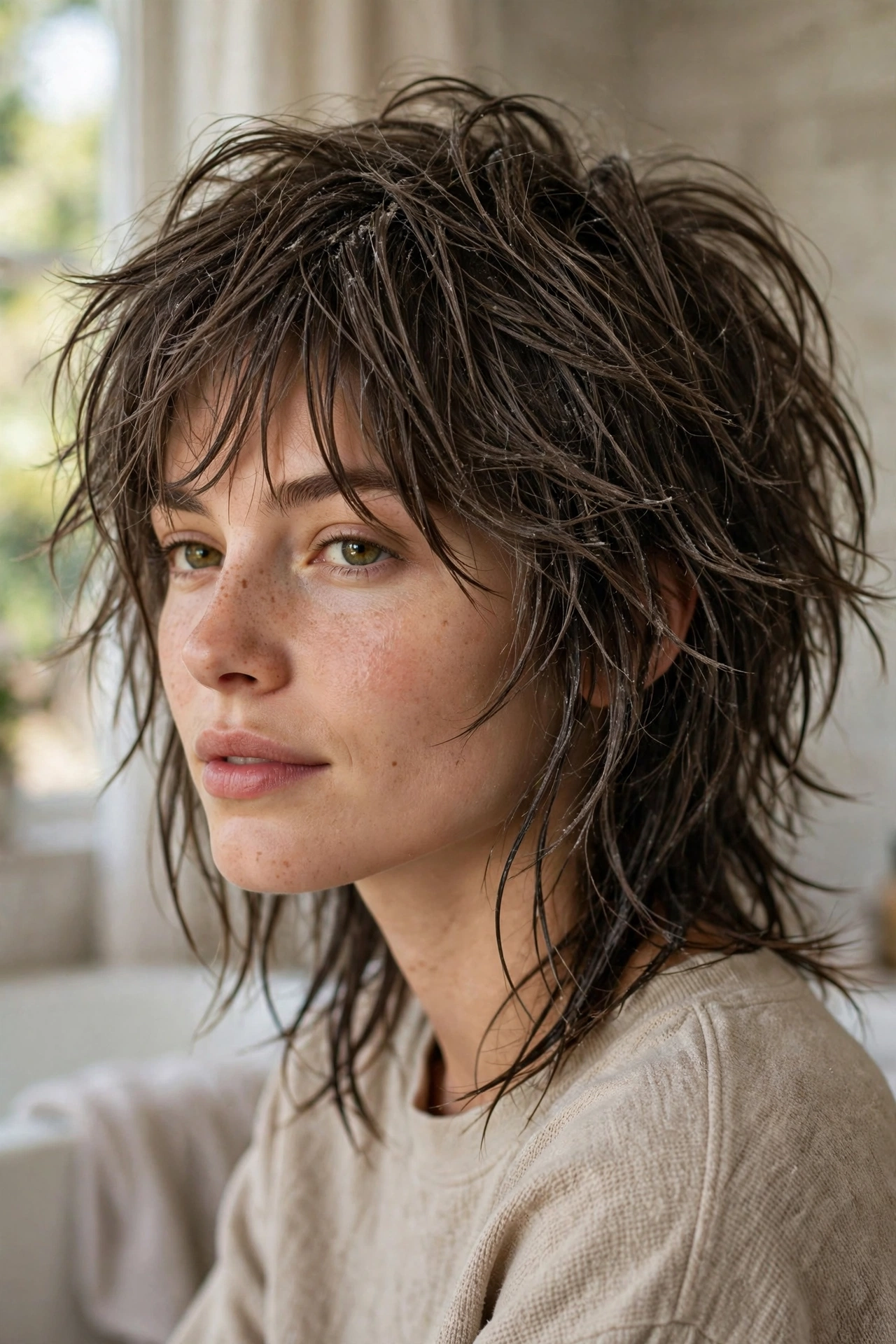
The Air-Dried Tousled Wolf
Deliberately undone, with the layers left to fall where they want and nothing smoothed. Texture spray or powder gives piecey definition with a matte finish. This is the version the cut was designed for, and it’s why the wolf cut suits people who genuinely don’t want to style their hair. Applying product to damp hair rather than dry gives noticeably better separation.
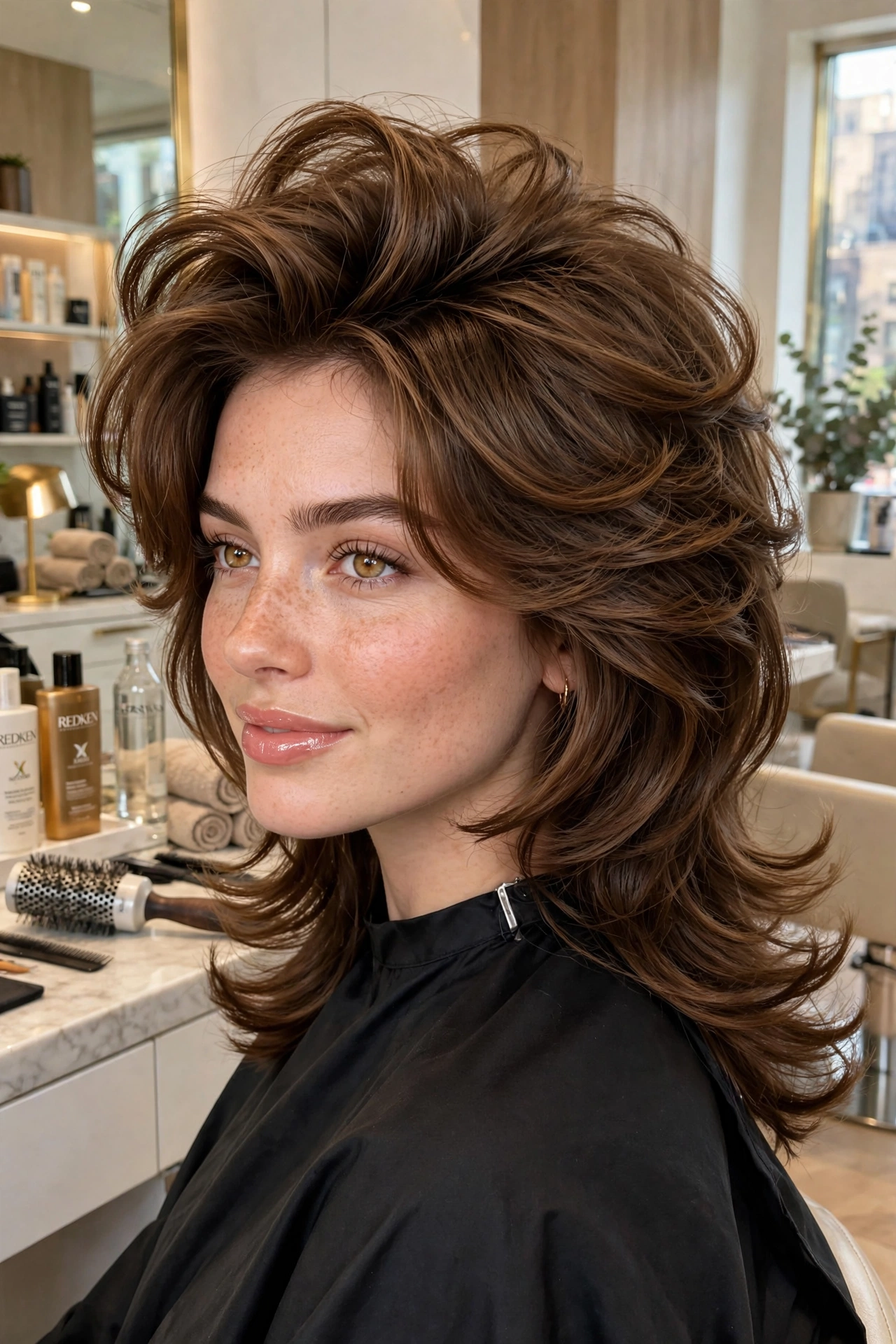
The Blown-Out Bouncy Wolf
Ten minutes with a round brush. That’s what separates this from the air-dried version, and the payoff is a polished finish that still shows every layer. Blow-dry the crown layers forward and upward, then the lengths downward and slightly back. The contrast in direction is what creates the bounce. Long, flowing layers rather than choppy ones make this the most polished a wolf cut gets.
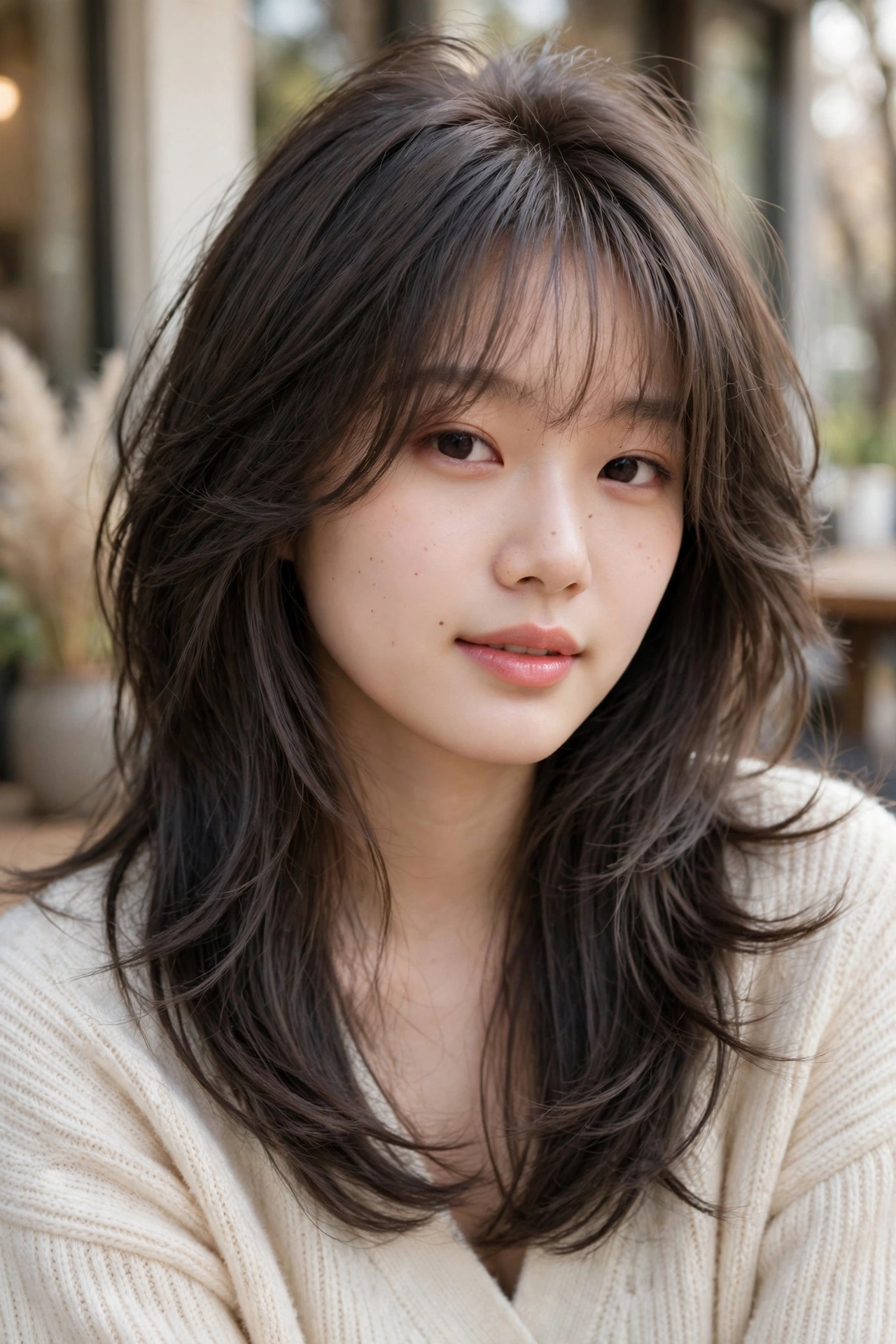
The Korean Wolf Cut
Softer layering, more rounded volume through the crown, and a fringe that sits lighter than the Western version. Less rock and roll, more soft and airy. It suits straight and fine hair better than the razored versions, and it’s considerably more forgiving if you’re nervous about the cut looking too aggressive.
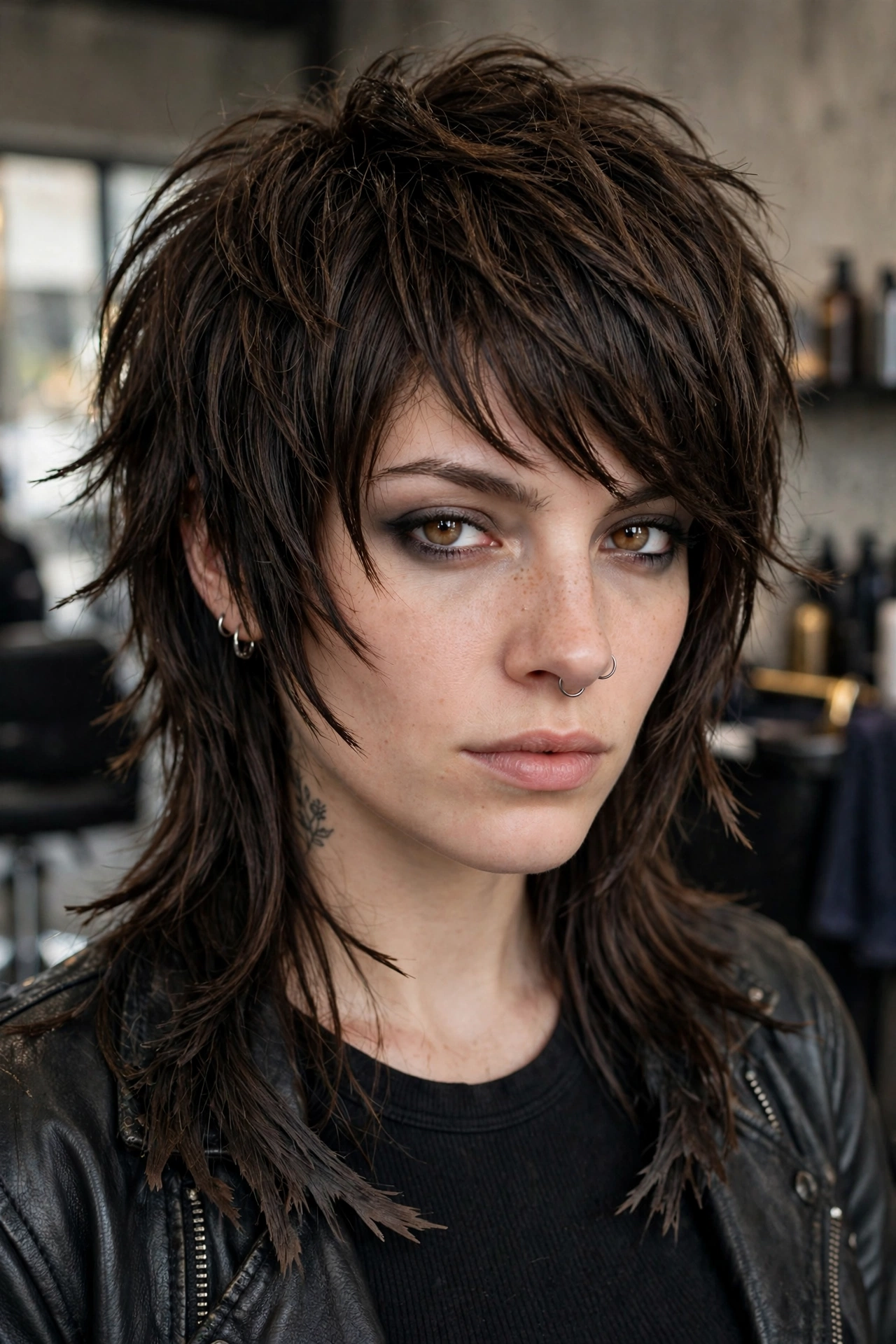
The Razored Rocker Wolf
Wondering why some wolf cuts look right and yours came out as a boring layer cut? Usually the tool. Stylists building a proper wolf cut typically use a razor for a significant portion of the work to create feathered, chewed-on ends that look lived-in. Standard shears blending everything perfectly produces long layers, not a wolf cut. You need those deliberate steps between the top and the bottom. Ask specifically whether your stylist uses a razor before booking.
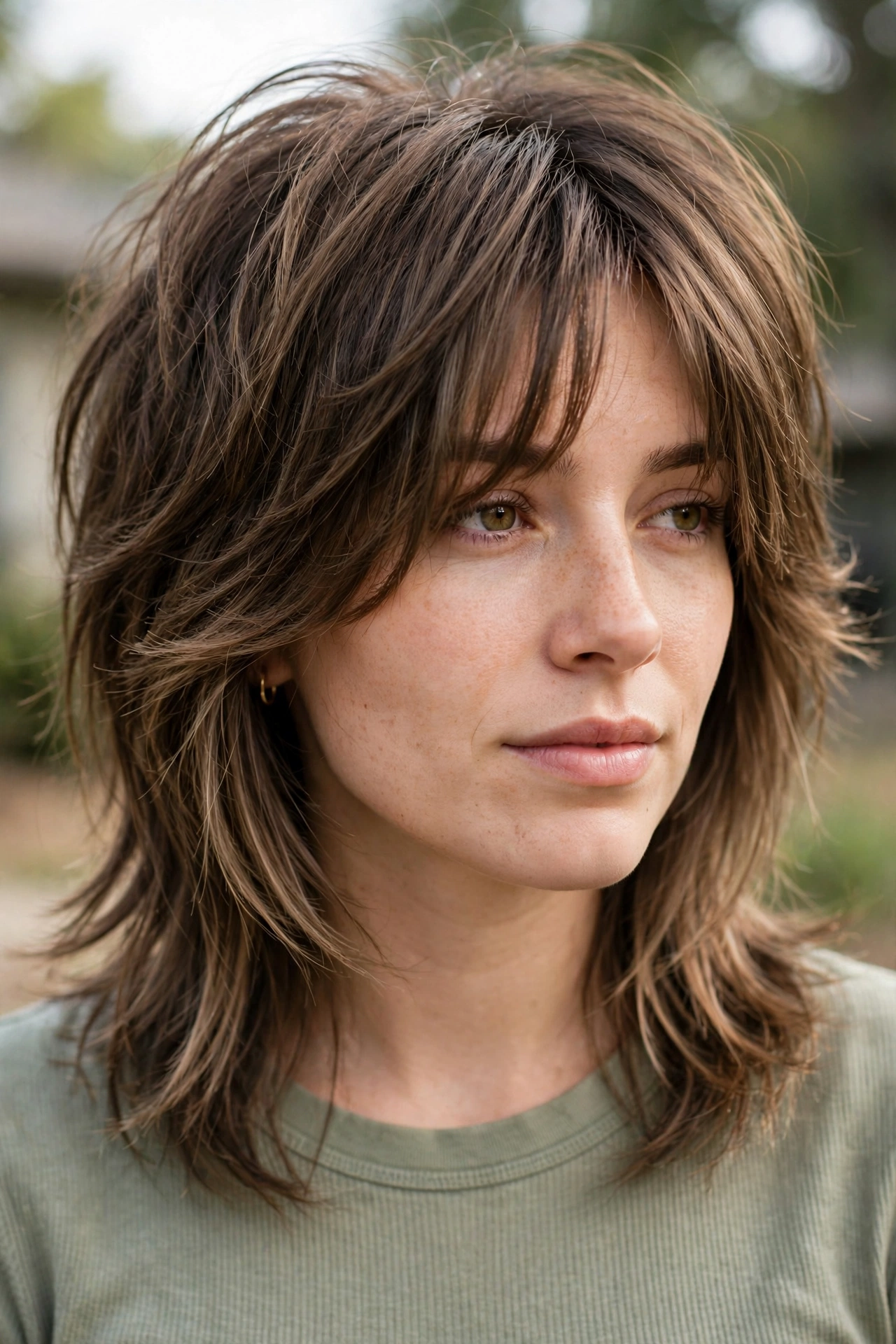
The Polished Office Wolf
There’s a persistent myth that layered textured cuts read too casual for professional settings. It isn’t true. The difference between creative professional and just-rolled-out-of-bed is about an inch of layering and the right product. Keep the layering starting below the chin, choose a deeper or warmer colour, blow-dry rather than air-dry, and the cut becomes entirely office-appropriate.

The Grown-Out Month-Five Wolf
Wolf bangs grow out into face-framing layers, which means even neglect looks intentional with this cut. Five months with zero trims still reads as a deliberate shape rather than a mistake, which is genuinely rare among trend cuts. Anyone nervous about commitment should keep this in mind: the exit strategy is built into the design.
What Nobody Tells You Before Booking
Most roundups show photos taken under salon lighting. These are the details that decide whether you walk out happy.
Layer Placement Is the Whole Cut
On long hair, the first layer should start no lower than the chin. Anything lower and you have a U-cut with bangs.
Serious versions involve five or six inches of difference between the shortest crown layers and the lengths, which is what creates the visual jump between voluminous top and wispy bottom. That contrast is the cut. Ask your stylist directly where they plan to start the shortest layer, and if the answer is somewhere around your shoulders, you’re getting long layers rather than a wolf cut.
Razor Versus Shears
The tool matters as much as the technique.
Razoring creates the feathered, slightly rough ends that give the cut its lived-in quality. Shears alone, blended smoothly, produce a polished layer cut that misses the point entirely. That said, razors are harsh on fine or damaged hair, so if your ends are fragile, ask for point cutting with shears instead and accept a slightly softer result.
Face Shape, and Why the Usual Advice Is Backwards
| Face Shape | Wolf Cut Approach | Bang Guidance |
|---|---|---|
| Round | Classic wolf works well | Cheekbone level or lower, wide-set |
| Square | Classic wolf works well | Soft, side-swept curtains |
| Oval | Almost any version | Any length |
| Heart | Softer, more traditional layers | Fuller at the jaw |
| Long | Softer wolf with fuller fringe | Brow-skimming, not long sweeping |
| Diamond | Soft wolf, avoid sharp contrast | Wispy pieces at the temples |
Round and square faces are actually the strongest candidates here, which contradicts the usual advice about avoiding volume. The lift at the temples and the choppy face-framing pieces elongate rather than widen, provided the bangs sit at cheekbone level or below.
Hair Type and Maintenance
| Hair Type | Layering Approach | Trim Frequency |
|---|---|---|
| Fine and straight | Soft blended layers, weight at perimeter | 8 to 10 weeks |
| Medium and wavy | Standard wolf layering, razor finish | 6 to 8 weeks |
| Thick and coarse | Internal and hidden layers, debulking | 6 to 8 weeks |
| Curly | Dry cutting, longer bangs for shrinkage | 8 to 12 weeks |
| Coily | Section by section on stretched hair | 8 to 12 weeks |
Fringe trims sit outside this schedule entirely. Budget one a month regardless of when the rest of the cut is due.
The Blending Detail Most Salons Miss
Curtain bangs should be blended into the front layers gradually rather than cut as a separate section.
This is what gives the combination its signature seamlessness. Bangs cut as their own block sit on top of the haircut instead of belonging to it, and the whole thing looks like two unrelated decisions made on the same head. If your last set of bangs looked bolted on, this is almost certainly why.
Cost and Realistic Commitment
At a mid-range US salon, expect roughly $60 to $130 for a wash, cut and blow-dry, with major metros running higher. Tipping eighteen to twenty-two percent is standard. Apprentice chairs and membership salons often come in twenty to thirty percent lower.
The cut holds shape for four to eight weeks depending on length. Bring two or three reference photos of the specific length you want, since short and long wolf cuts are genuinely different cuts and showing the wrong one sends your stylist toward the wrong layer placement.
Final Thoughts
The wolf cut with curtain bangs has outlasted its trend label for a simple reason: it adds volume, movement and personality at once, and it grows out gracefully instead of trapping you. The curtain bangs soften what could otherwise feel severe, and they turn into face-framing layers on their own if you stop maintaining them.
Find a stylist who looks at your face shape, density and texture before picking up scissors rather than one working straight from your reference photo. Ask where the shortest layer will start, and ask whether they use a razor. Be honest about how much time you’ll actually spend styling, because the air-dried version and the blown-out version are different commitments. Avoid flat single-process colour if you want the layers to read.
Save the versions that stopped your scroll and take three of them to your consultation, all at the length you actually want. That one detail prevents more disappointment than any other piece of advice here.
Frequently Asked Questions
What exactly should I ask for at the salon?
Ask for a wolf cut with heavy layering through the crown and longer wispy lengths below, specifying where the shortest layer should start. For the fringe, request a centre-parted curtain that skims the cheekbones and blends into the front layers rather than being cut as a separate section.
Does a wolf cut work on fine hair?
Yes, but only a softer version. Heavy disconnected layers make fine hair look thinner and leave the ends stringy. Ask for soft blended layers with more weight kept at the perimeter, and choose a wispy fringe that borrows minimal hair from the hairline.
How often does a wolf cut with curtain bangs need trimming?
The cut itself holds shape for six to eight weeks, stretching to ten on fine hair and twelve on curly. The fringe is separate and needs reshaping roughly monthly, since bangs lose their shape considerably faster than the rest of the cut.
Will a wolf cut look bad growing out?
Less than almost any other trend cut. The layers soften rather than developing a hard line, and the curtain bangs simply become face-framing layers. Many people wear the grown-out version for months without trims and it still reads as a deliberate shape.